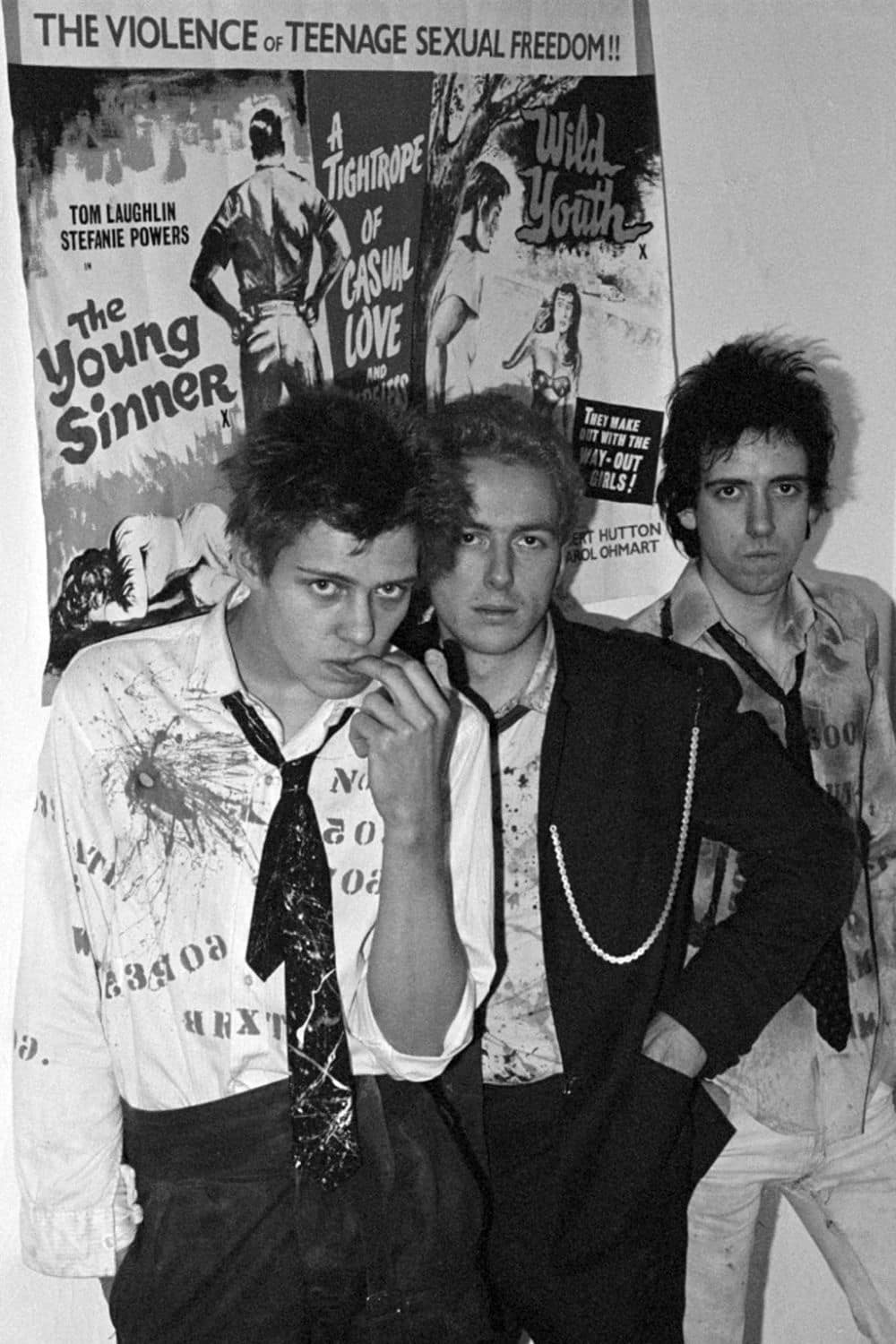
June to December 1976

Early Dates

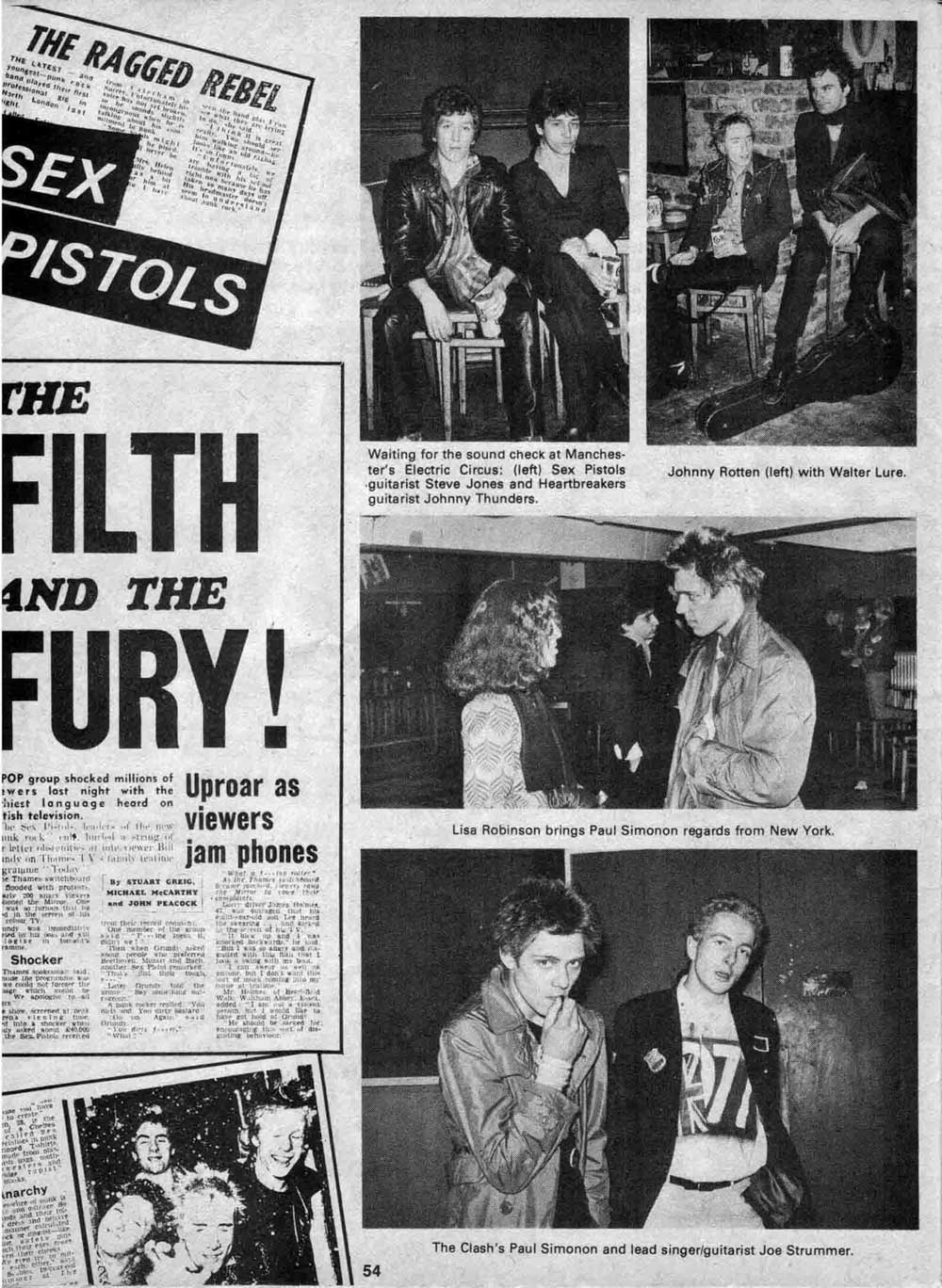
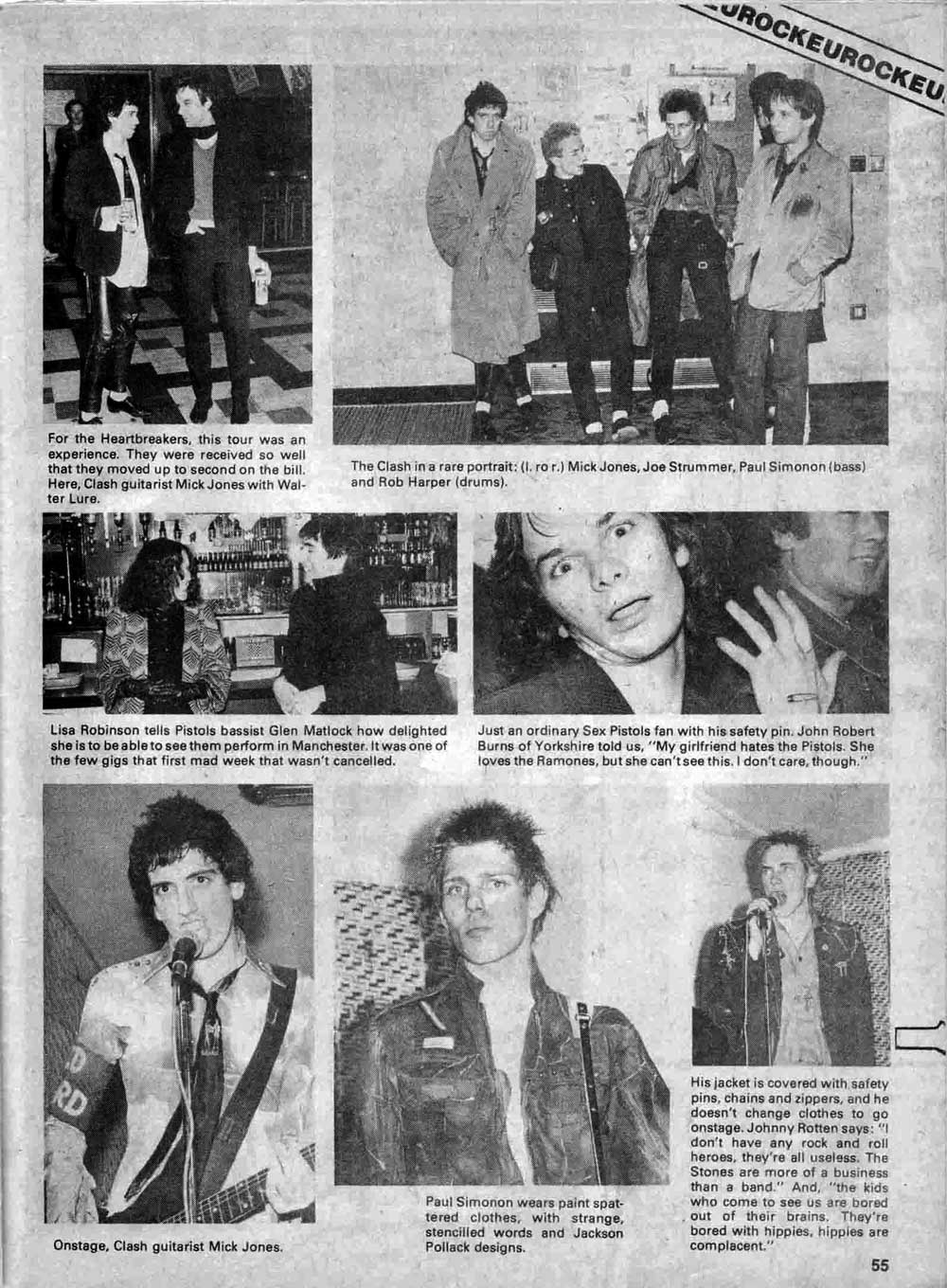
Known articles around the time of the tour. If you know of anything that is missing please do let us know.


INDEX
Archive
Snippets
UK Articles
International Articles
Feature Magazine
Books
Social media
Fanzines, Blogs
Sundry
Retrospective articles
Photos


Sources

Internet Archive source
British Newspaper Archive
source
Newspaper.com
source
Getty images
source
UK Music Magazines, Record Mirror, Sounds, NME, Melody Maker,
source and flckr
Rock Archive (photos)
source
Twitter
NME, SOUNDS, Record Mirror, Melody Maker
Rocks Back Pages (
paywall)
Still unusual fanzine colection
source


Snippets

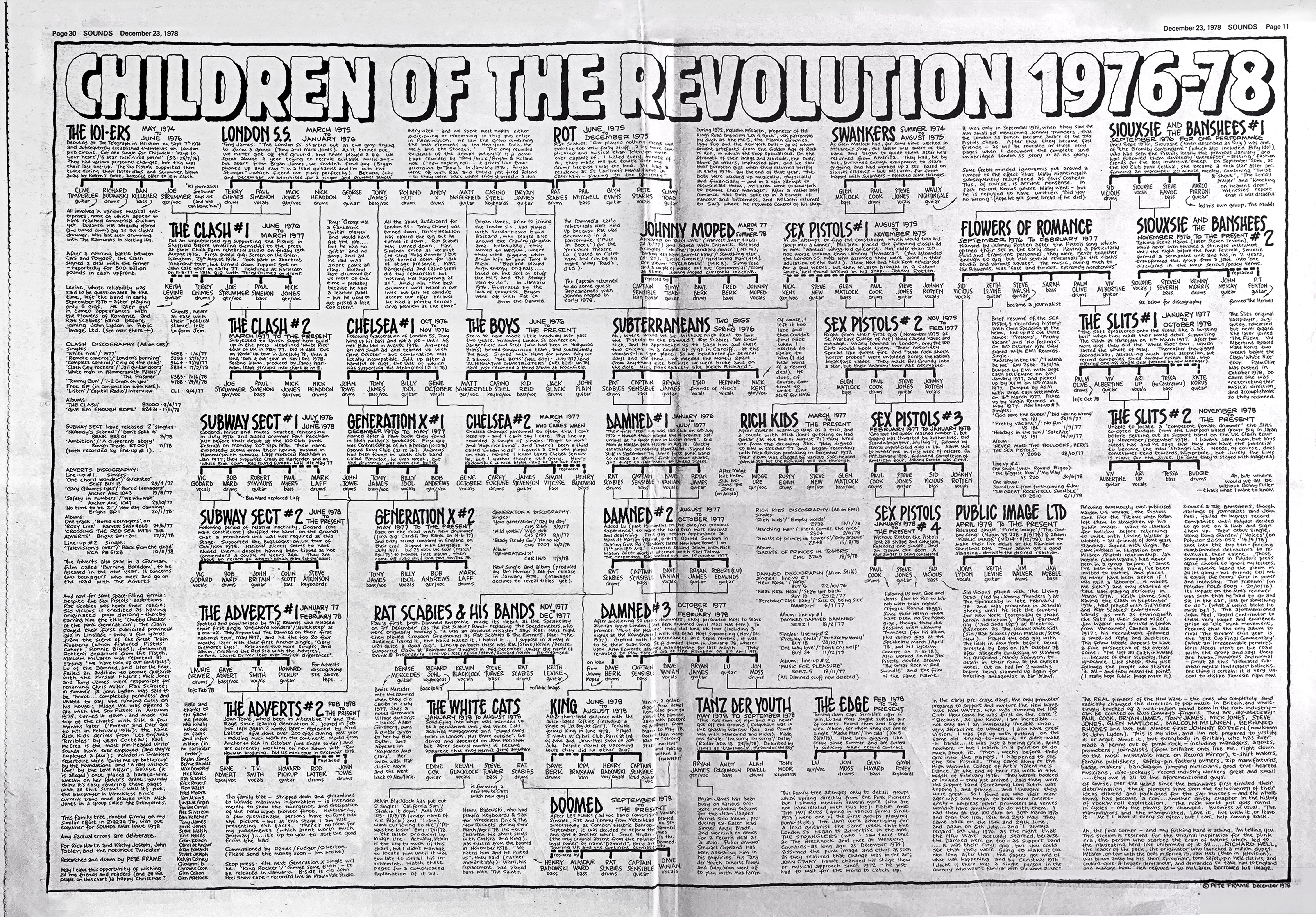
"Children of the Revolution", Sounds, Christmas 1978 edition

Children of the Revolution 1976-1978

Punk rock family tree by Pete Frame for the Christmas 1978 edition of Sounds

Enlarge image


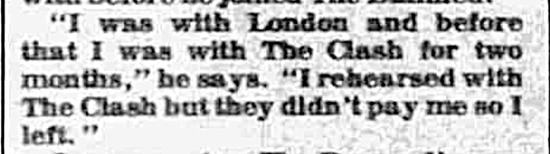
Extracted, Record Mirror, 3 December 1977,

INTERVIEW, RAT SCABIES

Link to full interview

"I was with London and before that I was with The Clash for two months," he says. "I rehearsed with The Clash but they didn't pay me so I left."


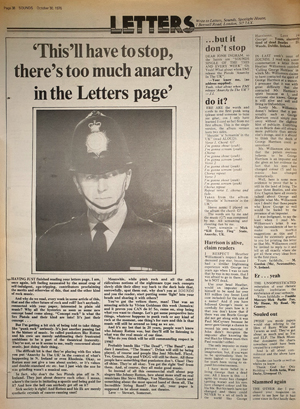
SOUNDS, "Letters page", October 30, 1976, Page 38

"And it's my bet that in 20 years, people won't know who Johnny Rotten?"

'This'll have to stop, there's too much anarchy in the Letters page'

HAVING JUST finished reading your letters page, I am, once again, left feeling nauseated by the usual crop of self-indulgent, ego-tripping, contributors proclaiming the merits and otherwise of this, that and the other kind of rock music,

And why do we read, every week in some article of this, that and the other future of rock and roll? Isn't anybody, connected with your paper, interested in plain old music? all the hysterics as soon as some new concept band come along. "Concept rock" is what the Sex Pistols and their kind are into! It's just their concept...

But I'm getting a bit sick of being told to take things like "punk rock" seriously. It's just another passing fad in the history of music. So called punksters like Rotten and his crew merely sublimating their frustrated ambitions to be a part of the theatrical fraternity. They're not, or so it seems to me, really concerned about music, Just doing their thing.

The difficult bit is that they're playing with fire when you put 'Anarchy In The UK' in the context of what's happening in N. Ireland or even Rhodesia. Okay, so Rotten may not give a toss about society, or it's values and double-standard etc etc. but I just wish the axe he was grinding wasn't a musical one.

In fact, why don't the Sex Pistols piss off to N. Ireland. They just about deserve each other. I mean, where's the taste in imitating a spastic and being paid for it? And how the hell can anybody get off on it?

Sick society is right! And Rotten and his ilk are merely synthetic crystals of cancer-causing snot!

Meanwhle, while punk rock and all the other ridiculous notions of the nightmare type rock conepts slowly slide their slimy way back to the dark hole that, sorrowfully, spat them out, why don't you at SOUNDS and you the reader, start putting some 'light' into your heads and sharing it with others?

You've got the writers there, man! That was an amazing article by Vivien Goldman this week (Jamaica) and proves you CAN do it! So, come on, stop being what you want to change. Let's get some perspective into things, whatever happens to punk rock or any kind of rock at the moment, one thing's for sure and this is that music will still be around so long as we are.

And it's my bet that in 20 in 20 years, people won't know who Johnny Rotten was, but they'll still be listening to what was the real music of our time. Who do you think will be still commanding respect in

1996? Probably bands like "The Dead", "The Band", and dare I mention, "The Stones". Dylan will still be being played, of course and people like Joni Mitchell. Floyd Yes, Genesis, Zep and VDGG will still be there. All these people have aeople have something ng that punksters don't. Class! They all shine. They're all okay. You get the right 'feel' from ther them. And, of course, they all make good music.

So instead of all this commercial stuff about pop singers like Johnny Rotten, how about more stuff on real musicians like Steve Hillage, Van Morrison, Garcia and something about the most spaced band of them all, The Incredible String Band? After all, your paper is supposed to be about music, not theatre. Love Stewart, Somerset.

Write to Letters, Sounds, Spotlight House, 1 Benwell Road, London, N77AX.

.but it don't stop

DEAR JONH INGHAMNDS the Saints ar SINGLE OF THE THIS OF THE THIS AND EVERY WEEK' Yeah! What about when EMI release the Pistols "Anarchy In The UK'

Your know me, (no address supplied). Yeah, what about when EMI release 'Anarchy In The UK'?

do it?

ERE ARE the words and cards to me first punk song (please send someone to tune (please send someonnly have me gitar, cos only have learned 1 cord so far) from first album. This is the the single single version. the album version lasts two sides.

"Shoutin 'n' Screamin' in the UK" (read ALOUD).
Verse 1. Chord G7 I'm gonna shout (yeak) I'm gonna scream (yeah)
Chorus I'm gonna shout (yeah) I'm gonna scream (yeah) Verse 2
I'm gonna shout (yeah) I'm gonna scream (yeah) Chorus repeat
Verse I'm gonna shout (yeah I'm gonna scream (yeah) (yeak)
Chorus repeat Repeat verse 1, chorus and

Taken from the album "Shoutin 'n' Screamin' in the UK"

Sleeve notes: I played on the album the chord: G7. The words are by me and the music (G7) was composed by me. All screaming and shouting dun by me.

Yours, screamin Mick "Kill Every Fing" Stain, Anarchy, UK.

SOUNDS
30 October 1976

Enlarge image


Facebook

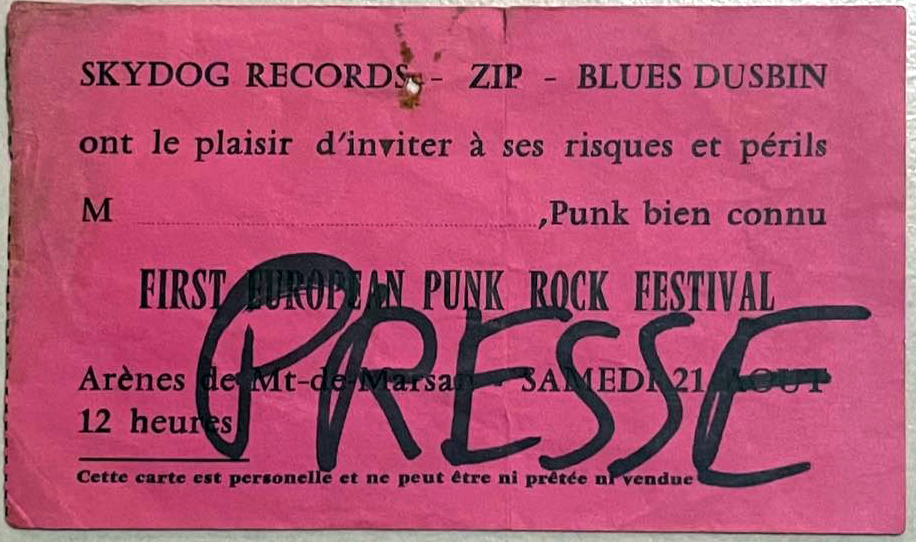
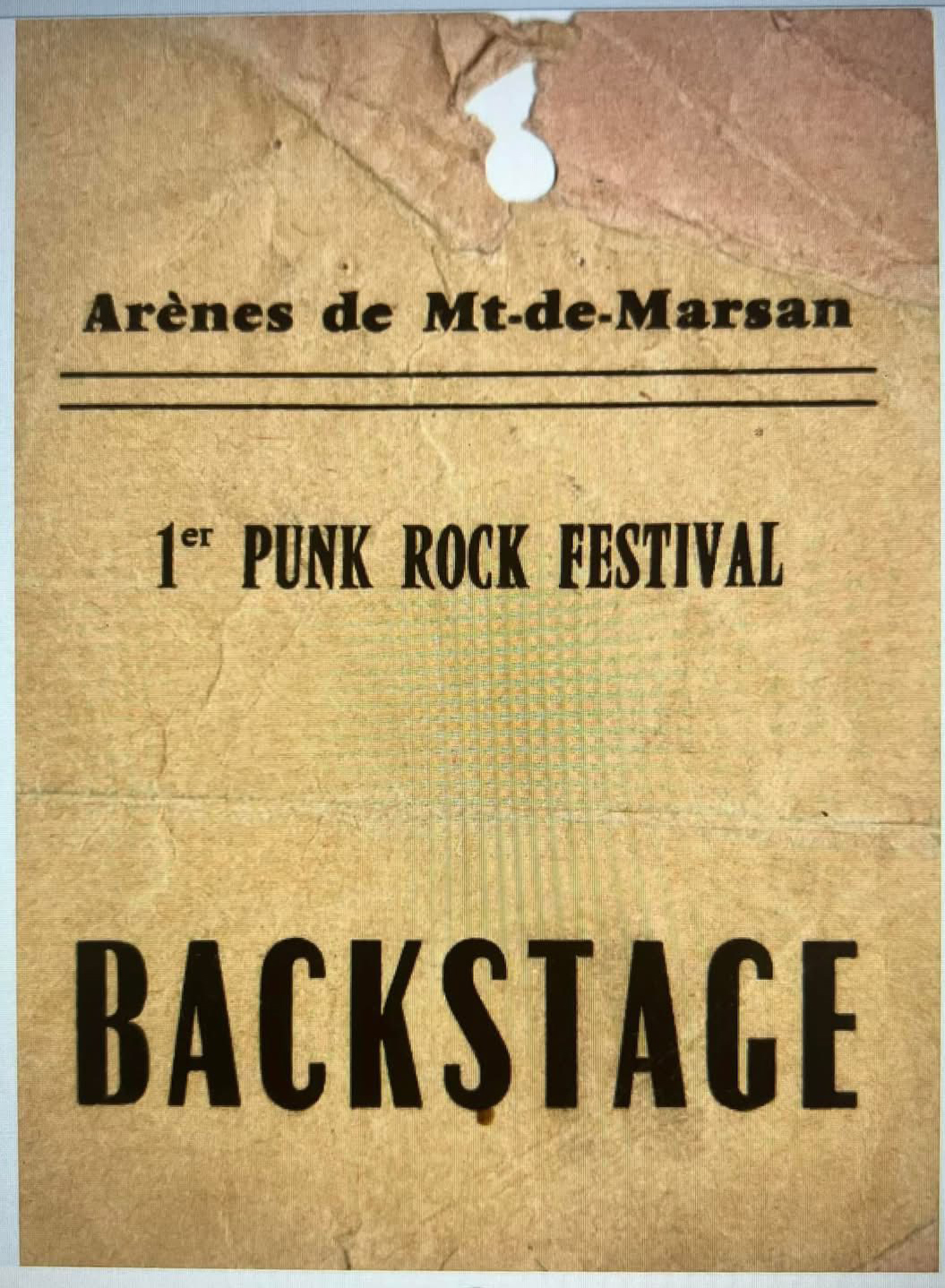
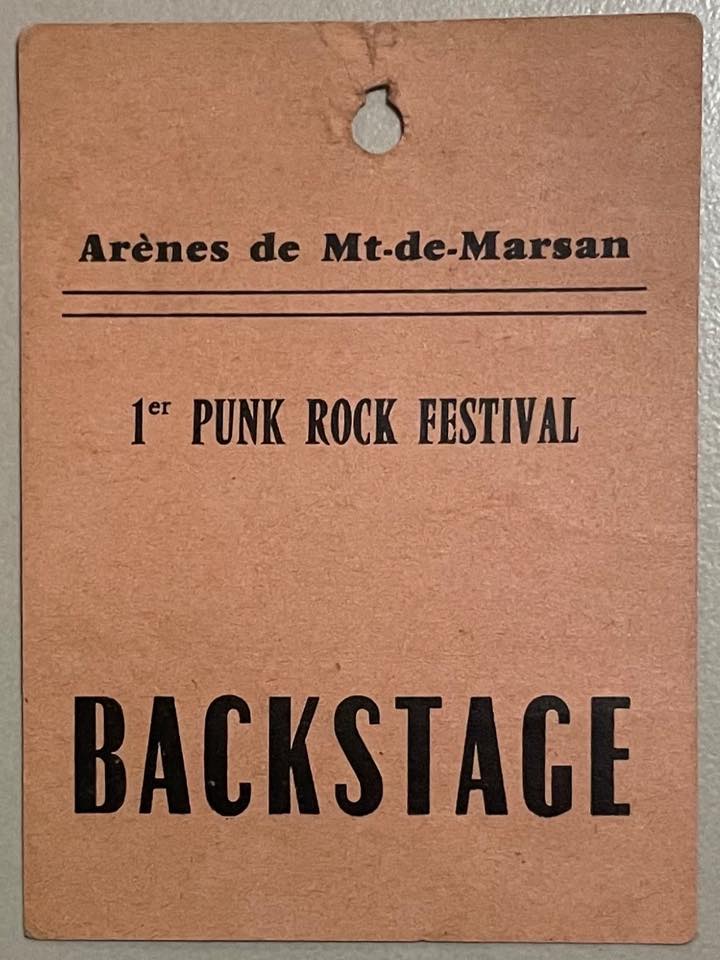
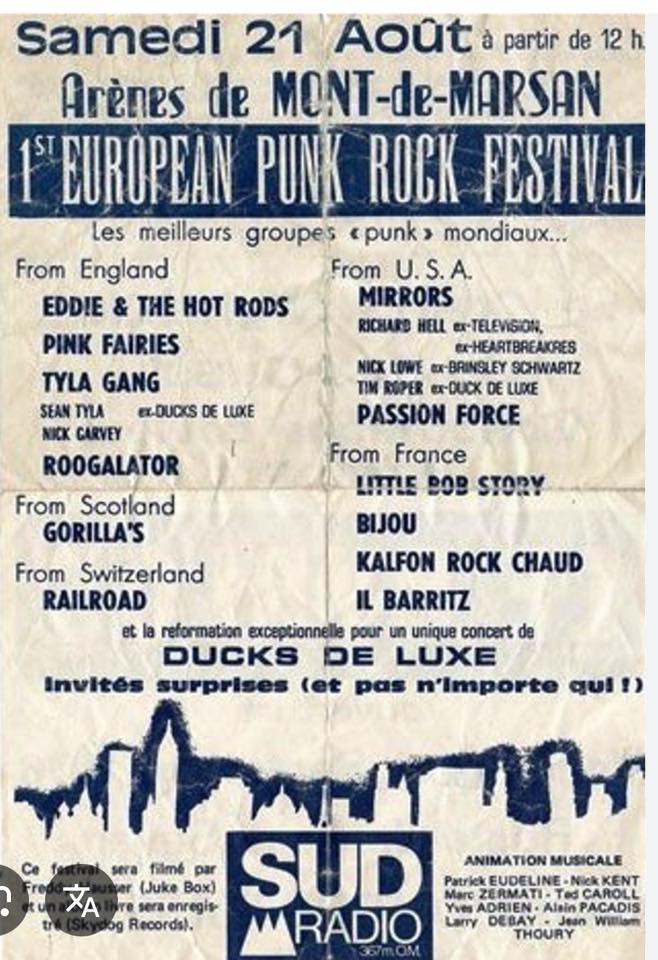
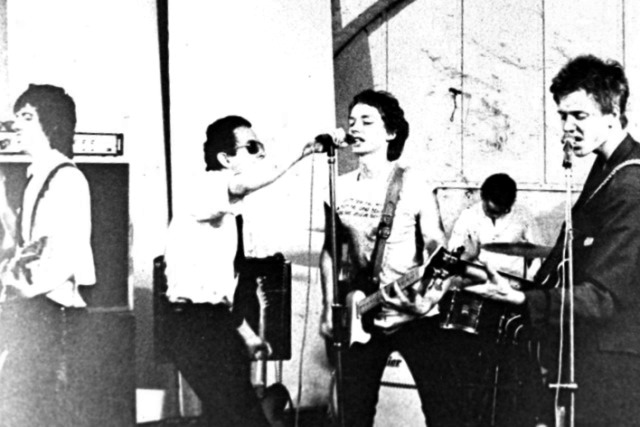
Back Stage pass & music magazine review for the 1st Mont De Marsan music festival. Kindly shared by Ed Eddie Lock

Back to the top


UK Articles

Johnny Waller, “The Night I Nearly Joined The Clash”, Sounds, 30 July 1983. Reconstructed from a damaged scan.

"The Night I Nearly Joined The Clash"

Text only. Scans wanted ****

– In this candid reflection, John Foxx recounts his brief flirtation with joining Mick Jones and the embryonic Clash during the uncertain pre-punk days of 1975–76.

– Torn between guitars and circuitry, Foxx ultimately chose the path of electronic experimentation, leaving The Clash to find their true voice in Joe Strummer.

– Foxx reflects on Mick Jones and London SS and life under the Westway.

The Night I Nearly Joined The Clash
John Foxx admits all to Johnny Waller

“It’s strange, really, looking back now,” says John Foxx, swirling his coffee, lost momentarily in thought. “That time — 1975, early ’76 — it was like the whole country had gone to sleep. Grey, beige, tired. You could feel something was about to explode.”

Foxx, dressed in an immaculately neat suit that looks like it might hum if you stood too close, is a man of quiet intensity. He doesn’t waste words. But when the topic turns to the early days of punk — and a fateful brush with one of its founding fathers — he becomes animated.

“I’d just moved to London from the north,” he recalls. Art school. I was walking around with notebooks, synth ideas, weird sci-fi obsessions. I wasn’t sure what I was going to do — just that I had to make something new. Something... stark.”

“The scene was pretty barren at the time. You had pub rock — Brinsley Schwarz, Dr. Feelgood. I went to those gigs. They had energy, yeah. But it wasn’t what I was looking for.”

“I wanted to get away from the past, not dive into a rougher version of it.”

One night, in a pub in Westbourne Park, Foxx found himself talking to a wiry, intense guitarist with a mop of black curls and a gleam of ambition in his eye: Mick Jones.

“He was with this outfit called London SS,” Foxx explains. “Which wasn’t really a band — more like a rotating crew of kids trying to get something going. They were always rehearsing, always reforming.”

“We got chatting. I said I was a singer, had done some art school bands. He said they were looking for someone.”

Jones invited him to a rehearsal — “a basement somewhere near Ladbroke Grove, I think, though it might've been Chalk Farm. It's all a bit hazy now.”

“They were raw,” says Foxx, smiling. “Proper volume merchants. Loud, messy, a sort of cross between the New York Dolls and Eddie Cochran.”

“There was something magnetic about it. They weren’t technically great, but that didn’t matter. There was conviction. That’s what struck me.”

Did he consider joining? “For a moment, yeah,” he nods. “I mean — what else was there? I hadn’t settled on a direction yet. I’d just left Tiger Lily and was in that post-band limbo. The idea of fronting a noisy, confrontational group was... tempting.”

“But I was already drifting toward machines. I’d started experimenting with tape loops, found sounds. I’d just discovered Kraftwerk and Suicide. I wanted distance. Something anti-rock, in a way.”

Still, he kept returning to the rehearsals for a week or two. “It was like standing at a crossroads,” he says. “On one side — the guitars, the sweat, the speed. On the other — ice, echo, circuitry.”

Ultimately, it was the future that won. “I realised I wasn’t interested in looking backwards. I didn’t want to be a louder version of something from 1965.”

And so, he walked away. Not long after, Mick Jones and his manager Bernie Rhodes found Joe Strummer, and London SS mutated into The Clash.

“I remember hearing White Riot for the first time and thinking — yes. They found the right voice. Joe brought purpose, politics. I would’ve been a detour for them. A dead end.”

Was there ever any regret?

He shakes his head. “No. None. The Clash were brilliant — but they were a band. They needed shared ideology, fire, camaraderie. I’m more of a loner.”

Foxx went on to form Ultravox, first with guitars and a Bowie-glam lean, and later — post-1979 — as a solo artist pioneering bleak, urban electronica. Albums like Metamatic captured a very different vision of modernity: cold tower blocks, empty streets, the hum of surveillance.

“Punk was about tearing things down,” he says. “But synths were about rebuilding — with glass and chrome. That was the city I saw in my head.”

Still, it’s hard not to imagine what might have been. John Foxx, clad in black, barking out “Career Opportunities”? A synth under “London Calling”?

He laughs. “It’d have been a disaster. I’d have tried to put drum machines on everything. Mick would’ve throttled me.”

But Foxx has only admiration for the group he nearly joined.

“They had a moment. And they used it well. They were a proper band — one of the few from that era who grew, who meant something.”

“I think that’s what people miss now — the courage of it. To go out with nothing but fury and a couple of chords, and demand to be heard.”

So many names passed through the early London punk circles. “It was all open,” he says. “I knew Billy Idol, I’d met Siouxsie. There was no fame yet — just ideas.”

“That’s why people like Mick were always searching. They didn’t want to be the next Stones. They wanted to be something else. No one knew what. That was the beauty of it.”

Foxx pauses. “In a way, I think that period — ’75 to ’77 — was the most exciting. Before the media caught up. Before punk had a uniform.”

“When it was still raw possibility.”

He leans back, amused by the idea of an alternate history where he joins The Clash. “It might’ve lasted a week. Or maybe we’d have done something totally unexpected. Who knows?”

“But I don’t think I was meant to be in a gang. I wanted to be a ghost in the machine, not a general in the revolution.”

Even now, as synths continue to influence a new generation, Foxx remains an enigmatic figure — admired by artists from Gary Numan to Moby to LCD Soundsystem. The shadow he cast may not be as loud as The Clash’s, but it's long.

Final thoughts?

“I suppose,” he says, “if I had joined, I’d have ended up writing songs about machines in The Clash. And that would have been a very short career.”

He grins. “Sometimes, the best decisions are the ones you don’t even know you’re making.”

~1,270 words
Reconstructed from a damaged scan, July 1983 edition of Sounds

"The Night I Nearly Joined The Clash", The 101ers, The Elgin, Ladbroke Grove, 1975, X.com


Parsons, Tony. “The kids are hungry.” New Musical Express, 2 Oct. 1976, 4 pages. Reprint – History of Rock 1976, p. 116.

The kids are hungry

Story and Author: Feature by Tony Parsons in New Musical Express, capturing the surge of high-energy youth rock in Britain during 1976.

Reports on eaerly punk. Sex Pistols and Eddie & The Hot Rods as the sharpest challenge yet to the bloated rock establishment. Comparisons with American garage roots (Ramones, Television, New York Dolls),

— Parsons argues that the UK’s new street bands—Clash, Damned, Wharf Rats—owe more to hunger than polish. Punk is cast as a genuine “kids’ rock” born of Essex overspill suburbs and London clubs, tracing its lineage from Dr. Feelgood’s pub circuit. Warnings abound that youth is fleeting, but the ferocity of Anarchy in the UK and club punch-ups signal that 1977 could topple the complacent old guard.

Sex Pistols at Notre Dame Hall, Leicester Place, London (15 Nov. 1976); regular Hot Rods gigs at Wardour Street venues; pub-rock trailblazing by Dr. Feelgood in London clubs.

Read the article

PDF


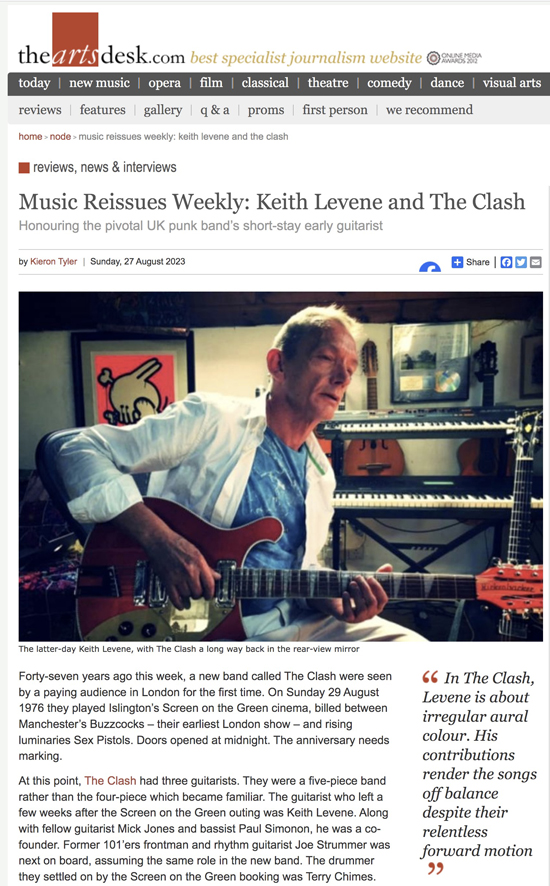
Music Reissues Weekly

Keith Levene and The Clash

Covers the first few months of The Clash from London SS to 101'ers to the first few gigs of the Clash and includes references to the gig at the Black Swan.

During this June 1976 rehearsal period, the as-yet unnamed outfit’s initial drummer was Paul Buck (later in 999 as Pablo Labritaine), who had been at school with Strummer. He left after two or three practices and Terry Chimes was once-again tapped. The line-up settled on Chimes, Levene, Jones, Simonon and Strummer. Finding a name was difficult – amongst those in the running were The Psychotic Negatives and The Heartdrops or Weak Heartdrops (from a Big Youth record). Simonon came up with The Clash.

A debut show was booked for 4 July, supporting Sex Pistols sat Sheffield’s Black Swan – on the same day The Ramones debuted in the UK at The Roundhouse. The Sheffield billing was “ex 101’ers.” It was deliberate that, Pistols aside, London’s punk élite would not have a chance to pronounce on the worthiness of the band.

Despite there being no sonic evidence for the Sheffield debut, a little is known about what was played. The band opened with an instrumental titled “Listen” and, according to Pat Gilbert's 2005 book Passion is a Fashion, also played “Protex Blue” and Mick Jones’ Sixties-style beatster “1-2 Crush on You.” The set additionally included 101’ers staples “Keys to Your Heart,” “Junco Partner” and “Too Much Monkey Business” along with a Who cover and The Troggs' “I Can’t Control Myself” (also covered by the early Buzzcocks). A 101’ers hangover clouded proceedings.

Music Reissues Weekly:

Keith Levene and The Clash Honouring the pivotal UK punk band’s short-stay early guitarist

by Kieron Tyler
Sunday, 27 August 2023

The latter-day Keith Levene, with The Clash a long way back in the rear-view mirror Forty-seven years ago this week, a new band called The Clash were seen by a paying audience in London for the first time. On Sunday 29 August 1976 they played Islington’s Screen on the Green cinema, billed between Manchester’s Buzzcocks – their earliest London show – and rising luminaries Sex Pistols. Doors opened at midnight. The anniversary needs marking.

At this point, The Clash had three guitarists. They were a five-piece band rather than the four-piece which became familiar. The guitarist who left a few weeks after the Screen on the Green outing was Keith Levene. Along with fellow guitarist Mick Jones and bassist Paul Simonon, he was a co-founder. Former 101’ers frontman and rhythm guitarist Joe Strummer was next on board, assuming the same role in the new band. The drummer they settled on by the Screen on the Green booking was Terry Chimes.

Sex Pistols Screen on the Green

When The Clash played the 100 Club a month later on 20 September – at what became known as the “Punk Festival” – Levene was out and they were the band which – despite some drummer wobbles – signed to CBS on 26 January 1977. What came next for The Clash is well known. Easily lost though is the story of what came first.

Remarkably, and despite his short stay in the band, there is an aural evidence of the formative, Levene-era Clash. The band played in front of audiences five times with him in the line-up – the last three appearances were recorded. The surviving audio from before and after Levene’s departure makes it possible to dig into his importance to the band and impact on their sound – and how The Clash changed after the departure of one of their co-creators.

Keith Levene, who died on 11 November 2022 at age 65, was a significant figure in British punk and what came in its wake. An accomplished, self-taught guitarist his pre-punk adventures included working as roadie for Yes in 1972 and 1973. After leaving The Clash, he spent some of late 1976 in a band named Flowers of Romance with, amongst other in-crowd punks, Sid Vicious and a pre-Slits Viv Albertine. They never played live. In late 1977, he was in a short-lived band named Drunk & Disorderly with Rat Scabies, who had just left The Damned – they played live twice supporting The Clash at London’s Rainbow. Then, from May 1978, Levene became integral to John Lydon’s post-Pistols band Public Image Ltd, who he left in 1983. Following this, his path was erratic. He was the only person to play with members of all three of The Clash, The Damned and Sex Pistols. Becoming a member of The Clash was the opening shot.

An examination of the set lists from Levene’s stay in The Clash makes it obvious this was different to what CBS signed in early 1977. Songs were played live which were never recorded: “Deadly Serious” (also known as “Going to the Disco”), “How Can I Understand the Flies?” “I Know What to Think About you,” “I Never Did it,” “Mark Me Absent” and “Sitting at My Party.” These sat alongside others which were released: “1977,” “48 Hours,” “Deny,” “I'm So Bored With you” (later reconfigured as “I'm So Bored With the USA”), “Janie Jones,” “London's Burning,” “Protex Blue” and “What's My Name.” Of those lacking later studio versions, “Deadly Serious,” “How Can I Understand the Flies,” “I Know What to Think About you” and “Mark Me Absent” remained in the live set after Levene had gone. His departure did not markedly affect the material played on stage.

Scrolling back, as recounted in Marcus Gray’s 1995 book Last Gang in Town, Levene first met Mick Jones through a mutual friend named Alan Drake, the potential singer for a new band Jones wanted to form in Spring 1976 after his spell in the rehearsal-only London SS. Levene came on board, probably as result of encouragement by Malcolm McLaren associate Bernard Rhodes, who had managed The London SS. McLaren had Sex Pistols on his books so Rhodes wanted a competitor band. Also around was another London SS alumnus, neophyte bassist Paul Simonon.

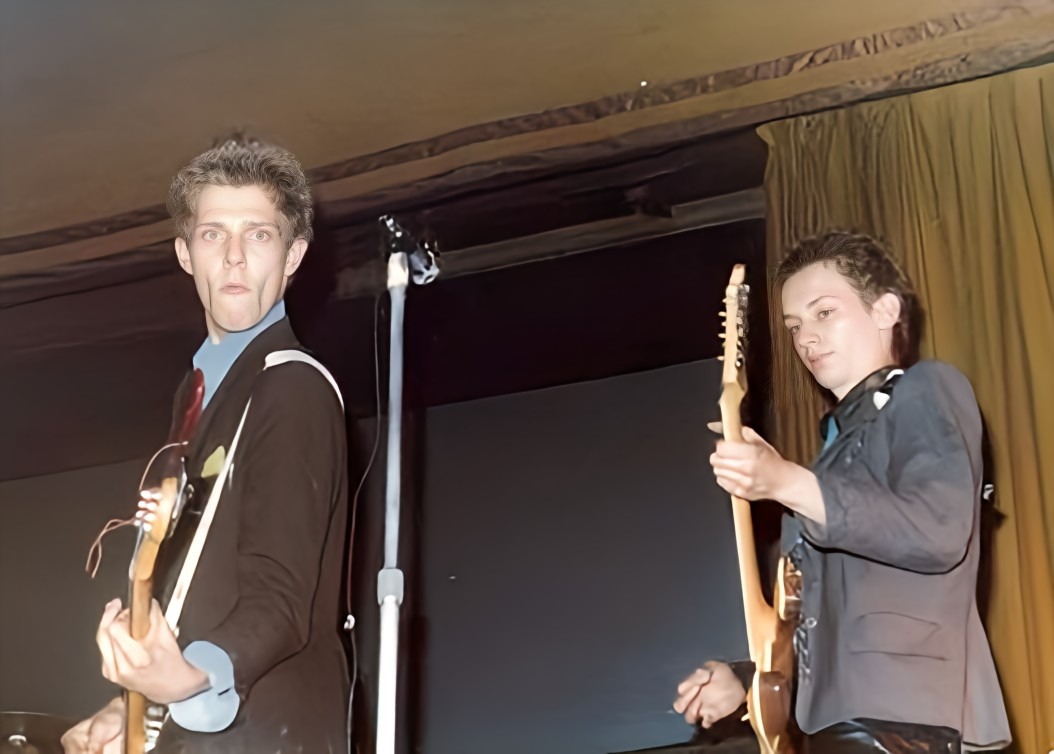
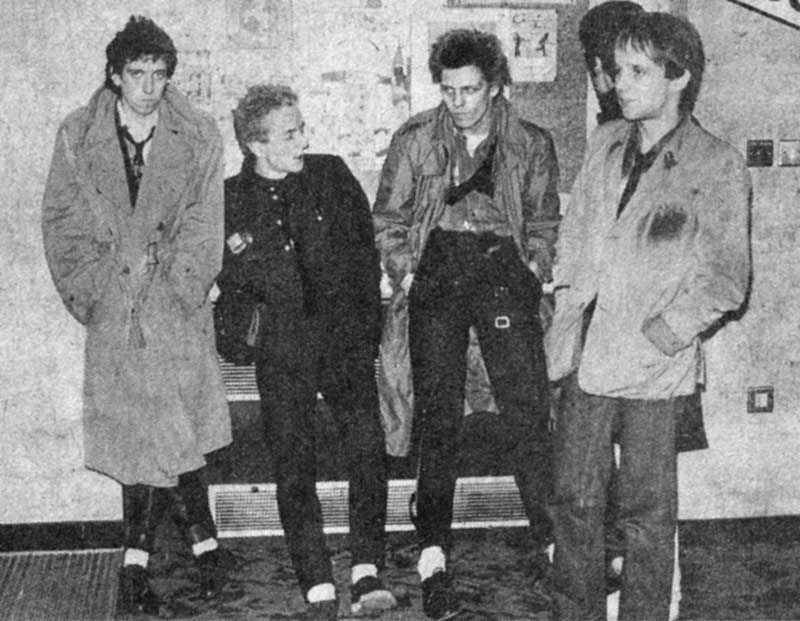
Pictured left, The Clash rehearsing in June 1976 with Paul Buck on drums. Keith Levene, right

In April or May 1976. Mick Jones, Keith Levene and Paul Simonon had the skeleton of a new band. Drake dropped out and a few rehearsals were held with a singer named Billy Watts. Drummer Terry Chimes – another fleeting London SS member – arrived after he was phoned by Rhodes. Watts and Chimes were gone by the time Levene and Rhodes approached the recently Sex Pistols-smitten 101’ers frontman Joe Strummer at a 25 May Pistols gig at the 100 Club to see if he’d join the band they were touting. Despite the imminent release of his band’s debut single “Keys to Your Heart” and the following he had fronting a band familiar on the college and pub circuit, Strummer pitched in with the unknowns and began rehearsing with the new band in the first or second week of June 1976. The final 101’ers show was on 5 June.

During this June 1976 rehearsal period, the as-yet unnamed outfit’s initial drummer was Paul Buck (later in 999 as Pablo Labritaine), who had been at school with Strummer. He left after two or three practices and Terry Chimes was once-again tapped. The line-up settled on Chimes, Levene, Jones, Simonon and Strummer. Finding a name was difficult – amongst those in the running were The Psychotic Negatives and The Heartdrops or Weak Heartdrops (from a Big Youth record). Simonon came up with The Clash. A debut show was booked for 4 July, supporting Sex Pistols sat Sheffield’s Black Swan – on the same day The Ramones debuted in the UK at The Roundhouse. The Sheffield billing was “ex 101’ers.” It was deliberate that, Pistols aside, London’s punk élite would not have a chance to pronounce on the worthiness of the band.

Despite there being no sonic evidence for the Sheffield debut, a little is known about what was played. The band opened with an instrumental titled “Listen” and, according to Pat Gilbert's 2005 book Passion is a Fashion, also played “Protex Blue” and Mick Jones’ Sixties-style beatster “1-2 Crush on You.” The set additionally included 101’ers staples “Keys to Your Heart,” “Junco Partner” and “Too Much Monkey Business” along with a Who cover and The Troggs' “I Can’t Control Myself” (also covered by the early Buzzcocks). A 101’ers hangover clouded proceedings. A retreat to rehearsing followed.

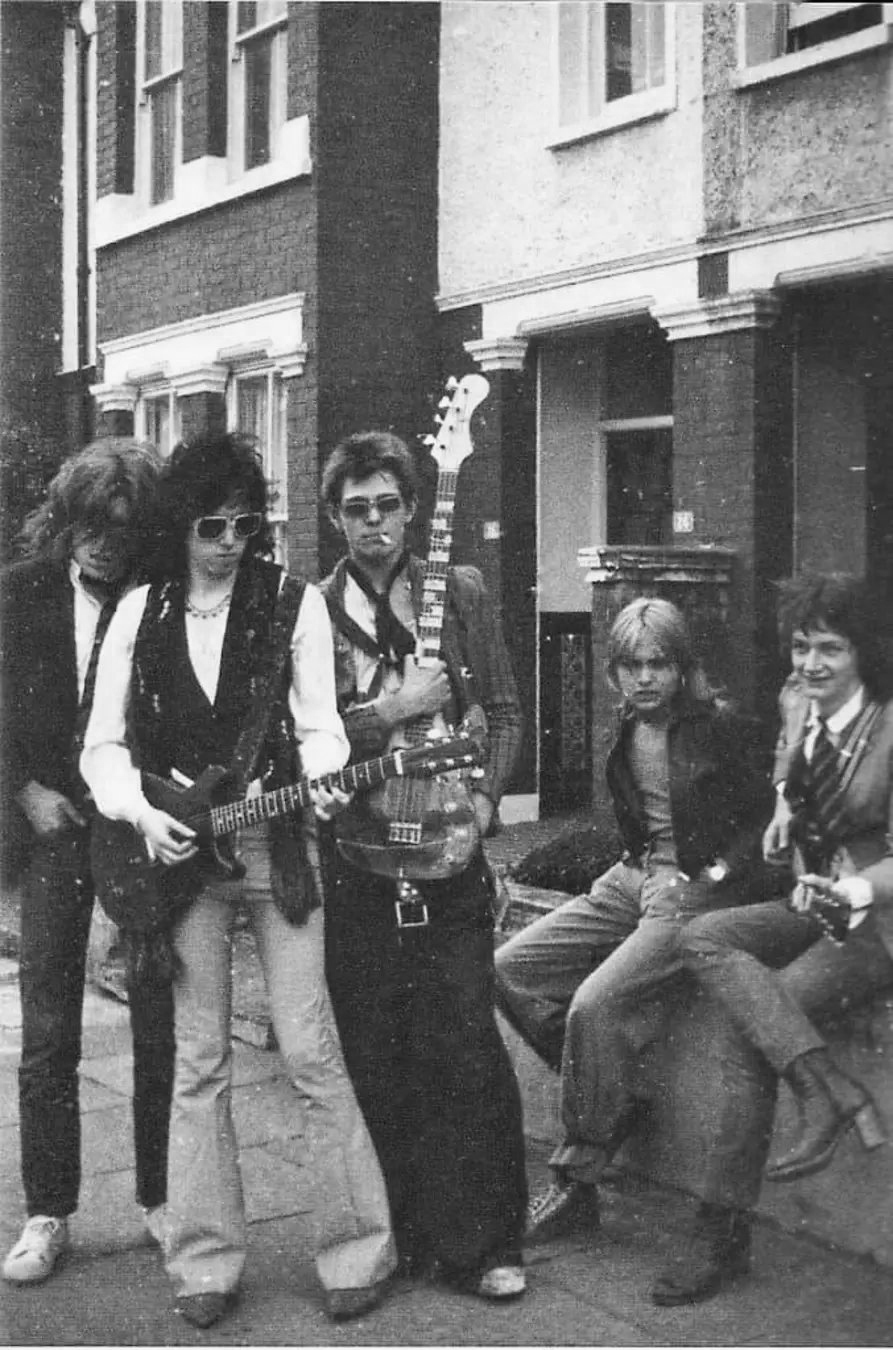
(Pictured right, The Clash rehearsing in late June or July 1976 with Terry Chimes on drums. Keith Levene, second right)

Next up, over a month on, was a showcase at their Camden rehearsal room on 13 August 1976 – an invitation-only event for booking agents, music journalists and record label people. This time, the band had to be sure it had the goods. Despite this being written about by Sounds’ Giovanni Dadomo and the presence of writers Caroline Coon and John Ingham, there is no record of what was performed. However if, as at Sheffield, R&B and 101’ers numbers were played, it would have been noted. Dadomo was thrilled by what he saw, writing “I think they're the first band to come along who'll really frighten the Sex Pistols shitless. Exciting isn't the word for it.”

In the early rehearsals Levene, like Strummer, played a Fender Telecaster. For the showcase and later, he had the more unusual, un-rock Mosrite guitar – perhaps influenced by The Ramones, whose guitarist Johnny also played a Mosrite: Levene had seen them at Dingwalls, near The Clash’s rehearsal studio, on 5 July 1976. The showcase ushered in a new-style Clash.

Focus arrives with the next three shows, the remaining trio Levene played with the band: The Screen on the Green (29 August); The 100 Club (31 August, supporting Sex Pistols for a third time); The Roundhouse (5 September, supporting Strummer’s former pub-rock peers The Kursaal Flyers). All were recorded.

In parallel, there is a written record from the time. The nascent Clash was an object of fascination.

Pictured left, The Clash rehearsing in late June or July 1976 with Terry Chimes on drums. Keith Levene, third right at microphone

On seeing them at The Screen on the Green, NME’s Charles Shaar Murray wrote “a group called Clash take the stage. They are the kind of garage band who should be speedily returned to their garage, preferably with the motor running, which would undoubtedly be more of a loss to their friends and families than to either rock or roll. Their extreme-left guitarist, allegedly known as Joe Strummer, has good moves, but he and the band are a little shaky on ground that involves starting, stopping and changing chord at approximately the same time.” While it’s odd the R&B-favouring Shaar Murray wasn’t aware of Strummer from The 101’ers, this review inspired the future Clash song “Garageland.”

The already converted Giovanni Dadomo was there too. In Sounds he wrote, The Clash “were amazingly good” despite “their equipment [doing] the band a grave disservice tonight, losing Joe Strummer's hard to mix vocals until they became an unintelligible mumble and generally poleaxing the band's nuclear potential.”

Also for Sounds, Chas de Whalley saw them at The Roundhouse and said “At least you can guarantee that any band formed by the 101’ers guitarist Joe Strummer will bristle with fire and energy. Unfortunately at the Roundhouse The Clash had little more on offer.”

Mixed views then. The audio of the Screen on the Green, 100 Club and Roundhouse shows brings a different perspective, especially on how Levene plugged into this new band.

At The Screen on the Green on 29 August The Clash take the stage and spend the first minute tuning up in front of a silent audience. Hardly nuclear. After the fiddling, the set opener is “Deny.” People in the audience start whooping. The live sound is fine. Jones has the rhythm guitar over which Levene superimposes jagged, spidery arpeggios. Next up is the Kinks/Who-style garage rocker “I Know What to Think About you.” Again, Levene is about irregular aural colour. His contributions render the songs off balance despite their relentless forward motion. When the well-known “Janie Jones” arrives, the difference between pre- and post-Levene band is set in stone: not as fast as later, with a metallic ring to the whole sound – not as in heavy metal, but a sharpness. It’s the same with the chugging “What’s My Name.”

Pictured right, The Clash during the 13 August 1976 showcase at their rehearsal room. Keith Levene, right

Two days later, supporting Sex Pistols at the 100 Club, there's the same restraint with the pacing and an equivalent textured approach to the overall delivery. No matter how crude the songs, Levene’s guitar brings a prickliness. “1-2 Crush on You” is more mod-flash Nuggets-style garage rocker than punk in the 1976 or 1977 sense. “What’s my Name” is most interesting as it has a clanging quality which was later lost.

On 5 September, at The Roundhouse, the measured tempo is still a defining feature. As is Strummer’s verbal baiting of the crowd, which doesn’t work: there are catcalls for The 101’ers. In terms of Levene’s presence, his soloing as part of the overall onward thrust brings a spikiness which was lost in the barrage which was later perfected. By accommodating Levene’s guitar, this version of The Clash was a more measured unit than what was on the horizon.

Sex-Pistols-100-Club-Punk-Festival

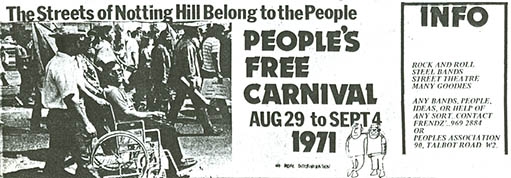
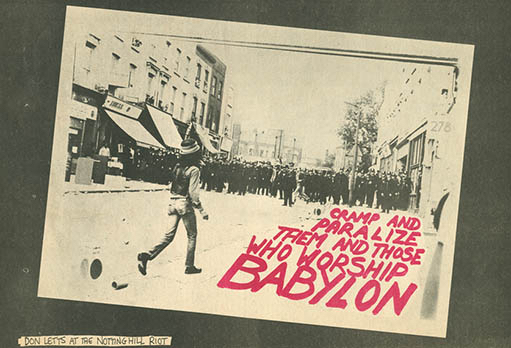
Regular shows and press coverage meant the band was progressing but after late August’s Notting Hill Carnival, which Strummer and Simonon attended, the former turned up at a rehearsal with a new song titled “White Riot.” Levene’s refusal to play a song with so provocative title is one reason he gave for leaving the band there and then. He also said he was increasingly sick of manager Bernard Rhodes’ constant programming-style verbiage and Strummer haranguing him about the band’s mission. He was also tiring of, as he saw it, rock ’n’ roll. Any or all of these resulted in him walking out, leaving his guitar feeding back while leaning on an amplifier.

Within a week or so, on 20 September, The Clash played at 100 Club punk fest without Levene and as a four-piece for the first time – on before Sex Pistols again. “White Riot” debuted as the set opener. The show was recorded and finds the band faster than earlier and more emblematically punch-it-out punk than before. The Sixties garage-rock edge and chiming textures Levene gave the band have already gone. Shows from Birmingham, Fulham Town Hall and The Royal College of Art in October and November 1976 are the same – the band has become The Clash: The Clash which would be caught on their debut album is within reach.

According to The Clash, Levene’s sole legacy was a co-writing credit the first album’s “What’s my Name.” But, as the recorded evidence from live dates shows, when he was on stage with the band in August and September 1976, his effect was to temper the coarseness while bringing an unpredictable edge. It is this sound, his sound, which left an imprint by resonating through the early Subway Sect as heard on their first single “Nobody’s Scared.” A slightly different, more abstract, legacy.

As to what the Keith Levene Clash would have sounded like had they signed to a label and recorded? Nothing they were doing then would have attracted a mainstream imprint. Levene's Clash would have had little chance in finding a wide audience. Nevertheless, Joe Strummer joined as he knew where music was going; after ditching The 101’ers, The Clash was his lunge for the brass ring. And manager Bernard Rhodes was only interested in a major label for his charges. Such a scenario meant there was no place for an individualistic guitarist. If Levene had stayed, he would have become collateral damage. There was no chance of an alternative history for UK punk.

Link -
archived PDF
added July 2024


Miles, "The Clash: Eighteen Flight Rock... and the Sound of the Westway", NME, 11 December 1976.

Eighteen Flight Rock ... AND THE SOUND OF THE WESTWAY - interview with The Clash

...AND THE SOUND OF THE WESTWAY

Interview with The Clash by Miles, published in NME on 11 December 1976. Conducted in the band's rehearsal space near the Roundhouse, the article presents The Clash—Joe Strummer, Mick Jones, Paul Simonon—as an emerging punk group with a strong anti-racist, anti-fascist, and anti-violence ethos.

Miles, "The Clash: Eighteen Flight Rock... and the Sound of the Westway", NME, 11 December 1976.

The Clash: Eighteen Flight Rock...

...AND THE SOUND OF THE WESTWAY

WHAT DO you think people ought to know about you?
Joe Strummer: "I think people ought to know that we're antifascist, we're anti-violence, we're anti-Racist and we're pro-creative. We're against ignorance."
Mick Jones: "We urge people to learn fast."

We are in The Clash's huge, bare rehearsal studio in the railway yard near London's Roundhouse. Singer and guitarist Joe Strummer does most of the talking but Mick Jones, also on guitar, throws in some well-thought-out opinions. Paul Simonon, the bass player, says less. Drummer Terry Chimes isn't there.

Strummer paces the room nervously. He wears boots and a boilersuit painted with abstract expressionist slashes of colour. The group make their own clothes since they are too poor to buy any, transforming jumble sale shirts by painting on words and colours. Anyone can do it.

Joe directs his total attention to each question and I can see the boredom return to his face if I wait too long before asking another, like the shadows of clouds passing over a mountain, always changing. It introduces an un-nerving need for haste in speech and thought.

Mick and Paul seem more relaxed but are equally uncompromising in their answers, caring little for social niceties.

They talk of the boredom of living in the council high-rise blocks, of living at home with parents, of the dole queues and the mind-destroying jobs offered to unemployed school leavers. They talk about there being no clubs that stay open late, of how Britain has no Rock 'n' Roll radio stations, of how there is nothing to do. They speak of how kids who like The Clash will get beaten up because of how they look. Joe has even been thrown out of a pub full of hippies because he has short hair.

I asked how their music was a solution to all this.

Joe leapt at the question: "Our music is a solution to this, because it's a solution for us, number one. Because I don't have to get drunk every night and go around kicking people and smashing up phone boxes which is what Paul used to do. I get my frustrations out on stage and in creating something like clothes or songs.
"Number two is for our audiences, because we're dealing with subjects we really believe matter. We're hoping to educate any kid who comes to listen to us, right, just to keep 'em from joining the National Front when things get really tough in a couple of years. I mean, we just really don't want the National Front stepping in and saying, Things are bad – it's the Blacks... We want to prevent that somehow, you know?"

It was their lyrics which first attracted me to the group – they seemed to be the only people coming right out and singing about how things really are in Britain today for young people. One song in particular summed it up: it’s called "Career Opportunities".

"Career Opportunities / the ones that never knock / Every job they offer you / is to keep you out the dock / career opertunities.
"They offered me the office / They offered me the shop / They said I'd better take anything they'd got. / 'Do you wanna make tea / at the BBC?' / 'Do you wan-na be, do you wan-na be – a cop?'"
"I hate the Army / an' I hate the RAF / You won't find me fighting in the tropical heat / I hate the Civil Service rules and I won't open letter bombs for y-o-u!"

Like Mick says, "These songs couldn't be written in any other year."

Joe: "We want to sing about what we think is relevant and important."
Mick: "We want to bring things to the attention of other people to help them learn faster. That's the important thing... to try and understand what's going down."
Paul: "This group is the pulse of the movement."

Mick is from Brixton. "I ain't never lived under five floors. I ain't never lived on the ground. Now I'm in Paddington. I'm on the 18th now." He still lives at home.

Joe: "We got a song called 'London's Burning With Boredom' and we wrote it on the 18th floor, didn't we?"

Mick: "You can see the Westway. It's a celebration of the Westway..." (an enormous inner London flyover – the Notting Hill riots took place beneath it).

"Up and down the Westway / In and out the lights / What a great traffic system / it's so bright / I can't think of a better way / to spend the night / than speeding around / underneath the yellow lights / London's burning with boredom, baby / London's burning down, 999 999.
"Now I'm in the subway / looking for the flat. / This one leads to this block / and this one leads to that. / The wind howls through the empty blocks / looking for a home / But run through the empty stone / because I'm all alone."

Mick explained how he sees the difference between punk rock and reggae. The music of The Clash has the emphasis on rhythm, just like reggae but: "they all come from a sunny Caribbean island, right? They're all laid back. But our speed is the Westway speed."

"The speed of a car going down the Westway..." adds Joe.
Mick: "...ours is like, the only thing that's speaking for young white kids."
Joe: "We listen to reggae, we get a lot off Blacks, right."
Mick: "We know they've got their thing sewn up. They're it. They got their own culture but the young white kids don't have nothing. That's why so many of them are living in ignorance and they've just gotta wise up."

I told Joe some people had thought that the lyrics to their song "White Riot" were racialist. Joe lunged at the remark like a Doberman Pincher: "They're not racist! They're not racist at all! I'll tell you the verses, right? It goes:

"Black people got a lot of problems / but they don't mind throwing a brick. / But white men go to school / where they teach you how to be thick / So everybody does what they're told to / and everybody eats supermarket soul food."

"The only thing we're saying about the Blacks is that they've got their problems and they're prepared to deal with them. But white men, they just ain't prepared to deal with them – everything's too cozy. They've got stereos, drugs, hi-fis, cars..."

Mick: "We're completely antiracist. We want to bridge the gap. They used to blame everything on the Jews, now they're saying it about the Blacks and the Asians... everybody's a scapegoat, right?"

Joe: "The poor blacks and the poor whites are in the same boat... They don't want us in their culture, but we just happen to dig Tapper Zukie and Big Youth, Dillinger, Aswad, and Delroy Washington. We dig them and we ain't scared of going into heavy black record shops and getting their gear. We even go to heavy black gigs where we're the only white people there.
"We'd just like to bridge the gap between the two things. I'd like to have black people coming to hear us, right, but primarily we gotta be concerned with young white kids because that's what we are. But we ain't nothing like racist, NO WAY."

On stage The Clash are dynamite, a continuous buzz of pure energy. They play for 45 minutes but it seems like 30.

Joe: "We don't want to be indulgent. We take a certain song and we do the subject for what it's worth and then we get on with the next one. We don't hang about."

Some people have made the connection between the high energy output of the punk rock groups and violence. The Clash rise up united. The kids, they say, just feel really bored and frustrated, get really drunk and then become violent.

Mick: "But we ain't advocating it. We're trying to understand it... It ain't hip. We definitely think it ain't hip. We think it's disgusting to be violent." He recalled their recent gig at the ICA where Jane cut up Shane's earlobe: "On that gig, it put me an' you off, didn't it? I mean, when I came off stage I didn't feel particularly good."

Joe: "But it's energy, right? And we wanna channel it in the right directions."

Paul Simonon had the words "Creative Violence" stencilled on his painted boilersuit. Since I wanted to know about violence Joe explained further: "Suppose I smash your face in and slit your nostrils with this, right?"

Joe has been opening and closing his flick-knife throughout the interview. He holds it close for me to see.

"...Well, if you don't learn anything from it, then it's not worth it, right? But suppose some guy comes up to me and tries to put one over on me, right? And I smash his face up and he learns something from it. Well, that's in a sense creative violence.
"And this sort of paintwork is creative violence too, right?" He points to Paul's white stencils and clashing colours.

Coming from the concrete jungle, they see society disintegrating, but instead of sitting back like Bowie and waiting for fascism to arrive and "save" them, they are fighting back. When Paul Simonon named the band The Clash, he meant it:

"In 1977 / There's knives in W11. Ain't so lucky to be rich. / Sten guns in Knightsbridge / Danger, stranger, you'd better paint your face / No Elvis, Beatles or Rolling Stones in 1977."

All lyrics © 1976 The Clash
© Miles, 1976

Expand image – or PDF


Caroline Coon, Originally published in Melody Maker, November 1976. Reprinted in The Guardian.

Joe Strummer: "I shudder to think what would have happened if I hadn't gone to boarding school"

– This early interview profiles Joe Strummer, Mick Jones, Paul Simonon, and Terry Chimes of The Clash at the height of their emergence from London’s punk underground. Conducted at the band’s cold rehearsal space.

– Strummer reflects on his strict upbringing and how it shaped his resilience, Paul and Mick discuss broken homes, criticize the failures of the hippie movement

Joe’s time in boarding school to Mick’s fractured home life and Paul’s years hustling at Portobello Market are used to explain their urgency and commitment.

– Gigs, fashion, violence, social policy, and their creative ethic, it captures The Clash at their most raw and idealistic, poised to reshape British music and culture.

The ICA Incident and The Clash’s Anti-Violence Stance, band condemns violence at gigs, emphasizing creative outlets over aggression.

Melody Maker --- November 1976 --- reprinted in the Guardian

Joe Strummer: "I shudder to think what would have happened if I hadn't gone to boarding school"

Three weeks ago at London's ICA, Jane and Shane, regulars on the new-wave punk rock scene, were sprawled at the edge of the stage. Blood covered Shane's face. Jane, very drunk, had kissed, bitten and, with broken glass, cut him in a calm, but no less macabre, love rite.

The Clash were not pleased. "All of you who think violence is tough – why don't you go home and collect stamps? That's much tougher," roared Joe Strummer. Then he slammed into the band's anthem White Riot:

"All the power is in the hands / Of people rich enough to buy it / While we walk the streets / Too chicken to even try it / And everybody does what they're told to / And everybody eats supermarket soul-food / White Riot, I wanna riot / White riot – a riot of my own!"

The song, played with the force of an acetylene torch, is no less politically uncompromising than other numbers in the band's repertoire – songs like Deny, Protex Blue, Career Opportunities, and 1977. To hammer home their impact, The Clash play with enough committed force to bring down the walls of Babylon, Jericho, Heaven, and Hell if necessary. And their audiences go wild.

But far from wanting people to hurt each other, Joe Strummer (vocals, guitar), Mick Jones (guitar), Paul Simonon (bass), and Terry Chimes (drums) insist that their aim is to shake audiences into channelling their frustrations into creative outlets. It's difficult, however, trying to maintain a balance between positive reaction and violence.

How easy it is, though, when you examine The Clash's background – one only too similar to that experienced by thousands of young people who identify with new-wave rock bands – to explain their emotional intensity.

Aware that, like the rest of the band, he'd rather not talk about his childhood, I asked Joe (22) where he came from. "That's the trouble, see."

He speaks fast, using words economically. "The only place I considered home was the boarding school, in Yorkshire, my parents sent me to. It's easier, isn't it? I mean it gets kids out the way, doesn't it?" Then he adds defiantly: "It was great! You have to stand up for yourself. You get beaten up the first day you get there. And I'm really glad that I went because I shudder to think what would have happened if I hadn't gone to boarding school. I only saw my father twice a year. If I'd seen him all the time I'd probably have murdered him by now. He was very strict."

While Joe is talking, Paul (20) is sitting next to him pointing and shooting a realistic, replica pistol – bang – at the posters on the walls – bang – at Mick across the room – bang – at Gertie the roadie's dog – bang, bang – anywhere at all.

"I get on all right with my parents," he says. "But I don't see them very much. They split up when I was eight. I stayed with my mum but I felt it was a bit soft with her. I could do whatever I liked and I wasn't getting nowhere so I went to stay with my Dad.
It was good training because I had to do all the launderette and that. In a way I worked for him – getting money together and that – down
Portobello Market and doing the paper rounds after school. It got me sort of prepared for when things get harder."

Paul liked school. "I never learned anything. All you done is play about … there were 45 in our class and we had a Pakistani teacher who didn't even speak English."

Mick (21, like Paul) comes from Brixton. His father is a taxi driver and his mother is in America. "They kind of left home one at a time," he says. "I was much more interested in them than they were in me. They decided I weren't happening, I suppose. I stayed with my gran for a long time. And I read a lot. Psychologically it really did me in. I wish I knew then what I know now. Now I know it isn't that big a deal. But then, at school, I'd sit there with this word 'divorce, divorce' in my head all the time. But there was no social stigma attached to it because all the other kids seemed to be going through the same thing. Very few of the kids I knew were living a sheltered family life."

When he was 16, Mick believes he had two choices – football or rock'n'roll. He chose rock. Why? "Because he couldn't afford toilet rolls," quips Joe. Much laughter. Mick explains: "I thought it was much less limiting. And it was more exciting, and I got into music at a very early age. I went to my first rock concert when I was 12. It was free, in Hyde Park and Nice, Traffic, Junior's Eyes and The Pretty Things were playing.
The first guitar I had was a secondhand
Hofner. I paid 16 quid for it and I think I was ripped off. But, I tell you something – I sold it for 30 to a Sex Pistol." Everyone laughs again, gleefully.

Laughter is a cheap luxury when, like The Clash, you never have the money for a square meal and when, like Joe, you live in a squat – or like Paul, you "crash" in your manager's vast unheated rehearsal room (where this interview took place) with no hot water or cooking facilities.

After Paul and Mick left school, they both eventually ended up as casual art students. Mick was already in a group when a friend of his dragged Paul down to a rehearsal.

"The first live rock'n'roll I can remember seeing was the Sex Pistols, less than a year ago. All I listened to before then was ska and bluebeat down at the Streatham Locarno. But when I went to this rehearsal, as soon as I got there Mick said: 'You can sing, can't you?' And they got me singing. But I couldn't get into it. They were into the New York Dolls and they all had very long hair so it only lasted a couple of days."

Ten days later however, Paul had "acquired" a bass guitar, Mick had cut his hair, and they had formed a group called The Heartdrops (although The Phones, The Mirrors, The Outsiders, and The Psychotic Negatives were also names for a day).

Then, walking down Golborne Road with Glen Matlock of the Sex Pistols, they bumped into Joe.

The meeting was auspicious. "I don't like your group [the 101ers]," said Mick. "But we think you're great."

"As soon as I saw these guys," says Joe, "I knew that that was what a group, in my eyes, was supposed to look like. So I didn't really hesitate when they asked me to join."

How did Joe first get into a rock'n'roll band?
"Because I owned a drum kit. Someone gave me a camera and then I met this guy who had a drum kit in his garage and I had a go on it one day. And I thought: 'This guy's going to swap me this little camera for all that kit.' And I said, 'Here you are.'
Then I went down to
Wales and I ran into a band who had a drummer but no drum kit. But I didn't want to play drums because I wanted to be the star of the show, right? So I said: 'If you use my drum kit you're going to have me as your singer.' And they had no option but to accept."

Before Joe joined the band they were called Flaming Youth. He changed their name to The Vultures. They did six gigs before Joe decided to come back to London to form The 101ers.

Joe broke up The 101ers directly as a result of seeing the Sex Pistols. A few months ago he told me:
"Yesterday I thought I was a crud. Then I saw the Sex Pistols and I became a king and decided to move into the future."

Today he says:
"As soon as I saw them, I knew that rhythm and blues was dead, that the future was here somehow. Every other group was riffing their way through the Black Sabbath catalogue. But hearing the Pistols I knew. I just knew. It was something you just knew without bothering to think about."

What is it about punk rock which is so important to Joe?
"It's the music of now. And it's in English. We sing in English, not mimicking some American rock singer's accent. That's just pretending to be something you ain't."

Continues Mick:
"It's the only music which is about young white kids. Black kids have got it all sewn up. They have their own cultural music. Basically young white kids are relying on a different time to provide for their kids."

But what's so different about youth today, then? Silence. Joe stands up and, relishing the drama, he turns to reveal the stark, hand-painted graffiti on the back of his boiler suit.
HATE AND WAR glare in red and white across his shoulders. It's the hippy motto reversed.

"The hippy movement was a failure," is Joe's explanation. "All hippies around now just represent complete apathy. There's a million good reasons why the thing failed, OK. But the only thing we've got to live with is that it failed.
At least you tried. But I'm not interested in why it failed. I'll jeer at hippies because that's helpful. They'll realise they're stuck in a rut and maybe they'll get out of it."

The pervading, resentful feeling on the New Youth Front is that the older generation, squandering the opportunities of the rich 60s, has left them with the shell of a disintegrating society. One of the reasons drummer Terry Chimes is notable for his absence is that he is having a serious argument with Joe. Terry wants to "get out" of the country while there's still time. Joe thinks he should stick around to see IT – the political chaos they see as inevitable – through.

What do they feel about society today?
"It's alienating the individual," says Mick. "No one gives a shit about you."

Says Joe:
"There's nowhere to go. Nothing to do. The radio's for housewives. Nothing caters for us. All the laws are against you. Whoever's got the money's got the power. The Rent Act's a complete mockery. It's a big joke. I just have to fuck off into the night for somewhere to sleep."

Adds Paul, with feeling:
"At the moment what the government should do is put licenses on clubs so that kids can have somewhere to go. But they're clamping down on all that. But it's great because there's going to be kids on the streets. And they're going to want something to do. And when there ain't nothing to do you wreck up cars and that.
The situation that is beginning to happen now is their fault. If we end up wrecking the place it's the Government's fault. They'll bring back National Service and we'll all be sent down to
South Africa or Rhodesia to protect white capital interest. And then we'll all be slaughtered..."

They may knock society, but they're all on the dole, aren't they?

Joe: "Yeah. We get a little freedom from social security. Otherwise I'd have to spend 40 hours a week lifting cardboard boxes or washing dishes, or whatever I done in the past.
But because we're on the dole – which is £9.70 a week – I can get a rock'n'roll band together.
If I got up at 4am and went to
Soho and joined a queue I could get a job as a casual washer-upper. That's the other opportunity I've got. Or the opportunity to work in a factory!"

But someone’s got to work in a factory?

Mick: "Why have they? Don't you think technology is advanced enough to give all those jobs over to a few people and machines?
There's a social stigma attached to being unemployed. Like 'Social Security Scroungers' every day in The Sun. I don't want to hear that. I cheer them. You go up north and the kids are ASHAMED that they can't get a job."

Aren't they being rather pious when all they are doing is playing in a rock'n'roll band?

Paul: "No. It's the most immediate way we can handle it. We can inspire people. There's no one else to inspire you. Rock'n'roll is a really good medium. It has impact, and, if we do our job properly then we're making people aware of a situation they'd otherwise tend to ignore. We can have a vast effect!"

Oh yes, I jibe, rock stars have usually started out saying they're going to change everything.

Joe reacts first:
"But you learn by mistakes. The Rolling Stones made mistakes. But I want to do something useful. I'm not going to spend all my money on drugs.
I'm going to start a radio station with my money. I want to be active. I don't want to end up in a villa in the south of
France watching colour TV."

Do they want money, then?

Paul: "Yes. Money's good because you can do things with it. Bands like the Stones and Led Zeppelin took everything without putting anything back. But we can put money back into the situation we were in before and get something going for the kids our own age."

Not that there are any profits at the moment – which completely belies the resentment in some quarters that these new-wave bands are "having it easy, and don't deserve all the exposure they're getting."

Apart from playing such – as Mick Jones himself so aptly puts it – "wonderfully vital" music, which deserves all the encouragement it can get, these bands are struggling harder than ever to stay on the road.

Joe: "We make a loss at every gig. It's the promoters who we want to attack. I bet you can only name one or two who really care about music and I'm amazed that there isn't one that really cares about what's happening at the moment. We're really having to get down on our knees and grovel for venues."

No doubt life will be easier when The Clash sign the contract dangling under their manager's nose. They are more politically motivated than The Damned, perhaps more musically accessible than The Pistols. Their lovingly painted clothes (the same on and off stage, of course), which are acrylic-spattered with the ferocity of a Jackson Pollock action painting, have started one of the most creative fashion crazes of the year.

And their acute awareness, and ability to articulate the essence of the era which inspires their music, will ensure that their contribution to the history of rock is of lasting significance.

Website or archived PDF


Jonh Ingham, "In Love with the Modern World," SOUNDS, 9 October 1976, Punk Rock Special, pp. 22–28, 7 pages

Welcome To The Rock Special #1
In Love With The Modern World

– (Sid Vicious) "I don't understand why people think it's so difficult to learn to play the guitar. I found it incredibly easy. You just pick a chord ... "

– Profile and scene report featuring The Sex Pistols, The Clash, The Damned, Buzzcocks, Siouxsie and the Banshees, Eddie & The Hot Rods, Subway Sect, Eater, and The Vibrators. © 1976.Redefining Punk Rock

– Jonh Ingham challenges the label "punk rock" and highlights the rise of a new, working-class music movement, the Birth of a Scene at the 100 Club, Kings Road, Punk Fanzines and how Mark P. and Steve Mick captured punk’s spirit.

The Sex Pistols' rise, their confrontations with the music industry, and their uncompromising ethos, The Clash: Moving into the Future with a profiles of Joe Strummer, Mick Jones, and crew as they define political punk and DIY aesthetics, Ingham reflects on punk’s explosive growth and unpredictable future.

Page 22 --- SOUNDS --- 9 October 1976 --- Profile by Jonh Ingham --- 7 pages

Welcome to the (?) Rock Special

In love with the modern world

I WAS hoping to avoid mentioning the bloody word at all, but since SOUNDS has so adamantly advertised this shebang as a Punk Rock Special, I guess there's no avoiding it. In the context of the band and people mentioned in the following pages, I hate the word as much as they do. For a start it's (rock) historically inaccurate. Punk rock as a genre in the mid-60s, composed of American garage bands trying to duplicate or better their English fave raves like the Yardbirds and Them, has no correlation with the viciously original music of the Sex Pistols or The Clash or The Damned.
As an attitude there's basis for discussion, but consider Mark Pin Sniffin Glue 3:
“You get the feeling at Pistols gigs that everyone's posing so they can't really be punks can they? Punks are carefree, and I mean completely... you know, like a football who kicks in someone's head and don't care a shit. Yer, the Pistols crowd are not punks, they're too vain. But what's wrong with that so am I.”
John Rotten half-seriously favours "anarchy rock."
Paul Morley in his fanzine Out There wants “s rock.” That's 's' as in 'surge'.
The Jam mentioned the "punk rock (?) scene."
Slouxsie from the Banshees reckoned that should have been (?) rock.
And so it shall.

In April, John Rotten wanted "more bands like us" — well now he's got them. Each week during their residency at the 100 Club, more and more of the audience have felt the urge to create their own excitement, live out their rock and roll fantasies, get on that stage, have an audience looking at them. Each week sees new requests for satisfactory bassists and drummers (of which there is a sore need), cheap instruments and cheap or free rehearsal rooms. It has to be cheap or free because most of them are unemployed, and living on £11.10 a week doesn't leave much spare change for guitar and amp payments. But that doesn't lower the buzz of world-be rock stars organising themselves for action.

The bands in the following pages aren't necessarily inspired or influenced by the Pistols, but they do share (with one exception) youth, the belief that old farts like the Stones, Beatles, Yes — in fact, the entire pantheon of rock aristocracy — should have been carted off to the euthanasia centre years ago, and, for the first time in rock, a background that is 99% working class.
It's gratifying and exciting that The Damned and The Clash share almost no musical similarities either with the Pistols or each other — the more experimentation the better — and it's equally exciting that while the groups jibe about each other's demerits, the audience is judging and accepting each new group on its own terms. (It should be mentioned that the jibes are seldom in earnest. When did you last see or hear of the Stones et al loaning their equipment to other bands or tuning the guitars for musicians so fresh they can't do it themselves? Yet that attitude of help and cooperation was commonplace among the bands at the 100 Club Punk Festival.)

On the other side is the music industry. As the Sex Pistols gigs have changed from private party to public celebration, the A&R men, agents, and even managing directors have walked into the 100 Club to weigh the band and their prospective future. I keep saying 100 Club because no other London club (with the initial exception of the Nashville) has wanted to give them the chance to develop what is obviously a departure from the past. (You need only look at the audience to begin seeing that.)

That repressive attitude permeates most of the industry boffins. Ten and twelve years ago they were telling the old farts in power to take their Dennis Lotises and Lita Rosas and slope off into the sunset; now they're the old farts, unwilling to give any time or encouragement to youth who want to do things that might threaten their power and position. Even though it is those same youths who will be providing the record industry with its means of survival and profit over the next ten years.

The comments of some of these influential industry people can be found further on. It is worth remembering that these people with their fingers on the pulse are evaluating the Sex Pistols and the whole scene in the context of record sales being 40% lower than last year. Most of them prefaced their comments with variations of, "Oh hmmm... How can I put this?"

But while the industry stands by the bar and tries to determine the minimum amount they could spend on the band in the hope that it took off without the company having to actually commit itself, the audience leaps and bounces and doesn't give a shit about commerciality or whether 'Anarchy In The UK' has chart potential. They're present for excitement and a good time, and they can tell you why in highly articulate terms.

Interestingly, as the audience continues to grow, the new fans assume the trappings of the original audience. In the Ladies toilet, for instance, three immaculate Pistols fans of three weeks standing are applying makeup and grooming their newly short hair. Leaning against the wall in brogues and a Dannimac, is long-haired, 18-year-old Mary from Plumstead. She has been trying to make a gig for ages and she is watching the other three girls with open admiration. When Mary goes to her next Sex Pistols gig, you know exactly how she will look.

JONH INGHAM


"I didn't even know the Summer Of Love was happening. I was too busy playing with my Action Man."Sid Vicious


THE AUDIENCE

YOU SEE them on Kings Road on Saturday afternoons. They look different. Longhaired youths in their flares and platforms turn and stare; tourists laugh and jabber among themselves, aiming expensive cameras for the folks back home; local residents of several decades standing look bemused or shocked and shake their heads with resignation.

Could their attention be focussed on the bright pink hair? Or the blue hair? Or green, mauve or yellow hair? Perhaps it's the rubber stockings or seamed fishnet stockings, or the shiny black stilettos with bondage overtones. Perhaps it's the sheets of PVC rubber safety-pinned into t-shirts, or is it the ripped t-shirts, the baggy pants ending in tight cuffs, the winkle-pickers, the weird shades?

Maybe the "couture" look favoured by some of the more steadily employed has stopped them short. At Sex one can choose from trousers with vinyl pockets and zips on the arse, outrageously oversized fall-apart sweaters, studded belts and wrist straps, anarchy shirts with hand-painted stripes and Marx and swastika patches and CHAOS armbands, and the Sex staple, t-shirts printed with everything from the Cambridge rapist's mask to the naked young boy that is the Sex Pistols' logo and of course, out-and-out bondage apparel.

Up the road, Acme Attractions are denuding any warehouse still possessing early 60s fashion — you want an original Beatles suit? Look no further. The only thing out of step with Swinging London: the booming reggae on the sound system and the perennial dreadlocked yout's grooving to the beat.

Between the two emporiums, Retro caters to all decades.

These people, this technicolour parade that owes no allegiance to any fashion or trend except that which they create themselves, this group that has uncompromisingly treated the 70s as the 70s, are the ones variously described as "folks in Bizarre Costumes" (Charles Shaar Murray) and "garishly designed night creatures" (Giovanni Dadomo). But as Bo Diddley said some cons ago, "you can't judge a book by the cover."

On a recent Saturday Steve celebrated his 21st birthday. He and his 19-year-old friend Siouxsie had spent the afternoon shopping and now, as midnight approached, picked their way through the Soho puddles towards Louise's, treating the staggering, pissing drunks with the same indifference as the rain.
The drunks laughed and tried to think of insults, but that was normal for straights. Steve hated them, because they refused to accept him for what he was. He didn't try to do anything about the funny way they looked, but they were always going on about the super-hero peroxide flashes gracing the sides of his jet black hair or his choice of sartorial correctness. Especially in Bromley, where he lived. Especially schoolgirls.
It was a good thing, probably, that Siouxsie was wearing her polka-dot plastic mac.

Louise's used to be an almost exclusively lesbian club but has graciously expanded to accommodate the leading edge of 70s youth and their pansexual tastes. In the reception Siouxsie removed her mac, revealing a simple black dress with a plunging V neckline, black net loosely covering her pert breasts. A home-made swastika flash was safety-pinned to a red armband. Black strap stilettos, studs gleaming, bound her feet; fishnet tights and black vinyl stockings her legs. Her short black hair was flecked with red flames.

Steve was still wearing the same clothes — the white shirt daubed with paint and a Union Jack pinned over the right breast, black drainpipe slacks and winklepickers — he had worn on stage at the 100 Club the previous Monday night when he had played bass with Siouxsie, Sid Vicious and Marco, also known as Siouxsie and the Banshees. He had first picked up a guitar the previous afternoon.
"I don't know why I did it, I just knew I wanted to before I was 21."

It was also Siouxsie’s first stage appearance.
"I'd always wanted to be on a stage... I was a bit nervous at first but when I saw everybody enjoying it, I enjoyed doing it. I think they considered it a joke.
"I've always gone around being looked at so I thought perhaps I should go on a stage and exploit it.
"I also had singing lessons," she added archly. "When I was about 16. I really wanted to do singing and I practised a lot and made cassettes and I dunno... I went to some interviews from Melody Maker ads, record producers looking for singers, and it really put me off. They made me think I'd have to become a classical type singer to be popular—"
"Dana," smirked Steve.
"—So that the general public would like you. They gave me the impression that everyone who makes it has to sleep around. The fact that I could get work by that and be paid for it and nothing be expected of me (professionally), that was, you—"

They moved inside. Downstairs was non-stop dance-arama. Upstairs, in the fire-engine red room flanked by the bar and a wall of great posing mirrors, the party got underway. Most of Steve's friends — known for convenience's sake as the Bromley contingent — were there, all Sex Pistols fans of long persuasion, all looking just as much a part of the present as the Pistols, who were also there.

Most of the Bromley contingent owe their discovery of the Pistols to Simon (age 19), who witnessed an early gig at Ravensbourne College of Art last December. "I was almost the only person applauding."

Simon looks like the one established rock star he, or anyone else present for that matter, still rates — Bowie. Siouxsie, in fact, was inspired to perform because of Ziggy Stardust.
"He's the only singer who's managed to keep up by changing and not stay the same... get old."

Their other tastes are what you would expect: Lou Reed, the Velvets, the Stooges — in many instances discovered through Bowie's involvement — and old Stones, Who, Small Faces, and offbeat soul tracks. They took to the Pistols because of the energy, and "they had guts to them, in the music and by being on stage" (Steve), and "they were different" (Simon), and "they were young" (Siouxsie). The only other 70s artists to so far make the grade are the Ramones and Jonathan Richman, who Siouxsie credits with a new concept of love songs:
"They're not mushy, they're more fair."

Though some of the new, post-Pistols English bands are viewed favourably, Simon has definite ideas about the icons the Pistols are smashing, as well as the ones they're establishing.
"It's really funny all those kids shouting out anarchy and half of them don't know what it is. I agree with..."

Johnny Rotten, The Clash, The Damned and a committed cast of hundreds of new music makers give the finger to the old farts.
"…anarchy, but I was like that before the Pistols. People are always telling you what to do and it's always old people telling young people. If you're going to be told what to do it should be from young people. That'll never happen, so you've gotta have anarchy. There's no way old people are going to just sit back, they're just going to tell young people to do too much. It's like all those old people trying to stop the Pistols thing. They're like parents."

He sneered, and took a sip of champagne.
"This nostalgia thing. I don't like it. First the 40s, then the 50s, then the 60s. Why no 70s? I think everything was moving so fast in the 50s and 60s that it just couldn't go on, but instead of slowing down it ground to a halt.
"I never took that much notice of hippies. I liked things that really took the piss out of it, like Frank Zappa, but then he went all serious. As people get older they just act older, don't they? Want to be taken seriously. Stupid."

"Flowah powah," mocked Debbie, sitting next to him. Debbie is 15. "I don't remember that long ago," she laughed. "I remember Woodstock."

"It was so weak and stupid," continued Simon, "And they believed it. To try and change things with flowers; if you get beaten up you've got to retaliate. I really think that violence is the only way. If you're going to change the world you've got to use violence — not beating people up, but destroying property. It doesn't matter if you protest — it's property that really counts. As soon as there's damage they take notice. If the IRA had only done buildings and not people...
There was a really good feeling at first, people wanting a united Ireland, but the minute they did people — they're not opponents any more, they're murderers.

"I want to stop older people telling young people what to do. I'm young and everything I do there's some arseholes telling me I'm wrong. There are a few exceptions — they're alright.
But I don't think anyone will bother, will they? To use violence. They're too lazy, aren't they?"

Steve's view is far more succinct. "There'll only ever be anarchy in the 100 Club," he laughed. He also believes in love. "But I don't believe in devotion, thinking that someone or something is the only thing there. I'm interested in marriage, but not in the traditions and the possessiveness. It's just for a laugh."

They drained the champagne. Vivien Westwood, seditionary and Sex mastermind, bought another bottle for the birthday man. Debbie, changed into a black leotard and red leggings, went downstairs and danced. Her hair was cut in a modern interpretation of a 50s flat-top. In the past it had been sprayed every colour of the rainbow, now it was blonde. Since all the other girls at her school were starting to crop their hair, hers was growing out.

But she isn't what the demographics experts call an opinion-former among the mostly Jewish, middle-class teenage femininity that constitutes her peer group in suburban Burnt Oak, where she lives.
"You're joking?!? At first they really had something against me. Now they sort of take it. Laugh. They're into what I was into three years ago. Clumpy shoes. What gets me is something will come out and if one person gets it, then they all get it. They're just like clockwork.
"I bought some plastic sandals a couple of years ago, and they really laughed at me, but now everyone's getting them and they turned around to me and said, 'Why don't you get a pair?' They forget that they used to laugh at you. You get used to it."

The party carried on.


Page 24  (?) Rock Special

Fanzines

"I may be sounding dramatic but I wanna go out and hear the sounds that I like every night. I wanna have to choose what gig to go to. We need somethin' happening daily, if it don't get that way we can forget the whole thing right now!"Sniffin Glue 3

MARK P., 19, had worked in a bank in Deptford for two years and read the music papers every week. He was nurturing this idea, sparked by a Lenny Bruce sketch about aeroplane glue. Then he read a record review by Nick Kent, whose opinion he respected, and rushed out and bought The Ramones. On it was the chain-saw-sharp song, Now I Wanna Sniff Some Glue. Sparks flew. Two weeks later his rock fanzine Sniffin Glue was on the streets.

Although he had eclectic tastes — reggae, Little Feat, Bowie — the continual need for an energy fix caused him to rave in its xeroxed pages about Eddie and the Hot Rods, BOC and (natch) the Ramones. He wore flares and shoulder-length hair and, strictly in keeping with Sniffin Glue's spirit, it was punkish enough to rate glue a better high than acid because it destroyed more brain cells. He also relished the put-on.

In July he saw the Sex Pistols. His hair semi-short. Sniffin Glue 2 was under way. He kept returning to the 100 Club, hacking his hair ever shorter with a pair of K-Tel clippers, adapting drainpipes. ("You just can't help getting into it!" he wrote in SG3.) A band he discovered were renamed The New Beatles, and a four-song showcase was plotted for tunes like You're A Dirty Poser (the lyrics to be spontaneously made up by describing prominent cases in the audience) and We Don't Want No Anarchy ("We just wanna sing out of key"). He left the bank.

By the time SG3 was in preparation, he had appointed former school friend Steve Mick co-editor. The two fed off each other — who else would confront Johnny Rotten with the supposition that he only wrote Anarchy In The UK in order to sell Sex's anarchy shirts?

"If they sing about anarchy Rotten can't do nuffin' about it," asserts Mark. "He's a singer. Rock and roll bands are never going to change anything on that level. If they were so concerned with anarchy—I mean, contracts with a major record company and all that business. Fuckin' 'ell. They want to make money as a rock and roll band."

Sniffin Glue 3 represented a major leap, with a photo cover and The Damned's first interview, littered with photos and contact strips, and still xeroxed. But it's the writing that grabs the attention. Mark has an enviable ability to muck in with the action while simultaneously retaining an objective viewpoint that is unfailingly accurate, while Steve has the benefits of a first-year English Lit. course (he maintains he only went to college for the exercise afforded by the daily three-mile walk) to draw from.

Unfortunately, they feel SG is already too successful.
"There's all sorts of business," sighs Mark. "I don't like all that, but I've got to get used to it. I don't write it for people to read, I do it because it's so easy to write. I like people coming up and saying, 'You've got a great mag.' I like to pose like anyone else."

But success can't stop them. Only a week after the 100 Club Punk Festival, SG3½ had hit the streets with a fine critique of the two days. Print run was 10 copies, since they couldn't afford more. (Or as the blurb under the title says, "This issue is rare... Rip it up and it'll be rarer!")

What can the future hold for such men?
Mark: "I'd love to be a singer ... every record, I used to make out I was the artist. Best Bryan Ferry take-offs ever, I do."
Steve: "I told the college I wanted to be a leader of men."


"The great ignorant public don't know why we're in a band – It's because we're bored with all that old crap. Like every decent human being should be."John Rotten


SEX PISTOLS

John Rotten (vocals), Steve Jones (guitar), Glen Matlock (bass), Paul Cook (drums)

I am an anti-Christ
I am an anarchist
Know what I want and I know where to get it
I wanna destroy the passer-by
I wanna be anarchy
No dogsbody

(Anarchy In The UK)

1975: Paul, Steve and Glen rehearse every night in a warehouse in Hammersmith, playing a repertoire of Small Faces and Who. Paul played guitar, Steve sang, there was a second guitarist and a variety of drummers.
Paul: "We were a good band—really tight and solid, but we never played publicly because it wasn't going anywhere."

November 1975: Play first gig at St. Martins Art College. The plugs are pulled after 10 minutes. Play Central School Of Art the next night. They are allowed to finish their 30-minute set.

December: Get gigs around outskirts of London by gate-crashing colleges, posing as the support band. Alienate most people. A small group, mostly young, suddenly find a band to be excited about again.
John: "The great ignorant public don't know why we're in a band—it's because we're bored with all that old crap. Like every decent human being should be."

1976

January: Get first real boost playing at Andrew Logan's party.
February: Play the 100 Club on new band night. Glen decides mid-set he's had enough of John's out-of-tune singing and tells him in no uncertain terms. John retaliates by pulling over Paul's cymbals. Paul rushes off and demolishes the dressing room. Steve breaks all his strings. John storms offstage and out the exit. Booker Ron Watts is impressed enough — and by their audience — to start booking them regularly.
March: Play the Marquee supporting Eddie and the Hot Rods. The first time they have monitors, they go a bit wild. John throws some chairs. They are banned.
"I heard about them through friends quite early on. They looked and sounded good — most groups are pretty boring, they weren't boring. I find it very weird all that about them not playing music. If they're notable for one thing it's that. They're always in time and in tune. I can't understand why some of the Melody Maker have chosen to attack them on the very thing that is their strength. Obviously, they've got cloth ears."Chris Spedding, musician

April: Promote their own gig at the El Paradise strip club in Soho. Support at the Nashville several times. Get heckled a lot.
May/June: Residency at the 100 Club, now the only place in London they can play. The audience slowly grows; with headline gigs the hecklers vanish. When it's time to play the band just step onstage out of the audience. New songs are constantly being introduced. Start playing in the provinces. Record three tracks with Chris Spedding.

John Curd, promoter, refused to give a quote, not wanting to sully his mouth with the name Sex Pistols. He had seen the band at their first 100 Club gig and thought them awful. His wife confirmed that he had thrown Pistols manager Malcolm McLaren out when the latter asked Curd to book the band at Roundhouse.

Betcha thought you had it all worked out
Betcha thought you knew what I was about
Betcha thought you solved all my problems
Fuck you all my problems
Problems, got a problem.
The problem is you
What you gonna do?

(Problems)

July: Get a decent P.A. Play The Midnight Court at the Lyceum, the largest stage they have encountered, in the largest venue. They deal with a bad case of nervousness, but as Steve relaxes he takes off in shuddering, blasting experimentation, face screwed up in concentration as he searches for unheard notes. Afterwards, a young girl in denim twinset comes up and appropriates his attentions.
"I go home once a week to have dinner with my mother."

Two weeks later in Manchester the experience is repeated, Glen suddenly launching into the bass explosions that are now a staple of their sound. Anarchy In The UK is unveiled.

A week later, Steve relaxes in Louise's. Suddenly, he is no longer just another young man playing guitar, but basks in the self-assurance of one who accepts attention as a matter of course.
John: "I can't see much future in this country. Ten years? I dunno. I'm not a prophet like Richard Williams — ask him. He's the problem — complacent cynics, they've seen it all before, they've been through it, man, they've experienced it. They're just yapping the way bloody parents do.
"What do I care about the end? I'm having fun now. I don't want to die an old fool on a pension."

August: The crowd at the 100 Club continues to grow. Music biz figures start turning up en masse. The band record seven tracks on a four-track deck in their own studio, overdubbing and mixing on 16-track facilities. Malcolm starts shopping for a recording contract. In the middle of what is the music biz's "dead" period, the band work continually.

On Bank Holiday Weekend play a midnight concert at the Screen on the Green cinema. Launched in a blaze of smoke bombs, it is their best gig yet, Steve raging away in simultaneous feedback, noise and ringing crystal-clear rhythms, Paul and Glen thundering like a stampeding herd of cattle. John knocks a capped tooth out with the mic during the second song. The blinding pain provokes an unbelievable performance.

We don't care about long hair
We don't wear flares
On my face, not a trace
Of reality
I don't work
A lot of speed's all I need
I'm a lazy sod

(I'm A Lazy Sod)

Sid Vicious:
"As a musical thing I found them very unmusical — perhaps the fact that it wasn't disciplined prevented me from liking it. I could see it was valid; you can't knock anything that has an audience.
It's right for now because they have an image but I can't see it going anywhere further than where it is right now, and when you sign someone you have to think in terms of five years.
We had a meeting today and we'd be interested in signing them for a single or an EP and see what happens. If their manager was sensible and didn't want the world."
Dave Dee, A&R Manager, Atlantic Records

September: The Pistols play in Paris — their first gig outside Britain — inaugurating a new, 2,000-capacity disco. The promoters haven't advertised them due to nervousness. Most of the capacity crowd have no knowledge of them. John wears a black bondage suit dripping with pins, swastikas, crucifixes and chains. Half the crowd love them and dance wildly, half hate them and take it out on the outrageously dressed English fans, punching and pawing them.

After a short northern tour, they play Chelmsford maximum security prison. Steve draws a few wolf whistles, John, in his homemade anarchy shirt, draws a lot. The band play clean and precise, John taunting the prisoners mercilessly. They love it, returning the ripostes with gusto. By the end, the prison hippie breaks the rules and starts dancing — he isn't stopped.

At the 100 Club Punk Festival, the audience stretches around the block. As the band hit the stage there is a mass epidemic of pogo-dancing. John looks at the seething crowd with a satisfied grin: "Great." As the evening progresses, the band tread a thinner and thinner line between order and chaos. The encore of Anarchy is a blazing carnage of feedback, noise and head-crushing rhythm. It is great.
John: "There'll always be something to fight — apathy's the main thing. All those silly bastards at The Melody Maker telling us what bands to like every week, and they go off like sheep and rabied dogs and do. The brainless generation."

"When I saw them at the Nashville my first impression was that they were too unattractive, but I went back as the press built up. I went up to Barbarellas and that impressed me. They looked and sounded so new, which was a major criterion in my interest.
"They have a very good mainstream rock appeal overlaid with their own uniqueness. The guitar is very fresh and Johnny's singing is very unique. They've improved one hell of a lot — the improvement ratio is enormous and that's what music needs."
Chris Parry, A&R Manager, Polydor Records


Paul: "It's great the way all this is getting up the old farts' noses. I wanna be an anarchist.
Get pissed."

(Anarchy In The UK)

All songs copyright 1976 Sex Pistols/Glitterbest


In 1973, Joe Strummer terrorised South Wales as part of The Vultures. He turned up in London in 1975 on the tail-end of pub rock, rapidly rising through the ranks as main madman with The 101’ers. Then, in early 1976:
"All of a sudden it was old-fashioned and boring. How many times can you sing 'Roll Over Beethoven' and not get bored? About 150 times, I reckon."
He left. He had met the other three in the street a week before. They had been together two months. They joined forces.

Mick, the psychic poet of the group, isn't too forthcoming about his past except to admit he's been in bands before. There are vague mentions of a group that almost made an appearance on Top Of The Pops. A spy reports he used to be seen around the Royal College of Art dances, looking as much like Keith Richard as possible.

Mick: "I don't understand why people think it's so difficult to learn to play guitar. I found it incredibly easy. You just pick a chord, go twang, and you've got music."


THE CLASH

Joe Strummer (vocals, guitar), Mick Jones (guitar, vocals), Paul Simonon (bass), Terry Chimes (drums)

"I formed (the 101'ers) with my sweat. I slogged at it. Then I met these others. Before I used to think I was a crud. Now I realise I'm the King and I've decided to move into the future."
Joe Strummer, Melody Maker, July 24, 1976

Now he looks like Mick Jones. His black hair is short, he wears a pencil-thin, old black jacket with a broken plastic VOX logo pinned to the chest, pencil-thin black leather pants and needle-pointed black winklepickers. He favours a black shirt with painted yellow stripes, or perhaps a tie spattered with paint. The latter fashion has been picked up from Paul.

Paul was an artist. From the evidence of the half-finished fresco on the back wall of The Clash's rehearsal studio, he favoured a hard-edged realism. Getting bored with the task of finishing it, one day he decorated his beat-up brown shoes with a dribble of yellow paint. They looked great.
Joe: "And then you swing your arm a little wider and it gets on your clothes."

Terry has three years drumming under his belt. He was inspired by his older brother, a kettle drummer in an orchestra. Although he's played in a variety of aggregations, this is his first serious effort.

Originally, there was also Keith Levene. A third guitarist, he gave the music a real punch, but it needed a good P.A. and sound balance to get the guitars properly meshed and the lyrics audible. After three gigs he left, for reasons undisclosed.

The music — fairly mainstream. It recognised tradition. But it lives in the present. It is very fast, very hard, and very short. They don't talk between numbers, except for Mick or Joe to stomp in a frantic "1-2-3-4!" They move like maniacs, and it looks fantastic, but they lack...
Mick: "Now we're just exploring it — a new rock and roll fashion. The access of it. You've got to do something between gigs, don't you?"

Paul only went to art school because he didn't like working. He'd been wanting to play music for a long time, but it took Mick to force him into it. He learned to play by putting his fingers on the bits of paper the others pasted to appropriate spots on the neck, and playing along with the reggae singles on the rehearsal room jukebox. None of which prevents him from blasting through sets with the authority of a veteran, moving and playing with power, presence.

They need to play to an audience every night for six months — then watch out.

Lyrics have only been audible at the last gig — the fourth — but show a penchant for direct lust and direct politics. They're specific. Janie Jones, for example, about a bored office exec reading The Sun and dreaming of being either side of a two-way mirror: "He's in love with the Janie Jones world. But he hates his point of view."

Other titles are White Riot, Protex Blue, 1977, I'm So Bored With You, Deadly Serious. Like the other bands, at the moment they show no interest in hanging around after 30.
Paul: "By then we'll be old and bein' boring, we'll give up and help young kids on the street."
"Professors," proffers Bernard, their manager.
"Yeah," muses Joe. "Become coaches."
Mick: "A lot of the things we do is to encourage kids to do it themselves and be creative themselves. Be honest with themselves."
Joe: "That's the important thing — to be good. To be honest."

In 1977
there's knives in W11
It ain't so lucky to be rich
Because there's sten guns in Knightsbridge
Danger, stranger
You'd better paint your face
No Elvis, Beatles or Rolling Stones
In 1977

(1977)

"I've only been in love with a beer bottle and a mirror."Sid Vicious


THE DAMNED

Dave Vanian (vocals), Bryan James (guitar), Ray Burns (bass), Rat Scabies (drums)

Three months ago, when The Damned could count the number of gigs played on one hand (they can still count them on two), Rat Scabies had an axiom. He and Bryan had been trying to put a band together since 1975, when the Sex Pistols was still just a fantasy — but as many of the increasing number of people at the 100 Club dissatisfied with merely being part of the audience are discovering, finding the right people for a band is like the search for El Dorado.

By the time The Damned first conquered a stage — the second new-wave London band — they were six months behind the Pistols.

Rat always failed to see the humour as he vehemently maintained, "If we'd been together six months ago we'd have beaten the Pistols, then everyone would be talking about us as the first band."

Rat, 19 and egotistical and bursting with hi-speed unlimited energy, is a little vague about his drumming genesis. Sniffin' Glue 3 reveals Dave Clarke as initial inspiration, but he readily admits only to two years' solid drumming: The Damned is his first "serious group." Merely see him on stage belting the bejeezus out of his kit and you'll understand why drums are his chosen weapons.
"It's getting to hit things, isn't it?!?"

Before music took over, Rat and Ray both worked as janitors at the Fairfield Hall, Croydon. On Saturdays they were terrors of the terraces. During Christmas 1974, Ray, aka Captain Sensible, saw T. Rex and felt the urges... a bass was the simplest instrument to learn.

Bryan is the only one with previous experience in working rock 'n' roll combos. Before The Damned it was London SS, and before that The Bastards. Needless to say, his musical tastes run towards The Dolls and The Stooges — in fact, the sublimely tacky spider-web-embroidered jacket he usually wears on stage is a relic from Stooges guitarist James Williamson.

Dave was found in classic Tin Pan Alley style — a face in the regular Sex Pistols audience that looked like a singer. He was perfect in that he had never previously sung; no preconceptions. He pays lip service to the currently de rigueur denial that he wasn't influenced or inspired by Rotten and co.
"Actually," he deadpans, "I wanted to start a funeral parlour. But the rates were too high."

When not prowling the stage, Dave, 17, works as a gravedigger.

The Damned's ethos is high-energy "because no-one else around is." They play loud, hard and fast. Since they do so few gigs and don't believe in rehearsing much, the improvement can be measured visibly from date to date. More frequent playing — whether to an audience or an empty rehearsal room — would cinch them so tight there wouldn't be room to breathe. And then we might experience some real raw power.

Until now Bryan has written the songs, but new tunes seem to be much more of a band effort. Their choice of oldies centres on The Dolls' It's Too Late, The Beatles' Help!, and The Stooges' 1970.
"We were playing 'Help!' over at Bryan's," says Rat. "And I suggested it as a good song to do. Not all that dinky, musicianly playing that goes on in it, but the general feel.
"I used to be really into all that — how well each musician was playing — but I've gotten beyond that. You're a band and you play as a band and project as a band. And if you can't do it as a band then you're not a musician."

Unlike the Pistols and The Clash, they're not interested in projecting any unique sartorial sense. Heavens, Rat and Dave even wear flares!
Dave: "I don't like being dictated to about what clothes I should wear."
Rat: "Yeah, you want to wear what's comfortable."

Brian: "It's like politics for a band to say you should wear this or that — it's just as bad. You play in London and the audience is super-cool because they don't know if it's hip to applaud, but you go to High Wycombe and you get all these guys who look like fucking hippies from the sticks. They don't know what's happening, they just come along to enjoy it; they go wild."
Ray: Adjusts TV screen-shaped red plastic shades and says nothing.

While the Pistols and The Clash set their sights on the First Division record companies, the offbeat independents that have been formed to cater for the music the majors overlook have taken The Damned under their auspices. Skydog has been hampered by being headquartered in France and Chiswick didn’t move fast enough, so Stiff Records has the honour of releasing the group's first single, New Rose / Help!, in a couple of weeks.

Produced by Nick Lowe, it was recorded in two hours and mixed in another two — total cost: $46. Although Help! is amusing, it's New Rose that grabs the attention, hammered along by a killer riff and some ridiculous drumming, its 2:30 neatly bisected by a blazing solo.
And if you think anything recorded that fast can't be music, take note of United Artists A&R chief Andrew Lauder's reaction upon being introduced to the band via the single. He loved it.


"I don't believe in sexuality at all. People are very unsexy. I don't enjoy that side of life. Being sexy is just a fat arse and tits that will do anything you want. I personally look upon myself as one of the most sexless monsters ever."
Sid Vicious


EDDIE & THE HOT RODS

Barrie Masters (vocals), Dave Higgs (guitar), Paul Gray (bass), Steve Nicol (drums)

Although the Rods’ aesthetics are far removed from most of their new-wave brethren — a lyrical concern with classical romance and teen pursuits, the wearing of flares, a taste for psychedelia and American oldies — and some would say there is no connection (Mark P. points out that "the Rods are pretty conventional; they'll play Hammersmith Odeon just like the Feelgoods. The 'ot Rods audience is hippies who want to rock an' roll."), they share that all-consuming lust for high energy.

In their peak — Writing On The Wall or Get Out Of Denver — they pack the devastation of a well-aimed A-bomb. And the mass audience that the Rods are picking up are, point me into the Pistols (if they do), primarily for the same reason: fast, exciting, loud, noisy rock that sounds and feels great.

The Rods were the first non-teenybop / chart-oriented band in some years to concentrate on singles rather than an album — also the attitude of the Pistols and The Damned — and have been known at the more eccentric gigs to spend the night performing requests, with perhaps a lacing of Whole Lotta Love and Interstellar Overdrive.


THE BUZZCOCKS

Howard Devoto (vocals), Pete Shelley (guitar), Steve Diggle (bass), John Maher (drums)

The only non-London band, the Manchester-based Buzzcocks are typical of many of the bands in that their formation was almost an accident after months of half-realised ambition.

Devoto, in a "moment of oblivion" one night last year, the result of some "very simple music — it might have been the Stooges", decided to have a go at trying to do it on stage.
"The real problem was finding people you could work with."

He already knew Peter, but it wasn't until the Sex Pistols' first Manchester concert that the group was completed. Pete and Steve had come early to meet respective potential group members and Malcolm McLaren introduced them, mistakenly thinking that each was the person the other was waiting for.

Their music is hard, crude, and — on the Punk Festival's showing — very powerful. With the exception of Shelley they tend to stand still, Devoto spitting stark, intense lyrics over chopping, meatcleaver rhythms. At the 100 Club, they succeeded in driving a large number of the audience from the room, a difficult achievement.
"It's nice for that to happen sometimes. It makes you feel like you've been there."

As in London, suitable venues are few. They wanted to get a residency at the Ranch, a local bar and disco, but they started driving the regulars out. So, like most new-wave bands, they can count their gigs on ten fingers.

"All the guys around me were forming bands, and they had heroes to look up to. But I didn't have anyone. I didn't want to look like or be Joni Mitchell. I didn't even want to be Fanny. Then it suddenly occurred to me that I didn't have to have a hero, I could pick up a guitar and just play.
It's not so much why I started playing as why I didn't play before."

Vivien


SUBWAY SECT

Vic Godard (vocals), Robert Miller (guitar), Paul Myers (bass), Paul Smith (drums)

Aged 18 and 19, from Mortlake, they formed because, Paul Myers says, being unemployed "got boring during the days." Robert has been playing three months, his Fender Mustang inches south of his chin à la Pacemaker-era Gerry Marsden. Smith has played for four weeks.

Although influenced by the Sex Pistols, they have a strong originality and identity. Myers and Smith are solid and uncomplicated, while Miller overlays a fast-strummed rhythm, varying it for the "solos". Godard sings and chews gum at the same time, presenting simple, interesting lyrics. They don't move much on stage, looking bored without it being affected.

Musical tastes include Television, The Velvet Underground, first heard a year ago after listening to Lou Reed's solo work — "And then we didn't think much of Lou" — and the New York Dolls"But they weren't serious." Interestingly, they are unfamiliar with the other new-wave staples, the Small Faces and early Who.

Their biggest problem is finding a rehearsal room cheap enough for them to rehearse every day; they credit Malcolm McLaren with getting them before the public eye.
"Otherwise we'd still be playing among ourselves."


EATER

Andy Blade (guitar), Brian Chevette (guitar), Paul Flynn (bass), Roger Bullen (drums)

Probably the youngest band, and thereby a source of trouble. Fourteen-year-old drummer Social Demise couldn't manage both school and the group, so Brian was introduced by Rat Scabies to 14-year-old Andy and 14-year-old Roger, a pint-sized powerhouse, who in turn knew Paul Flynn.

Together in one form or another since Christmas, they initially played pubs and parties around their native Finchley. The one "top class" gig was in Manchester two weeks ago, promoted by themselves.

Apart from Alice Cooper's Eighteen"I heard it a year after it came out," says Andy, "It was one of the best songs I've ever heard." — the songs are original, including Bedroom Fix, a homage to Lou and the Velvets.

The problem is all of them are taken at an irritating tempo midway between fast and slow — faster, please — and also need to be much shorter. Apart from the above-named groups, Andy and Blue also share the scene's general love for the Dolls, having first encountered them stumbling and blasting Jet Boy on The Old Grey Whistle Test.

Vivien: "Civilisation will drag on for ages, because everything that's ever come up to challenge it, the media cotton onto it and turn it into a big commercial joke until it's a household thing. That's how they survive... Anarchy will only succeed if it erupts everywhere at the same time, but it won't, will it? They'll hang on as long as they can."


THE VIBRATORS

Knox (vocals, guitar), John Ellis (vocals, guitar), Pat Collier (bass), John Edwards (drums)

The grand-dads of the scene, with an average age of 23/24, though Knox readily admits to 31. He also admits that to an extent they’re cashing in on the scene's publicity, "but we like playing hard and fast, and kind of got roped in."

Unlike the other bands, The Vibrators began in pubs, since those were the only bookings they could get, but boozers are now being phased out. Also unlike the others, they include a lot of oldies — from Great Balls Of Fire to I Saw Her Standing There to Interstellar Overdrive to 1969.

Their own numbers include Claws In My Brain, Down On The Street, and their rather lame theme song We Vibrate (perhaps they should change it to Whole Lotta Shakin' Goin' On).

Although Knox reckons they’re trying to entertain with an emphasis on fun, in the confines of the 100 Club it comes across as condescension. They're also hindered by an obvious lack of cohesion in attitude and presentation — they desperately need to rethink their stance, and decide unanimously whether they're part of the scene or not.

Sid Vicious: "I did like the New York Dolls a lot — their ambiguity and also the racket they churned out. I was very impressed by their ordinariness and how bad they were."

Rat Scabies: "I've got nothing against age, it's attitude that matters."


This round-up is already obsolete.
The Jam haven’t been mentioned (give us a call, lads — your telephone’s not working), and there are the French bands — Whos Art, European Sons, The Black Head Gang, Stinky Toys — who, apart from the latter, remain an unknown quantity. Caroline Coon, in her Punk Festival report in Melody Maker, mentions The Babes and 1919 Alteria Motive Five.

There’s a new band every week. And that’s the way it should be.

Stay tuned for further developments.


Coon, Caroline. "New Faces: Clash and The Damned." Melody Maker, 13 Nov. 1976, pp. 31-32.

New Faces: Clash and The Damned
Clash: Down And Out And Proud

— Caroline Coon profiles "New Faces: Clash and The Damned." The Clash's politically charged anthems like "White Riot" and their members' tough backgrounds, contrasting them with The Damned's more horror-influenced, high-energy aesthetic and their rebuttal of media-fuelled violence accusations.

— The Clash performance at London's ICA, The 100 Club's London Punk Rock Festival — The First European Punk Rock Festival in France

Read the article

PDF  |  Alt text


Dadomo, Giovanni, Sounds, 6 November 1976

"Finest post Pistols band"

THE CLASH
Since their debut back in September the Clash have proved themselves far and away the most exciting and original of the post-Pistols new wavers. With their strong hooks, pacemaking sartorial innovations and remarkable front duo of Mick Jones and Joe Strummer, they still seem the band most likely to transcend the whole ‘punk’ overkill and reach bigger audiences.

At the moment the only thing that seems to stand in their way is the danger that their extreme social/political attitude will drive them into a cul-de-sac — with talk of a big deal with a major label in the offing they could well find themselves in the same position as the Pistols, i.e., how to continue playing ‘dole queue’ rock when they've moved up into a higher wage bracket.

Hopefully they’ll get over this most intriguing hurdle and actually release some vinyl soon. The results could well be some of the finest recorded rock of the decade.
Giovanni Dadomo

Enlarge image


Uncredited review, likely from a fanzine (Sniffin Glue'?), October 1976, shortly after Keith Levene left The Clash

The Clash were really good

"They seem to be getting better every time I see 'em. Their set was more loose and expressive than before. They've dropped a member and they are probably the most powerful band on the scene at the moment. The response from the audience was pretty good but they're still yet to find their own audience. They're gonna start heading in clubs so they should soon build up a loyal following, they fucking deserve it."

Clash a better band minus Keith?
Enlarge image


Kris Needs, "How I Met The Clash", Trakmarx, November 2004 *Excerpted from: Joe Strummer & The Legend Of The Clash, Plexus Publishing

How I met the Clash

– Music journalist Kris Needs recounts his early encounters and deepening relationship with The Clash, from witnessing their first shows in 1976 to being closely involved during the making of London Calling. His story documents the raw energy, personal dynamics, and cultural impact of the band as they rose to become one of the most influential acts in punk and rock history.

From his first Encounter, Leighton Buzzard, October 1976 and how a gig in a leisure centre changed Kris Needs' life and sparked a lifelong connection with The Clash, early friendships with Mick Jones and Joe Strummer

The ICA (23 Oct 1976) and Royal College of Art (5 Nov 1976), High Wycombe 18 Nov 1976) and early press coverage, record deals and The Anarchy Tour, The Roxy (1 Jan 1977), Harlesden Coliseum (11 March 1977) signing to CBS, recording the first album.

– The London Calling era the rebirth of The Clash at Vanilla Studios and The Vanilla Tapes, Guy Stevens and the Wessex Sessions.

– The Take The Fifth Tour: Cracking America, Legacy of London Calling and a tribute to Joe Strummer and John Peel

HOW I MET THE CLASH

by KRIS NEEDS

Meeting The Clash

It would be utterly predictable for me to say I was prompted to write a book about Joe Strummer and The Clash after the unbelievably sad event of December 2002. Also totally true. But I'd been working on this for years - since October 1976, to be precise, when I wrote my first article on The Clash for America's now long-gone 'New York Rocker' magazine - after witnessing them live for the first time.

After that I covered them solidly - mainly in Zigzag, the magazine I edited during most of the time The Clash were in existence. I'd always toyed with the idea of collecting together all my features and experiences into one long set of dispatches from the front line. Then I got diverted and The Clash dissolved into the farce of the final line up and I only thought about it occasionally, like when 'Should I Stay Or Should I Go' got to number one.

Then I got waylaid again. Then Joe died.

Now was the time. I didn't care who else was already on the case. I'd been in there, come out alive and it took Joe dying to realise that the only way I would let loose some of this massive swelling of grief would be to let it all out. Pay tribute to Joe, write about his life, and at the same time, try and capture some of the essence of the great band he was in. There was a story to be told here but I'd put my cards on the table and simply call it Joe Strummer & The Legend Of The Clash.

For me, the roller coaster story of The Clash is epic and fascinating, with the best soundtrack ever and peppered with some of the best memories a man could wish for. They had their faults, which some who didn't experience The Clash at close quarters are quite happy to dwell on, so why should I throw in more muck when all I had was a non-stop amazing time in their hands? In 2004, there's been so much written about them and it feels like a duty to relate my own experiences from the trenches, as well as emitting the loudest tribute to Joe that my metaphysical intestines can muster. Nothing less, but hopefully more. Tell it like I saw it.

Old friends

One rather astounding thing for me was, as the book unfolded, it took on this life of its own with the emergence of old friends I hadn't seen since the Clash days. These included legendary road manager Johnny Green, Mick's school-mate Robin Banks, who wrote some of those Zigzag pieces and was with the band constantly, even the finally-clean Topper Headon. Then there were people I had kept in touch with, such as Mick Jones, Don Letts, DJ 'Scratchy' Myers and roadie/MC Jock Scott. Then when I started talking to the guys who knew Joe after The Clash the final pieces fell into place. Richard Norris, Rat Scabies and Roger Goodman were just three who were involved in Joe's life from the mid-90s onwards and shed new light on his post-Clash life. I ended up with that Clash war diary, Joe's later life story and the desired tribute all at the same time. And aching sides in the process!

Here, I'm just going to home in on two specific and classic periods which probably provided the greatest music, bollock-blowing live sets and, on a purely personal level, the most cherished memories. Two twin tower chunks out of seven years with The Clash - the run-up to the first album and the making of London Calling. This was when the excitement levels were running riot.

Some gigs can change your life

We pick up the story when The Clash have been in existence barely six months. No record deal but a rapidly-mounting reputation born out of a handful of gigs, including the Screen On The Green and the 100 Club festival. They were still grabbing any gigs that came along - including supporting pub-rock outfits at leisure centres in Leighton Buzzard.

'Some gigs can change your life. Usually, you realise that later. The best ones are when you know it's happening right there and then. Bang! Your world is never the same again.

9 October, 1976, was one of those nights. At the time I was living in a place called Leighton Buzzard - your average original market town with amoeba-like estates, crap pubs and lairy beer monsters kicking off after closing time. But it also had a fairly vibrant gig scene. A guy I'd been to school with, Chris France, put on gigs in a pub backroom and had already brought in a virginal Jam, pub-rockers Eddie And the Hot Rods and the legendary local maniac John Otway. Bigger events took place at the local Tiddenfoot Leisure Centre, which was one of those council hangars better suited to bingo and comedians.

But that October evening Chris had booked a locally popular pub band called The Rockets...with The Clash as support.

In the run up to the gig, my anticipation was stoked by a couple of factors. Firstly, the October issue of Sniffin' Glue carried the first major Clash interview. Here they banged The Clash manifesto firmly down on the table. The band sought no favours from the press - they were urgent and aggressive, talking as if The Clash were indeed the only group that mattered and landing up with Mick leading Joe into the famous quote, 'Like trousers like brain.' Oddly, Joe's declaration of punk style would become one of the punk movement's defining declarations.

Bernie Rhodes

The week before the gig I got a string of phone-calls from Bernie Rhodes. This came about because I'd told Chris France, who booked the gig directly with Bernie [and paid him about £320], that I wanted to write a piece for New York Rocker, the US publication dedicated to punk rock. Bernie also knew I'd eventually be doing a Zigzag piece.

Having never encountered Bernie before, I had no idea about his background or personality. All I knew was he was the band's manager. Bernie gave me the whole street- credible spiel, all the while emphasising that this was the only band worth following and how they were going to turn the world upside down. At first, I thought it was the usual hype you got from managers, but there was something more here. Bernie really knew how to stir up interest. And he was dead right. I really was never the same again.

When we arrived the hall was half full of local hippies, rock fans and lager meatheads, who draped themselves over the comfy chairs. There couldn't have been more than ten punters of a punky disposition in the whole joint. First place we hit was the bar - and immediately encountered were The Clash. There were no dressing rooms to speak of so they were just hanging about waiting until the time came to go on.

Mick

For some reason, I found myself perched next to Mick - the bloke I'd seen knocking about in the Portobello Road and Camden areas. He knew he'd seen me before too. It all came out when we did that inevitable first meeting gushing about music. The Stones, the Dolls, Iggy and the Stooges...oh, and Mott The Hoople.

"That's it!", we both said at the same time. The Rainbow Theatre in '72, Elephant And Castle College in '73, Croydon...the dates kept coming. When I was running Mott's fan club, I often went backstage, and that's where I first met Mick.

We hit it off that night partly through the uncannily-similar way that we'd both grown up with rock 'n' roll. As there is only a year between our birth-dates, we both let the same landmarks stoke our passion. Those early conversations were splattered with mutual reference points: devouring the music papers every week to find out what was currently hot then tracking down imports by the likes of the Flamin' Groovies, the MC5 and, most fanatically, the New York Dolls. The Rolling Stones, the Faces, Mott, of course. Living for it and getting closer to the dream by any means necessary. For me, it was running Mott's fan club for three years - non-paid dogsbody work, but I got into gigs and hung out with the band. For Mick it was nurturing the hope of one day being in a band like that, and consequently acquiring and learning to play the guitar before [finally] running into the other pieces of that jigsaw.

The desire, the look, the instrument - Mick had the lot before he had the band that could bring it all home. Mick's attitude and musical adolescence were fairly different to Joe's, although they started off similar with a sixties love for the Stones, Kinks and Animals. Then they took different paths. Mick had the rock 'n' roll dream from an early age and continued along the route mapped out by the NME and US magazines like Creem. The Stones overseeing everything, while rock got flashier and trashier, culminating in the Dolls. Meanwhile, Joe pursued his more traditional path, reading and getting into wordsmiths of protest like Woody Guthrie and Bob Dylan, while sticking to his eternal love of Chuck Berry. The 101'ers were flying on five star rock 'n' roll petrol, while Mick wanted a high-octane collision between the trash of the Dolls and the street anthems of Mott. Those paths met again in '76 when the Ramones and the Pistols blasted the rock 'n' roll form with the spirit of punk.

In contrast to Mick's readiness to wax lyrical about the Stones or Mott The Hoople, Joe was friendly, but remained pretty quiet. It all must've been something of a culture shock for him. Six months before he'd been playing pub-rock standards with the 101'ers. Now he was at the centre of a whole new movement. Baggy suits had been replaced by Oxfam jackets, studs and boiler-suits splattered in paint. And he was already being called a spokesman for a generation.

The Clash, Leighton Buzzard

Then it was time. The Clash came on, exploded into 'White Riot' and it was like a bomb had gone off. Coruscating razor-chords and breakneck double-time rhythms topped with the amphetamined passion howling out of the incandescent singer, who was literally vibrating. The Clash's diversity and depth could evolve later. In 1976 they simply provided a declaration of all-out war on all the bullshit you'd accumulated over your whole life.'

Over the next few years I'd almost get used to how great The Clash were live. In October '76 I was a Clash virgin. I certainly didn't have a clue that I'd be spending a large chunk of the next seven years with this lot as good mates and still be hanging out with Mick Jones 28 years later - while mourning the passing of that amazing singer.

I had to review the gig for 'New York Rocker'', which was like a hip collision between the legendary Punk magazine and NME. It was the first bit of press the group got in the States. I led off with, 'The Clash taking the stage was like an injection of electricity into the smokey air. They charged headlong into a dynamite opener with shattering energy, strutting and lurching with manic, stuttering violence. Like clockwork robots out of control. [I later found out that this was 'White Riot']. Before they'd played a note the group hit you straight between the eyes with the visuals. Oxfam shirts splattered with paint and daubed with slogans like STEN GUNS IN KNIGHTSBRIDGE. The set sort of went, 'White Riot','London's Burning', '1977', 'Janie Jones', 'Protex Blue', 'Career Opportunities', '48 Hours', 'Cum Clean' and I'm So Bored With The USA' [Maybe not in that exact order].

Despite sound problems they were astounding, almost overpowering in their attack and conviction, I continued. In The Clash's 35-minute set I counted about six potential rock ''n' roll killer classics. Every song they do is their own, none over three minutes long, each razor sharp and rocking at lethal speed.

The Clash are the most devastating of the new wave British bands...bent on reforming rock 'n' roll to topple the bored and ancient heroes and replace them with high-energy rock 'n' roll played by people with their fingers on the pulse of what's REALLY going on. The Clash are riding the movement, happy to be part of something fresh and new, but with the ease of geezers who know they'll be going from strength to strength when the bandwagon- jumpers have long since fallen into the dust and clambered onto another trend.

The Clash are vital and different. Every gig they do - and so far there have been about half a dozen - is better than the last. They're great now. In three months they'll be staggering.'

That night still looms as one of the greatest experiences of my life. So many people lucky [or old enough!] to have seen The Clash have said they had their lives changed that first time. Me too. That same month I also saw the Sex Pistols up the road at Dunstable Civic Hall. Also impressive but their impact was diminished by the fact that there were about 80 people in a venue that could accommodate a couple of thousand. Plus the sound was appalling. Even in this half-full leisure centre I could stand a few feet from the stage and get knocked backwards by the energy sparking off the stage.

After the Clash's show, me and my mates hit the bar to gibber disbelievingly about what we'd just seen. The group were already there. Here I ranted endlessly about what I thought about The Clash. After all, this was the best group I'd seen in years. I knew Mick felt the same way. Slowly the rest of the group got involved in the conversation too. Joe shook my hand and gave that characteristic head-leaning back nod. He must've been drained after that performance.

Having made arrangements to meet up the following week, I left to go back to my nice house in Leighton Buzzard, but now everything suddenly seemed dull and boring. To quote Joe, it felt like a cog in the universe had indeed shifted that night.

Rehearsals Rehearsals

Three days later I met The Clash [minus Terry Chimes] at Rehearsals Rehearsals to do their second press interview. There were the pink drapes, Paul's car-dump mural and three angry young men eager to expound the same radical agenda as I'd just read about in Sniffin' Glue. We adjourned to the Caernarvon Castle pub over the road. I had some money and got 'em in.

Mick, Joe, Paul and myself sat around the table. But then Joe disappeared underneath it. Had he dropped something? Surely not pissed already? I then became aware of something pulling on my trouser leg? It was Joe. He got back in his seat with an evil, incriminating grin on his face. 'What do you call those, then?', he demanded. Joe was obviously referring to my new jeans, which I'd purchased to replace the customary flares I'd sported for the previous few years. I thought they were straight legged but they still weren't narrow enough for Joe's liking.

Even a slight flare was now taboo in punk rock - which I did find a bit odd because I thought the movement was about doing and wearing what you wanted. But he had a point. Flares meant the old regime. Hippies and all that. Plus if you look back now at old photos they did look fairly stupid.

'Like trousers, like brain'. Joe recalled his old catchphrase with a laugh on Westway To The World. 'That was the difference between the flared look that was a hangover from the sixties and the new look, which was fast and trim and going places. You could tell people a mile off what they were into.'

And I wasn't going to hear the last of this strides business. To be honest, I'd been more worried about the fact that I was 22 years old, having read all the 'old fart' comments and guessing that these boys were around the 20 mark. I didn't find out until much later that at 24 Joe was actually nearly two years older than me, while Mick was just over a year younger.

Irrespective of any prior influences, the three penniless urban warriors sitting in front of me were wiping the slate clean and starting all over again. No Elvis, Beatles or Rolling Stones'. All in the name of maximum impact. Mick would be jamming with Keith Richards ten years later, while Joe would be held up with all three when he died. But in October 1976, The Clash were on a mission.

'We're one up the arse for the rich, established groups,' declared Mick. 'There's so many useless bands around it's not even worth naming any...There's a lot of oppression around today. We're making people aware of it and opposing it...We're still rock 'n' roll though.' They talked about London. 'We love the place,' declared Joe. 'Blocks of flats, concrete...'. 'Yeah", agreed Paul. "If we get any gigs where we have to stay away we'll just have to take photos of London with us.' 'I hate the country,' chimed in Mick. 'The minute I see cows I get sick! I ain't never lived below eighteen floors.' Joe added that 'London's Burning' was, 'a celebration of the Westway under a yellow light.'

They said that the only other current music they really liked at that time was reggae and the Ramones - 'They must be really intelligent to write lyrics like that,' said Joe. As reggae voiced the discontent of black youths. The Clash saw their own music doing the same for white kids growing up in council estate ghettoes with nothing to do and no future. Okay, nigh on 30 years have passed and the situation has got much worse. But before The Clash nobody was writing songs about the harsh reality and desperation of inner city life. While bemoaning the sad state of radio - one of his favourite gripes - Joe likened The Clash to a public broadcast system bringing the truth. He always harboured a desire to start his own station. Public Enemy would later cite The Clash as a major influence in this respect when they announced that they were a hiphop version of news channel CNN. 'We weren't CNN, we just told the news,' says Mick now.

The distinct personalities of The Clash's frontline had become apparent over our two meetings. There was Joe, the ex-pub-rocker, who seemed older than the others and had obviously enjoyed a reasonable education. His passion and expression seemed drawn from deeper sources than just being pissed off with pub-rock. He was channelling the type of wired energy that came from Jerry Lee Lewis and appreciated the importance of lyrics, especially the way they'd been used in the old American protest songs. He had a way with words and a quick wit. Plus, behind the gruff exterior was the genuinely nice bloke who would open up as time went on.

Mick was more forthcoming, obviously sensitive and in love with the rock 'n' roll world. You sensed he would adapt to life as a rock star with enthusiasm, if only to live out the fantasy he'd read about every week in NME. A year later, Mick's rock star affectations

would start to bring him into conflict what propelled The Clash to greatness.

This friction was perfectly offset and silent Paul.

with Joe. But, like the Stones, this friction is complimented by the strong, street-wise and often Clash already had the essential ingredients for a

Although damning rock stereotypes, Theclassic group that none of their contemporaries could match. A frighteningly new and dangerous version of the old rock formula, which had come along almost by accident. I emerged from that meeting uplifted and elated. I could have said that I had just met the future of rock 'n' roll, if that phrase hadn't just been abused with Bruce Springsteen. I went home and got out one of my white shirts. Fished out a tub of paint and splashed it all over with a glaring red CLASH. Trouble is, I used gloss. It wouldn't dry, stank like hell and stood up on its own afterwards. I still wore it with pride though.

Institute Of Contemporary Arts

The next few weeks proved highly eventful as The Clash became part of my life. I witnessed my second Clash gig on 23 October, at the Institute Of Contemporary Arts in The Mall. Home turf and top of the bill. The evening was aptly-titled A Night Of Pure Energy.

London was buzzing as punk poetess Patti Smith was in town from New York for shows at Hammersmith Odeon and a press conference, where she hurled sandwiches at journalists who challenged her. Patti was the first female punk icon to arrive from the States. The Clash had checked out her gig at London's Roundhouse a few months earlier and were fans. The parallels between the two camps became apparent when she announced at the press conference, 'Call me Field Marshall of Rock 'n' Roll! I'm fucking declaring war, a war where everybody's fighting the same war. My guitar is my machine gun!'

The shows were great and on the afternoon of the ICA I interviewed Patti's genial guitarist Lenny Kaye. He'd heard of The Clash and, after I'd gushed my enthusiasm, said his band would try and come along that evening.

The ICA was heaving that night. I wore my new shirt and, unfortunately, those semi- flares. First on were Subway Sect, who Bernie had taken under his wing. A lot of people really liked them for their stance - four disaffected teenagers dressed down in Oxfam gear and playing monochromic dissonant reflections on a grey life. One of their songs was called 'We Oppose All Rock 'N' Roll'. Even Sid thought they were great.

The Clash were even better than Leighton Buzzard. Along with Rotten, Joe Strummer was now the most compulsive singer in rock 'n' roll - not just punk. He could barely contain his anger and emotion as he spat, slavered and shouted lyrics which were more like rhetorical slogans. Often Joe would end a song lying on his back, pouring sweat, face clenched as he wrenched the last drop of blazing soul out of his raw throat.

Then there was Mick's force-ten guitar blizzard. His classic pop harmonising with Joe was interspersed with sorties around the stage doing scissor jumps. Paul Simonon was the lean, mean bass machine.

Three diverse individuals bent on tearing the system down, shredding your preconceptions and pinning you against the wall. They were taking that primeval rock 'n' roll piledrive hump and dropkicking it off the Westway like a scatter-bomb. The Clash tore through what would make up most of the first album. This time they got the response they deserved. They were playing to their own crowd - like Tony James, who'd just joined Chelsea [later to form Generation X] with Billy Idol - Sid Vicious and the rest of the punk elite. There were a lot of record company people there, plus journalists and the simply curious who wanted to see what all the fuss was about.

The gig made the music press for a couple of reasons. First of all, a young Clash fan called Shane MacGowan had turned up to pogo with Mad Jane Crockford, who would later play bass with female band The Modettes. The pair were standing right in front of me and, at some point, got over-excited in their play-fighting. Jane gave Shane an over-affectionate nibble on the ear - and ended up causing a deep cut! Not taking the whole lobe, as was reported, but it certainly passed into punk legend after NME seized on it the following week. Joe saw what was going on and shouted from the stage: 'All of you who think violence is tough, why don't you go home and collect stamps? That's much tougher'. Shane would later tell Zigzag that Jane had bottled him - out of affection, of course.

Patti Smith had duly turned up with her entourage. Despite apparently being on another planet, she ended up leaping onstage to join in - somewhat ironically - with 'I'm So Bored With The USA'. She skipped, jumped and flung her arms around in circles while howling the chorus for all she was worth. 'I just couldn't stop myself', she told me afterwards. Patti obviously had the hots for Paul. The feeling was mutual and she ended up leaving with him.

Having missed my last train home

Having missed my last train home I ended up leaving with Mick, who said I could stay at Davis Road. The squat had now become a bit of a prime hangout - current inhabitants included Sid Vicious, Keith Levene, an occasional Johnny Rotten, Steve Walsh of Flowers Of Romance and Viv Albertine, Mick's girlfriend. But first we would have to stop off at the tower block flat which he shared with his nan.

It was those trousers again, the same ones that Strummer had ridiculed. 'Sid won't like it if you turn up in them. You might get hurt,' said Mick with concern. 'We'll go to my nan's and I'll lend you a pair.' So we trudged off into the night to Wilmcote House, on a high from the gig, swapping stories and giggling like idiots. While I was there, Mick took me out onto the little balcony and looked down at the yellow-lit bustle of the Westway snaking through West London. 'This is where me and Joe wrote 'London's Burning'', he said. A lot of the first Clash album was spawned within that perfect symbol of inner city hopelessness.

I was really warming to Mick. He was open, funny, passionate and, it was becoming increasingly more obvious, extremely talented. Also considerate, as he rummaged in his chest of drawers and emerged triumphant with a pair of faded old jeans which had been taken in at the leg. "Here's my old ones. These'll do!" I put them on and felt like Rudolph Nureyev in his ballet tights! Again we walked into the night, me doing a good John Wayne impersonation. This time it was to Davis Road.

Sid Vicious

I was a bit wary of meeting Sid Vicious as his legend had proceeded him. All the stories about him chain-whipping Nick Kent at the 100 Club festival and being marked down as the ultimate nihilistic thug. I didn't know that he was going to turn out to be a big softie, an average nice bloke who liked the music and lifestyle. Sitting in one of the rooms were Keith Levene, Steve Walsh, Viv and Sid, who was in the process of learning to play bass to the Ramones' 'Blitzkreig Bop'. They were all laughing and frazzled, firing up vast quantities of punk's drug-de-jour, amphetamine sulphate. Mick was knackered and retired fairly early with Viv. Eventually it was just me and Sid, talking about the New York Dolls and the Ramones while he soldiered on with the bass.

By the time I left around eight next morning he could play along to 'Blitzkreig Bop'. "I can play bass now!" he proudly declared as I left. It's a shame that it would be the last time I'd see him so happy.

At the this time The Clash weren't particularly looking to clamber on the ever- accelerating bandwagon of punk rock bands signing to major labels. They were simply honing their set, their style and their strategy, while focussing on playing live with maximum disturbance.

Royal College Of Art

My next Clash gig was at London's Royal College Of Art on 5 November. Appropriately the evening was called A Night Of Treason. The Clash were supported by The Rockets [who they'd supported in Leighton Buzzard] and Subway Sect. This was a different crowd from the ICA. Punk was starting to catch on now, while at the same time drawing plenty of aggression from anyone from teddy boys to lager thugs. The RCA was sprinkled with Clash faith-full but also some drunken students who apparently got a bit pissed off when Sid Vicious started heckling their mates in pub-rock support band, the Tyla Gang.

When The Clash came on, it all went off.

This one has been told many times in different versions, but I was standing ten feet from the incident and some heckling from the students was blackening the mood of the gig. This escalated as a few bottles were thrown. Joe told them to cool it a few times. When they carried on hurling, Joe and Paul leapt off the stage to sort out a couple of the main protagonists. Within seconds, Sid Vicious appeared from the back of the stage and dived in to the crowd to join in. There was a bit of a skirmish, which seemed to do the trick, then Joe and Paul returned to the stage to finish the set, now driven by adrenaline into ferocious overdrive. Mick later said he stayed up there because 'somebody had to keep in tune.' Before the gig Joe had told me they had a new song called 'Hate And War'. 'Well, it wouldn't be 'Peace And Love' would it?' he explained.

I was sporting another of my emulsion creations, plus Mick's old strides, and came in for some evil stares. After the show I was standing by the stage waiting for the band to come out when a small gaggle of herberts swaggered up. They looked suspiciously like the mob who'd been chucking bottles. They thought I was Mick and started poking me and mouthing threats and jibes. Suddenly there was an explosion of activity and ruckus as Sid appeared. He was making straight for the lunks and hurling abuse, while being held back by four people. The aggressors bolted.

Afterwards we hopped into a cab to head back to Davis Road. It soon became obvious that we were being followed by a Volkswagen, which parked up nearby when we reached our destination. Ominous figures got out and I immediately recognised them as idiots from the college. Mick also seemed to think that they were the ones who'd been starting a lot of the trouble at the gig. 'Hold on', said Sid, who promptly hopped onto the front garden wall brandishing some handy roofing slates. 'Fuck off!_ he yelled, lip curling and teeth bared, as he hurled slates at the protagonists. This they duly did. We laughed. Far from starting on me, it was the second time that Sid had saved me from a kicking in one night. It was also my first taste of lunk-on-punk aggression.

Building the Momentum, High Wycombe

The gigs continued. I next caught the band on 18 November at a pub in High Wycombe called the Nag's Head, which was run by 100 Club promoter Ron Watts. Within the space of two weeks the group had improved again. Joe had dyed his hair blonde and sported a boiler- suit on the back of which he'd daubed the title of that new song - 'Hate And War'. This time the onstage attack was even more frenzied and confrontational. The rehearsals were obviously paying off as the songs uncoiled off the stage in taut, ballistic stun-bursts while Strummer was almost consumed with righteous anger.

The set was similarly lean, and included 'White Riot', 'London's Burning', '48 Hours', 'Janie Jones', 'I'm So Bored With The USA', 'Protex Blue', 'Hate And War', 'Career Opportunities', 'What's My Name', 'Deny' and '1-2 Crush on You'.

I reviewed the show in Sounds and tried to convey the fact that The Clash excited me in a way I'd never experienced before. I'd seldom felt this passionate in years of being inspired by music. The groups I liked were rarely more than TV images, records or dots in the distance at a stadium. This time I could have reached up and touched the group if I'd wanted to, then have a drink with them afterwards.

I wrote: 'The Clash are now firing with more compressed energy than a flamethrower at full blast. They play with almost frightening conviction and intensity, each number a rapid-fire statement delivered like a knockout blow.' I was impressed by the emergence of Joe as a totally compulsive front-man enough to compare him to 'a paint spattered Greek god'!

Admittedly, my enthusiastic outpourings might not have got the nod from more restrained and scholarly observers, but I still stand by them. At the time I was gripped by the band's euphoric surge. Those gigs are still some of the best I've ever witnessed.

It was staggering to behold the emergence of what was going to be one of the greatest bands of all time in the space of just a couple of months. That night at High Wycombe clashed with the Miss World concert, and was half full. The little loft was awash with A&R men, who spent most of the set asking punters - including me and my mates - if they thought the band were any good. They were better than good and improving with every show.

Walking into the cupboard-sized dressing room afterwards, Joe was spreadeagled on a table, barely able to speak because he was so spent. Or maybe he wanted to avoid talking to the A&R men.

Record deals

In my review I also took the opportunity to ask why the group hadn't been signed yet. 'The Clash seem forced to take a back seat on the new wave recording front while groups like the Damned, Pistols and Vibrators shove singles out. Why isn't it that the hottest group this country has got hasn't yet had the chance to get themselves on vinyl? Dunno, but going on last Thursday's set, it won't be too long before some record compay wakes up.'

Polydor seemed to be front-runners at this time and stuck the band into their studios off Oxford Street to record some demos. These would be used to convince the bosses to sign the group. Simple? Not when you consider that the group's choice of producer for the sessions was Guy Stevens - the berserk ex-Mott The Hoople producer who'd sacked Mick from Violent Luck.

The first time that the rest of the band met Guy they were accompanied by Sid Vicious. Guy had just been to see Led Zeppelin's film, The Song Remains The Same and, being a fan, was appalled at the self-indulgence on display. He was so enraged he took the record and flung it across the room - hitting Joe smack in the eye. Seeking medication for Joe's injury, they found Sid rummaging in Guy's medicine cabinet.

Mick told me that Guy's way of 'method producing' could involve hurling a chair at the wall if he thought he'd get a reaction from the musician and create a more impassioned performance. They recorded five songs - 'Career Opportunities', 'White Riot', '1977', 'Janie Jones', 'London's Burning' - but didn't capture the essence of the band. Joe would later complain to NME's Tony Parsons that Guy had tried to make him sing in a clearer fashion, enunciating his words.

Guy's unconventional methods rubbed Polydor hotshots Chris Parry and Vic Smith up the wrong way. Their brief was to get an accurate representation of The Clash on tape. Guy responded by getting progressively more incapacitated, forcing engineer Vic Smith to finish the mixing. The results sounded flat compared to the gigs. 'Boring,' said Joe. As Mick revealed when we spoke the following March: "It was great recording with Guy Stevens - fantastic when we were doing it. He was really inciting us, but when it came down to the mixing it was a bit untogether."

While the record labels were hesitating to offer the band, Terry Chimes announced he was leaving. Unconvinced by the politics, and increasingly put off by the growing amount of violence around the scene, Terry agreed to fill in until a replacement could be found. As it happened, the drumming position wouldn't have a permanent incumbent until the arrival of Topper Headon the following year. In the meantime, The Clash tried out a guy called Rob Harper with Terry periodically reappearing up until March.

Anarchy Tour

On 1 December, the Sex Pistols were booked as last minute replacements for Queen on ITV's Today Show, thus sparking what has become popularly known as 'The Bill Grundy Incident' as the band rose to his pissed-up goading with a few choice words. The Press loved it. They finally had a nail on which to hang their fear and loathing of the ever-growing punk movement. The Daily Mirror blared the classic 'Filth And The Fury' headline on its front page and carried a report about the lorry driver who was so outraged that he kicked in his TV. Middle England was up in arms over the 'foul-mouthed yobs'. More to the point, the imminent Anarchy Tour of the UK was in tatters. Even Grundy was suspended for two weeks for his obvious provocation of the situation.

The Anarchy Tour had been put together by the Sex Pistols management to showcase their band and punk rock in general. Originally it was planned to have the Ramones and Talking Heads on the bill too, but music biz politics intervened. The Damned came in as outsiders, but with tour support from their record company. There was also proto-punk icon Johnny Thunders, flown in from New York with his new band the Heartbreakers. Finally, The Clash were slotted in as bottom of the bill to pad it out. Considering their growing reputation it was almost insulting to see their name in such tiny print at the bottom of the tour poster. Eventually, the tour would play just a handful of shows. Even the major Boxing Day gig at London's large Roxy Theatre in Harlesden was pulled.

There had already been a warm-up gig at Coventry's Lanchester Poly on 26 November, with the Pistols and The Clash, who were trying out new drummer Rob Harper. It didn't bode well for the tour when a body of students had decided that 'White Riot' and the Pistols' new song, 'No Future' - soon-to-be-called 'God Save The Queen', - were fascist and tried to hold back payment.

The first proper gig to remain from the schedule was on 6 December at Leeds Polytechnic. By now the tour was being pursued by Fleet Street's finest, just waiting for some dirt to fling. Paul and Steve from the Pistols were goaded by a photographer into uprooting a potted plant in the hotel foyer, which was promptly paid for. The Mirror subsequently reported that they'd wrecked the joint.

At that night's gig, Joe took the stage with his £39.17 weekly dole income stencilled on the front of his shirt. He exercised his fixation with '1984' again with the opening announcement of 'I've been going around for two days thinking Big Brother' is really here'. The crowd of curious students looked on in apathy - as they did for the rest of the night.

The opposition to punk rock didn't only apply to gigs. The Pistols were having problems with their record label EMI, who'd just released their debut single, 'Anarchy In The UK'. Tour support was withdrawn amidst protests from pressing plant workers. Pretty soon band and label would mutually separate. After days of waiting and being thrown out of hotels, the tour managed a gig at Manchester's Electric Circus on 10 December. It went down as one of those later-legendary affairs which probably sounds better than it was. The out- of-London masses had still to pack out punk gigs and roar their enthusiasm.

With gigs still being called off, the next show was four days later at the Caerphilly Castle Cinema, a hastily-booked replacement for the cancelled Cardiff Top Rank. It only held a hundred people and the tour was now deeply in debt. But by now the whole venture had turned into a crusade. The bus had driven back to London, then had to drive all the way to Wales for this one-off.

The gig was notable for being picketted by local council officials and members of the Pentecostal Church, who warned of eternal damnation and sang Christmas carols outside. Further last minute shows were added in Manchester and Cleethorpes, with Plymouth's Woods Centre being only the third date of the original itinerary to actually take place.

The Anarchy Tour had been prevented from becoming the trailblazing nationwide package it could've been. The furore, cancellations, disappointments and endless waiting had put pressure on everybody. EMI backing out financially halfway through had put a huge financial strain on the Pistols and the rest.

Joe later told Melody Maker's Caroline Coon, 'All that stuff with the Pistols tour! I hated it. I HATED it. It was the Pistols' time. We were in the background. The first few nights were terrible. We were just locked up in the hotel room with the Pistols, doin' nothing. And yet, for me, it was great too. We had the coach and we had hotels and we got to play - even though they didn't let us do it that often....It was good fun.

'But when I got back to London on Christmas Eve I felt awful. I was really destroyed, because I'd got used to eating - it was Holiday Inn rubbish, but it was two meals a day and that. When I got off the coach we had no money and it was just awful. I felt twice as hungry as I'd ever felt before. I had nowhere to live and I remember walking away from the coach, deliberately not putting on my woolly jumper. I walked all the way up Tottenham Court Road and it was really cold but I wanted to get as cold and as miserable as I could.'

In terms of publicity, The Clash probably came out of the tour best. But afterwards none of the participants were happy campers. 'That was soul-destroying', Mick told me later. 'We thought we were the greatest rock 'n' roll bands, conquering the world. Everyone was really excited, but the day before it started the Grundy thing went down and gigs started getting cancelled. The Pistols suffered quite terribly. It was really tragic, but we learnt so much from it. You knew the time had to come.'

'The tour turned into a cause, in a way,' added Paul. 'Us kids just wanted to play. We were stuck in hotel rooms for a couple of days waiting to play, then we'd be told the gig was cancelled and we'd wait for another three days in the hotel room.'

'It really put punk rock on the map,' reasoned Joe in Don Letts' Westway To The World documentary. 'Every truck driver and builder, and your grandmother and your uncle knew what punk rock was all about.'

The Roxy

At the end of '76, the Roxy - a former gay bar in Covent Garden - became the punk equivalent of the Marquee. The Roxy slowly caught on and was given a boost when Don Letts started playing reggae in the absence of any available punk records. In the wake of the 'Anarchy' disaster the Roxy was one of the few places the punk groups could play or hang out at without hassle. Small, dark and pokey, it was somewhere to go where you could see mates and get served - a big deal back then. The bands were often bog-standard Pistols- Clash impersonators, while the bar was usually packed with people like Sid, Thunders, Chelsea, Gen X and Clashers. Also, Mr Rotten, who said, 'It's a wankhole, but fuck, Don's on!'

There was talk of staging the pulled London date from the Anarchy Tour at the Roxy on New Year's Day with Sex Pistols and The Clash. However, McLaren wouldn't go for it. Many said this was down to him wanting to hold on to the Pistols 'banned everywhere' reputation. Plus he wasn't into endorsing a new punk club which he didn't have a stake in.

The Roxy and Beyond

So, on the first day of 1977, The Clash played instead.

I turned up about eight and encountered the band for the first time since High Wycombe. They were obviously still disappointed by the way the Anarchy Tour had panned out, but seemed determined to blow tonight's roof off to compensate. I walked into Joe and asked 'how ya doin'?' 'How do I look?' came the reply. His shirt simply had a big 1977 stencilled on it while his hair was still blonde. Joe's manner was speedy and surly. Mick was starting to look more like a rock star in his white strides and black silky shirt. His manner was speedy but friendly.

The gig was a full-on Clash classic, as they roared through the set. And then did it all a second time three hours later. They'd added a new song, 'Remote Control', which Mick had written over Christmas about the Anarchy Tour: 'Who needs remote control/From the Civic Hall?'. Even though barely three months had elapsed since their glorious ICA gig, something had changed. After the manic savaging of punk rock by authority and media, and its parallel ascension as the latest 'youth rebellion' trend, the mood amongst the shock troops seemed to have darkened. Particularly among the Davis Road hardcore. It was like their exclusive gentlemen's club had been invaded by dullards and made public property. In a sense, that's what had happened, but Sid, Keith, Alan, Steve Walsh and the rest weren't the friendly nutters I'd encountered just a couple of months before. Heroin was starting to make its presence felt - having been introduced to the scene by The Heartbreakers on the Anarchy Tour.

It was also a rather strange paradox that a lot of people were slagging off the new groups who'd taken the advice of the originators and started their own bands, myself included. I guess this was a reaction to the flow of Roxy bands who hadn't taken the other bit of advice - do something new, original and true to yourself. There were so many Clash-Pistols copyists it was starting to disappear up its own arse. As The Clash moved on in leaps, new outfits were springing up every week - but imitating not originating.

By the time 1977 became reality, it had become achingly essential that The Clash make a record. But when they signed to CBS - in a last minute Bernie Rhodes swerve away from hopeful Polydor - Mark Perry famously wrote in Sniffin' Glue that punk died that day. The band were bemused because, more than anything, they just wanted to get their message across to as many people as possible - by any means possible.

'I've been numbered wherever I go,' Mick told me a few weeks after signing. Despite some confusion and frustration at the outcry, he was excited to have the chance to record the music which was exploding live.

'I think it's important that we don't change,' he said. What is happening right now is that at last we've got the chance to make records. It all comes down to records...You've got to make records. You can do your own label and not many people will hear it. This way more people will hear our record. I don't care if they don't like it or don't buy it, as long as they hear it. We've got complete control. Everything is our own ideas.'

The Clash in the studio

The Clash were in the studio recording their first single the day after signing. They chose to do 'White Riot' backed with '1977'. Recording location was CBS's own studio in Whitfield Street, off Tottenham Court Road. They had the weekend to do it and used Micky Foote as producer. This was the place where the Stooges recorded Raw Power in '73, which impressed Joe and Mick.

Simon Humphrey, in-house engineer at these sessions and for the first album, has been called upon several times for his memories. Apart from reporting a certain sullenness in the band but Mick's avid eagerness to learn the ropes, his favourite anecdote was about Joe and his amplifier. His comments reinforce my feelings that Joe was playing his overnight punk personna to the hilt - gruff, blunt and somewhat aggressive. Joe insisted on singing while playing his guitar at the same time. He stuck his amp next to the drum kit. When Simon said he couldn't put it there because it would affect the separation, Joe replied, 'I don't know what separation is and I don't like it'. Joe later said that this was his idea of a joke, but for the rest of his life he never stopped doing his vocal takes quickly while bashing away at the unplugged-in Tele.

Simon considered Joe to be the most difficult member to work with. Whereas Mick was like a kid in a candy shop as he strived to learn the workings of the studio, Joe worked by his own rules, like delivering the song from start to finish without doing the painstaking drop-ins usually favoured by singers and producers.

Within a couple of years I watched as Joe started gliding through takes, affable and relaxed as you like. By then he'd started customising his own space in the studio to make him feel at home and would do for the rest of his life. When Joe started enjoying singing the lyrics he'd lovingly crafted while Mick developed what he'd picked up in early recording sessions is when The Clash became truly great. The first album was their declaration of intent. A snapshot of their birth capturing their first nine months. A bit like the Rolling Stones, except they only featured one original song on their first album.

The album was recorded over three consecutive four-day chunks, running Thursday to Sunday from 10 February. Whitfield Street's Studio Three was again the location, with Simon Humphreys engineering and Micky Foote in the producer's chair. Bernie Rhodes was sometimes there in his 'executive producer' role. Anybody who's asked says that Mick probably contributed more to the finished sound than anybody. 'Any guitar of note on the record is Jonesy', said Joe, while his little overdub touches and backing vocals elevated the album above just being a record of the live set.

I went along to the sessions a couple of times, but it was always after a hefty pub or club session. I think they were doing 'London's Burning' but, rather than make up a fanciful tale of being present at this historic moment, it has to be said I hardly remember a thing, other than having the usual blast and being in the lift with a bunch of girls. I do recall the place being cramped and somewhat archaic. It was like CBS had shoved this bunch of punks into the cupboard where they could be heard and not seen. Or as Joe put it, 'I got the feeling they were going to spend the price of an egg sandwich on us.'

But when it was finished, Mick couldn't hold in his enthusiasm. "Well, we're really excited about it. I mean, AN ALBUM! It_s destined to be a classic!" He added that the album had succeeded in being a real studio product, rather than just a reproduction of the stage act. "We used the studio to make it sound good".

Recording the First Album

I was almost dizzy with euphoria first time I actually experienced the full album all the way through. I'd already heard it with the band, but having the thing in your hand, to play over and over again and then rave to your mates was something else. I vented my gibberings in New York Rocker, calling it 'the most stunning debut album ever', which was 'gonna change attitudes and perceptions of rock 'n' roll'.

Zigzag opened its jail hippy doors to let me spout, 'I can't mince words here. I've only heard it once, but I know this is the most exciting album I've heard in years. I can't think about it for more than a minute without feeling like I'm going to explode [let alone write about it!]. You can hear all the words. There's the hardest guitar/drum sound ever, various studio tricks enhance the production and make some songs even more effective...but most important, it's captured the essence of The Clash. Their intense conviction is here in all its blazing glory. The whole thing's magnificent! Even if you don't buy it, at least HEAR it. It's one of the most important records ever made.'

You don't need me to run through what appeared on the first Clash album or why it was so great but, in view of what the group would get up to later, two tracks in particular stand out - 'Police And Thieves' and 'Garageland'. The former was The Clash's first personal London-style translation of the group's reggae fixation, being a cover of Junior Murvin's Lee Perry-produced Carnival anthem from '76.

"It's a logical progression', reckoned Mick when I expressed surprise around that time.

'There's obviously a lot of links between us and what's happening with the Rastas. It just seemed right to do it. We had lots of our own material, but we wanted to do one song by someone else. What would we do? Not a sixties rehash. Let's do something which is '77, right? Let's try and turn people on.'

'This is a rock 'n' roll track in 4/4, but it's experimental. We've incorporated dub reggae techniques. We'll probably get slagged to bits for it, but we don't care. They can't understand that what we're trying to do is redefine the scene and make it clear to people the way to move. You've got to take risks all the time. That's why we did it - as a risk.'

The consummate glory of 'Garageland' showed new subtleties creeping into the Clash attack. Joe was inspired to write the words by Charles Shaar Murray's damning review of their second gig, where he'd written that The Clash were 'the kind of garage band who should be speedily returned to the garage, preferably with the motor running.' The slag- off inspired the defiant chorus, while the verses deal with punk bands being signed to record companies.

At the time, Mick told me it was his favourite track. "It's where we're moving on next. The chorus is "we're a garage band and we come from garage land." That's just what we are...It'll always be rock 'n' roll, but we're hoping to improve the aura of the sound....It's also commenting on the current situation with all the groups being signed up....in a way, that song does pronounce that the next step is about to be taken.'

Who'd have guessed the magnitude of the eventual stairway to heaven, but first The Clash had to promote the LP with some highly-eventful gigs. On March 11, they celebrated its completion by playing a one-off at an Asian porno cinema in Harlesden, North London in March. This provided my first Clash feature in Zigzag, who'd I'd been pressurising since the previous October.

Some highlights which might convey some of the sense of occasion, and it has to be kept in mind that this was only six months since I'd first encountered The Clash and punk rock in the flesh and had my life changed irretrievably. Back then this was NEW.

Harlesden Coliseum

'One of the best gigs I've been to recently was The Clash's self-organised one at Harlesden Coliseum. It was an important gig for each group on the bill. The Slits, the first all-girl punk band, were making their world debut. The Subway Sect hadn't played since November. The Buzzcocks were making their first appearance since reorganising the lineup after singer Howard Devoto's departure, and The Clash were playing their first gig in three months since signing with CBS.

Harlesden Coliseum usually serves as a Pakistani porn pit, attracting vast crowds of just three a night. The Clash noticed the place when they were rehearsing for the Anarchy Tour at the Roxy theatre up the road. They liked the look of it and thought it would be a great place for a gig.

Inside, the Coliseum is the classic definition of a fleapit, all peeling paint and stained seats. The owners seemed rather bemused by the sudden invasion of punks. When I get to the Coliseum at about two-thirty, all the bands are there apart from The Clash, although Mick has come down early cos he's so excited about the gig. While the roadies build the stage and groups wheel in their gear, Mick and I adjourn to the balcony and look at the bustle of activity going on below.

'It's great, isn't it? Our own gig...I'm really excited. This is more than a gig. It's an important event!'

It was soon time for The Clash's sound-check. They ironed out the sound problems with 'London's Burning' [twice], 'Garageland' [which on first hearing live sounded like a corker] and - I recognise those chords! - Jonathan's Richman's 'Roadrunner', with the chorus changed to 'Radio One!'. Sounds fantastic Clashified. Mick says they may do it as an encore, but it doesn't happen. "We couldn't get it together". Paul says he hates the song anyway.

As The Clash retire to their dressing room - the place where they do the projecting from! - the people start to come in. Considering the place is in deepest Harlesden and it's raining, there is a good turnout. The atmosphere builds up all evening. It's electric by Clash time!'

First on were The Slits making their debut and a big impression. They overcame their sound problems with pure energy, with Ari Up stamping and screaming like a little girl throwing a tantrum at a party.

Next up were Subway Sect, who'd changed from the rambling, two-chord outfit I'd seen the previous November. They've been rehearsing a lot at The Clash's studio and had a stack of unusual new numbers. Then it was the reorganised Buzzcocks with Pete Shelley now front man. They sported the Mondrian shirts and tore through much of their classic first album with a whiff of greatness to come.

Back to me in March '77...

'It was The Clash's night, though, and they played a blinder - despite little obstacles like one of the hired hippy sound men accidentally pulling out a lead. It was great seeing them back onstage, in new zip-festooned outfits to boot. The crowd in front of the stage went potty, pogoing right up into the air, screaming the words, shaking themselves to death and falling into twitching heaps. They couldn't have been able to see what was going on, which is a show in itself.

There were some great announcements from Joe. Someone yelled something about the CBS contract. "Yeah! I've been to the South of France to buy heroin!", he yelled. Another time: "I'm Bruce Lee's son!", he declared, before slamming the band into another devastating two-minute burnup. Joe had psyched himself up so much for the show that he'd been almost frothing at the mouth before he went on. Meanwhile, Paul's bass-playing had improved in leaps and bounds. This turned out to be Terry Chimes' last gig with the band. To emphasise the point he had 'Good-Bye' stencilled on his shirt.

Next day, after staying at Mick's, we saw a video recording of the gig. A bloke called Julien [Temple] is making a video film of The Clash. He's a student at the London Film School and, using their equipment, has been filming gigs and interviews since the 'Anarchy Tour'.

Harlseden Colisum recorded by Julian Temple

The recording of Friday's gig showed just how impressive The Clash are onstage. In the excitement you're bound to miss some things. Like Mick's guitar-strap breaking and him holding up the guitar like a machine gun to finish the number; Joe jerking across the stage like an electrocuted piranha fish; or Paul ripping a giant chord from his bass with a violence so intense that his arm is nearly torn from its socket.

That's The Clash. Pushing themselves to the limit. The least you can do is give them a listen. You'll never be the same again!'

That's the first bit. There followed the milestone arrival of drummer Topper Headon, the arduous recording of controversial second album Give 'Em Enough Rope, riotous tours and the inexorable rise of The Clash to becoming one of the biggest bands in the country on their way to taking over the world as America started to fall under their spell. Then came London Calling, the second Clash time-frame I'm going to freeze and mutate out of the book. I still smile when I think about this whole mid-'79-_80 period.

London Calling Era

If the US fixation had been present even before the formation of The Clash, the Pearl Harbour tour brought it out into the open. On their return the fired-up group's main thoughts were on their next album and they embarked on a feverish writing frenzy. America had planted a seed, while Britain didn't seem so attractive since Margaret Thatcher goose-stepped her way to power. Joe was in love with the romantic notion of the States, just like he'd seen it in the movies at boarding school. Musically, he felt like he'd found the Holy Grail. American music had always been his lifeblood and now he'd visited the source.

'I got so much inspiration from America, I can't describe it,' Joe bubbled as I tried to prise snippets of info from him after the band had returned to the UK. The enthusiasm made you scour the record shops for records by obscure country singers.

'That happened with Mott The Hoople as well,' recalls Mick. 'They came back from America all full of it. They came back with guitars, records you couldn't get here and stuff...When we went to America we made sure we plugged into the heart of the city when we visited places, like Motown's Hitsville in Detroit.'

Around the same time, I was in a punk band called The Vice Creems. [Unfortunately I was singing]. Mick said he would produce us when he came back from the States. The ambitious new Zigzag record label had hired Olympic Studios - where the Stones did 'Sympathy For The Devil' - for 20 March. But the week before the session the band split up, leaving just me and and guitarist Colin Keinch. I told Mick of my plight and he just said, 'Let's go ahead. I'll get you a band.' Colin and I duly made our way to Olympic, and walked straight into Johnny Green, who was setting up some very familiar pink amplifiers. Then Mick arrived, along with Topper Headon and Tony James. 'I said I'd get you a band,' grinned Mick, as he plugged in his black Les Paul. 'Blimey, we've got half The Clash in our group', I thought. 'That's what generous people they mate. They didn't think any more of it,' Johnny told me.

Within an hour the assembled company were working up the called 'Danger Love'. Colin taught Mick the arrangement,flame-breathing, mid-period Clash-style monster. 'So this must be how The Clash work,' I thought. Setting up, jamming, shaping half songs into roof-raising anthems. With the basic song down, Mick dubbed layer upon layer of guitar, colliding and counteracting. You don't hear it at the time as the riffs and counter-riffs keep coming, but Mick has the end result in his head. When he gets on the mixing desk it all makes sense.

After that day, I could hear any Clash track and tell how it must've been built. From watching this and how the first four albums progressed I got what Joe had said about how he worked with Mick. Joe was the words and the voice, while Mick was the sound and the big picture.

Vice Creems

The flip to the Vice Creems single was a cover of Fabian's fifties rock 'n' roll classic 'Like A Tiger'. Here we let rip on some Ramones-style punk rock 'n' roll. Tony's Generation X band mate Billy Idol turned up and ended doing handclaps, while Robin Crocker joined us in some rousing Wilder-beast howls in the middle of 'Tiger'. The Clash would employ this effect later, in 'London Calling', 'Washington Bullets' and 'Should I Stay Or Should I Go'.

I was gob-smacked one afternoon in August 2004 when Robin Crocker told me that 'Danger Love' had inspired Joe when writing 'London Calling'. Come again? 'It was on that Vice Creems single, "Danger Love",' he cackled at my disbelief. 'That's where Joe got the idea for the wilder-beast noise.'

Because they were contracted to CBS and Chrysalis, Mick and the boys had to adopt false names. Mick became Michael Blair, from 1984, Topper was Nicholas Khan, while Tony became Anthony Ross. For his trouble, Mick was given two ounces of prime Jamaican weed, and to this day, 'Danger Love' remains the great lost semi-Clash single and I'm amazed to find changes hands for around £325.

I Fought The Law

Meanwhile, The Clash wanted to release their version of Bobby Fuller's 'I Fought The Law' as their new single, with 'Gates Of The West' on the flip. Instead, CBS wanted another single off 'Rope', and put out 'English Civil War' on 3 March, with the group's version of 'Pressure Drop' on the flip. Eventually, 'I Fought The Law' - plus three more non- album tracks - were released as the Cost Of Living EP on 19 May - the day of the General Election which saw Margaret Thatcher and the Conservatives voted in.

Split with Bernie and LC sessions

Now that they'd split with Bernie, The Clash had to find somewhere else to write and rehearse the growing corpus of songs that they were building up in. In March, Johnny Green and Baker turned up Vanilla Studios in Causton Road, Pimlico, which was basic but practical. It was up the stairs behind a garage. Certainly off the beaten track, which ensured that the only visitors would be invited ones. The band started working up new material through May and June. After the obsessive effort which had gone into making Give 'Em Enough Rope, the group had become close again as they shared their American adventure. So they plotted up at Vanjilla and got down to the business at hand with renewed vigour and unity. A garage band, in the true sense of the word.

Robin would phone regularly with enthusiastic progress reports, telling me about the daily football matches played over the road in a concrete playground. Mick invited me along to check it out and, being stupid, I wandered around for half an hour before I found the place. Here I encountered the re-born Clash. Hammering away at new ideas, getting on famously and riding the crest of a creative wave.

We did have a game of football. I've always been crap and flummoxed about like a beached seal, but Johnny recalls that 'Paul was quite hard and enthusiastic...Topper was skilled and nimble; Joe would be well-meaning and try hard but wasn't very good, and Jonesy was really flash, but we all laughed at his style, because he wasn't as good as he thought he was..As soon as they were back inside they'd roll a joint. Rather than sedating them it had the opposite effect - it would fire them up. Very unusual for white boys.'

Mick has credited the daily game for the eventual stunning album: 'I just think we really found ourselves at that time and it was a lot to do with the football. No, I'm serious! Because it made us play together as one.'

Everyone seemed to be pouring their new-found musical strains into one big melting pot. Joe was reliving his early Woody Guthrie and rock 'n' roll fixations and had started writing on piano. Mick strummed gentle country songs. Topper battered out the dance grooves he'd picked up. As ever, Paul was into his reggae, but - realising you could make money from songwriting royalties - made sure he wrote a song in 'The Guns Of Brixton', which evolved from a bass-line he'd been hammering at rehearsals.

Joe took the 'London Calling' title from the BBC World Service reports that he had first tuned in to whilst visiting his father in Malawi in 1960. Inspired by the view of the West End provided by Joe's daily trips to Wessex studios on the number 19 bus, the song was originally about tourism. However, Mick suggested he rewrite it against the apocalyptic fear generated by the 1979 Three Mile Island meltdown incident - where a nuclear reactor in Pennsylvania went into partial meltdown.

Mick also had an instrumental with the pithy working-title 'For Fuck's Sake', which became 'Working And Waiting' and, finally, 'Clampdown'. Joe and his piano came up with 'Death Or Glory' and a song called 'Four Horsemen'. The new songs came pouring out as The Clash wrote together as a band - for the first and last time.

'London Calling was the last album that we actually wrote, rehearsed and recorded,' Topper told me in September '04. 'That was the time I was happiest with the band and I feel that we were at our peak, musically. There was very much a band feel of four guys working together. It was an amazing thing, the four of us then.

'I do think that I allowed them to play other styles of music, like funk and jazz. I like to think that The Clash wouldn't have got as big if I hadn't been in them and, obviously, it's could've been even bigger if I hadn't fucked up.'

The most common false assumption made about London Calling was that it was designed to 'crack America'. Not so. When they poured out the new songs, The Clash were inspired by America. It had opened the door for their already-inbuilt influences. They now felt that, with punk becoming a cliched dead-end, they didn't want to - indeed, couldn't - simply recycle the first album to order. Before their time in The Clash, Joe had listened to soul and rock 'n' roll, Mick cut his teeth with the New York Dolls and the Stones,while Topper had played with a soul band. Even the ska which Paul grew up with sprang out of American R&B. The album was simply a gestalt of of these influences.

'It was there already,' says Mick. 'All we did was write a few numbers and do our thing.'

At the end of June the group were ready to demo the new songs and thus began the story of what became the fabled Vanilla Tapes. Johnny and the Baker called up their mate Bill Pridden, soundman for the Who, for advice. They knew him from hiring gear from the Who's hire company. He suggested they use a Teac four-track recorder linked to a portastudio, which were new products on the market. Bill helped them set it up and taught the Baker how to use it. They taped several rehearsals and laid down a bunch of new songs in their most basic versions.

Vanilla Tapes

When London Calling was reissued to celebrate its 25th anniversary in September '04, it came with a bonus CD called The Vanilla Tapes. For years it was believed that Johnny Green had lost the cassette on the London Underground while pissed. With the knowledge that the group taped everything, Clash-spotters slavered over the possibility there was an album's worth of material gone missing. The legend grew so the tapes became known as The Great Lost Clash Album.

'What a load of bollocks that all is - I did lose 'em!' fog-horned Johnny Green at the way such a small incident has been blown up into one of rock's great mysteries. Johnny revealed that Guy Stevens was already a candidate to produce the next album and wanted to hear the new songs. 'But he didn't have a tape recorder. I thought that was great. The previous producer had flown over on Concorde and was an expert in gourmet cuisine. So we get this new producer and he don't even have a tape recorder!'

Johnny went to Tottenham Court Road and got the cheapest mono radio-cassette player. Then he went to Vanilla where the Baker copied a cassette of the band rehearsing off the porta-studio.

'Then I had to deliver it to Guy, but first we went to the pub on the corner and had a few beers. Then I caught the train. I nodded out and woke up at Seven Sisters. It wasn't until later that I realised I'd forgotten the bag. I went back to Baker Street, where the lost property office is, but it never turned up.

'So I went back and told the band,' recalls Johnny. 'They just said, "You're a silly cunt". Then Baker ran him off a duplicate. And that's the story of the tape. Nobody thought a lot of it. The tracks were just sketches in the studio. At one point Joe wanted to release the Vanilla Tapes as the record because he was so pissed off with CBS.'

Mick laughs about it now. 'For years they told me, "Oh no, Mick, the tapes were erased. He left them too close to the train magnet near the engine of the train". And I bought that. For years. But it's only recently come out that he fell asleep on the train and left it on the platform. By the time he realised and rushed back they'd gone. Then I found them when I was moving in March [2004]. I knew exactly what was on it when I found it in a box of cassettes. I didn't know I had it until that time. We certainly hadn't heard it for 25 years.''

The 21 tracks on the CD are a fascinating glimpse of The Clash at work, laying the foundations for what would become London Calling. Not professing to be the finished article but works in progress showing the band at their most loose and relaxed. Mick always described the creation of London Calling as 'a natural, organic process'. This is where the seeds started sprouting.

Zigzag awards

We held a party in June at London's Venue to present the annual Zigzag awards - where The Clash swept the board - and also celebrate the mag's tenth birthday. Or rather the fact that this independent champion of the underdog and bad taste had made a decade. Playing were Levi and the Rockats, Jayne County, John Otway, Doll By Doll and reggae band Merger. The event, which quickly descended into a drunken, riproaring kneesup, was attended by The Clash, PiL, Siouxsie and the Banshees, Gen X and probably every punk in London.

Although they didn't perform, it turned out to be The Clash's most high profile public appearance of the year. The whole band turned out and spent most of the party talking with fans. I tried to present the awards [a selection of jokes and cuddly animals], but any sense of ceremony quickly disintegrated as only the Banshees came on stage to pick up their giraffe. Mick said he was 'too shy', while Joe was simply so pissed he couldn't find the stage. I'd seen him earlier, grinning and staggering around. By the time he found the stage, all the prizes had gone, including the pair of hairy gorilla feet I'd got him.

The songs continued to catch fire at Vanilla. As the sessions gathered momentum, it was evidently becoming clear that The Clash were creating a monster. As Robin Banks, who was there most days, explained, 'It wasn't so much what went on at Wessex later, it was what was happening at Vanilla that was interesting. It was just a very creative time. There was a real feeling of camaraderie and a lot of football. There was a real sense of freedom because they'd got rid of Bernie, so there was no money, they were skint and they could hardly afford to book the studio. But it was the most productive period for The Clash. That's when they were most relaxed. There was no friction, only creative friction. The friction before was partly because Mick was slipping into his rock star personna, but he was at the tail end of that now. Their backs were against the wall but it was an amazing time.'

'That was a great place,' remembers Johnny Green. 'Nobody came in because it was so hard to find. Nobody used to come there. I used to pay extra to keep an extra set of keys to that door. No one was allowed up when they were playing.

'But they loved it when people like you and Robin came down for the football. They really were so pleased to see you, but they'd often say, "Go and have a drink and we'll be with you in an hour." That takes quite a lot of determination. They were so hard at it.'

One day Johnny caught Annie Lennox, who was rehearsing in the downstairs room with her band the Tourists, listening behind the door while The Clash were playing. First he told her to fuck off. When she didn't move he assisted her down the steps, amidst some protest.

'She looked a bit crestfallen, but those rehearsals were tight as arseholes. We just didn't want things to degenerate into a party. We just had cups of tea on an old tea tray.'

Notre Dame Hall

On 6 July, The Clash played the second of two 'secret' gigs at Notre Dame Hall, off London's Leicester Square, to try out some of the new songs. A good night - first time I'd seen them play for a while. My trusty cassette recorder inexplicably sneaked on during the set. Here I have early versions of 'Hatefull', 'Rudi Can't Fail', 'I'm Not Down', 'Jimmy Jazz', 'Revolution Rock', 'Death Or Glory' and 'Lovers Rock', punctuated by deafening wildebeest blasts from our corner. It shows how written and arranged a lot of London Calling was before they started actual recording the following month. If I'd have known there'd be all that fuss about The Vanilla Tapes I'd have gladly come forward!

Backstage afterwards, the group obviously felt they'd taken a giant step in debuting so much new tackle. They were expecting to incur criticism, but the attitude was, 'Just wait for the album.'

Guy Stevens

Meanwhile, the group continued working at Vanilla, with Guy Stevens, having finally heard the demos, lined up as producer. As much as this came as something of a shock, it also made perfect sense. This was the madman who had knocked Mick back in his previous band and made Joe feel uncomfortable during the Polydor demos. However, Guy's manic enthusiasm was a welcome contrast to Sandy Pearlman's ascetic production methods - certainly, Joe and Paul hadn't liked the painstaking way in which Pearlman worked.

Mick didn't care - he'd been taking notes sufficiently to have the confidence to go in and do the job himself. Or as Robin Crocker puts it, 'Give 'Em Enough Rope was the sacrificial lamb to allow them to make London Calling.' Mick just needed a good technician who he got on with - which he'd found in Bill Price - a shit-hot studio like Wessex and a manic creative catalyst to make things bubble and detonate. Hello Guy.

Still keen to crack the US market, CBS wanted to engage another big name American producer. Their A&R department was horrified by the idea of letting a maverick like Stevens produce the record. The label's dismay only strengthened The Clash's resolve to hire him. More importantly, freed from Pearlman's AOR-wash, the Vanilla sessions had seen The Clash white-hot, and Guy would be in tune with that. Also, he'd worked with Bill Price on the Violent Luck sessions, which helped. The only problem was, Guy was drinking even more than usual.

'Guy Stevens brought a lot of R&B into this country,' Mick told me in '04. 'Before Mott he was doing the Sue label and responsible for bringing in a lot of R&B. Then he did Mott. I think it's all connected...turning people on and then the bands he was working with at the time. It all connects.'

Guy also had an extensive knowledge of rock 'n' roll and soul music, which would come in handy with the group's new directions. In the States, Joe had got on particularly well with Bo Diddley, a true original with yards of yarns about the golden age of R&B.

Punk's restrictions were now lifted. Joe's 'Chuck Berry Is Dead' t-shirt was in the dumper as he developed his interest in rockabilly. But, being Joe, he didn't just go out and buy a few records.

'No way could it be ordinary with Joe around,' recalls Johnny Green. 'He really got into rockabilly. He'd think nothing of jumping in a car and going to Bedford to see Ray Campi and his Rockabilly Rebels. His passion was unlimited and it communicated itself to you. He wasn't a dilettante about it.'

'Right at the height of the punk-ted wars, we would get all dressed up like teddy boys' remembered Mick in '04. 'Slick our hair back and go to a teddy boy place in Southgate, or somewhere like that, for the whole night. Seriously go! Totally anonymous. No one knew were weren't one of them.'

Joe did that and went to the Roxy afterwards.

'Yeah, he probably got away with it because he was Joe. But then, he did get bashed up by a ted in the Speakeasy in the early days as well.'

The sessions took place over six weeks in August and early September, with a short break for the quick financial injection of the Russrock festival in Finland, which provided a very necessary £37,500 towards studio expenses.

On the first day of recording Guy set out his stall by arriving equipped with a shopping bag containing two bottles of tequila. The Clash kicked off with a bang, recording twelve tracks during the first three days alone. These were mainly cover versions at guy's suggestion, such as Bob Dylan's 'Billy The Kid', a couple of Bo Diddley tunes and Vince Taylor's 'Brand New Cadillac', which was the only one to make it to the album.

Guy was in his element at the sessions, behaving with all the mania that had made his legend but got him shunned by the music biz establishment. Here, it was applauded - at first - and paid for. He could throw as many chairs as he liked, swing a ladder at Mick during a guitar solo or pour beer into the studio TV before upending it, the night they recorded 'Clampdown'.

I started making regular visits to the studio. One night I was sharing a cab with Joe, Topper, Johnny and Robin. As we rounded the bend to Wessex we spotted a familiar wild- haired figure, running frantically with a look of sheer panic on his face. It was Guy. We wound down the window and asked what he was up to. 'Got to make the off licence before it shuts!' he panted, and sprinted on. He appeared at the studio, triumphant, ten minutes later, glugged down a bottle of cheap cider and zonked out.Once, Guy turned up with a bloke who sat there for eighteen hours while the producer supplied him with drinks. The man turned out to be a cab driver! His taxi was outside with the meter running. Bill's engineer and tape op, Jerry Green, was left with the £360 bill.

Often he would insist on travelling to the studio in a cab, which would be required to pass the nearby Arsenal football ground so he could saluite the hallowed turf. He'd then crank proceedings up for the day by blasting out the commentary from Arsenal's recent dramatic Cup Final victory over Manchester United, waving a scarf and bellowing.

When CBS chief Maurice Oberstein visited the studio, Guy - full of booze and hoping to make an impression - laid down in front of his Rolls Royce until he declared the new stuff was 'brilliant.'

When Guy spoke to you it was in your face at force ten passion with phlegm flying. I was his friend for life when he discovered I'd run Mott's fan club and enjoyed many a story about Ian Hunter, who Guy often insisted on phoning for advice. But he tended to spit as he spoke, to the extent where Joe invented a device out of cardboard he could hold in front of his face for protection. 'The Spittle guard!', remembers Mick. 'Guy would be talking and spitting and Joe'd put a bit of cardboard up with his eyes poking over the top.'

Joe wasn't without his own little studio eccentricities. He still played unplugged guitar and stamped his foot so loudly during vocal takes that the others, not wishing to spoil the take, slipped a square of carpet foam under his foot. He always wore the towel and gaffa tape Strum-guard on his forearm, but the force of his strumming also took its toll on his battered fingers. Keith Richards has a similar condition, but to the extent that his fingers have developed clubbed tips, which he calls his 'hammerheads'.

The London Calling 25th anniversary reissue comes with a DVD by Don Letts about the making of the album. There's some brilliant footage of Guy in full chair-demolishing action.

'Now you can actually see it!' enthuses Mick. 'There's a film of it now. There's extras of us in the studio. Johnny, Baker and Paul shot it. There's one bit...the only bit I remember of the whole filming is, do you remember The Golden Shot? [Crossbow-dominated sixties quiz show]. Get the target, then going up a bit, left a bit, left a bit, up a bit - fire!'

It got to the point where Guy would engage Bill Price in grappling matches to win control of a fader. If Guy was perfect for extracting wired-up performances of already-written songs, he was less patient with the painstaking technicalities of mixing the results. The arguments with Bill would go past the shouting and pointing stage and often end up with the two grown men rolling around on the floor.

After a while, Guy's antics and damage did start to get in the way of the creative process. Sure, he had kickstarted much of the studio action but sometimes I would turn up and Guy would be asleep. It seems that, once the basic songs had been stuck down, Guy's job was done and he faded into the background, or simply passed out. The overdubbing and mixing process fell to Mick and Bill, with the rest of the band in attendance to make suggestions or add necessary parts.

Guy did receive much praise and respect for his work and it seemed like his career might be on the upturn. He started taking tablets to combat his alcoholism but, on 29 August, '81, took too many and died. London Calling turned out to be his parting shot - an immortal swansong. Guy's death was a great loss, not to mention waste. He was one of the true maverick geniuses and pioneers. Full marks to The Clash for daring to believe in him so he left our world on a high.

During the London Calling sessions, The Clash recorded a jam called 'Midnight To Stevens', which would eventually surface on the Clash On Broadway CD, along with two of the Polydor demos. It went, 'Guy, you finished the booze and you've run out of speed, but the wild side of life is the one that we need'.

If Guy had fulfilled his next planned project, he could have done for Jerry Lee Lewis what Rick Rubin achieved with Johnny Cash a few years later. But anyway, what a final statement!'

Take the Fifth Tour

The long-overdue release of the first album in the US after selling 100,000 copies on import was enough to prod the record company into allowing The Clash a second tour, which started in early September. This tour was dubbed The Clash Take The Fifth - after the Fifth Amendment of the American constitution, which grants the right to remain silent in the face of incrimination. Pennie Smith was there in her capacity as Clash photographer, as well as for NME. They would need a sleeve for the new album.

The tour was a near sell-out success but did not run totally smoothly, partly down to equipment malfunctioning and trying to get enough money to keep the tour afloat. A new song called 'Armagideon Time' was starting to make its presence felt. The Clash had started jamming at sound-checks on the popular Willie Williams tune of the time, which was also enjoying typical Jamaican recycling as the rhythm for 'Real Rock' by Sound Dimension and 'Jah Give' by Horace Andy. The song was tailor-made for The Clash with its words of dread and foreboding.

The New York Palladium gig ended up with Paul smashing his bass onto the stage in frustration and inadvertently providing Pennie Smith with one of the classic rock 'n' roll images of all time. Paul later said he did it because the sound was shit and the audience weren't allowed to stand up and dance.

The US jaunt finally wound up on 16 October in Vancouver with another reserved crowd and a showdown with the US crew over payment. But, despite the hardships and frayed nerves, the tour had severely boosted The Clash's profile in the US, as well as providing some top memories.

Meanwhile, go ahead London.

Back from America, finishing touches were put on to the album at Wessex. The Clash also recorded 'Armagideon Time'. I first heard it - for about eight hours straight - one night at Wessex when it was just a rumbling, dubbed-up backing track. Mick had decided that an electric sitar would suit the new melody he was working on. From time to time, I'd pop in to see how things were progressing on the album. Apart from Joe and Mick, the rest of the group had basically done their bits. Joe was a happy man as what had started life as a stream of manic activity became honed into what he felt would be a landmark record. I would often hear him booming out of the speakers unaccompanied. He sounded so relaxed compared to the previous two albums: shouting, whispering, singing and howling some of his best lyrics to date.

The Strummer-Jones song-writing partnership hit a glorious creative zenith, as the pair wrote in the same room, trading ideas, while the whole band were obviously firing on all cylinders. Later Topper looked back on those sessions as the point where he found his feet in the band. 'On London Calling I was a member of the band. I felt like a member of the band. When I joined the band I had to play the first album, which I wasn't on. By London Calling I was an integral part of the band. That's when it peaked. It was the four of us playing together, really loving what we were doing.'

At one point they were going to call the album The Last Testament but, feeling that might be a tad pretentious, eventually settled on the name of the first track, London Calling.

One afternoon in November, I rang Mick to see how the album was going. He said they might have it finished it that night, and invited me over. I duly made my way up to London for teatime. It would be over twelve hours before I finally escaped.

There was a full squad in attendance - the band, Guy, Bill, Johnny, Robin, Baker, Kosmo and others. Bill and Mick were undertaking the delicate task of sequencing the tracks and making sure of the final mixes and running order. At the last moment Mick had laid down his new 'Train In Vain'. Originally it was intended as a giveaway flexi-disc for NME, but that night they decided that they would keep it for the album.

I'd gone along expecting a mixing session, but walked in and Mick was in the vocal booth singing passionately over a contagious funky guitar groove: 'Stand my me, or not at all...'. He called it 'Train In Vain' and he'd only written it the day before, recorded the backing track with the band in the evening and was now putting on the vocals. Then he mixed it with Bill. The track was so last-minute it was too late to even list it on the sleeve, but it was sneaked onto the end of side four with the title scratched in the run- out groove. Good job too - it went on to become the group's first Top 40 hit in America.

We were all back the next night for the sequencing and final playback. While final touches were put on the mix and running order, we killed time before the big moment. I remembered that the last time I'd been present at something like this was in 1973 when Mott The Hoople were doing the same thing to their Mott album at AIR Studios - with Bill at the controls on that occasion too.

The waiting around involved those time-honoured Clash studio pursuits of drinking, getting stoned, playing endless games of 'Space Invaders' and making animal noises. It was a dementedly celebratory evening and night. These weeks of recording had been sheer fun, like a voyage of discovery, for the group. It was definitely one of the happiest nights I ever spent in their company. Joe enthused that he'd finally realised his lifelong rock 'n' roll dream.

Joe's high spirits became particularly evident when he led the others in wrapping me from head to foot in gaffer-tape so I ended up looking like a black, shiny version of the Mummy. I was dumped helplessly on top of the pool table while Joe topped things off by positioning the cue ball in the centre of my trouser-seat ['Try and fart that one off, Needsy!']. Finally, Topper's motorcycle helmet was placed on my head. Why Joe would want to subject me to such an awful indignity remains a mystery. I'd have expected such tomfoolery from Paul, Robin or Johnny, the masters of the stitch-up. It had to be the Guy Stevens influence, but he was asleep in the corner by now.

As the sun came up, it was time to hear London Calling for the first time all the way through. I didn't realise at the time that I was witnessing a piece of rock 'n' roll history - albeit in a highly unusual, not to mention very uncomfortable, position.

When the first complete playback of London Calling was over, I can only describe my initial reaction as stunned. Only when it was over did Joe remove the gaffer tape and crash helmet.

'So what'cha think?', he asked, still cackling but now also glowing with pride as this had been the first time The Clash themselves had heard their new masterpiece from top to bottom.

'Load of bollocks', I shrugged, then ran away and hand-wrote a stop-press report for the Christmas Zigzag, which I was in the process of finishing. Obviously the feature - like 'Train In Vain' it was too last-minute to list on the cover - came completely off the top of my head, as I'd hardly been in any position to take notes.

'That was an interesting way to hear the album,' sniggered Mick 25 years on. In retrospect it was, but also bloody uncomfortable. Worth it, though.

Rather than pontificate on the enormous attention foisted on The Clash with the reissue of London Calling, I'll leave the last word to Mick.

'You couldn't have known that punk would have such an effect. We were supposed to be a punk band and yet we were doing whatever we wanted to do. I never would've thought that 25 years later they'd bring London Calling out in a reissue, like it's Sergeant Pepper or something.'

Of course, The Clash would go on to conquer America, gestate the behemoth Sandinista!, tour lots more and grind shudderingly through the creation of Combat Rock. Bernie Rhodes would return, nudging the sacking of Topper and Mick and signalling the death of The Clash. From that leisure centre in Leighton Buzzard to the top of the world, then back down again. I just shared a morsel as we once again reflect and mourn on the death of Joe Strummer.

This time this awful anniversary comes at a time when the Clash name is at a higher profile than ever before, but London Calling would've still been hailed as a masterpiece on its quarter century if he was still here. The place of The Clash now transcends all the backbiting, frustration and human faults that blighted them. Joe's legacy continues to swell as much through people swapping their Strummer stories in pubs and around campfires as the records and delights like the Strummerville exhibition. I loved The Clash, loved Joe and always will. I'm not ashamed to say so and that's why I wrote my book.

The final, unimaginable sting in the tail came when I was literally writing the last page - the acknowledgements. John Peel has died. What cruel twist was that? Okay, so The Clash fucked up their Peel session and never got asked back but, in terms of propagating the group's music and - on a wider scale - global ideals and love of all music, Peel was in total sympathy. He was as influential in the formation of The Clash as anyone because he turned Strummer and Jones onto so much music, as he did myself. An original punk rocker whose loss is just too immeasurable to contemplate at this point.

That totally unexpected lightning bolt takes away any deep and profound punch-line I might've been readying to wind up this Christmas Clash special. First Joe Strummer, now John Peel.

I immediately dedicated my book to Peely's memory. Amidst memories of taking him down the Vortex and sitting in on his show, I recall that he played that Vice Creems single which Mick Jones produced. Afterwards, he commented [on air], 'Don't give up your typewriter just yet, Kris.' Sound advice, John. God bless you.

'Joe Strummer & The Legend Of The Clash' is out in mid-December via Plexus Publishing. Kris Needs tMx 96 11/04 Links

Online or archive PDF


Uncredited clipping, likely late 1976 or early 1977 NME news

The Clash & Polydor Demos

This is Joe Strummer and Paul Simonon of The Clash, regarded by many as the leading new wave rock band, who will shortly make their recording debut. The band's manager, Bernard Rhodes, this week confirmed that a record contract with a major company is imminent, though he was unable to confirm that The Clash would sign with Polydor, who have long expressed interest in contracting them.

The group recently spent two days in the Polydor studio with producer Guy Stevens, which further enhanced rumours that they would sign for that company, but a spokesman for Polydor commented that this should not be taken as evidence that any agreement has been reached by the two parties. "Polydor is still interested in The Clash," he continued, "and we are close to signing them. But we've been close to signing groups before and it hasn't come off."

It is certain, however, that Stevens will not be producing the band, whoever they eventually sign to. "We picked Guy Stevens," said Rhodes, "because we wanted a nut case to produce the band, because that's what our music is all about. But there are different kinds of nut cases, and it didn't work out with him."

The Clash have now decided to produce themselves.

Enlarge image | PDF


Silverton, Peter. Greatness from Garageland. Trouser Press, February 1978.

Greatness from Garageland

Text only. Scans wanted ****

– Reflection on The Clash at the height of their early fame, Peter Silverton charts the band’s rise from raw punk contenders to Britain’s greatest rock ‘n’ roll hope. Combining personal anecdotes, critical analysis, and cultural commentary, Silverton explores The Clash’s music, politics, image, and lasting significance within the punk movement and beyond.

– The Rainbow (9 May 1977), Silverton’s open declaration of admiration, placing The Clash in a lineage alongside Chuck Berry and The Rolling Stones.

Profiles of the band members, their backgrounds, personalities, and roles within The Clash’s dynamic, debunking the myth of their formation and recounting the gritty reality behind the band’s origins.

Clash vs. The Pistols and key early gigs, critical reactions, and how The Clash forged a distinct identity separate from the Sex Pistols.

Greatness from Garageland

Peter Silverton, Trouser Press, February 1978

UNANNOUNCED, TO SAY the least, a kid in boots, suspenders and short-cropped hair clambers through the photographers' pit and up onto the stage of London's Rainbow Theatre. Benignly ignored by band, stage crew and security alike, he wanders around the stage a little drunkenly, uncertain quite what to do now that he's made it up onto the hallowed, sacrosanct boards and is not making quite the impression he thought. Decision flickers across his face, lit by the giant spots, and he grabs hold of the sing-er's mike and prepares to join in on the harmonies. When the singer wants his mike back, the kid's frozen to the stand in fear-drenched exhilaration so the singer has to shout the lines over the kid's shoulder while the kid pumps in the response lines on perfect cue.

The encore over, the band leaves the stage and the kid's stuck there in front of two and a half thousand people and unsure what to do next. With the merest jerk of his head the bass player motions the kid to join the band backstage and everyone goes home happy.

Sounds like some fantasy of what rock 'n' roll should be about or at least a case of a cunning audience plant, doesn't it? It wasn't. It was The Clash. And it happened just that way at the first of their three nights at the Rainbow in December.

That's the thing about The Clash; they can break rules you hadn't realised existed till they trashed 'em. That's why, in a year, without any kind of Springsteen-like hype – except from zealot journalists like myself – they've gone from empty college and club halls to three nights at a major London venue. Like the Pistols, they're so special that they've created not only their own style but also their own rule structure. Only the most carping would say that The Clash are like anybody or anything else.

Because of events like the one just described, The Clash command an awesome respect, even adulatory deification from their fans. Some of them really do seem to expect The Clash to slip 'em the meaning of life in a three-minute rock 'n' roll song. Mind you, full-grown rock writers have been known to make the same mistake. And to think, all that achieved with only two national tours of Britain and but one album and three singles (in total 17 songs, 19 tracks) in general circulation.

And I still don't think The Clash realise themselves what kind of position they're in. It's as if they're (very understandably) scared of facing up to the fact of that worship and its implications.

Here's another little scene which might help explain what I'm getting at. A few days before I sat down to tap this through my crappy little Smith-Corona portable I found myself at a gig, competing with Clash meistersinger Joe Strummer for the bartender's attention. (Incidentally, I won.)

Having known Strummer for almost two years, I wasn't too surprised when, after exchanging the usual pleasantries, he turned on me a little drunkenly and demanded to know who my favourite English band was. More than a little embarrassed, I told him:

“Your lot.”

Nah, come on, he replied, “Tell me who you really think's the best.”

The Clash,” my voice getting louder. “Honest!”

Joe didn't believe. “I bet you'll tell the Hot Rods the same thing tomorrow.”

So, here in cold type, let's set the matter straight with an open letter.

Dear Joe,
The Clash are not only the best band in Britain. They're the best band in the world. (I think that for a magnitude of reasons I'll explain in good time.) For me, you're the latest in a straight three-act lineage: Chuck Berry, The Stones, The Clash. No one else comes near. The Beatles may have written better songs but... The Pistols may have been a bigger force of change but... Fercrissakes, if I didn't believe all this stuff, you don't think you'd catch me spieling out all these cascades of yeeugh-making praise, do you now? There's a whole lot more becoming things for an adult to do, you know.

Yours,
Pete

P.S. But I still don't believe that you're the saint, let alone godhead that some of your more impressionable fans crack you up to be. I know you're just as big a head-case as the rest of us.

Good. That out of the way, I can move on to telling you good and patient – you must be if you've got this far – readers just how and why The Clash have come to occupy such a prominent place in my – and a lot of other people's – affections.

The Clash at core are three people. Mick Jones on lead guitar, vocals and Keef lookalikes. He was in the London S.S., about whom the myths outweigh the facts at least tenfold. Paul Simonon plays bass, smiles a lot, lopes around like a grossly underfed gorilla on a vitamin B-and-methedrine cure for malnutrition and catches the fancy of more women than the rest of the band put together – Patti Smith, for example. Joe Strummer sings in a manner that some find so unmusical as to be repulsive (you find those kind of philistines everywhere) and others reckon is compulsive and entrancing. Joe was the leading light in the “world-famed” 101'ers and still plays the same tortured, demonic rhythm guitar that was the highlight of that band.

And then there's the fourth man, Nicky “Topper” Headon, the drummer. He gets left out of the central three because he's the last in a long line of skin-beaters with The ClashTerry Chimes (a.k.a. Tory Crimes) plays on the album – and, although Nicky's occupied the stool longer and deservedly so than anyone else, he's still relatively unimportant in the overall image of the band. But who knows, a year from now, he might be as important as Ringo was to the Fabs.

How did they come together? Well, not to put too fine a point on it, the line they usually hand out to gullible journalists is a heap of shit. They claim that Paul and Mick were trotting down Portobello Road one balmy Saturday, already intent on forming their own band, when they chanced upon Joe Strummer and, knowing him from the still-in-existence-at-this-point 101'ers, asked him to be their lead singer. After a couple of days to think it over, he junked the 101'ers and threw in his lot with Mick and Paul. That's the fantasy. The reality, as usual, is both more complex and much less romantic.

To explain for the benefit of future historians of the social mores of the seventies, I must backtrack to the first time I encountered Mr. Strummer.

I'd been writing for this rag for a bit and I'd decided I wanted to do a short piece on what it was really like for a struggling band in London, supposed Mecca of rock 'n' roll. On the recommendation of a friend who'd known Joe since schooldays, I went down to a truly scummy college benefit to check out the 101'ers.

At this point (two years ago) I was just emerging from a five-year period where I was so disgusted by the rock 'n' roll scene that I spent all day in bed listening to Chuck Berry and reading Trotsky. I'd come to like quite a few of the current pub rock bands but however much I enjoyed them, I knew in my heart of hearts, there was something lacking. And, although, if pressed, I'd say it had something to do with lack of stage presence, it wasn't till I saw Joe that night that I realised just what was lacking – full-blooded desperation to become a star and communicate with your audience and the sense to realise that not only is that a far from easy task but that, if you don't find your own way of doing it, you might as well junk the idea right there and then.

The 101'ers were an immensely loveable but generally pretty ramshackle bunch who'd rip through Chuck Berry and R&B numbers with not a trace of genuflection at the altar of the greats. What they – or rather what Joe took – was theirs/his.

I became so enamoured with the 101'ers that what had started out as a short article ended up as a veritable thesis which Trouser Press has on file (and I hope they don't dig it out, even if it is the definitive work on the subject). The day I mailed the piece, the band broke up. The rest of the 101'ers dropped into the limbo of obscurity but Joe, with much flourish, hair cutting and clothes altering, hooked up with Paul and Mick.

That something of the kind had been in the offing I'd suspected since I'd been with Joe watching the Pistols (who were at this time supporting the 101'ers). As someone else put it, he saw the light and the Sex Pistols simultaneously.

Meanwhile Mick Jones, Brian James (later of The Damned) and Tony James (now in Generation X) had been sorting out their chops in a basement under the name of the London S.S. and the tutelage of future Clash manager Bernard Rhodes, a close pal of Sex Pistols manager Malcolm McLaren. The London S.S., unable to locate a suitable drummer, never actually played a gig but, according to the few who've heard them, their tapes were very impressive.

When Brian James walked off/was pushed off to form The Damned, the rest of London S.S. faced up to facts, chucked in the towel and went their separate ways.

This is when Mick joined forces with Paul – who'd never even touched a bass before ("I used to be an art designer till I discovered the Clash") – and Keith Levine, who only stayed long enough to do a few early gigs and cop a co-credit for ‘What's My Name’ on the album. He was a great guitarist but… well, just check out ‘Deny’.

Masterminded by their hustler-manager with tertiary verbal diarrhea, Bernard Rhodes, the three of them persuaded Strummer over a period of time that he was exactly the vocalist they needed. When Joe was finally convinced, the four of them moved into an enormous (but very cheap) rehearsal studio of their own and began to audition drummers. Getting the name was easy enough. After an initial flirtation with Weak Heart Drops (after a Big Youth song), they plumped for the challenge of The Clash. But getting a drummer wasn't so easy.

They searched with an unusual but understandable and probably correct attitude toward drummers. To wit, drummers can't drum because they all suffer from a Billy Cobham complex and want to play as much as an egocentric lead guitarist. Therefore, drummers have to be taught to drum. And drummers, being by and large nutters, don't take too kindly to such condescension. Also, at this time, while the rest of the band were outwardly convinced they'd be an unqualified success, under the surface they were stone scared that they couldn't live up to even their own belief in themselves. The tensions in the Clash camp (late summer '76) were running so high that just sitting around the rehearsal studio could be an exceedingly uncomfortable experience.

But, after rejecting various drummers who were more in tune with the band's commitment but couldn't really hack out the relentless trip-trap bottom line, they settled on Terry Chimes, who didn't give a flying one about the politics (in the widest sense) of The Clash but made up for it by being one of the best drummers this side of Jerry Nolan.

Anyway, that's how they'd shaped up to the point of their early gigs, so that's enough of this hagiography. That's not nearly as important as why The Clash are the CLASH.

Scene One:
Bernie Rhodes holds Clash preview for the press in the studio, subtly paralleling Paris schmutter previews. Giovanni Dadomo of Sounds is suitably impressed and reports that The Clash are the first band to come along that look like they could really scare the Pistols.

Scene Two:
The reaction sets in. When The Clash support the Pistols at a London cinema gig, Charles Shaar Murray says that they're a garage band who ought to get back in the garage and leave the car motor running. (This prompts them to write ‘Garageland’.)

Scene Three:
The sides settled, every Clash gig becomes an event. When Patti Smith comes over, she sees The Clash at the Institute of Contemporary Arts and is so knocked out with them that she jumps up and "jams." And some kid in the audience does a mock-up of biting off someone's ear (with the aid of a tomato ketchup capsule) and the picture gets in the weekly music press. By the time they play the Royal College of Art (Arty lot, aren't they? Still, what do you expect? They all went to art college and wear some of the flashest clothes imaginable), emotions are running way too high. They play a set under the rubric "A Night Of Treason." (It was November 5th, the night that honours the burning of Guy Fawkes, the bloke who tried to blow up the Houses of Parliament.)

Some of the audience, when not lobbing fireworks around, take an extreme dislike to The Clash and start bunging bottles at the stage. The rest of the audience is split between Clash fans who already think their band can do no wrong and the uncommitted whose prevailing attitude is "Well, they are playing violent music and if you play violent, well you know what they say about what you sow..."

The band are certain how they feel about playing in a rain of bottles. Strummer lurches off stage and tries to sort out those responsible… personally.

The Clash style has been set. It’s a straight case of being ruthlessly certain about how you feel and what you want to do and making sure that no one gets in your way. Like the man said, "We ain't looking for trouble but if someone starts it, it ain't gonna be us that's gonna be on the losing side."

Remember this is back in '76 when punk was still seen overwhelmingly as being POLITICAL. More than anyone else it was The Clash that everyone held responsible for putting down a party line. Now they're all pretty much retreated from that position (except The Clash, they just smile Highway 61 smiles) and say aw, we're really only into having fun, maaan. But then, you've no idea what a relief it was to have songs about something else than falling in love with some acne-infested adolescent or what a drag it is to be slogging our guts out "on the road" and staying in all these faceless hotels (when most kids in England have never even stayed in a hotel) or pathetic dirges about let's have a little more rock 'n' roll.

I know rock 'n' roll is supposed to be about the banalities of the pubescent dream but it had pretty much got to the stage where the average rock 'n' roll song was indistinguishable from moon/June bilge. If The Clash have done nothing else, they've given a big help to kicking out all that garbage (of course, many others have been working to the same end).

Strummer certainly didn't come from any poverty-stricken background (on the other hand, he never really pretended to) but his songs were like a well-aimed boot plonked straight into the guts of an overfed and complacent music business.

And Mick Jones was no slouch either.

‘Career Opportunities’, for example:

They offered me the office
They offered me the shop
They said I'd better take anything they'd got
Do you wanna make tea at the BBC
Do you, do you really wanna be a cop
Career opportunities
The ones that never knock
Every job they offer you's to keep you out the dock
Career opportunities
The ones that never knock.

Okay, so it ain't gonna cop him a poetry prize (who wants 'em?) but it displays both a savage understanding of the demands for immediacy in a rock 'n' roll song and a large helping of witty comment on what it's like to be given the choice of one shitty job or another shitty job. Of course, The Clash never thought they could really change things. They're only (only!) a rock 'n' roll band, not a political party. But, if you're gonna sing about something, you might as well sing about something that doesn't usually make it onto pop singles.

Unfortunately, while they handled it, lesser talents came along and decided that they'd have to write ‘political’ songs and, as a matter of course, mostly came up with insulting simplicities like Chelsea's ‘Right To Work’.

And then, even more important, there was the music. Even early on (and especially after Small Faces addict Glen Matlock got the boot) the Pistols were very fond of heavy metal drones. I don't think The Clash even listened to HM. Joe only cared for ‘50s rockers (especially bluesman Clarence "Gatemouth" Brown, believe it or not) and reggae. Jones was deeply into Mott, which shows in The Clash's attitude toward their fans both in their songs and their stage demeanour. And Paul Simonon was into football (listen to the chant on ‘Janie Jones’) and painting (look at the clothes, stage backdrops and all their visual presentation).

By the time they'd done the Anarchy Tour with the Pistols, The Clash were in an unrivalled second position. They began to get the kind of press eulogies and fan worship that'd turn anybody's head. How could anybody fail to react to them?

Onstage, Strummer is so obviously a natural star, forcing his body and Telecaster to ever greater heights of pain/pleasure, grabbing the mic and screaming lines like he really does care.

Mick Jones bopping around like a younger Keef (yeah, that comparison again) doing a military two-step and sending out shards of steely guitar licks.

And Paul, lumbering around looking looser and more relaxed but thumping his bass while indulging in perverse, arcane calisthenics.

And the clothes. Obviously paramilitary in origin – zips and slogans featured very heavily – but whoever heard of an army splashing paint all over their tunics?

All this combines to make sure The Clash, even at their worst, are never mere music. I am absolutely convinced that it’s not only me that feels that they’re the ‘70s answer to the Stones. If asked, Clash fans will say they love 'em so much because “They're good to dance to” or “I fancy Mick Jones or “I just like 'em, that's all.” If that is all, why do they shout out for ‘White Riot’ all the time at gigs? It’s not one of The Clash's best songs, but it is the one that most represents where they’re coming from, what they stand for and, by extension, what particular fantasy they're enacting for their audience. If the kids just wanted to dance or screw, they could go to a disco/home to bed. They want and get more but their lack of articulacy prevents them explaining what. Where success and even the music are subordinate to the stance – they’re saying not we play rock 'n' roll but we are rock 'n' roll.

If Chuck Berry represents for me an idealised adolescence I never had, and the Stones were an adolescence that I lived through once removed because, like so many kids, I was too busy studying, The Clash are as good an excuse as any for me to live out a perfect adolescence ten years late. Hell, why else be a rock 'n' roll writer – there's more to it than freebie albums, you know.

Which is also why – just like the Stones – while The Clash will fire imaginations, they'll never become a grandiosely successful band. Some reckon they won’t make it in the States at all. I don't agree with that. Judging by the recent Rainbow shows, they’ve got enough classic big stage rock 'n' roll choreography worked out to handle any auditorium. And their newer songs, like ‘City of the Dead’ and the as-yet-unissued ‘White Man In Hammersmith Palais’ are played at a pace that even ears used to the Eagles can handle.

Also, by slowing matters down a trifle, they seem to have upped the energy level – too much speed becomes nothing but a fast train blur. They learned their lesson on the first English tour. The set started out at 45 minutes. By the end of the tour it was down to 29 minutes and that included all the album plus ‘1977’, ‘Capital Radio’ (only available on a limited edition giveaway – which is a pity because it's one of their best songs), their truly awful version of Toots and the Maytals’ sublime ‘Pressure Drop’, and ‘London's Burning’ – twice. It gave their roadies something to boast about but if you wanted to keep up with it, you had to snort at least 2 grams of amphetamine.

This drop in speed/rise in intensity is obviously partly a result of their smoking a lot more dope and listening to a lot of very spliffed-out rasta roots reggae. They realised you ain’t gotta run at full throttle to give out the necessary power.

Nonetheless, The Clash have come in for a lot of criticism. Ignoring the early jeers about unmusicality, the most hurtful has been that they’re a kind of punk Bay City Rollers, programmed to do just what their manager tells them to do. Quite simply, that’s like saying that the Stones were only Oldham’s puppets. Of course, Bernie being some kind of weird conceptual artist lams in a fair share of the ideas but, at the last resort, it’s Mick, Paul, Joe and Topper that cut the cake on stage and record.

Anyway, I reckon that carping like that is just more proof of The Clash’s importance. Nobody gets into the same kind of polarisations about, say, Slaughter and the Dogs or 999. People only get into heavy-duty arguments about bands that really matter.

Look. If you already like The Clash, you’ll like 'em even more live (if they play a good show – which admittedly, they don’t do as often as they should). If you hate The Clash, you’ll either learn the error of your ways when you realise what great little pop songs they write or continue to hate 'em. The choice is yours.

All I can say is that any band that can bring a relatively cynical scribbler like myself to gush like a besotted fan, has got to be one of the most special things to have ever happened.

© Peter Silverton, 1978


ADRIAN LOBB, "Paul Simonon 'I was living off half Joe Strummer's dole money when he joined The Clash'", The Big Issue, 9 May 2023

Paul Simonon 'I was living off half Joe Strummer's dole money when he joined The Clash'

https://www.bigissue.com/article

Paul Simonon: 'I was living off half Joe Strummer's dole money when he joined The Clash'

https://www.bigissue.com/article

Music

Bass player Paul Simonon revisits the early days of The Clash in a new interview - and says although they had no money, they sure had style

Punk legend Paul Simonon, bass player for The Clash, has shared details about the DIY ethic and community spirit which characterised the band's beginnings and the London punk scene in the 1970s.

"We were fighting to survive," said Simonon. "I got kicked off the dole and when Joe [Strummer] joined, I had no income whatsoever. So I was penniless and living off half of Joe's dole money.

"That was really bonding. I remember me and Strummer talking about how mirrored sunglasses were cool and quite intimidating. An hour later, he came back with a pair. I said they look brilliant, and he'd got a pair for me as well.

"It says a lot about Joe as a person. That's called generosity. I try to live like that too. So we walked around looking pretty sharp… but we were bloody starving!"

Paul Simonon was the bass player and artistic director with The Clash, bringing a working-class art school perspective to the punk pioneers that reshaped both music and style in the UK.

In a new interview for The Big Issue's Letter To My Younger Self, he describes those early years of The Clash - the inspiration, the struggle and the generosity of his bandmates.

Simonon, whose new LP with singer Galen Ayers is out on May 19, recalls how The Clash had a work ethic to back up their talent. He also describes how growing up in Brixton before moving to West London had influenced him.

"I would tell my younger self to just keep going. At the beginning of The Clash, we were following our instincts and passions. I wouldn't change anything," said Simonon.

"We worked so hard. It was all action for the whole period of The Clash. We never had a holiday - we were on a mission.

"We toured forever, which was the best thing in the world because travel is the best education. I was fortunate because in Brixton, with the Windrush generations, and then working down Portobello Market as a kid, it felt like the whole world was wandering up and down. So I grew up with broad horizons. It was exciting, enlightening, and made a deep impact on me."

Simonon was also open about his lack of musical training before starting the band with Jones.

"I went to art school to be a painter. Mick Jones went to art school to put a band together," he said.

"My friend was invited to try out as drummer for Mick's band London SS, and I went to support him. They dragged me onto a mic and it was a disaster - but the story is that Bernie Rhodes suggested Mick get rid of his band and start one with me.

"It was the same way Bernie was responsible for getting John Lydon as singer in the Sex Pistols - mixing musicians with non-musicians. The magic was that Mick had the patience to teach me how to play bass. For a good period of time, Mick taught me everything - plus I played along with reggae records, which helped.

"I guess we're lucky. We just had a unique ingredient of personalities within the band. And the contribution by Mick, Joe and Topper is immense. When you've hardly played bass but you've got someone like Topper behind you on drums, it certainly hides a lot of mistakes. That was my jazz phase!"

In a wide-ranging interview, in which he also discusses working with Damon Albarn in The Good, The Bad & The Queen and Gorillaz, his political awakenings, and the influence of his parents, Paul Simonon also talked through his style secrets from his time in The Clash.

"A lot of my style came from seeing the West Indian guys hanging out on street corners in Brixton," he said. "I remember a bloke in an orange suit with a Trilby who looked amazing.

"And I'd been to Italy for a brief time when my stepfather won a scholarship to study music (although he wouldn't let me anywhere near his piano, which was a gripe). So there was also Italian style.

"And Dr Feelgood were an influence, there was the mod thing and the skinhead experience. So the elements were all around us.

"But most of it came through living off secondhand clothes at Portobello market. We couldn't buy anything from The Sex Pistols shop - we didn't want to look like them.

"But the joy for The Clash was that everybody wore flares so secondhand shops were full of straight leg trousers nobody wanted. There was a bit of the mod thing, the skinhead experience, elements were all around us.

"And the Do It Yourself aspect was from art school. I was exposed to Jackson Pollock and saw a lot of freedom in his work. I knew what paint to use - the Humbrol enamel paint you used to paint model planes with. So we'd splash our shoes or trousers. But you had to be subtle.

"I remember walking down Golborne Road with Mick and Joe. I just did my shoes and shirt, whereas they did everything and looked like they'd fallen into a paint shop. Add a bit of [Pop Artist Robert] Rauschenberg too - cutting up photographs of Haile Selassie and sticking it onto my shirt, and that was our style."

Paul Simonon and Gelen Ayers debut album as Galen & Paul - Can We Do Tomorrow Another Day - is out on May 19

Big Issue - Link - Archived PDF


In 1976 I auditioned for a band called The Clash

Rusty Egan | Facebook

In 1976 I auditioned for a band called Clash, I was invited back for 3 months I did not get the job. In 2010 Mick Jones arrived at Islington saying Rusty I need a drummer . We went over 4 songs once and I was in. I loved it . Then Glen 'Midge and Steve Stella New played our last gig with Steve who left us all 3 months later.

In 2016 with Gary Kemp Joining us we reformed once more for one night. 2016 has reminded me that I have survived making and playing music from 19 to nearly 60. Had fortunes not even reach me let alone for me to blow, others blew my royalties sadly they are also gone. 2016 So many great creative and talented people have gone and I have seen so many still on stage and loving making and playing music .

It comes naturally. I hope that whatever you do to make a living no matter what the income is you love it and you would do it without pay. 2017 see's the release of my 13 track album I hope it's going to be a year of live music more writing and recording and the odd DJ Gig . Please follow me on https://twitter.com/DJRustyEgan & https://www.mixcloud.com/rustyegan/


Kendall, Paul. “Sandy Pearlman: A wizard, a true star.” Zigzag, no. 58, Mar. 1976, pages 3

Sandy Pearlman: A wizard, a true star

— Interview by Paul Kendall in Zigzag #58 (March 1976) with producer, manager, and writer Sandy Pearlman.

A candid interview, Pearlman reflects on his production work with Pavlov’s Dog, The Dictators, and especially Blue Öyster Cult, for whom he wrote many early lyrics.

— Discusses record deals, turning down bands like Aerosmith and The Tubes, and the challenges of making groups sound better than their limits. Pearlman reveals the surreal origins of the Blue Öyster Cult name—an anagram of “Cully Stout Beer” created in drunken wordplay with Richard Meltzer. He also explores the cultural positioning of BÖC as “French intellectual rebels,” compares Bruce Springsteen’s universality with Slade’s parochialism, and explains his philosophy of records as “bigger than life.”

Read the article

Alt text.html  |  PDF


Back to the top


International Articles

BRAVO (Germany). “Punk Clash.” BRAVO, no. 45, 4 November 1976, pp. 68–69.

PUNK CLASH

This was issue no. 45 of BRAVO magazine in 1976, published weekly. The article appeared as a two-page photo spread on pages 68–69 and features The Clash early in their career, notably presenting Mick Jones as the apparent frontman — a common early misconception before Joe Strummer's public profile rose.

The band Clash from that new-fangled punk-rock on a spread in Bravo of 4 November 1976. Bravo obviously thought Mick Jones, not Joe Strummer, was the frontman 761104-clash

PUNK CLASH

The Clash (German: crash, racket, clatter, rumble) is the name of London’s newest punk rock group. BRAVO witnessed how these five wild guys aren’t shy about throwing punches—even at each other...

Caption (top right):
During the BRAVO photo session with The Clash…
Caption (middle right):
…the five boys got into a scuffle...
Caption (bottom right):
…and suddenly a full-blown brawl broke out.

Main caption (center group photo):
Clash are London’s hottest new discovery: Mick Jones, Paul Simonon, Joe Strummer, Terry Chimes and Keith Levene (left to right)

Guitarist Mick Jones (21) tugs at his striped jacket and yells:
“Now we’re going to blast your eardrums out of your skulls!”

Seconds later, London’s most infamous punk club—the “100 Club”—is shaking from a mad, thunderous noise: hammering, shrieking guitars turned up full blast. Pure punk rock. Loud to the point of pain.

When Paul Simonon (20) scrapes his fiberglass bass against rhythm guitarist Joe Strummer’s (20) jet-black axe, the glasses in people’s hands tremble. No question: Clash are currently the hottest punk rock band in London. Everyone’s talking about them.

“We’re bursting with energy,” says drummer Terry Chimes (20).
“That’s exactly what excites our fans. With us, a bomb could go off at any second.”

When, during their final song White Riot, guitarist Keith Levene (19) accidentally bashes the drummer’s drum—
that’s just a warning of what happens the next day during a BRAVO photo shoot with Clash.

In the middle of a group photo on a London street, the five boys suddenly start grappling with each other. A fight breaks out just like that.

But by the evening, they’re already back on stage playing together like nothing happened.

“You can’t take stuff like that too seriously,” says Mick.
“But if one of us feels the need to punch the other—
well, then he just goes ahead and does it…”

Enlarge Image


New York Rocker Volume.1 n5, December 1976 New-York

KRIS NEEDS: London The Clash

Wanted ****


Back to the top


Feature Magazines

Originally published in NME, 13 August 2011. Written by Mark Beaumont, with contributions from Barry Miles, Caroline Coon, and others.

The gigs, the punch ups, the legacy
The Clash

How the '76 Punk Explosion changed music forever

This feature explores the explosive rise of The Clash during the summer of 1976, charting their early gigs, political stance, and influence on punk culture and beyond. Through interviews and reflections, it reveals how the band’s raw energy, anti-establishment ethos, and commitment to social commentary ignited a musical revolution that still resonates today.

– Introduction to The Clash and the 1976 punk revolution, The Clash's debut gig supporting the Sex Pistols at teh Black swan Sheffield (4 July 1976).

– Meeting the Ramones’ at their first London gig at Dingwalls, The Clash/Sex Pistols/ Buzzcocls at The Screen On The Green (29 August 1976), Keith Levene's departure.

– 1976 NME intervie — anti-racism, anti-fascism, and social justice, how The Clash channelled aggression into art and activism.

Read the article

PDF


MOJO Magazine, Issue 151, June 2006. "The Punk Files: The Clash & The 1976 Punk Explosion." London: Bauer Media Group.

The Punk Files,
The man who wasn’t there - Joe Strummer

June 2006 - Pat Gilbert

This special edition of MOJO Magazine explores the birth of punk in 1976, focusing on The Clash, the chaos of the era, and how punk reshaped music and culture. Featuring in-depth articles, rare interviews, and retrospectives, it reveals the turbulent stories behind bands like The Sex Pistols, Siouxsie, The Damned, and the complex legacy of Joe Strummer.

The Punk Files– The secret history of the 1976 punk explosion. Page 54
Kris Needs on The New York Dolls The outrageous tale of punk’s fearless American forebears. Page 58
Back to Bromley Mark Paytress on the Sex Pistols' suburban fanbase. Page 70
From Cockney Rebel to Yes. Exploring the unlikely influences behind the punk scene. Page 76
Joe Strummer: Pat Gilbert uncovers the hidden identities of The Clash's frontman. Page 80
Pre-Clash Years Rare snapshots and stories from Strummer's early life. Page 83
– How Joe Strummer transformed himself for punk. Page 84
The Sound of Fury: Kieron Tyler selects the defining tracks of 1976. Page 90
– The punk influences through Mick Jones on Mott The Hoople. Page 95
We Are Not The Clash: Chris Salewicz details the downfall and final days of The Clash. Page 100
Redemption Song: Chris Salewicz's biography of Joe Strummer. Page 106

Read the article

PDF


Gilbert, P. (2016). PUNK '76. Mojo Magazine, February 2016, Issue 267, pp. 66–88.
21 pages - Clash on page 76/77

Punk '76

A month-by-month retrospective of punk's explosive rise in 1976, charting the journey from underground chaos to national infamy. Featuring insights from key figures like The Sex Pistols, The Clash, The Ramones, Caroline Coon, and Mark Perry, it captures the energy, rebellion, and legacy of punk's defining year.

PUNK '76: Pat Gilbert introduces a month-by-month journey through punk’s explosive rise. Page 66
– How the Sex Pistols sparked chaos from Watford discos to media outrage. Page 68
Ted Carroll & Chiswick Records: The story of pub rock’s influence on punk and signing The 101'ers. Page 72
Caroline Coon on coining 'punk rock' and witnessing The Clash's beginnings. Page 74
Mark P. & Sniffin' Glue: How Mark Perry went from bank clerk to fanzine pioneer and punk figurehead. Page 76
The Ramones at the Roundhouse: The Ramones' 1976 London gig that electrified the UK punk scene. Page 78
The Roxy Club Story: How London’s first punk venue gave a stage to a generation of misfits. Page 84

Where Are They Now? A look at what became of punk’s key players, four decades on. Page 86

Compilation: A collection of proto-punk tracks that shaped the sound of 1976. Page 88

Read the article

PDF


MOJO Magazine, August 1994 - Special Feature on The Clash's journey from Westway to Broadway. 20 pages

The Clash From Westway to Broadway

The Riot Act: John Ingham captures punk's chaotic rise in London, 1976.

– The Clash's mission to conquer America and redefine rock. Take the Fifth Tour 1979

– Ray Lowry’s sketches and memories from The Clash’s US tour.

The Clash on Broadway: Seventeen legendary nights at Bond's in New York, 1981.

Fifteen Years On, Joe Strummer reflects on The Clash’s American journey.


Reference: MOJO - Punk: The Whole Story (2006). For more, visit Archive.org

MOJO / Punk: the whole story

Contents (Clash only)

Eyewitness - The birth of punk at the 100 Club Festival, Sept 1976

Sniffin' Glue - How a fanzine became punk’s voice

The Clash Explode! - From squats to stardom: The rise of The Clash

Levene’s Departure - Internal conflicts reshape The Clash

What Happened Next - Post-punk journeys and transformations

Sandinista! — Genius or Folly? - The Clash’s ambitious triple album saga

Online viewer (very good)

Read the article


Retropective magazine features, audio, video

For a full catalogies of retropective articles in magazines, interviews and features on TV and radio go here.


Books

Coon, Caroline. 1988: The New Wave Punk Rock Explosion. London: Omnibus Press, first published 1977, reissued 1982. ISBN 0-7119-0052-9.

Book: "The New Wave Punk Rock Explosion,' 1977

Caroline Coon’s 1988 captures the eruptive energy of the UK punk rock scene between 1976 and 1977 through first-hand observations, photography, and interviews. Though centred primarily on the Sex Pistols, the book importantly chronicles The Clash as key figures in the second wave of punk: politically motivated, street-level, and fiercely independent.

The book underscores Bernard Rhodes' influence (shared with Malcolm McLaren) in shaping The Clash, as well as their significant role in punk’s spread to France and their participation in events like the White Riot tour.

Caroline Coon, "1988: WHEN I FIRST interviewed the Clash in their barrack like studio in Chalk Farm, they had yet to sign a record contract, although they were already one of the punk scene's favourite bands."

This is one of several articles (Such as 'Down out and Proud', at the ICA) collated for her book. The text below focuses on reviews of The 100 Club Festival (20 September 1976) and The Clash at the RCA (5 November 1976).

Read the article

OnlinePDFAlt text


Social Media

The Clash Official

Paul Simonon's 'LETTER TO MY YOUNGER SELF'

In this weeks The Big Issue Paul Simonon’s 'LETTER TO MY YOUNGER SELF’ "We walked around looking pretty sharp… but we were bloody starving!” Paul Simonon recalls Joe Strummer's generosity in the cash-strapped early days of The Clash in this week's Letter To My Younger Self.


Fanzines

Ingham, Jonh. London’s Burning No. 1. Self-published, December 1976. A4 fanzine, 14 single-sided pages, stapled top-left

London's Burning issue #1, 1976

London’s Burning No. 1 is a rare, single-issue punk fanzine created by music journalist Jonh Ingham in late 1976 while hospitalized at Brompton Hospital. Inspired by Mark Perry’s Sniffin’ Glue, it serves as a tribute to The Clash, featuring collages of lyrics, band photos, punk imagery, and satirical content like the "Old Fart Of The Month" segment mocking mainstream music criticism. The zine embodies the DIY ethos and rebellious spirit of the early punk movement.

Clash, Clash, Clash

Archive PDF


Punky Gibbon (fan archive), The Clash – Band Bio & Discography, PunkyGibbon.co.uk first archived 10 Feb. 2004.

Punky Gibbon

The article on Punky Gibbon is an informal, fan-written band profile of The Clash, blending biography with opinion. It covers their origins, lineup, musical evolution, contradictions, and cultural significance, while including personal commentary and wry asides. It isn’t an academic or journalistic piece but rather a punk-spirited, enthusiast-driven overview — part tribute, part critique — aimed at readers who already have some familiarity with punk history.

online or archive PDF

Quote from Keith Levene interview and some early notes.


Perry, Mark, and Terry Rawlings, eds. Sniffin' Glue: The Essential Punk Accessory. London: Sanctuary Publishing, 2000. ISBN-13: 978-1860742750

Sniffin' Glue: The Essential Punk Accessory by Mark Perry

Fanzine reproducd as a book

"Sniffin Glue" was the most vital and cutting edge punk fanzine of its time. It featured all the key artists of the time from "The Ramones" and the "Sex Pistols" to "Blondie".

Written by Mark Perry, this book takes an irreverent retrospective look at the heady days of punk, featuring superb original photographs from the likes of Jill Furmanovsky and Pennie Smith and a full-length interview with TV and radion personality Danny Baker, who wrote for the original fanzine over 20 years ago at the start of their career.

During its brief existence "Sniffin Glue" brilliantly chronicled the birth, rise and demise of punk rock in the UK.

Starting with a print run of a mere 50 copies, by Issue 3 the circulation was way into the thousands. Joined in the later issues by young co-writer Danny Baker, sales started to exceed expectations and by Issue 12 Mark Perry called it a day declaring it's existence too successful as he was keen to avoid accusations of becoming part of the established rock press.

And for the collector there are all 12 issues of the magazine reproduced in their entirety.

The Clash were featured in several issues of Sniffin’ Glue, the seminal punk fanzine founded by Mark Perry in 1976. While a comprehensive index of all mentions is not readily available, notable references include: 

Internet Archive


Damage Fanzine, London Scene, "A Travellers Guide," Page 203

London Venues 1976


DAMAGE 10

LONDON 'SCENE: A Travelers' Guide

by Dave Ward

London its largest regular meeting place for punks et al. who worshipfully trek there. about 2:00 in the afternoon from when, until about midnight, they can hear as many as six or seven bands, usually one of which is a big name band. There are bars, restaurants (reasonably priced) and the opportunity to do some serious posing amid the latest in punk paraphernalia. The cover is about $5 and well worth it. The Roundhouse is also the venue for a lot of avant garde theatre and musical festivals, so it's worth picking up a program.

New wave has reached such proportions that it can sell out the larger venues and does so regularly. Thus, established major venues like the Rainbow (Archway Station) and the Hammersmith Odeon (Ham-mersmith Station) are now featuring new wave one or two nights a week. Both are (for Britain) larger auditoriums (capacity roughly 2,500) with large stages. Besides these, many of the London colleges, of which there are about a hundred, also promote new wave and usually cost very little.. Easiest access to information on all gigs is through the weekly magazine Time-Out (Thursdays) which carries details of them all and is sold at all newspaper shops. It also has a comprehensive guide to the widest possible range of events and details of routes to just about all venues. Of the major rock papers, NME (New Musical Express) is perhaps the most new wave inclined and comes out weekly on Thursdays. The underground (subway) system is by far the most convenient way to travel in London; it's slightly expensive but quick and cleaner and less dangerous than its New York counterpart. Drawback-it closes about 1:00 am. There are somewhere in the region of two hundred pubs featuring live music most nights and the usual time for the opening set is about 9-9:30. Pubs usually open about 6:00 and close about 1 11:00 and most have one band a night. For less hassle, arrive early.

For new wave lovers, there's no better place to be than London but it's also true that things are a bit different here. Gigs are usually charged with high energy and au-diences tend to be a lot more vociferous and sometimes more violent. There are all kinds of political connections to both the ex-treme left and extreme right; many bands play benefits for one side or the other. This tends to lead to occasional violence. Sometimes it's just the raw energy. Throw-ing abuse, beer cans and hockers at the bands are the most common forms of compliment and accepted as such. 1. It's generally true to say that new wave is a working class youth movement in Britain (as rock was in the early 60s) and is a form of violent revolt. You can expect a pretty frenetic experience. Enjoy it.

There was a time when, even in London, new wave was restricted to the one or two venues where the owners believed that washing spit off the walls and floor and sweeping up blood-smeared safety pins was no big deal. Then others began to realize that what they were dealing with was no here today, gone tomorrow fashion fad but a new and genuine youth/culture move-ment. Most London-based punks date the arrival of the music as the summer of '76 Punk Festival at the 100 Club, Oxford Street, where an audience of a hundred or so had their brains pinned to the wall by the likes of the Sex Pistols and the Clash.

Since then it's continued to grow, to such proportions that on any night of the week your average voyeurs can take their pick from anything up to thirty different venues varying in size from the local pub to Vic-torian barns like the Music Machine. It's so widespread now that it's impossible to keep track; but for the sake of those likely to visit London, here are a few of the juicy ones:

100 CLUB: 100 Oxford Street (Oxford Circus or Tottenham Court Road Underground Stations)

The owners of the 100 Club are well used to providing a stage for minority Interests: they've been doing it for years with blues. jazz and reggae. They opened their doors to new wave when even the supposedly hip. promoters were staring in shock. These days it's open six open six nights a week (closed Mondays) and offers a selection of new wave, reggae, jazz, rock and even folk. The place itself is a large cellar with two bars and empathetic staff. Bei Being in the vanguard of new wave has now begun to pay off in-asmuch as the originators of the movement show their appreciation by still playing there when they could be selling out larger venues. As with many places, they offen have a mixed bill of new wave and reggae and thus get a mixed audience. Things usually begin about 8:00 and end about mid-night, admission is about $2-3 and the capacity is about 500.

THE ROXY: Covent Garden (Covent Garden Underground Station)

If there are ultimate hardcore punk/new wave venues, this is undoubtedly one of them. Set in the middle of central London's most desolate area, it has a lousy overpric ed restaurant and a bar with good but ex-pensive beers. The Roxy has a reputation for booking the more outrageous bands, e.g. Wayne County, and also for giving a chance to bands just starting out albeit without paying them. As a consequence, the quality of the acts is always variable but rarely boring. The place itself is always fac-

ing financial problems and seems to be con-tinually changing management. It's one of those small, sweaty, dark places and on a good night it's the best in town. The cover varies from free to $5. Opens about 8:00 and closes 1-2:00 am. Favorite hang out of the new wave poseurs.

THE MARQUEE Wardour Street (Piccadilly Circus, Oxford Circus Underground Stations)

The Marquee is one of Britain's oldest rock venues and has been used by bands for live albums since way back in the early 60s. They serve rock music seven nights a week and provide one of the major stages for up and coming bands. It's a fairly small place with a capacity of 300-400 and its popularity often makes it necessary to have two shows a night (7:30 and 9:30) but if you want to be sure of getting in, arrive early. The at mosphere is pungent and the bar is ludicrously overpriced but does good business thanks to a little help from the ap-palling ventilation system. Standing room only. Entrance is usually $2-3 for which you'll see two bands; a support act that could be anything and either someone new and hot or a well known name band. Au-diences are usually fairly riotous and the ex-perience of being one of the pogoing, spit-ting compressed mass is something to savor. Wear waterproof make-up. Within 100 yards of the 100 Glub.

THE NASHVILLE: Cromwell Road (West Kensington Underground)

As pubs go, it's one of the larger ones. As its name suggests, it started life as one of London's premiere country showcases; even has an old Chet Atkins guitar on the wall. Then it lost its financial viability, olos-ed ed down and opened as a rock pub. The popularity of the place is based on the regularity with which it provides the best in pub entertainment and, in more recent times, it has become one of the after-the-gig jamming places for whomever is in town. Serves Fullers beers. Unlike most venues, it has a few tables but if you want one, arrive about 6:00, have a pint or two in the regular bar and start the line yourself about 7:00. Opens about 8:00 and costs $1-5. Favorite gig of the Dave Edmunds/Nick Lowe set.

THE NAGS HEAD (The Angel Islington Underground)

Set in London's less salubrious East End, the Nags Head is strictly for those hardcore head banging, spit puke and pogoing lovers. As hardcore as the Roxy but with a

more working class anti-hero clientele. It's about as dark and dangerous as you can get and is therefore much frequented by bands and voyeurs with those inclinations. En-trance is ludicrous at $2-7, particularly as you're likely to see a couple of new acts. Open pub hours (6-11:00), holds about 200; so go early and look mean.

The MUSIC MACHINE Camden High Street (between Mornington Crescent and Camden Town Underground)

dy In far forgotten Victorian days, this was an old time music hall frequented by the likes of the Prince of Wales but it's doubtful whether you'll see Prince Charles doing the same thing now. It still has the original decor with gold painted cherubs and gothic nonsense, over which more recent genera-tions have taken delight in adding some variable graffiti. You can eat, drink and play the latest electronic games. There are two large dance floors, an upstairs balcony and even old-time theatrical boxes (no extra cost). Things don't start until about 9:00. You'll get two, sometimes three, bands for your money and the main act won't get onstage until about midnight which means you can catch them after seeing a pub gig somewhere else. The cover is cheap (they) make their money on the bar) and it's new wave about three out of six nights. It's a well known hangout for junkies. Decaying music hall set in an area notorious for drunks and secondhand clothes stores. Capacity is 1500-2000.

DINGWALLS Camden Lock (Camden Town Underground)

Situated on Camden Town's new home for hip businesses, Dingwalls is one of the more expensive 'in' places which offers new wave a couple of nights a week. The ad-vantages of the place are a good restaurant and a wide choice of booze which goes at half price before 10:00. It's a small place with some tables. The high admission charge ($3-7) allows them to book top line acts and it stays open until about 2:00 weekends, 1:00 during the week. Opens about 8:30.

THE ROUNDHOUSE (opposite Camden Town Underground)

The Roundhouse is funded by the Arts Council of Great Britain and has recently had its grant reduced which has meant fewer live gigs and theatrical productions. To try to compensate for this, the manage-ment has dedicated Sundays to new wave and reggae. In doing so, they have given

Enlarge image


Fanzines

Fanzines ––punk77.co.uk
Bored teenagers –– boredteenagers.co.uk/
stillunusual/ –– tumblr.com/stillunusual/
stillunusual/ –– stillunusual.tumblr.com/
Punk Fanzine Archives from around the world.
On the Other Hand


Back to the top


Retrospective articles

The birth of The Clash. (2008, October 10). The Independent.

The Birth of The Clash

The birth of The Clash, published by The Independent in 2008, is an extract from the book The Clash: Strummer, Jones, Simonon, Headon. It recounts the band’s chaotic origins in 1976 through vivid first-person memories, capturing the energy, conflict, and creative urgency that sparked their formation.

– The summer of 1976, The Sex Pistols and 100 Club

– Joe Strummer’s Background, formation of The Clash

– First Clash Gig, 4 July 1976 at the Black Swan, Sheffield.

The birth of The Clash. (2008, October 10). The Independent.

The Birth of The Clash

The summer of 1976 was long and hot, the airwaves full of the sound of disco, prog rock and Abba. But in a few dark cellars and pubs in London, a new sound and a new look was developing. The back room of a bondage clothing store in the Kings Road had spewed up the Sex Pistols, who played a handful of chaotic gigs before landing a Tuesday night residency at the 100 Club. On 4 June, a Pistols show in Manchester organised by the Buzzcocks and attended by less than 100 people inspired journalists to hail the dawn of a new age of punk. A month later, at a small pub in Sheffield, The Clash made their live debut as support act for the Pistols.

JOE: We started the 101'ers with one amplifier and one speaker. I built my equipment from a drawer, out of a skip. We booked our own club, too, 'cos no one was gonna book us into a club or pub, so we found a room upstairs in a pub, rented it for a quid for the evening and that's how we learned to play. By doing it ourselves. That was the punk ethos.

PAUL: The first time I saw the 101'ers was at this dump which had people running about with their dogs and giant hippies stomping around. There was one guy called Dave the Van or something who wore blue overalls, had a big beard and was jumping around completely sloshed while Joe was on stage. He'd be playing and there was a woman breastfeeding a baby and dogs running across the stage, but Joe was definitely the guy to watch.

JOE: In 1975 Kilburn and the High Roads were the top of the tree that we were on. Then Dr Feelgood came along and they were like a machine of intense proportions and we fell into that scene. One night Allan Jones [later editor of Melody Maker and Uncut magazines], whom we'd known in Newport, came to the Pig Dog Club to see us and wrote a couple of lines about us in the Melody Maker, saying the 101'ers could really rock. I cut it out and took it to some pubs in West London, and eventually in the Elgin the landlord went, "alright, a fiver. Monday." And that was when we broke out of our little scene. The Elgin became a hotspot, the landlord switched us to a Thursday night because we were doing good business, and it really began to take off. Unknown to me the Sex Pistols would come there every Thursday and check us out. I didn't realise how good we were.

MICK: When Paul came into our basement rehearsal room he looked so stunning that we said, "can you sing?" He tried it and it didn't work out but he made an impression on me and we became quite friendly. He said, "let's get a group together", one day while we were walking round Portobello Market.

JOE: The first time I heard the word "punk" was in Time Out, a London magazine, where they wrote that Eddie and the Hot Rods were a second-generation punk band. I remember thinking, "what is this word?" Then the Pistols came through and it was clear what they meant.

MICK: We borrowed a bass guitar from Tony [James] and Paul painted the notes on it and then we (Paul and I) sat down to try and learn. He turned out to be a fantastic bass player. He had his own style, plus the look too, and was incredible. It was frustrating to begin with but he gradually built it up.

JOE: The 101'ers had been playing for two years or so when the Pistols burst onto the scene, and when I saw them I realised you couldn't compare the Pistols to any other group on the island, they were so far ahead. I mean, it can't be stressed enough, it was a quantum leap. As soon as I saw the Sex Pistols in the Nashville Rooms – they were supporting the 101'ers – and we had plenty of attitude, we were squatters and we didn't care a damn about anything or anybody but when this lot came in, I remember thinking, damn it, look at these guys. Sid Vicious was the last one in the queue as they came through the dressing room to do a soundcheck, and I thought, "I'm going to mess with one of these guys to see what they're made of", and he was wearing an Elvis Presley-like gold jacket so I said to him: "Oi". He went, "wot?", and I said, "where'd you get that jacket?". And I love Sid for this, 'cos the groups were like that in those days, facing each other out, like dog eat dog, and he could have said, "piss off turd", or something and he didn't. He said: "oh, it's really good, innit? I'll tell you where I got it, you know that stall..." I thought that was great, Sid didn't have to put on an attitude. Anyway, they played, there was hardly any audience, it was a Tuesday or something. And I knew we were finished, five seconds into their first song I knew we were like yesterday's papers, I mean, we were over.


PAUL: We saw the 101'ers at the Nashville with the Pistols. I knew Steve [Jones] and Glen [Matlock], though I'd never met John [Lydon]. He was fantastic on stage, really winding people up, blowing his nose, wearing a big, ripped red jumper and he just didn't give a toss. I thought they were great. I could really relate to them and didn't even notice the bad notes. When the 101'ers came on Joe was great and the rest of them were just sort of twiddling along.

MICK: We'd seen Joe with the 101'ers quite a few times and that he was out there playing was a big deal to us. We had this other singer, called Billy, from Wycombe, but it didn't work out and I can't remember why, but we were looking for a new singer. I think it was Bernie [Rhodes], The Clash's manager, who directed our thoughts to Joe. We'd seen him around, in the dole office and so on, and then we went to see the 101'ers with the Sex Pistols, which ended up with the Pistols in a fight and that was the night we decided Joe was the best guy out there.

PAUL: We had a singer named Billy Watts who was a nice bloke but his look was a bit old-fashioned and we needed fresh input. I think it was Bernie who suggested we try to nick Joe from the 101'ers.

JOE: The first time I saw Mick and Paul we were all in Lisson Grove labour exchange. I was queuing to get dole, which was about £10.64, and they were obviously waiting to see someone in there. I could see them staring at me and I didn't realise they'd seen the 101'ers the previous weekend and were probably going, "look there's that bloke from the 101'ers." But I thought it was on, you know [a fight], so I ignored them, collected my dole and was expecting them to tangle with me on my way to the door or in the street, but they continued sitting there. They were eye-catching though, they already looked different to everyone else. But I thought there was going to be trouble so I was working out which one to punch first. I thought I'd punch Mick first because he looked thinner and Paul looked a bit tasty so I decided I'd smack Mick and leg it.

PAUL: I remember seeing Joe in the dole queue and I think he caught us looking at him and was a bit worried, like he might get done over. He looked, for a moment, quite timid and in terror. We were just going, "it's that bloke out of the 101'ers."

MICK: We decided to ask Joe if he wanted to join us, and we were all in the squat when Bernie and Keith [Levene] went to see him play at the Golden Lion in Fulham. I think they gave him 48 hours to make his mind up but Bernie couldn't wait and phoned him after a day and Joe said yeah.

JOE: After seeing the Pistols I thought the 101'ers might as well give up there and then. The other members couldn't see it and we were beginning to splinter. The guitarist stormed off after a gig not much later at the Golden Lion in Fulham, but that night Bernie Rhodes came to the dressing room with Keith Levene and went, "hey, come with me, I want you to meet some people." There was something about the way he and Keith looked — I just said "OK" and we went to Shepherd's Bush, to a squat in Davis Road where there were these two guys waiting who I'd seen in the dole office not long before. There were amps in the room and we started to practise either then or the next day. Afterwards Bernie said, "why don't you think about joining this band?" I thought about it for about 24 hours and then rang him and said, "OK, I'm in." It was the look of them more than anything else, you could see the new world.

MICK: He came to see us at Davis Road and we were all nervously waiting and then we went straight into it. We went into the little room where we'd put eggboxes on the walls to soundproof it and began. He didn't want to do his tunes so much but he was into improving our songs. So we had a great lyric writer working with us and Bernie helping us to realise what we were about and what we should be writing about.

JOE: The day I joined The Clash was very much back to square one, year zero. Part of punk was that you had to shed all of what you knew before. We were almost Stalinist in the way that we insisted that you had to cast off all your friends, everything you'd ever known, and the way you'd played before, in a frenzied attempt to create something new, which was not easy at any time. It was very rigorous; we were insane, basically. It was completely and utterly insane.


JOE: When The Clash formed there was no real agenda, it was what everybody put in. There was only Mick and Paul, and Mick was teaching Paul how to play bass 'cos he'd only been playing for three weeks or something. Mick could already play really great guitar and I could hack it in there, but we didn't have a drummer. It was all new, all built from the ground up.

PAUL: When Joe came to see us at Davis Road we went into the little room to practise, and Mick and I started throwing our guitars about, jumping around, and I think Joe enjoyed it 'cos he didn't get that from his other band, where everything they did had to be perfect. With us it was just bash it out, and with me it was pot luck whether I hit E or G, which is why I painted the notes on the neck. Mick would say "G" and then I could just go to the G. Mick called it the Paul Simonon School of Music Method.

JOE: Paul was practising bass to reggae songs and the first Ramones album, which was seminal. It can't be stressed how great the first Ramones album was to the scene because it gave anyone who couldn't play the idea that it was simple enough to be able to play. We all used to practise along with it. Paul and I spent hours, days, weeks playing along to the record. Anyone could see where the notes went and it gave everyone confidence. It was the first word of punk, a fantastic record.

JOE: Our equipment was pretty rudimentary, we only needed three amps and cabs; we didn't have a drummer to begin with. Bernie bought us a PA and three microphones. One of our mics came from the English National Opera. I had a job there cleaning the toilets just before joining The Clash. I noticed a microphone high above the stage on the top gantry, for the man up there to talk to the wings or spot operators. One day when there was no-one around I climbed up this ladder to the very top with a pair of wire-cutters in my overalls. I got hold of the mic, cut the wires, stuffed the mic down the front of my trousers and climbed all the way down again. I was kind of sweating with the excitement of it all and, as I walked through the back corridor, the manager of the Opera House walked towards me and I thought, "he's sure to notice this microphone down my trousers", but he just walked straight past me. We used that mic in the early days.

This is an extract from The Clash: Strummer, Jones, Simonon, Headon by The Clash, published by Atlantic, price £30.


The first gig: 4 July 1976, the Black Swan, Sheffield (with the Sex Pistols)

JOE: The line-up for the first gig was Terry Chimes on drums, Paul Simonon, Mick Jones, myself and Keith Levene, so we had a three-guitar set-up at that time.

MICK: I don't think we had been rehearsing that long before the first gig.

JOE: The first gig we ever played was at what we used to call the Mucky Duck (actually called the Black Swan) in Sheffield. We had a song we did called Listen, which had a bassline that went up in a scale and then down a note to start, and Paul was so nervous that he just kept going up the scale, and we all fell over laughing 'cos we didn't know when to come in.

PAUL: The day The Clash started really was when we played the Mucky Duck with the Pistols, which was great.
It was the first time that I had ever played on stage. The night before it felt frightening but once we were on the way there then I began larking about. I tied one of
Keith's shoes to a piece of string and hung it out of the back of the van – the door had to be open anyway so we could breathe. So there we were sitting with all the amps and luggage with a plimsoll bouncing around behind us and all the cars behind us slowing down to avoid it. But the moment that we walked out on stage it was like I was in my own living room. I felt really comfortable. Things went wrong during the evening, and Mick had to come over and tune my guitar, but it didn't bother me. I just wanted to jump around, but Mick wanted it to be in tune.

An epiphany at a Sex Pistols gig led to the formation of the most enduring of punk bands. Here, in an extract from a new book, The Clash reveal how they started in a London squat

Archive PDF


Vague, T. (2021, April 3). The Sound of the Westway Part 3: Late 70s. International Times.

THE SOUND OF THE WESTWAY, LATE 70s

This article delves into the cultural and musical landscape of West London in the late 1970s, highlighting the influence of bands like The Clash and the significance of the Westway in the punk movement.

The Notting Hill Riots and the cover photo of Blackmarketclash album.

The Sound of the Westway Part 3: Late 70s Online or archived PDF

"Wilf Walker's punky reggae party at Acklam Hall began on October 15 with the Black Defence Committee Notting Hill branch benefit ‘in aid of Carnival defendants'; featuring Spartacus R (from the disco group Osibisa who had a hit earlier in the year with ‘Sunshine Day'), the Sukuya steel band, and ‘Clash' who were billed (with no ‘The') but didn't actually play, though they were at the gig."

Vague, T. (2021, April 3). The Sound of the Westway Part 3: Late 70s. International Times. https://internationaltimes.it/the-sound-of-the-westway-part-3-late-70s/ 

THE SOUND OF THE WESTWAY, LATE 70s

1968 Interzone International Times Fair

'Walking the Groveʼ in the May ʼ68 'Interzoneʼ International Times, Courtney Tulloch concluded that 'Notting Hill in its social aspects - housing and so on - is a huge grimy garbage heap, that is just waiting to get set on fire… In the meantime, look forward to the Notting Hill Fair especially, a human bonfire of energy and colour.

Donʼt wait for the area to change - no change in a physical environment how ever great can ever change you. Instead dig the vibrations in and around Notting Hill, perhaps the only area in London where through the differing enclaves of experimental living, a free-form and ingenious communal life-style could really burst forth...

Now there are signs that a real underground community is alive, and especially in the village around Portobello Road, down to the Gate. Each person will carry a fire in their heads despite (perhaps because of) the garbage, the ghetto poverty and the rest.ʼ

1969 King Mob Situationist Carnival

The year of 'Getting It Straight In Notting Hill Gateʼ by Quintessence, the Situationist King Mob group presented a 'Miss Notting Hill ʼ69ʼ Carnival float, featuring a girl with a giant syringe attached to her arm. This was 'a comment on the fact that there was junk and junk, the hard stuff, or the heroin of mindless routine and consumption.ʼ

1970 Notting Hill Peopleʼs Free Carnival

The weekend before the 1970 Notting Hill Fair/Carnival, Mick Farren and the Pink Fairies represented the Grove at a demo in Trafalgar Square, in solidarity with 'East End squatters, Notting Hill blacks, and Piccadilly freaks.ʼ The next day Hawkwind headlined a space-rock skinhead moonstomp on Wormwood Scrubs. Ironically, as the voice of the black community began to be heard at the start of the 70s, if anything Notting Hill Carnival became more of a hippy festival. After Rhaune Laslettʼs original Carnival committee pulled out due to the racial tension in the area in the wake of the first Mangrove bust, the radical street hippies took over. The 1970 Notting Hill 'Peopleʼs Carnivalʼ consisted of a procession round the area, starting and finishing in Powis Square, led by Ginger Johnsonʼs African drummers and a witchdoctor.

Proceedings ended with a rock festival in the square gardens featuring the American band Socca/Sacatash, Mataya, Stackhouse, James Metzner 'and various local musicians.ʼ

2QAA

1971 Angry Hippy Carnival

In the run-up to the Angry Notting Hill Carnival of 1971, Frendz made 'a call to all progressive people; black people smash the racist immigration bill; workers of Britain smash the Industrial Relations bill. All progressive people unite and smash growing fascism. Rally and march July 25, Acklam Road, Ladbroke Grove 2pm. Black Unity and Freedom Party.ʼ On the gatefold sleeve of Hawkwindʼs 1971 album 'X In Search of Spaceʼ, designed by Barney Bubbles, the group are pictured playing a free gig under the Westway. That summer Hawkwind appeared on several occasions at different locations under the flyover, including the Westway Theatre on the site of the Portobello Green Arcade and to the east (where Neighbourhood nightclub would later appear).

These gigs were usually benefits for local causes, during which they would merge with the Pink Fairies as Pinkwind.

The underground press ad for the 'Peopleʼs Free Carnival August 29 - September 4 1971ʼ proclaimed: 'The Streets of Notting Hill belong to the people - rockʼnʼroll - steel bands - street theatre - many goodies - any bands, people, ideas, or help of any sort, contact Frendz or Peopleʼs Association, 90 Talbot Road W2.ʼ The FreeFrendz 'Blow Upʼ Angry Brigade special reported that the 'Peopleʼs Carnival got off to a joyous start. The street fest continues all this week so do it in the road as noisily as you can.ʼ The Pink Fairies were pictured amongst the kids in the Powis Square gardens, 'at a quieter moment during the Notting Hill Free Carnival, a fantastic week of music, theatre and dancing in the street. Everybody got it on and the streets really came alive.ʼ Pictures of Mighty Baby and Skin Alley playing on the site of Portobello Green were captioned: 'The weekly Saturday concert under Westway in Portobello Road pounds on. Next week Graham Bond, Pink Fairies and Hawkwind.ʼ

The local street hippies Skin Alley told Frendz of an anti- common market demo in Powis Square, with Julie Driscoll and some 'very far out modern jazz triosʼ who didnʼt go down too well with the kids. Powis Square, during the 1971 Carnival, was also the unlikely venue of the debut with Hawkwind of the former Hendrix roadie, Ian 'Lemmyʼ Kilmister (or Kilminster), later of Motörhead. The Carnival procession consisted of a steel band led by Merle Major,

an angry West Indian mother of 6, chanting "Get involved, Power to the People"; from her old house on St Ervanʼs Road to Powis Square, where the Peopleʼs Association had opened a squat for her. As an effigy of her landlord was burnt, Merle Major sang the ʼ71 Carnival hit, 'Fire in the Holeʼ, which included the line, 'the people of the borough pay for your car.ʼ The Angry Carnival HQ on Talbot Road was subsequently busted by the bomb squad.

2QAA

1972/3 Calypso Carnival

From the early to mid 70s, under the administration of the Trinidadian Leslie Palmer, the Notting Hill hippy 'fayreʼ was transformed into 'an urban festival of black musicʼ, based on the Trinidad Carnival model. From the first Carnival HQ on Acklam Road, Leslie Palmer established the blueprint of the modern event; getting sponsorship, recruiting steel bands and sound-systems, introducing generators and extending the route. The attendance went up accordingly from 3,000 at the beginning of the 70s to 50,000 in 1973.

1974/5 Reggae Carnival

By the mid 70s, Jamaican reggae was challenging Trinidadian calypsoʼs dominance of Notting Hill Carnival. At the 1974 flares and platforms Carnival, the Trinidadian organiser Leslie Palmer introduced reggae sound- systems and the Cimarons played, thus attracting black youth from all over London, rather than just locals. In 1975 the turnout reached 100,000, and the Carnivalʼs press profile changed from harmless hippy fair to public order problem. Back in Trinidad, as Michael X was executed, the calypsonian Black Stalin sang: 'Go rap to them baldhead, tell them, calypso gone dread.ʼ

1976 Carnival Police Clash

2QAA

In 1976, as Darcus Howeʼs militant Carnival committee and the Golborne 100 group (led by George Clark, the 1967 Summer Project saint-turned-anti-Carnival sinner) joined the fray, as well as the Clash there were 1,500 white men in uniform in Notting Hill. In the Armagideon Times fanzine 'Story of the Clashʼ, Joe Strummer recalled getting caught up in the first incident under the Westway. After a group of 'blue helmets sticking up like a conga lineʼ went through the crowd, one was hit by a can, immediately followed by a hail of cans:

'The crowd drew back suddenly and the Notting Hill riot of 1976 was sparked. We were thrown back, women and children too, against a fence which sagged back dangerously over a drop. I can clearly see Bernie Rhodes, even now, frozen at the centre of a massive painting by Rabelais or Michelangelo… as around him a full riot breaks out and 200 screaming people running in every direction. The screaming started it all. Those fat black ladies started screaming the minute it broke out, soon there was fighting 10 blocks in every direction.ʼ Joe later recalled failing to set a car alight with a box of matches along Thorpe Close.

Meanwhile on Portobello Road, Don Letts (the future Clash associate film director) was walking into pop history towards Acklam Road - passing the Black Peopleʼs Information Centre sound-system/disco unit, hippies looking out of the upstairs windows of numbers 305 to 9, and a line of policemen - as Rocco Macaulay

began taking his famous series of pictures of the next charge. Macaulayʼs shot of police reaching the Westway, where the black youths had gathered (now the Portobello Green arcade) duly became the back cover of 'The Clashʼ album and the 'White Riotʼ tour backdrop projection. Don Lettsʼ Wild West 10 walk first appeared on the sleeve of the 'Black Market Clashʼ mini-LP in 1980.

As the riot raged under the Westway, alongside hoardings sprayed with 'Same thing day after day - Tube - Work… How much more can you takeʼ, with the youths being driven up Tavistock Road towards All Saints Road, in what could be an apocryphal report a drunk staggered between the police and youth lines, causing hostilities to temporarily cease until he stumbled off over a wall. Later that night, Joe Strummer, Paul Simonon and Sid Vicious were warned off by a black woman when they attempted to enter the West Indian Metro youth club on Tavistock Road.

The Sunʼs 'Carnival of Terrorʼ feature included the Sun 'man on the spotʼ reporting on 'How I was kicked at Black Discoʼ - Acklam Hall under the Westway (on the site of 12 Acklam Road/Neighbourhood nightclub). The reggae promoter Wilf Walker remembers Acklam Road in ʼ76 as a spiritual awakening of black Britain: "It was incredible in those days to be in a sea of black faces. As a black person, that kind of solidarity we donʼt experience anymore… We described it as a demo of solidarity and peace within the black community. I canʼt imagine what it would have been like for white people… ʼ76 showed the

strength of feeling, reggae was raging in those days, young blacks werenʼt into being happy natives, putting on a silly costume and dancing in the street, in the same street where we were getting done for sus every day." Wilf Walkerʼs Acklam Hall punky reggae party began with a Black Defence Committee benefit 'in aid of Carnival defendantsʼ; featuring Spartacus R (from Osibisa), the Sukuya steel band, and 'Clashʼ were billed (with no 'Theʼ) but didnʼt actually play. As Joe Strummer told the NME, "It wasnʼt our riot, though we felt like one." Although the Clash already existed, it can be argued that they were a pop culture echo of the 1976 riot, like Absolute Beginners was of 1958. Marcus Gray calls it 'the catalyst that brought to the surface a lot of disparate elements already presentʼ in the group. Not least, they got into reggae, feeding dub effects, 'heavy mannersʼ stencil graffiti and the apocalyptic Rasta rhetoric into the mix.

The NME reggae buff Penny Reel cites the Dennis Brown tracks 'Wolf and Leopardʼ, 'Whip them Jahʼ and 'Have No Fearʼ as portents of 'War inna Babylonʼ, played by Lloyd Coxsone under the Westway and Observer Hi-fi on Kensington Park Road (outside the newly opened original Rough Trade shop) in ʼ76. In the reggae riot response, the Pioneers lamented the 'Riot in Notting Hillʼ on Trojan, the Trenchtown label came up with 'Police Try Fe Mash Up Jah Jah Childrenʼ by Mike Durane, and the Morpheus label had their own militant take on 'Police and Thievesʼ, 'Police and Youth in the Groveʼ/'Babylon A Button Ladbroke Dubʼ by Have Sound Will Travel (promoted with

a punky riot headline flyer). Aswad had already recorded 'Three Babylonʼ ('Three Babylon tried to make I and I run, they come to have fun with their long truncheonsʼ) about a police incident under the Westway before the ʼ76 riot.

2QAA

PART 3 LATE 1970s
TOM VAGUE

Online or archive PDF


Jon Downes meets Keith Levene - YouTube, 22 Nov 2013

Jon Downes meets Keith Levene | Youtube

Interesting interview with Keith Leven on the opening days of the Clash .. and What's My Name.

After about a year wandering around the countryside being kicked out of various jobs, by the autumn of 1978 I was back living with my parents in the little village in North Devon where I once again live today. I had always seen punk rock as an art movement rather than anything else, and by this time The Sex Pistols had let me down with a bump as they became a cabaret show rather than a rock band. John Lydon had been suspiciously quiet for some months, and most of the rest of what had first enthused me about the movement had dissappeared into a maelstrom of self indulgence, and crass commerciality. I felt isolated and very alone.

Eventually the day came: the first single by Lydon's new band Public Image Limited was out. So, making some convenient excuse to my parents (who were probably onl;y too glad to get rid of me for the afternoon) I went into Bideford, made my way to the long defunct Braddick's record shop, which had fuelled my adolescent musical explorations for so many years and purchased the 7" artefact.

On returning home, I - almost reverently - unwrapped it and placed it on the turntable of my crappy little mono record player. I had built it up in my mind as something extraordinary. This was going to be a record that would make 'God Save the Queen' sound like The Bay City Rollers. I was certain of it. As I lowered the needle onto the slab of black vinyl, I held my breath in anticipation...

...It was different. It was very different. Rotten's voice, as scabrous as ever, wasn't raging against the machine. Or at least he wasn't raging against any machine that mattered to a nineteen year old manic depressive living in a tiny village that no-one has ever heard of. He seemed to be railing against the media, or maybe it was people like me who had never understood what he was actually talking about:

Hello. Hello. Hello. Hello. Hello. Hello.
Ha, Ha, Ha, Ha, Ha.
You never listen to word that I said
You only seen me
For the clothes that I wear
Or did the intrest go so much deeper
It must have been
The colour of my hair.

But the thing which really affected me was the guitar sound. I had been expecting the over produced heavy metal thunder of Steve Jones, but instead got a shimmering, acidic sound like shards of broken glass, but with an unearthly beauty. The guitarist was Keith Levene.

For the next four or five years I bought every PiL record as it came out. The unholy trinity of Levene, Lydon and Jah Wobble on bass until leaving before the 1981 LP 'Flowers of Romance' was recorded, produced scary, but gloriously beautiful music that ticked much the same emotional boxes for me as did Yoko Ono's early Plastic Ono Band records and provided a perfect sonic bridge for me between the noisy rock and roll music that I loved and the avant garde soundscapes that I admired. The reviews always hagioligised Lydon and Wobble, but I already semi-worshipped at the altar of Johnny Rotten, and - at the time - I didn't have a hi-fi that did justice to Wobble's avant-dub bass playing. No, for me, it was always about Keith Levene's extraordinary guitar soundscapes, and when he left the band in 1983, they lost something which has never been replaced.

A couple of weeks ago I received an e-mail which led on to me talking to the man himself and eventually doing an interview on the balcony at 'The Flyover' in Ladbroke Grove. You can watch it here.

00:00:00 - 00:00:50
hello okay legend um this is Keith Levene hello hello this is Keith Levene well Keith had all the places that I thought I was ever gonna interview on the balcony of a bar at the McFerrin memorial gig wasn't really one off I'm gonna fly over dare I say it under the [ __ ] Westway which you know I hate the flash and I hate that [ __ ] song that underneath that I say in and out the shops it's a big traffic system and it just sucks or whatever the words are [ __ ] you should know what the [ __ ]


00:00:50 - 00:01:59
words well I shouldn't because I left the band at night you know no no no I'm credited for writing one song called what's my name and I still don't know what my [ __ ] name is and I wrote it in a soundcheck and quite interesting a gig at the Mucky Duck the Black Swan the famous Black Swan I don't [ __ ] know um Sex Pistols clash and I knew our work I knew I wasn't going to be in the band anymore I knew and my fam but the thing is uh hung in for two more gigs because I we


00:01:25 - 00:02:28
were gonna play at the Roundhouse how can you not play The Roundhouse for a start we Patti Smith oh so [ __ ] me you know it was like I'll do that giggling I'm done we're done you know and it was like one since we knew we knew it was over gigs ago with me I just didn't fit no I just didn't fit excited to barely burn of Rose and Mick Jones got Paul whatever whatever do I know this [ __ ] yeah yeah yeah all right no I don't know and then I'm you know a lot of people came into the moment got Joe in the band


00:01:56 - 00:02:59
me and burn I've got Joe and they didn't meet on a [ __ ] donkey you know me and Bernhard poached him from I won I won his feet he was the best thing on the [ __ ] scene down the road yeah you know all these gigs in West London the best [ __ ] band out there you know for the sweat and the rock and roll was was the one I wanted at the time we got Joe talked him into it he came over Davis Road squat we're in this room about this big I'm playing my legs ball and I'm playing some of the 101 his chances and


00:02:28 - 00:03:22
Odin and playing other tunes he's like oh [ __ ] it I've got a I'll do it you know so it does it and you know they start turning into the clash and that's okay and it's to site and I'm getting really moody I'm depressed now but I mean I was piss so so I was i stunk you know I mean and they're like Keith you're so [ __ ] moody and they're saying you know it's drugs and speed it's this is that it wasn't I [ __ ] hated my situation and and we saw all agree they didn't keep me


00:02:56 - 00:04:04
out the band we just all agreed you know say it look take me out the band you've got a great [ __ ] band yeah I don't fit so I go no problem okay so I went then I went and hung out on my mates that I learned a pavement are we that was in pinna but at this gig the Black Swan and pistols were playing John had a similar situation that I'm just going through this thing he hated the [ __ ] band you know he hated Steve Steve hate everyone hated him everyone hated everyone right there really and you know


00:03:31 - 00:04:36
so we both got his stink around John sitting on his own I'm sitting on my own this is in the book you know this is I think this might have been a preview I don't know maybe not know mean maybe not whatever I'm sitting there he's sitting down the end of the hall none of my band was talking to me no his band that's what to him double capture because we were a team you and I was like were you look [ __ ] happy you know is that you know and I just said that if and I know this is never gonna happen


00:04:03 - 00:05:09
the pistols are no more we should do something we should do something anyway it was sort of I was hoping you were gonna say that yeah something like that you know yes very much yes I like it let's say a no [ __ ] us instead everyone's dead no pistols I'm working weekend locking who I'm working with now by the way and I run into Paul Young great pointless because I was around Kentucky's and wait duty but the [ __ ] me being I've been in Pinner hanging out with my old mates


00:04:36 - 00:05:43
real people as [ __ ] Punk Roxy was awful and then it's like and I said yeah I know all right I'm coming two days went to John's place and the rest is well most definitely history now you know we've form public image public image limited we're not a band we're a company and there's that's what happened to you I remember when I'm still living in North Devon I went out and bought the first public image things and it was the sound of your guitar I was awful [ __ ]


00:05:07 - 00:06:42
single or you obviously haven't heard my new record but yes I see not yet tell me about your new record send it to you my new record is called search for absolute zero which is actually a physics project not the record but the expression it's sort of being put together over the last at least seven years and I did these shows with with John Joe wobble John Wardle the bass player from pill it wasn't a pill reform I think we did it as a sort of anti pill if anything because we would because we were the [ __ ] best


00:05:58 - 00:06:59
and we we had this kid make them maverick sing who is a Johnny Rotten clone because he does the Sex Pistols experience and public imitation limited uh-huh no it's [ __ ] funny but but he's good and blimey he's so like Johnny but I say John when he was good I mean I'm ever saying a wobble with like big warning big one wobble when you meet him you but to keep saying in your head is not John is not John you know do not kill him okay and like and don't get freaked out because he's not [ __ ] John he's not


00:06:28 - 00:07:35
John you know and I remember Wabble met him when he saw me afterwards and even [ __ ] alky we're so glad you said that's me because he sound like [ __ ] John you know because he looks so like him and he can act like him you know I think he's studied being like Lydon you know back to my record so we mean what will made a record crew being an yang which was an EP and still is available on iTunes and and that was great and we made it about tune - it's very [ __ ] good and then we're doing


00:07:02 - 00:08:14
these gigs where he did about eight or nine culminated in Japan pretty good okay good shows we chose them you know didn't make loads of money we just chose good shows intimate and and because of that we ended up recording more stuff in my Clayton Bennett studio he was the drummer he's waffles drama all guys [ __ ] great and really great really good drummers really into music very genuine just [ __ ] good you know and so what I did was I took it pure because we knock this stuff off just like the metal box one take


00:07:38 - 00:08:36
bang one take pain one take paint wobble goes home and remark made this tune so that the final tuner search for absolute zero so what will takes all these tunes and dubs them up much like betrayal yeah and I always said we were but why didn't you put betrayal that with pill you know and it was like you know that's between me and him right but he did it again we put out the ying-yang album so I thought [ __ ] it I'll do it so I put out so traps at zero and the cherry on top in search


00:08:07 - 00:09:11
is these three tunes there were four but I think funny other one that we made faint one take one take one take yeah and and then there's all this other stuff that I've done since about and you know 2002 or something you know with different artists what have you some of them are like guitar portraits some of them are abstract some of them are very noe arty turns out not many people say did you not put lyrics on it on purpose and as I actually know but it didn't really come up so there are a couple of tunes I


00:08:40 - 00:10:00
think with vocals on it's got 11 tunes and 3 videos on there and of course you've got the alternative version yin yang which has gone down quite well they've both been out about a year yeah there's like three different versions of it I just send you the combination of it yeah well you are sort of broke you should do that too you know if it was how it should be I'd give you the [ __ ] out you wouldn't like you know I mean I'm a rough Milwaukee ominous I like I like to go waving your cousin


00:09:18 - 00:10:35
power 2.0 I'm a complete I'm a complete [ __ ] romance that's good I always like to that's why I like big things I'd like to hear what something might have been the things that can work out slightly different way yeah I go any mean potential what could have been what should have been almost well there she was yeah I get it like I've always wondered I remember I always wonder ever since I heard that person of beginning single your guitar I always clashed with the sounded light of your


00:09:58 - 00:11:16
you go you go good me too not really no no I've gotta say I did act I did add a certain edge for one of them us to present to the class I made them go fast and wanted to do pop tunes when I met me rock and roll me he played me I'm only dreaming on the guitar he played it to me and I'm like this is [ __ ] great I love this guy he gave me his blue suede shoes he had these Winkle pickers and he gave me them you know and it was just great and it was the best and apparently I was the best thing he'd ever come across you


00:10:41 - 00:11:41
know and it was great it was just such great he only knew all we wanted to do Keith what do you want to do all I know me is I want to be in a [ __ ] band I want to form a band I want to form a great [ __ ] back okay no punk rock no there's nothing I mean I think they were calling painted smears and the Ramones punk I don't think the Ramones that quite come out when we had this when we'd met but patty was around and of course she was around and you know it was just great and then it started


00:11:11 - 00:12:18
getting it's possibly punk rock it supposed to be the next thing you know it's supposed to be I mean we've had to beat and we had to son we've had that all that we grew up on that so they broken so many rules for us you know how could we and when they started doing what they did it was like kind of very difficult so hence you've got no TV on them any any cash records and there's no there's no you know how it takes or mysterious tapes or in tapes or anything I'm sorry I'm so


00:11:45 - 00:12:47
disappointed you I just love the third babe the [ __ ] it man you've left you've already produce such a body of work and the start you know some of the stuff of yours I've heard every bit of viewers it's [ __ ] outstanding I'm genuinely not happy with it as well all because there's nothing because you're an artist man because a problem like I can't believe I get it but I still can't believe the endless response the metal box gets because the mailbox with about 11 minutes more


00:12:14 - 00:13:20
[ __ ] focus you know whatever you're like search okay I'm looking forward to it man I really are now tell me you tell me about the work you did with Adrian show us okay our new sound Adrian was a friend of mine and I mean he said okay you know Canton comes this I didn't know what he did you know I didn't even know he was a producer and he's like keep coming the studio blah blah blah Beijing Street I turn up he's playing really good [ __ ] I mean really good reggae yeah keep it when you


00:12:49 - 00:13:56
play guitar and stuff yeah so I'm like okay you know and I didn't play on tons and tons of it but I played on quite a lot Ben Sherman devious woman I think that wasn't African head chard stuff I'm on a lot of stuff on credit and I just thought he was such a dynamite producer then he got it together and have that's okay his own studio in his house and everything and it carried on with tech head more African hedgehogs Mark Stewart mafia which I never got to be on hence that's


00:13:22 - 00:14:26
why I work with Mark now so in a way that worked that worked out what should have been because I wasn't on much to do at Matthew I love that [ __ ] record Liberty City was all that stuff and sought to make up for that I'm work with him now and we're going to be doing some more shows and we just did some and he's [ __ ] crazy but you know that's the thing he can't bottle mark you know you can't market mark you can't be on her a mark you know well you threw the hop group wasn't it start off and I


00:13:53 - 00:15:00
know not what [ __ ] back yeah no nothing great yeah he's as autistic as [ __ ] and that's a great thing you know and luckily in a way he's got me because um you know when I did these shows just recently I say I mean no offense or nothing peep you gotta do this okay I'll do let's rehearse he'd be copier so I'm doing these gigs what the gigs I'm gonna play on yeah you know okay so I'll show up do three numbers one that we did in the studio so I knew how it went and the other two one Bowie tune


00:14:28 - 00:14:54
and some other tune I don't even know what it was but we did it but we're going to do some more shows I do the whole I'll be doing a whole [ __ ] show and it will be it will be good it will be good you...


Monday, 23 January 2017 – Evans is a place on Earth

Punk's (still) not dead

The Museum of London Clash Exhibition

....and so the 40 year anniversary of punk continues. Following the British Library's rather good look back at the genre and some of its key players we have the Museum of London's considerably slighter retrospective.

Monday, 23 January 2017 – Evans is a place on Earth

Punk's (still) not dead

The Museum of London Clash Exhibition

....and so the 40 year anniversary of punk continues. Following the British Library's rather good look back at the genre and some of its key players we have the Museum of London's considerably slighter retrospective.

The Museum of London is a wonderful and fascinating place and, considering how difficult it can to be to find on a first visit, can get surprisingly busy. Their advertising reach (probably due to lack of budget) sometimes doesn't make it out as far as me so I'd like to thank Jo for giving me the heads up on this show. It tells the usual story of how the events of 1976 gave a voice to the disenfranchised but, instead of coming from the musicians, producers, and fanzine writers, through the voices, memories, and, most of all, clothes of the fans. The ones who were that at the time. So whilst the British Library exhibited Rat Scabies' leather jacket in a glass case here we get a Clash/Angelic Upstarts leather jacket in a glass case. Vive la difference!

20170115_134856

To be fair there are more than enough stories, and artefacts, to justify the two shows. Testimonies of the fans include those of 13 year old Leeds schoolgirl Judi Atkinson who took to wearing chicken bones in her hair and Alberto Umbridge from Morden who sported the notorious 'tits' t-shirt and bondage trousers. Before that'd become part of the uniform of the postcard punk. Lesley Edgar would wear her customised t-shirt (below) with either fishnets or homemade plastic trousers.

20170115_135405

There's a lovely little selection of lapel badges of the time. The Buzzcocks, Siouxsie, The Fall, ATV, The Lurkers, X Ray Spex, Spizz Oil, Penetration, and The Slits all represented. They've posters for punk gigs at the Coliseum and the Evening Standard piece about a riot at a '77 Clash concert at the Rainbow in Finsbury Park. Zoe Neale's scrapbook from her punk days is notable for a few reasons. A Crass gig in Ealing and Rip, Rig, and Panic (Neneh Cherry's former outfit) at the ULU but mostly for the unlikely inclusion of Classix Nouveaux, Chicken Shack, and Slade!

20170115_135516

20170115_135612

20170115_135754

There's a very small section devoted to the fanzine scene and Sniffin' Glue in particular. This was covered far better, and in more depth, at the British Library show. Of more interest are the recollections of the politicising effect of punk. Witness the homemade Crass t-shirt and the story of one Julian Shulman. He'd initially been put off punk by seeing The Sex Pistols wearing swastikas on television in their infamous interview with Bill Grundy. Rock Against Racism, a movement formed as a response to an increase in racial conflict and the growth of white nationalist groups such as the National Front, turned him round. As it did many. The NF were actively looking to recruit at both football matches and at gigs. RAR was a movement that changed the political direction of untold numbers of youths. It was no longer acceptable to spout racist bullshit and though it took a generation for that to become mainstream political thought I truly believe some of the seeds were planted at that time. They certainly were for me. That's what those ranting and raving about the ineffectiveness of the Women's March, and other demonstrations, on social media don't seem to get. This is a long game, a very long game, and by showing the next generation that kindness, fairness, and equality are better than hate, blame, and inequality we've got a chance of things starting to improve in the future. If not the next four years.

20170115_135936

20170115_140058

Not that the initial punks made any great claims about making things better. The No Future slogan is nihilism in its purest form. That kind of destructive behaviour, often paired with incredibly regressive music, was never going to last and soon more intelligent, musically adventurous, and downright political factions grew out of punk. Read Phil Hunt's quote below for an example of how lives were improved. Observe a young punk posing in front of a poster for Jamaican reggae deejay Prince Far I to see how the youth of Britain became open to more sonically adventurous music than before.

20170115_140632

20170115_140714

Amongst all this the young punks were, don't worry, still wearing daft clothes and doing silly things. Trevor Smith hung out in The Chelsea Potter on the King's Road (one of the few old punk hang outs still there, me and my friend Pam popped in for a drink after a Blondie exhibition once unaware of its history) and put toilet bleach in his hair. Luke Blair's hand drawn cassette cases are probably more successfully creative than Trev's amateur coiffeuring. With The Damned and The Dead Kennedys next to The Birthday Party and Killing Joke they seem to come from a time when punk was transforming into new wave or goth.

20170115_140947

20170115_141059

Creative impulses continued, often at the expense of formal education. 14 year old Max Hamilton skipped school to make a hand printed 999 patch and Peter Compton, another schoolboy, heard John Peel playing punk on the radio and handmade the below City of the Dead t-shirt.

20170115_141239

It may have been a small exhibition but it was an interesting one. It served as a complement to the larger British Library show rather than an alternative. I enjoyed hearing the tales of these young punks and how music, and dissemination of information and ideas, changed their lives. Although I'd say it's probably time to draw a line under punk nostalgia for a while now and focus on something else. So counter-cultural and punk did I feel at the end of my afternoon in the Museum of London I had a cappuccino and a krispy cake with a Mini Egg on top. Fuck the system!


Back to the top


Sundry

Clash Map of London

Open image


Photos

Open photos in full in new window

COLLECTION OF 12 LIMITED EDITION PHOTOGRAPHS BY PETER COOK


1976 Paul Simonon and Keth Levene, The Clash

venue unknown


The Clash - the early years Mick Jones, Paul Simonon and Keith Levene

Graham on X - https://x.com/


Adrian Boot The Clash Story and all the important the photosessions

Online or
archived PDF

The Clash Story contains 3 important photo sessions including The Clash in Belfast. The other two main sections were The Clash at the Camden Rehearsal Studios and The Clash under London's A40 Westway. Maybe it should have been called "UK Calling.

Links to photos

THE CLASH
The Clash Archive
The Clash - Belfast -1977
The Clash - Camden -1977
The Clash - Westway -1977
The Clash - Backstage 1976-79
The Clash - Live
Big Audio Dynamite
Straight to Hell
The Clash - Soho - 1976


Terry Chimes on drums somewhere

Rob Harper took over for the Anarchy Tour

Punk Rock - The Clash with Terry Chimes on drums 1977 | Facebook


ORIGINAL PHOTO Notting Hill Carnival riots

30th August 1976
Source unknown

BBC Report / ON THIS DAY
1976: The Notting Hill Carnival riots Link
Talking Pictures Online or archive PDF


Rockscene Anarchy


The Clash, Marco Pirroni, Sue Catwoman

Original October 1976 Bob Gruen Photograph


CLASH TO ME | Facebook
- https://www.facebook.com/

Claudio Comoli - Marco was only 17. Amazing. Always looked older than his years. Even now he speaks highly of Joe, Paul and Mick


Sheila Rock (photographer) recalls ..

Photographer Shelia Rock recalls, "I met them at their ICA gig in 1976 and went to Chalk Farm to photograph them soon afterwards. They look cool and lean and hungry. They had iconic status even then."

The Clash: Joe Strummer, Mick Jones, Topper Headon and Paul Simonon.


1976 photo by Sheila Rock

https://www.facebook.com/ - The Clash Official | Facebook

Back to the top


Photos

Getty Images
Hundreds of great photos, catalogued and sourced - All Clash images

Alamy
The odd great photo, some sourced - All Clash images

Sonic photos
Around 50 images, sourced - All Clash photos

RockArchive
Around 50 images, sourced - All Clash images

Adrian Boot, The Clash Story and all the important the photosessions
ALL THE CLASH
The Clash Archive - The Clash - Belfast -1977 - The Clash - Camden -1977 - The Clash - Westway -1977 - The Clash - Backstage 1976-79 - The Clash - Live - Big Audio Dynamite - Straight to Hell - The Clash - Soho - 1976

Iconicpix
Thirteen galleries - 13 Clash galleries


Extensive archive

of articles, magazines and other from the early gigs in 1976

Archive - Snippets - UK Articles - Video Audio - Social media - Fanzines Blogs - Retrospective articles - Photos


www.blackmarketclash.co.uk

email blackmarketclash.co.uk@gmail.com

THE CLASH
1976  1977  1978  1979  1980  1981  1982  1983  1984  1985  THE CLASH: ALBUM BY ALBUM, TRACK BY TRACK 

STRUMMER, BAD, Pogues, films + : THE SOLO YEARS
THE 101ers: 1974-1976   SOLO YEARS: 1986-2025

STRUMMER & THE LATINO ROCKABILLY WAR
ROCK THE RICH 88-89   ROCK THE RICH 99-00  

STRUMMER & THE MESCALEROS
ROCK ART TOURS 1999   ROCK ART TOURS 2000   GLOBAL A GO GO TOURS 2001   GLOBAL A GO GO TOURS 2002   STRUMMER DEMOS OUTAKES

BOOKS, NEWSPAPERS & FEATURE MAGAZINES
THE CLASH YEARS –– 1975-1986 
THE SOLO YEARS –– 1987-2002 
RETROSPECTIVE FEATURE MAGAZINES –– 2002-2025  
BOOKS  OTHER LINKS  

THE CLASH AUDIO & VIDEO
THE CLASH INTERVIEWED – INTERVIEWED / DOCS

Sex Pistols / The Jam / The Libertines / Others
The Sex Pistols  The Jam  The Libertines  other recordings-some master


Jun 76 - Black Swan , five piece ....

Sept 76 - 100 Club, London gigs ....

Dec 76 - Anarchy Tour ....

Jan / Mar - Early 77 Gigs ....

May 77 - White Riot UK Tour ....

Jul 77 - European Dates ....

Oct 77 - Out of Control UK Tour ....

Jan 78 - Sandy Pearlman UK Dates ....

Apr 78 - UK Festival Dates ....

Jul 78 - Out on Parole UK Tour ....

Oct 78 - Sort it Out UK Tour ....

Feb 79 - Pearl Harbour US Tour ....

Jul 79 - Finland + UK dates ....

Sep 79 - Take the Fifth US Tour ....

Dec 79 - Acklam Hall Secret Gigs ....

Jan 80 - 16 Tons UK Tour ....

Mar 80- 16 Tons US Tour ....

May 80 - 16 Tons UK/Europe ....

May 81 - Impossible Mission Tour ....

Jun 81 - Bonds Residency NY ....

Sep 81 - Mogador Paris Residency ....

Oct 81 - Radio Clash UK Tour ....

Oct 81 - London Lyceum Residency ....

Jan 82 - Japan Tour ....

Feb 82 - Australian Tour ....

Feb 82 - HK & Thai gigs ....

May 82 - Lochem Festival ....

May 82 - Combat Rock US Tour ....

July 82 - Casbah Club UK Tour ....

Aug 82 - Combat Rock US Tour ....

Oct 82 - Supporting The Who ....

Nov 82 - Bob Marley Festival ....

May 83 - US Festival + gigs ....

Jan 84 - West Coast dates ....

Feb 84 - Out of Control Europe ....

Mar 84 - Out of Control UK ....

April 84 - Out of Control US Tour ....

Sep 84 - Italian Festival dates ....

Dec 84 - Miners Benefit Gigs ....

May 85 - Busking Tour ....

Jun- Aug 85 - Festival dates ....

Sept 85 - European Tour ....

Jan 86 - Far East Tour ....


1986 onwards - Retrospective


74-76 - Joe with the 101ers ....

Jul 88 - Green Wedge UK Tour

Aug 88 - Rock the Rich UK Tour ....

Oct 89 - Earthquake Weather UK ....

Oct 89 - Earthquake Weather Euro ....

Nov 89 - Earthquake Weather US ....

Jun 99 - Comeback Festival dates ....

July 99 - Short US Tour ....

July 99 - UK Tour ....

Aug 99 - Festival Dates ....

Oct 99 - UK Tour ....

Nov 99 - Full US Tour ....

Dec 99 - European Xmas dates ....

Jan 00 - Australasian Tour ....

May 00 - Mini UK Tour ....

Nov 00 - supporting The Who Tour ....

Jul 01 - UK & US Instore Tour ....

Oct 01 - Full US Tour ....

Nov 01 - Japanese Tour ....

Nov 01 - Full UK Tour ....

April 02 - Brooklyn NY Residency ....

Jun 02 - UK Festivals ....

Jul 02 - Hootenanny Tour ....

Aug 02 - UK Festival Dates ....

Sep 02 - Japanesse Dates ....

Nov 02 - Bringing it all Back Home ....