 View full size
1. Camden Town's Punk Story
2.Up and down the Westway: The Clash's London - Treble
3. The Clash - Wikipedia
4. The Clash, Joe Strummer, Paul Simonon, Mick Jones, 'Rehearsal Rehearsals, Camden Town, No.III' - Proud Galleries
5. Clash City, PopMatters
6. An Endless Room
7. Standard Music Library
8. Short Record Companies on Google Maps
9. Back Yard Recordings on Google Maps
10. Camden Studios on Google Maps
11. London Concert Choir
12. Talentbanq Tickets
13. Dingwalls
14. Google
Friday 13 August 1976
Rehearsal Rehearsals, Camden
A private invite gig for journalists and friends.
Updated May 2021 Added review and set list
updated Aug 2021 - added facebook photos
Updated November 2022 added rare flyer
updated Aug 2025 - added photos
INDEX
Recordings in circulation
Background
Tickets, Posters
Other
Venue
Gig Review
News Reports
Books
Magazines
Comments
Social Media
Photos
Recordings in circulation

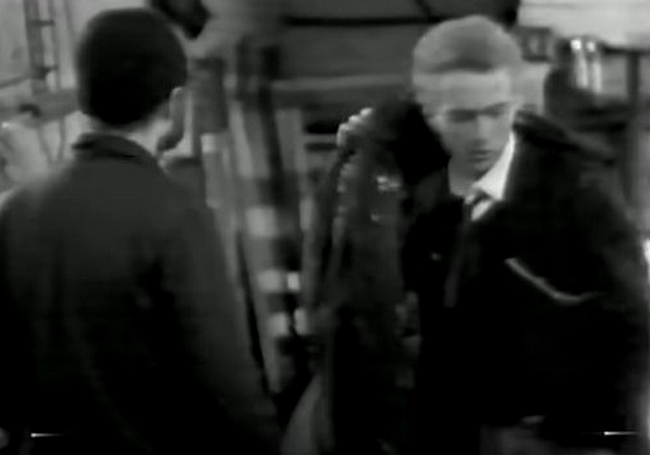
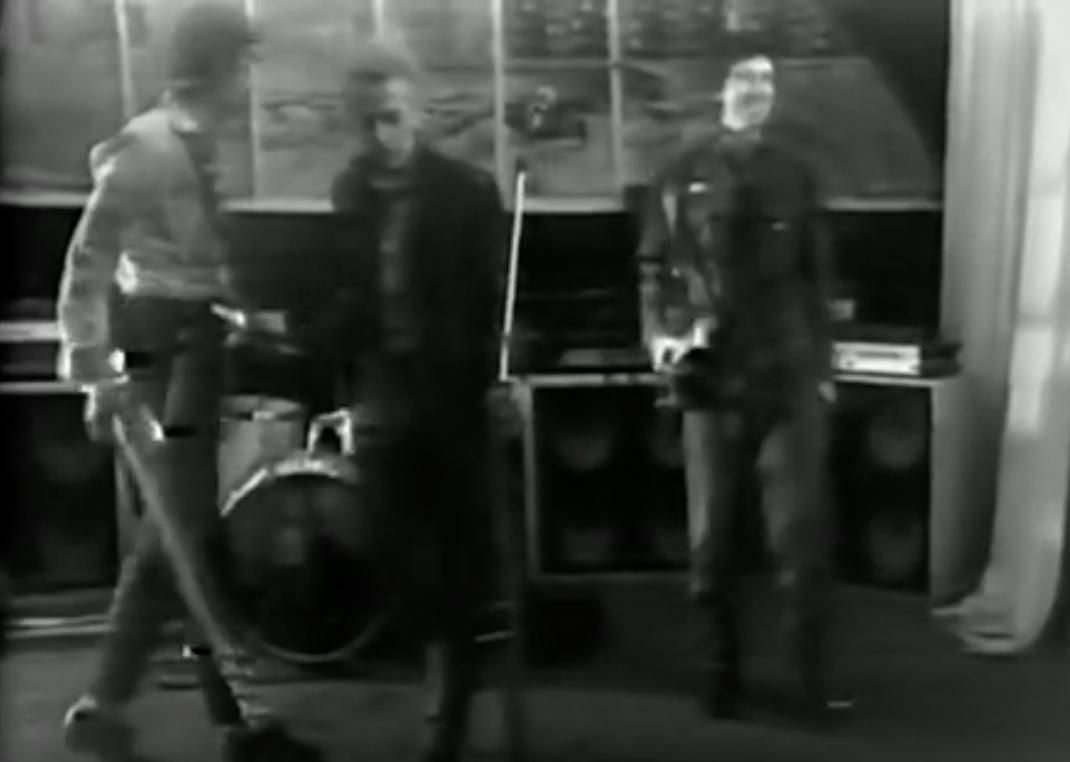
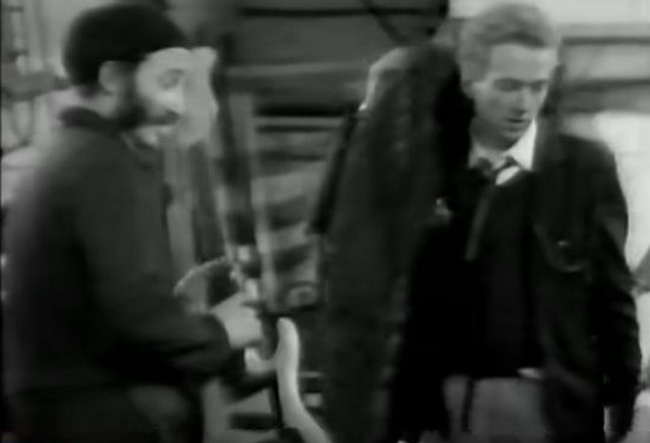
 Some video footage exists;
On various snippets of the band playing. Julian Temple's early footage? It's very frustrating that lots of video exists of the band, audio too, and as the years pass it 'dies' in storage. Like the Bonds footage for example. Sony have no intention of putting out non-commercial 'outakes'. It is just waiting to be sent to landfill.
Audio? Rob Harper talked of a 'practice' tape ...
There is rumour of some audio recordings? Rob Harper talked of a tape when Terry was sacked to help prepare for the Anarchy Tour. Terry's last gig was at High Wycombe on the 18th November
1976/77 Julian Temple's early footage 50hrs
Known to contain several concerts including The Roxy 1 Jan 1977 and Harlesden plus Rehearsals footageJulian Temples 1976 footage 18 hours - included Roxy/Anarchy Tour/Harlesden/Rainbow - only the footage that was used in the film eventually got digitised because it was shot on an obscure format that does exist anymore and so it cost a fortune to put onto tape.


Book: Return of the Last Gang in Town
Julian Temple's early footage
 [Extract] ... Malcolm’s (Mclaren) band had a promo film, so Bernie’s (Rhodes) band had to have one too.
Julien’s (Temple) black and white footage of the Clash at Rehearsals, on the Anarchy Tour, at the Harlesden Coliseum and in the Beaconsfield studio had been shot prior to the Clash’s latest image change and so was outmoded.
In 1999, Julien would contribute clips of the various bands on the Anarchy Tour, the Clash rehearsing ‘What’s My Name?’ with Rob Harper, the band overdubbing vocals to ‘I’m So Bored With The USA’ at Beaconsfield, and the band posing on the balcony outside 111 Wilmcote House, to Don Letts’s Clash documentary Westway To The World.
His own Sex Pistols documentary, The Filth And The Fury, was finally released the following year.
Julien claims to have over 50 hours of Clash footage from the 1976-77 period, most of which has never been seen.


Subway Sect at Rehersals Rehearsals
There is some video footage of Subway Sect at Rehearsal Rehearsal - 4mins which ha sbeen released on the Commercial DVD 'Punk in London'
Background
A private invite gig for journalists and friends
The Clash were based just inside the gates of the British Rail Yard in Chalk Farm Road, Camden Town, London in a first-floor British Rail goods yard known as Rehearsal Rehearsals within walking distance of the musical venues of Dingwalls and the Roundhouse. (Clash.org)
Back in 1976, it was just another abandoned area of North London which, after years of neglect, had been left to the drunks and winos that littered the pavements of Chalk Farm Road. Rehearsal Rehearsals sat in the middle of it in a filthy, dilapidated former British Rail goods yard.
The showcase performance on Friday the 13th at Camden’s Rehearsal Rehearsals drew a few true believers. “They had their little stage area and it was really great, 'cos they actually did it like they were doing a show. They were hiding behind a curtain. I think somebody got up, it might have been Caroline, and made an announcement—'The CLASH!'—and they ran on with their painted jackets, gave it everything, and there’s like ten of us there.” (Passion is a Fashion: Pat Gilbert).
“Bernie had bought a couple of bottles of really cheap, nasty German wine, so Ted went out and bought two or three bottles of drinkable stuff,” and, as the band came out “resplendent, covered in paint,” each detail—right down to the junk furniture—amplified the sense that something raw and irreversible was happening. (Passion is a Fashion: Pat Gilbert).
It didn’t matter that barely any press showed: “At first, it looked as though the fates were intent on wreaking immediate revenge, because—although a few bookers were present—only three of the numerous invited music journalists turned up… but they were the right three to attract.” (Return of the Last Gang in Town: Marcus Gray).
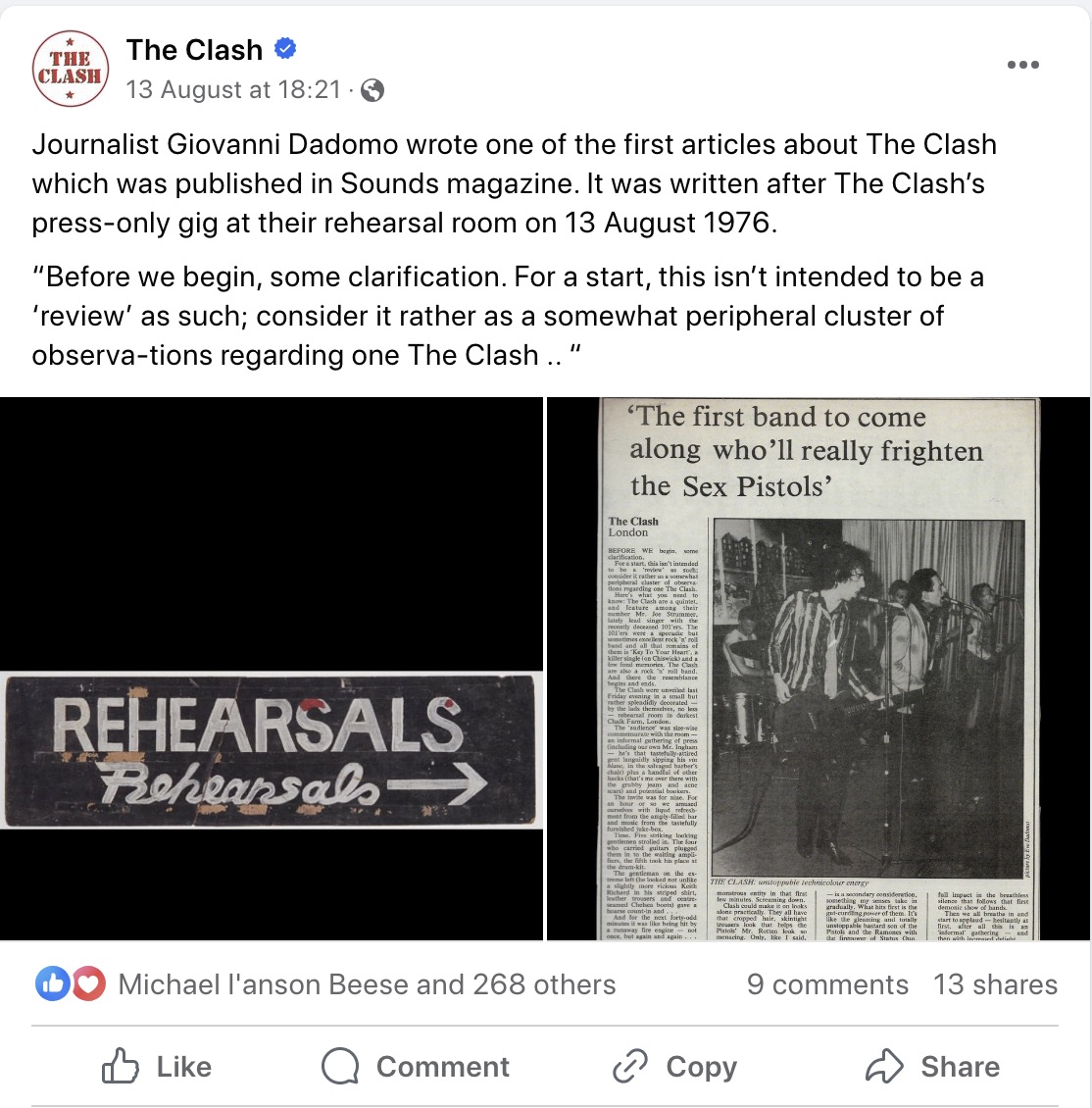
Giovanni Dadomo’s wrote: “For the next 40-odd minutes, it was like being hit by a runaway fire engine. Not once, but again and again and again,” and his declaration, “I think they're the first band to come along who’ll really frighten the Sex Pistols shitless.” (Sounds, 21 August 1976: Giovanni Dadomo).
This was not just the birth of a band but a turning point: “Strummer finally seems to have found his niche, his always manic deliveries finally finding their place in a compelling tapestry of sound and colour.” (Sounds, 21 August 1976: Giovanni Dadomo).

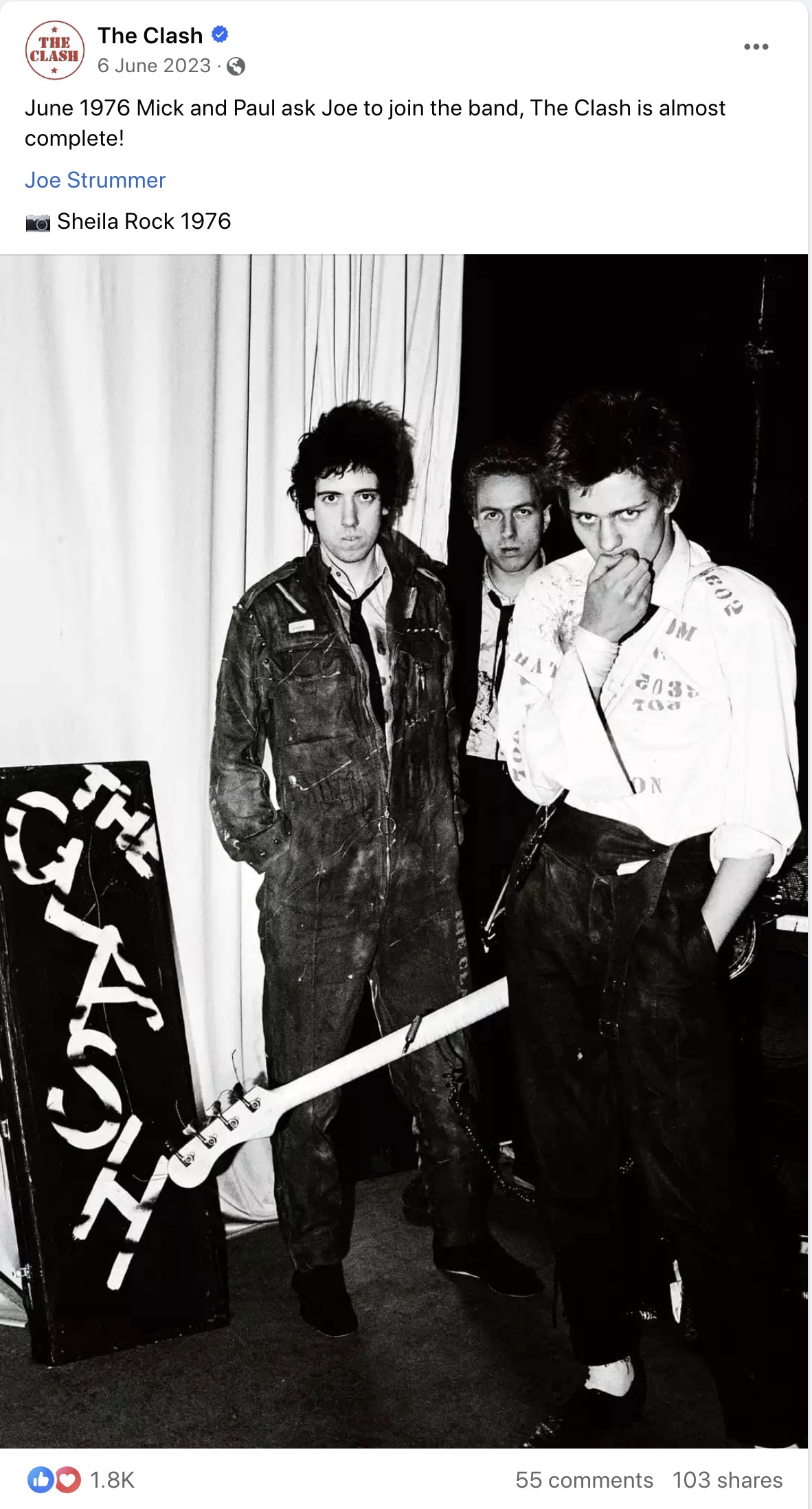
1976 Mick and Paul ask Joe to join the band
Tickets, Posters
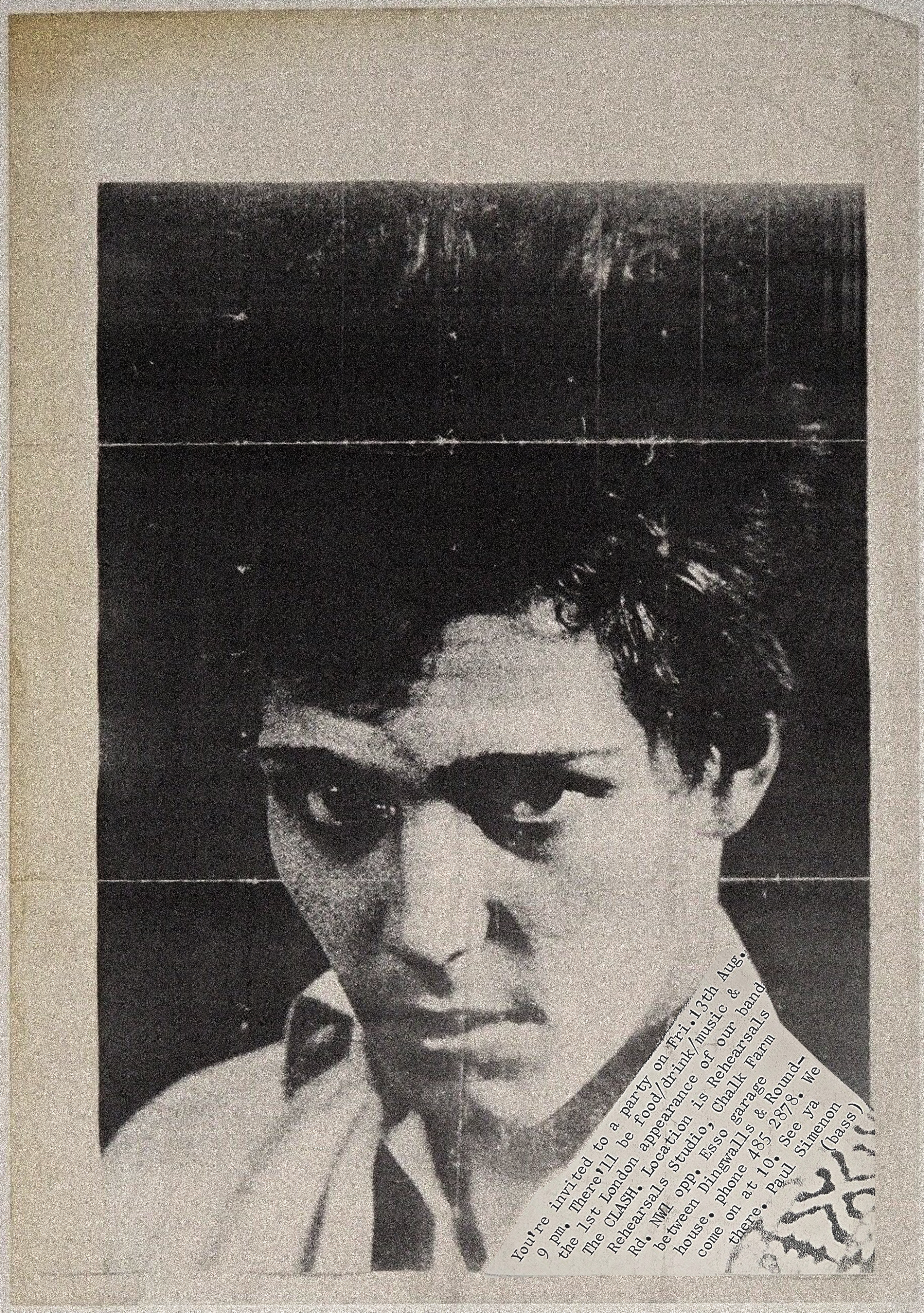
A3 Clash Flyer is for the Clash’s very first official London outing
Link to flyer
Clash City Collectors | Facebook
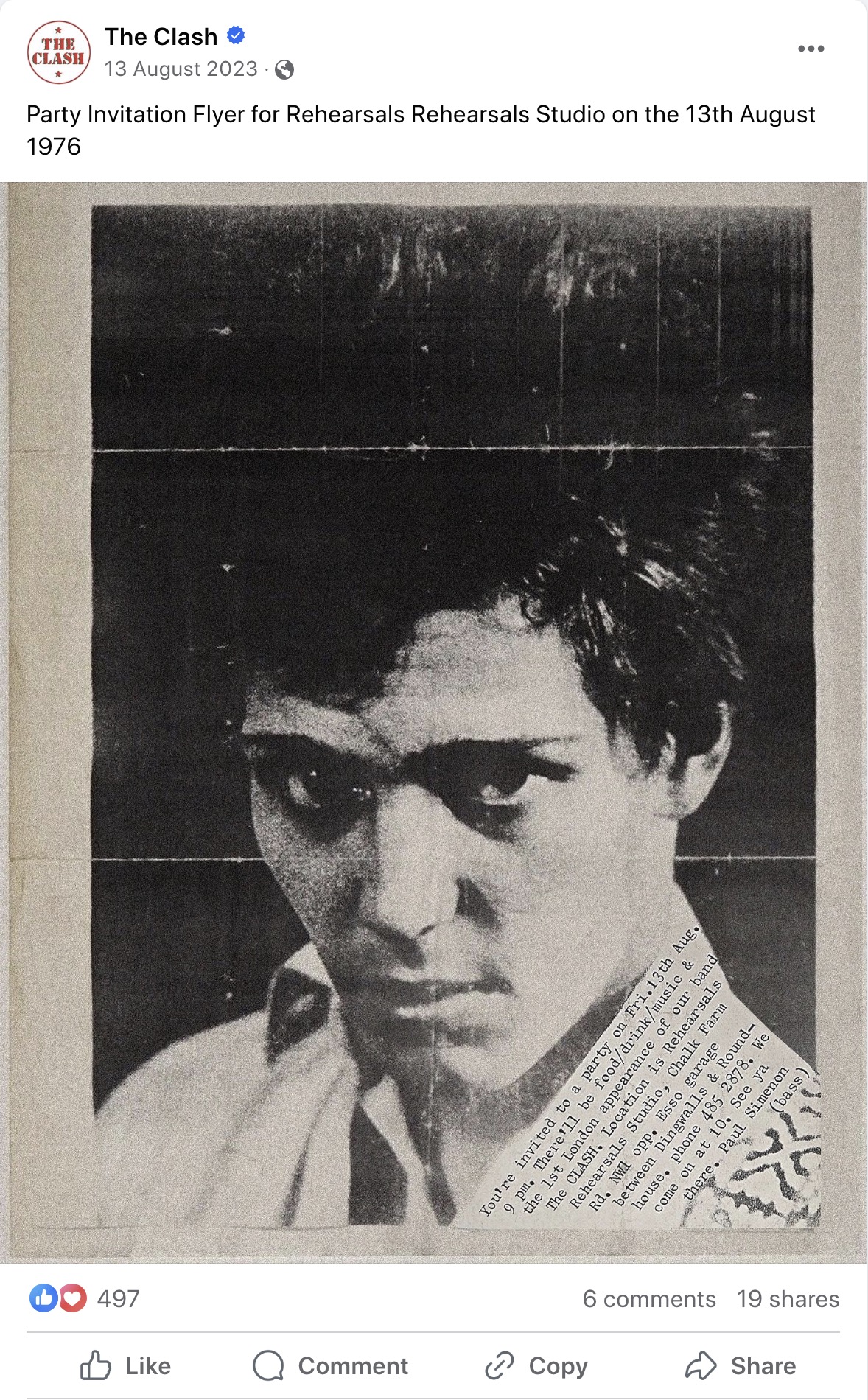
Party Invitation Flyer for 13th August 1976 [see photo text]
AUCTION INFO: Straight out of Ted Carroll's old Cadillac Shack in the last couple of weeks. Ted owned Chiswick Records and was sent the invitation. He had previously signed and released the 101'ers which had Joe Strummer as a band member. (Sold for £5,500).
Other
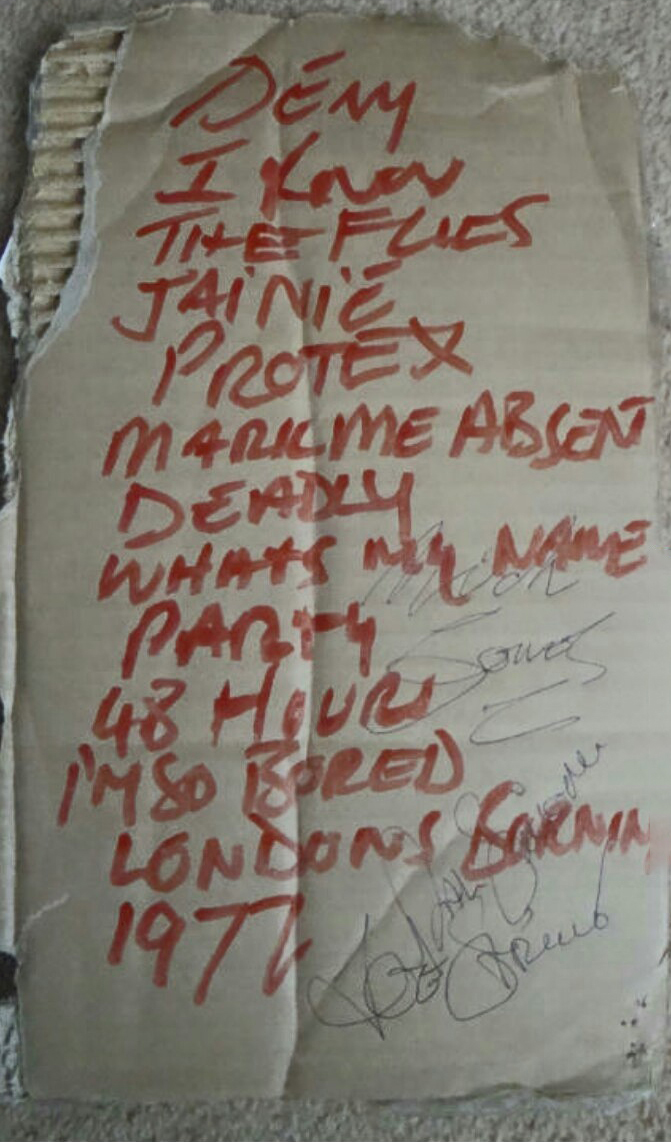
Is the original set list?
This has been circulated without authenticty that it is as described, the original set list.
Venue
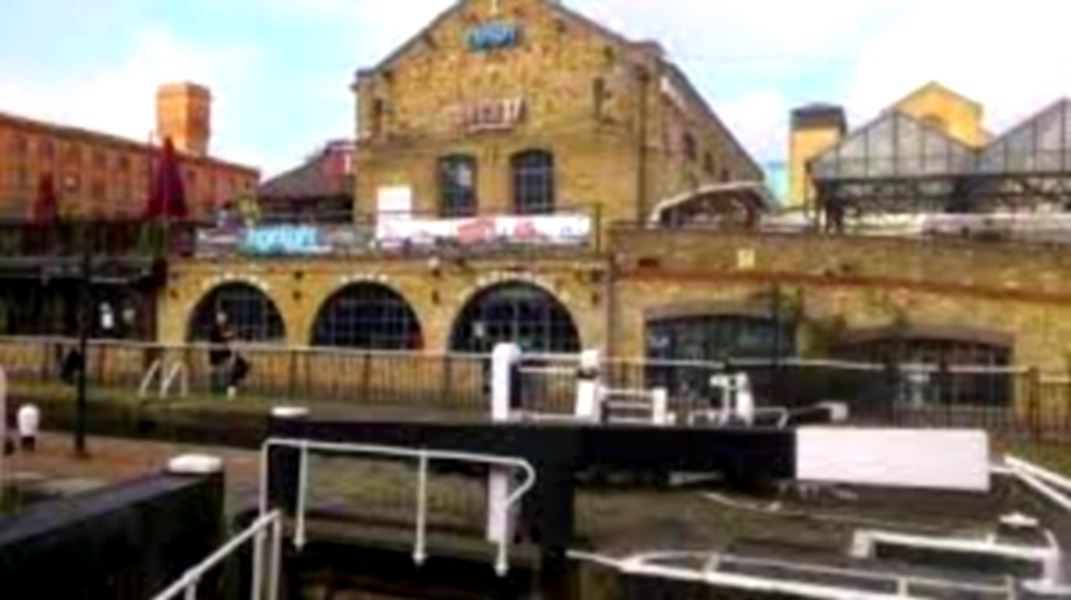
Rehearsal Rehearsals
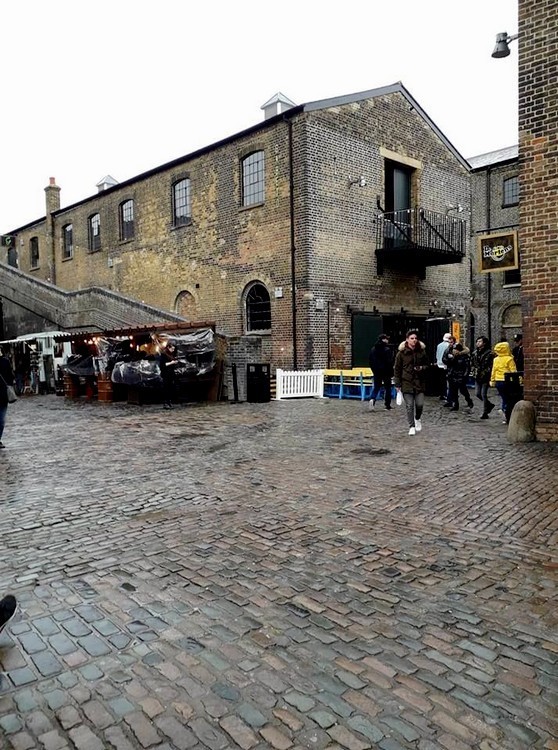
Rehearsal Rehearsals was a significant music venue in Camden Town, London, particularly during the 1970s and 1980s. It was the recording studio where The Clash shot the front cover of their debut album, which has since become iconic. The band also used the space as a rehearsal studio during the early part of their career. The venue was located in a rundown British Rail goods yard, which is now part of Camden Market.
The Bakers description of Rehearsal Rehearsals
Camden Town is a district of Inner London, just 2.4 miles northwest of Charing Cross. Back in 1976, it was just another abandoned area of North London which, after years of neglect, had been left to the drunks and winos that littered the pavements of Chalk Farm Road.
‘Rehearsal Rehearsals' sat in the middle of it in a filthy, dilapidated former British Rail goods yard. I arrived there with my schoolmates The Subway Sect, to help with band rehearsals after Malcolm McLaren had seen fit to call Bernie Rhodes and arrange for some much-needed rehearsal time.
However it was with anything but relish that we first encountered the cold, dank, and unpleasant rehearsal space. It's crumbling, musty atmosphere reminded me of my grandmother's old coal cellar and the damp cold penetrated everything, even in that hot month of August.
‘Rehearsals' was a place you didn't feel you wanted to hang around in any longer than you had to. Although brave attempts had been made to make it bearable, it was nevertheless a bleak and depressing environment.
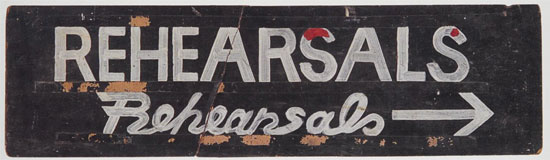
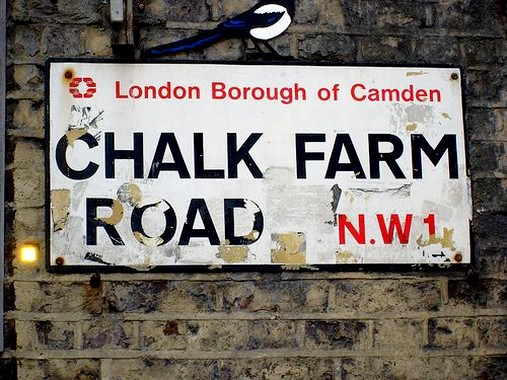
Sign for Rehearsal Rehearsals
Rehearsal Rehearsals famous shot
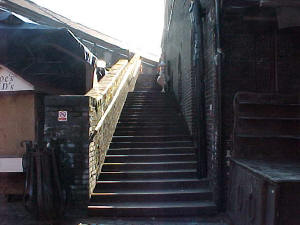
THE CLASH ON PAROLE | Facebook
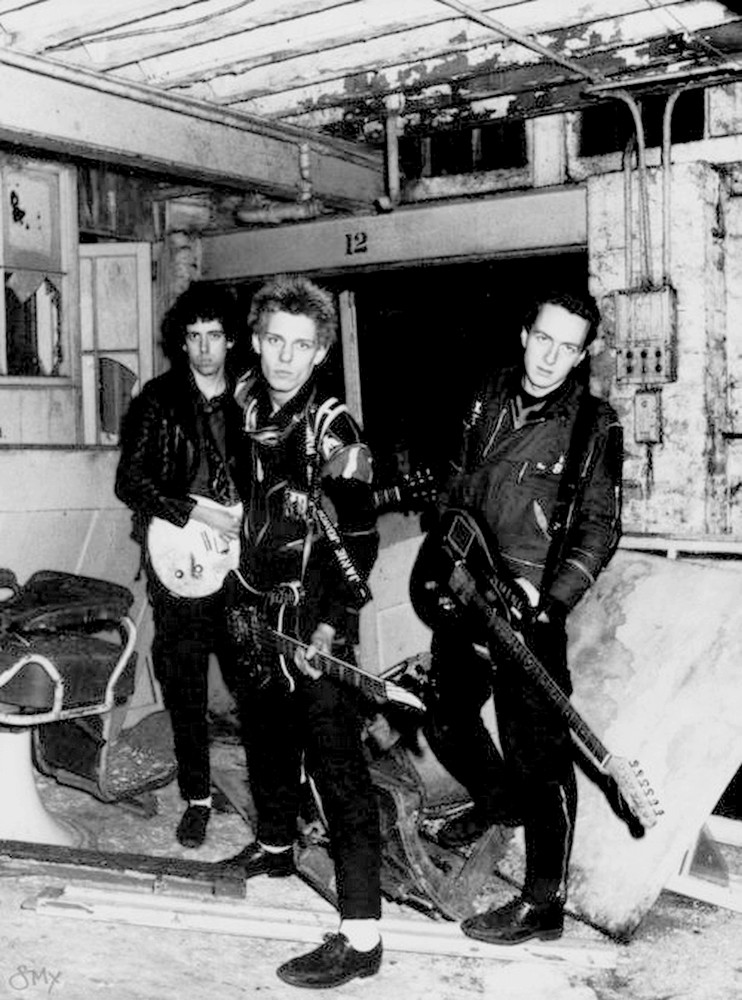
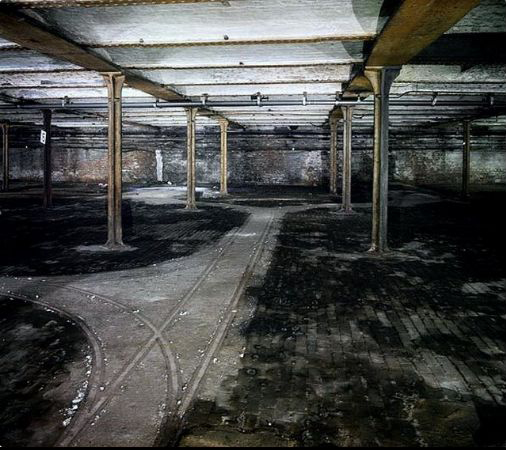
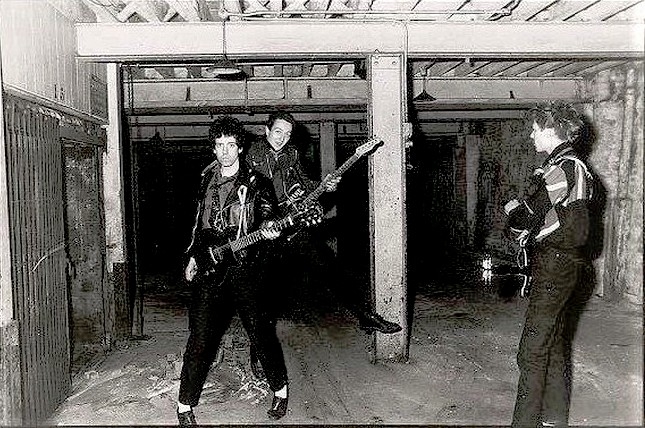
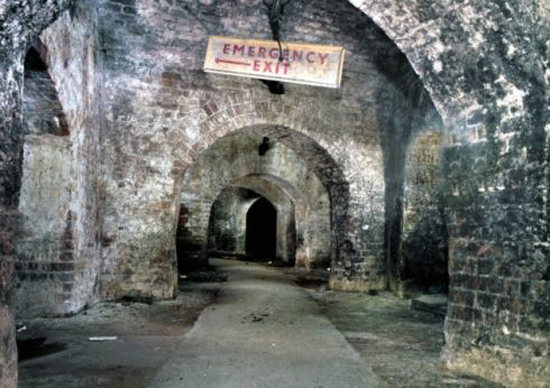
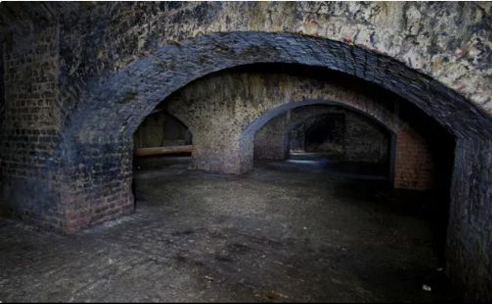
Auguste, Barry. "Rehearsal Rehearsals – The Baker." The Baker 77. Retrieved from thebaker77.wordpress.com
Rehearsal Rehearsals — The Baker
The Subways and Tunnels of Camden Town
Barry "The Baker" Auguste recounts how The Clash and The Subway Sect turned a bleak Camden rehearsal space and its eerie Victorian tunnels into a playground of punk rebellion, blending youthful mischief with the dark history beneath London's streets.
Rehearsal Rehearsals — The Baker
The Subways and Tunnels of Camden Town
Camden Town is a district of Inner London, just 2.4 miles northwest of Charing Cross. Back in 1976, it was just another abandoned area of North London which, after years of neglect, had been left to the drunks and winos that littered the pavements of Chalk Farm Road. Rehearsal Rehearsals sat in the middle of it, in a filthy, dilapidated former British Rail goods yard.
I arrived there with my schoolmates, The Subway Sect, to help with band rehearsals after Malcolm McLaren had seen fit to call Bernie Rhodes and arrange for some much-needed rehearsal time. However, it was with anything but relish that we first encountered the cold, dank, and unpleasant rehearsal space. Its crumbling, musty atmosphere reminded me of my grandmother’s old coal cellar, and the damp cold penetrated everything, even in that hot month of August. Rehearsals was a place you didn’t feel you wanted to hang around in any longer than you had to. Although brave attempts had been made to make it bearable, it was nevertheless a bleak and depressing environment.
Paul Simonon hung around the rehearsal room more than anyone else back then and was the first member of The Clash to befriend us. One night he said conspiratorially, “Want to see something really cool…?” He led us to the back of the rehearsal room behind the jukebox, through the drapes that served as sound-baffling, and down a gentle ramp to a huge, ancient door.
After some difficulty, we managed to get it open and it slid slowly back to reveal an extensive labyrinth of pitch-black tunnels and passageways. The deathly frozen air hit us instantly as we entered what seemed at first to be some kind of sinister medieval dungeon, reeking with years of mouldy disuse. Excitement gripped us, and I ran back to my car to get a torch.
Our first tentative exploration of the tunnels revealed a maze of derelict, mildewed archways and passages – some trailing off to dead-ends and others leading to enormous cavernous areas, as large as any warehouse. Tramway tracks criss-crossed some of the tunnels and water ran down walls or dripped from crumbling Victorian brickwork and ceilings.
Once Paul Smith (The Subway Sect’s drummer) had managed to get Sebastian Conran’s disused little yellow moped running, we explored further and deeper into the seemingly endless caverns with our torches and would play hide and seek down there for hours with Paul Simonon. The sound of the little moped’s engine getting ever closer in the darkness heightened the macabre excitement of the chase to a spine-chilling fever pitch.
The all-encompassing blackness, pierced only by our torches, hinted at ghastly silent terrors behind the commonest shapes or objects and challenged our senses until boundaries dissolved. I cannot convey the nightmare sensation of those vast subterranean passages — a commingling of coffin-terror and entrapment, with the inexorable fear of encountering something unknown waiting in the darkness like a Lovecraft tale. It fed our imaginations and kept us from delving too deep.
Unknown to us, this warren of cold menacing passages hadn’t known warmth or light for almost 100 years. The Camden Catacombs, as they’re known today, were once owned by British Railways. Built in the 19th century as stables for horses and pit ponies used to shunt railway wagons, the tunnels run under the Euston mainline, Primrose Hill, Gilbey’s Bonded Warehouse on the Regent’s Canal, and beneath Camden Lock Market.
The 650 or so railway horses were stabled on Chalk Farm Road (now Stables Market), and from 1865 a labyrinth of tunnels allowed them to travel underground from their stables to work in Camden Town Goods Yard without crossing the tracks. The same network served the heavy horses of Gilbey’s, the wine and liquor company.
In our innocence, unaware of the sinister past these cellars bore witness to, we continued amusing ourselves in the tunnels until around the time of the 100 Club Punk Festival, when everything in the punk scene became serious.
I remember Joe Strummer came down a few times, but Mick Jones and Terry Chimes never did to my knowledge — mostly it was Paul and us spending frenzied hours in the pitch-dark caverns behind Rehearsals.
Just two years later, The Clash would part company with Bernie Rhodes and leave behind the cold, damp rooms (if only for five years). So too would The Subway Sect, when Rhodes fired the whole band in autumn 1978, keeping Vic Godard as songwriter and singer.
It seems ironic that Camden Town has become trendy, with its markets and high street, mainly due to the brief presence of a punk band — when the railway yard had existed for over a century before. With hindsight, our fleeting use of the warehouse was just a moment in the long history of those dark, disused spaces.
The Baker
Photos
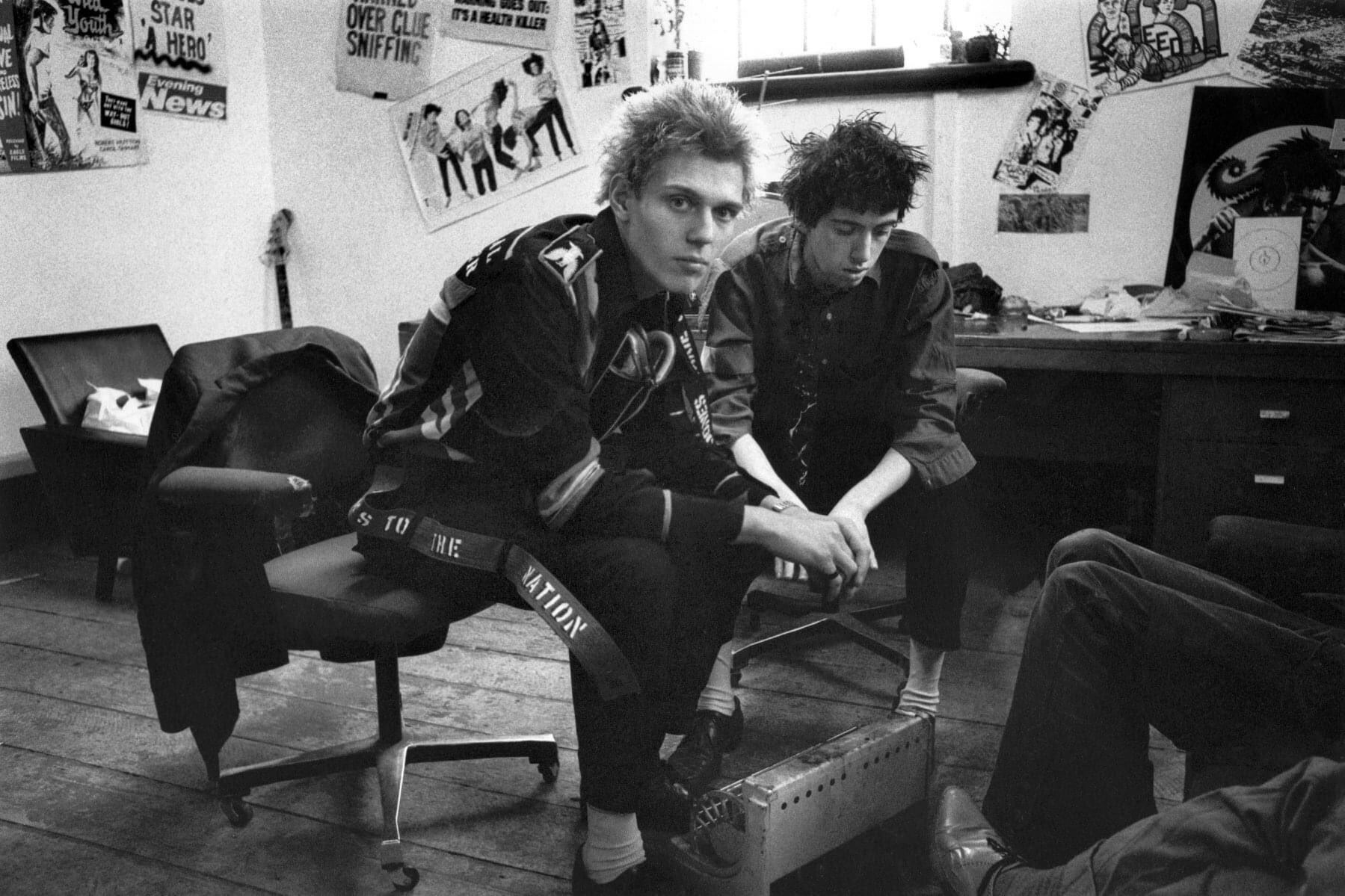
Gig review
....
....
News Reports
Sony SoundSystem Boxset, Julian Temple 6mins20
SoundSystem: Julian Temple montage largely from 1976 and Rehearsel Rehearsels
No copy available other than Boxset.

The Clash, Rehearsal Rehearsals, Chalk Farm
The Clash, Rehearsal Rehearsals, Chalk Farm, 1976, with Keith Levene and Terry "Tory Crimes" #TheClash #KeithLevene pic.twitter.com/fa9N9lkmst
— KEZ O))) (@kezwilliams13) February 17, 2020
"Dadomo, Giovanni. "The Clash." Sounds, 21 Aug. 1976, pp. 1 page, 825 words."
Watch out Pistols,Clash are coming
The first band to come along who’ll really frighten the Sex Pistols
— Famous ecstatic, visceral breakthrough article on The Clash by Giovanni Dadomo for Sounds, 21 August 1976.
— A first-look review of The Clash's debut private performance at a rehearsal room in Chalk Farm, London, describes the band's explosive 40-minute set as being "hit by a runaway fire engine" with "gut-curdling power", the band's striking visual aesthetic: cropped hair, paint-spattered clothing, and a look that combines mod flash with punk menace.
— Joe Strummer's transition from the 101'ers and declares the band "the first to really frighten the Sex Pistols."
PDF1 | PDF2 | PDF3 | ALT-TEXT3
/SOUNDS%201976%2008%2021.html/SOUNDS%201976%2008%2021_files%20copy/0_500h.jpg)
/SOUNDS%201976%2008%2021.html/SOUNDS%201976%2008%2021_files%20copy/2_500h.jpg)
/SOUNDS%201976%2008%2021.html/SOUNDS%201976%2008%2021_files%20copy/1_500h.jpg)
Comments
...
...
Blackmarketclash | Leave a comment
Do you know anything about this gig?
Did you go?
All help appreciated. Info, articles, reviews, comments or photos welcome.
Please email blackmarketclash
The Clash - All other FB posts
Books
REDEMPTION SONG: Rehearsal Rehearsals
 Redemption Song Internet Archive
By the end of August the Clash had played two more shows: one on the B thirteenth at Rehearsal Rehearsals, a showcase to which booking agents and press were invited (three journalists turned up, two from Sounds, one, Caroline Coon, from Melody Maker), and the second the night at The Screen on the Green.

PASSION IS A FASHION: Rehearsal Rehearsals
 nternet Archive
Rhodes organised an invite-only showcase for industry figures and jour- nalists on Friday, 13 August. The most important guests were the three writers that were championing The Clash and Pistols in the music press - Melody Makers Caroline Coon and Sounds's Jonh Ingham and Giovanni Dadomo. Roger Armstrong and Ted Carroll were also there.
'Bernie had bought a couple of bottles of really cheap, nasty German wine, so Ted went out and bought two or three bottles of drinkable stuff,' recalls Roger Armstrong. 'I remember the seating was a dentist's chair and an orange-crate.
They had their little stage area and it was really great, 'cos they actually did it like they were doing a show. They were hiding behind a curtain. I think somebody got up, it might have been Caroline, and made an announcement - "The CLASH!" - and they ran on with their painted jackets, gave it everything, and there's like ten of us there.'
Micky Foote says: 'They were fucking brilliant! I'd listened to it for two months but anyone who came in there would've been blown away. The three guitars sounded phenomenal. Each of them knew exactly what they wanted - Keith Levene had a Marshall with a pre-amp, Joe had a Telecaster going through a Vox, Mick tried lots of different set-ups. It was a sound designed for maximum impact.'
The group were rewarded with a review in Sounds, written by Giovanni.
It was a virtual love-letter, noting 'a compelling tapestry of sound and colour' and plenty of that old Mod flash. It concluded that they'd 'frighten The Sex Pistols shitless'.
RETURN OF THE LAST GANG IN TOWN:
Rehearsal Rehearsals
In a suitably punkish gesture of defiance, the showcase took place on Friday 13 August. At first, it looked as though the fates were intent on wreaking immediate revenge, because — although a few bookers were present — only three of the numerous invited music journalists turned up.
But, as Andy Czezowski has indicated, they were the right three to attract: Caroline Coon, Jonh Ingham and Giovanni Dadomo. Ultimately, by means direct and indirect, all of them would play a vital part in advancing the Clash cause. Bernie's plan was vindicated almost immediately, when Giovanni reviewed the show for Sounds, his piece illustrated with a photo taken by his wife, Eve.
At 9 pm, the band walked downstairs to where the small audience had been enjoying free drinks and listening to the juke box, plugged in their guitars... ‘And for the next 40- odd minutes, it was like being hit by a runaway fire engine,' wrote Giovanni. ‘Not once, but again and again and again.'
Making allowances for one or two ‘little cock-ups', he was quick to ‘dispel any notion that the music is one relentless semi-cacophony, because in all that nuclear glare, there are incandescent gems of solos and references to everything from "You Really Got Me" to you-name-it.
Also, Strummer seems to have finally found his niche, his always manic deliveries finally finding their place in a compelling tapestry of sound and colour.' He praised the band's image, ‘as much the antithesis of the bearded bedenimed latterday hippy as the mods were the rockers.
Clash have plenty of that old mod flash, too.' He signed off by declaring that he couldn't wait to see them again in a real venue — and, like Caroline and John, he would indeed attend many of the band's gigs over the next few months — but the key sentence, part of which was blown up and used as the headline, was, ‘I think they're the first band to come along who'll really frighten the Sex Pistols shitless.'
JOE STRUMMER AND THE LEGEND OF THE CLASH:
Rehearsal Rehearsals

The Clash's second gig, on 13 August, was meant to be their official unveiling to the world — an invite-only set at Rehearsals for some twenty-five invited guests. These included sundry pressmen, booking agents and mates.
Journalists Jonh Ingham, Caroline Coon and Giovanni Dadomo were present, with the latter giving The Clash an effusive write-up. ‘I think they're the first band to come along who'll really fright- en the Sex Pistols senseless'. His review mentioned that ‘Strummer finally seems to have found his niche, his always manic deliveries finally finding their place in a compelling tapestry of sound and colour.'
I remember this being the first review that really got me interested in The Clash. Giovanni praised the group's look, assimilation of musical styles and attack to a point where you felt like you were reading about the band you'd always dreamed of. Who could resist a group that made you feel like you've been ‘hit by a runaway fire engine. Not once, but again and again and again?'
THE CLASH: OFFICIAL: Rehearsal Rehearsals
%20(Big%20Pink%20Book)/Clash%20_%20Strummer,%20Jones,%20Simonon,%20Headon,%20The/Clash%20_%20Strummer,%20Jones,%20Simonon,%20Headon,%20The%20-%20Clash%20(Musical%20group)%20Pink%20book-300px.jpg) nternet Archive
nternet ArchiveJOE: Bernie organised a showcase gig at our rehearsal rooms for journalists: Jonh Ingham, Caroline Coon, people who stuck their head above the parapet in order to publicise Punk, which was not an easy game. It would have been easier for them to have ignored us and carried on writing about Grand Funk Railroad or something — they took some flak by writing about us. Tony
Parsons was another one who was there at the beginning.
MICK: We had to give the rehearsal room more than just a lick of paint. I remember spending days painting and listening to Rastafarian reggae, it was the soundtrack to that time.
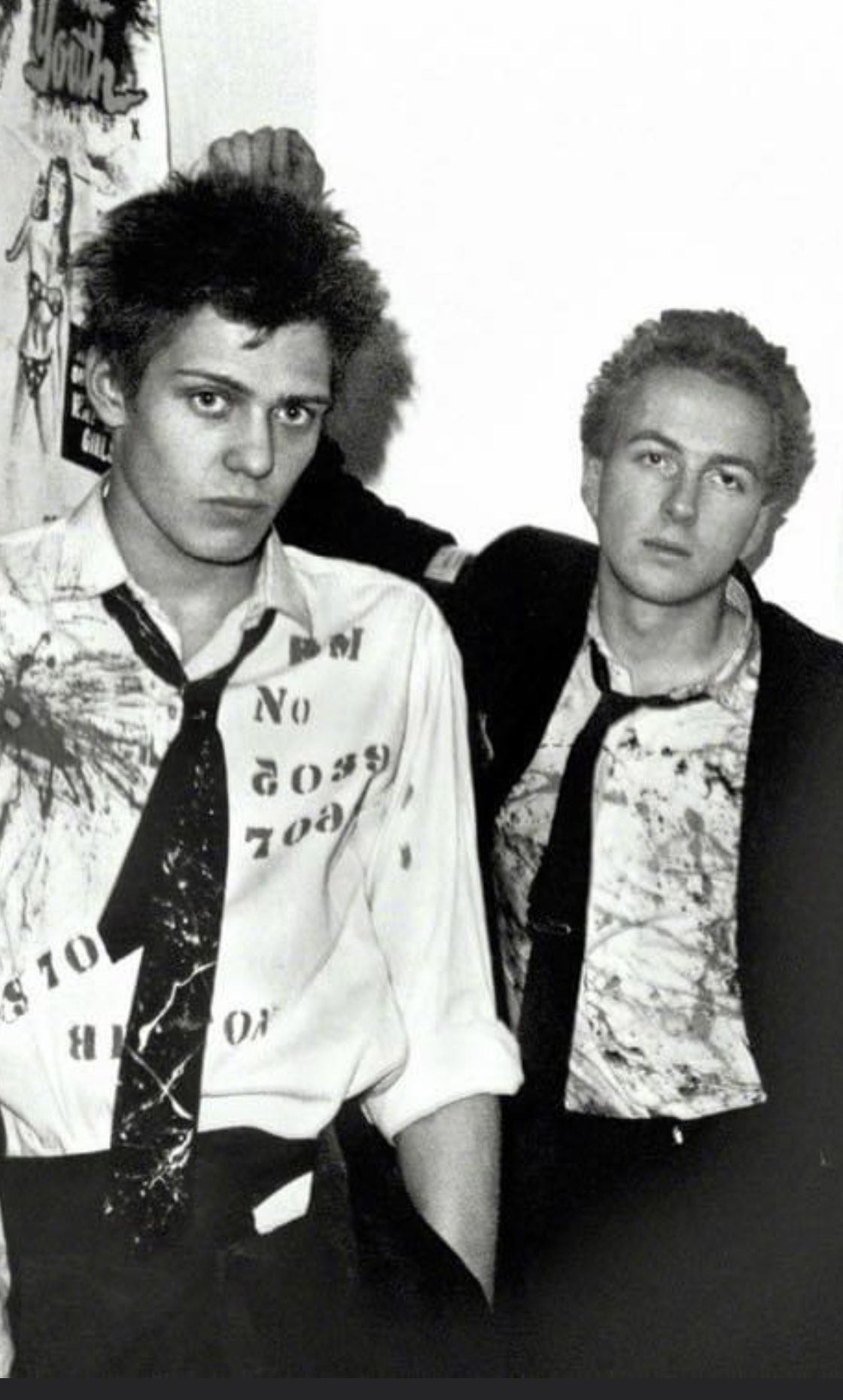
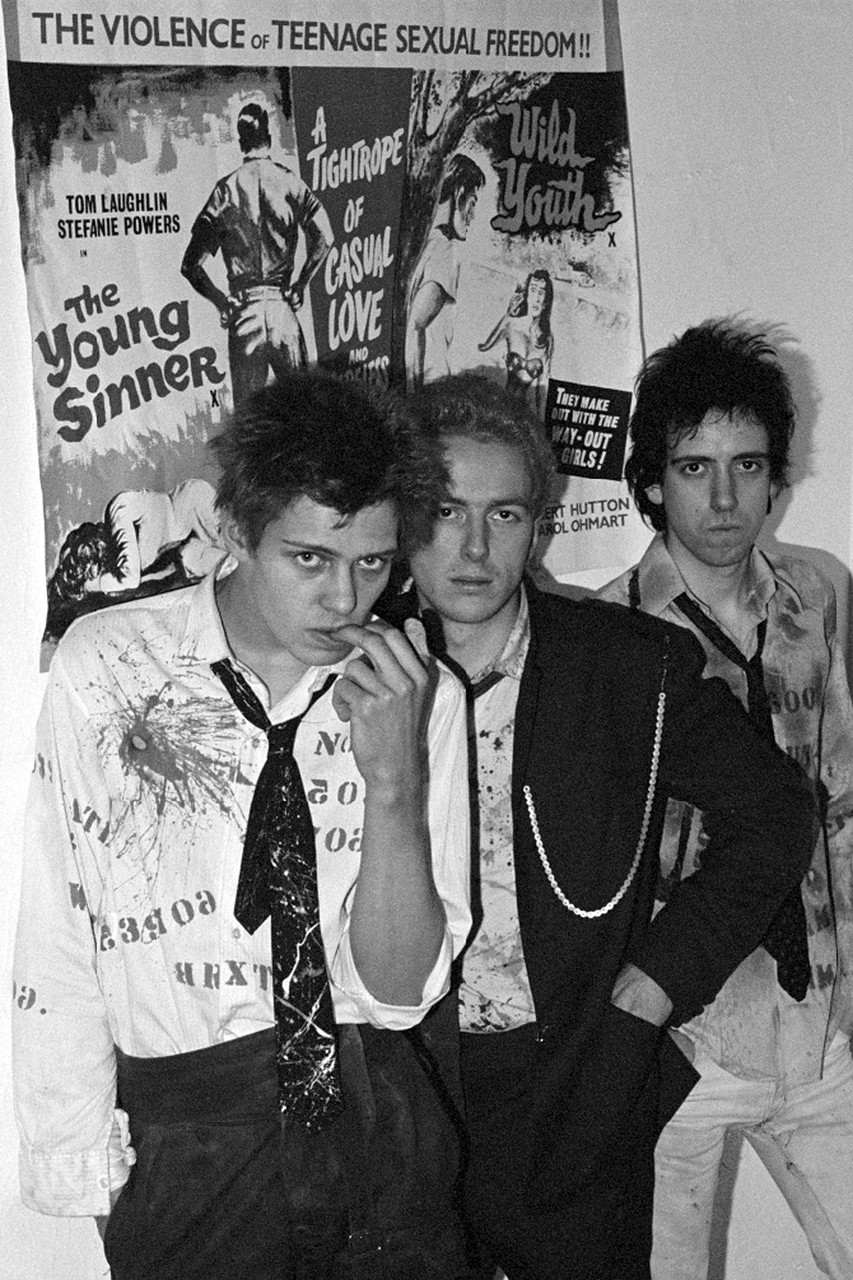
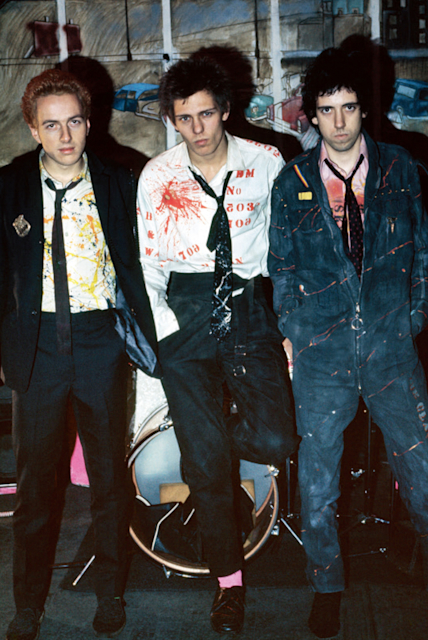
JOE: Bernie had made us paint the rehearsal rooms before the gig, and we didn't really have any clothes except the ones we were wearing, or what we got from thrift stores. So there was paint everywhere, which is what I think gave Paul the idea of flicking it on our shoes and trousers, to jazz them up. It gave us an identity, too. So we came out resplendent, covered in paint. Just up the road from Rehearsals Rehearsals were the people who Bernie used to spray his cars, so we went to them and they sprayed the guitars and amps, jackets, ties, shirts and shoes using spray guns. We must have looked fairly striking when we came on stage. If somewhat ridiculous.
MICK: By the second gig we had skinny ties and semi-smart jackets, but we'd gone through the painting thing. Paul made the connection between Jackson Pollock and our spritzing the paint on ourselves.
PAUL: I was walking down Denmark Street one day and I saw Glen Matlock. He was wearing what I first thought were Laura Ashley print trousers, but when I looked closer they were more Jackson Pollock. I realised that he'd splashed paint all over them. So thinking like Picasso, who'd pick up an idea and take it further, I went back to Rehearsals Rehearsals, got some gloss paint and splashed it on my shoes. It looked pretty good so I got a black shirt and did a bit on that with different paint and it was all about being aware of your textures (laughs). Because ideas were always discussed openly I only needed to do a few things for Mick and Joe to see what was going on and do their own stuff. It led to getting our guitars sprayed and then I got some stencils, probably from Bernie, which would clip together and so I sprayed words on jackets and shirts.
Return of the Last Gang in Town Marcus Grey
Bernie found what he considered to be the ideal place right under his nose: not too far from his flat in Camden Town, and next door but one to Harry’s, the Renault garage in which he still owned a share. Situated just inside the gates of the British Rail Yard, on Chalk Farm Road, halfway between Dingwalls and the Roundhouse
When Malcolm McLaren made his call for a London popular music scene reminiscent of the glory days of the early to mid Sixties, it struck a chord with the generation of music fans who, like Joe Strummer and his peer group at the City of London Freemen’s School, had been unable by reason of youth or distance to participate first time around. ‘That generation that came of age in the Seventies, we’d grown up in the Sixties, but we’d missed the Sixties,’ says punk period NME journalist Tony Parsons. ‘Itwas aparty we'd been too young to be invited to. A party of fucking girls who looked like Julie Christie, and stopping the war in Vietnam, and the Kings Road, and all that kind of thing. And by the time itgot to the mid Seventies, and we’d turned up with our bottle of cider and our peace badges, it was over, finished. Now, it’s too far away: it’s history to teenagers today. But we were close enough to itto want our turn.’
At the beginning of June 1976, Bernie Rhodes took itupon himself to locate a more suitable rehearsal space for the Davis Road band. Joe had just been recruited, and the musicians needed to pool their respective talents, work on a band identity, and develop a live repertoire. Bernie found what he considered to be the ideal place right under his nose: not too far from his flat in Camden Town, and next door but one to Harry’s, the Renault garage in which he still owned a share. Situated just inside the gates of the British Rail Yard, on Chalk Farm Road, halfway between Dingwalls and the Roundhouse — those two pillars of the Camden music scene — it was a damp and dilapidated two-storey end-terrace railway storage shed.
The amps and speakers were set up in the relatively large downstairs room opposite a somewhat incongruous line of old barbers’ chairs. The back room was used to store pinball and fruit machines. (Bernie was a great hoarder.) Upstairs, a small front room became an all-purpose band office and recreation area. The back room was derelict, the floorboards rotted through. Most of the tiny panes in the building’s high, narrow windows were broken, and stuffed with newspaper. The skylight was in a similar state, and was positioned directly over the water cistern, which had weeds growing out of it. There was a sink and a toilet, but no hot water and — a one-bar electric fire aside — no form of heating. Until itbroke down for keeps a couple of months after the band arrived, entertainment was provided by another of Bernie’s acquisitions: a jukebox, which they stocked with an eclectic selection of singles.
As well as tracks by Jimi Hendrix and the Doors, there were some of Paul’s reggae favourites — including Desmond Dekker’s ‘Israelites’ and the Rulers’ ‘Wrong ’Em Boyo’ — and the song with which he had failed his audition for the London SS, Jonathan Richman’s ‘Roadrunner’, since released as a single. A payphone on the wall was fixed to accept the same coin over and over again. The source of the electricity supply was similarly dubious. Bernie dispelled any possible lingering doubts about the function of the premises when he christened them Rehearsal Rehearsals. When the novelty value of this mouthful wore off, unsurprisingly quickly,the band and their associates shortened itto just plain Rehearsals.
In Keith Levene’s mind, the band might have felt complete with the addition of Joe, but there was still one vital gap in the line-up to be filled: the drummer. Richard Dudanski having refused to join, Joe called in a drum kit and a favour from his schoolfriend Pablo LaBritain, who sat in for the first couple of rehearsals while the band made up their mind about a full-time member. As a result, Pablo features in the first
Terry was as assertive as he was pragmatic. One of his auditions, in August 1975, was for Violent Luck, and Kelvin Blacklock recalls the drummer being mouthy and pushy to the point of obnoxiousness, refusing to leave until he was told whether or not he had the job. Three months later, Terry tried out for the London SS. He was not impressed by the likes of the New York Dolls, and — despite being fond of Free and Led Zeppelin — had no unshakeable allegiance to any particular band or genre of music. As a consequence, he did not fare well in the interview part of the audition. Nevertheless, he came away with the feeling that his loud, steady, precise drumming style had made a favourable impression. Which proved to be the case when he was called back to try out first for the Billy Watts line-up at Riverside Studios, and then — following the Pablo LaBritain interlude — with the Joe Strummer line-up at Rehearsals.
Initially, Terry was bemused by the change in singers, which no-one took the trouble to explain to him. ‘Billy had seemed such an integral part of what was going on at the time. And, also, Joe seemed such a weird sort of guy. He’s not the archetypal rock’n’roll singer, is he? They didn’t say, “This is the new singer because...” they just said, “This isthe new singer”, and Ilooked athim and thought, “So what’s so special about you that they booted the other guy out?” I got to know him quite quickly, and then it became evident why he was there.’
At first, Mick was the only person who made an effort to communicate with Terry. Joe’s initial remoteness could be partly attributed to the adjustments he himself was having to make. Terry quickly came to understand that Paul’s was due to shyness. ‘Paul wasn’t unfriendly. He just spoke so little that you weren’t sure what was going on in his head.’ Although he never became particularly close to Mick, Joe and Paul, itwas not long before Terry felt able to get along with them well enough. The same was not true for the two remaining members of the team. ‘Bernie irritated everyone intensely. One hundred per cent of the people he met, he irritated them intensely. That was a deliberate policy of his. He’s a one-off, a strange guy. I’ve never met anyone like him, before or since.’ Keith was equally ‘quick to take people out of their comfort zone’.
While Terry found Bernie annoying yet intriguing, he found Keith just plain annoying. ‘I said to Joe that Keith was very hostile, and it was a pain that he was like that. Joe said that he’d photographs of the band in their new habitat. Although a proficient drummer and visually more in keeping with the general band style than, say, Mick Jones (as the photos testify), Pablo did not stick around to fill the vacancy long-term. The fact that he went on to join the Clash-influenced punk band 999 suggests this decision was not entirely of his own making. Joe was in the process of shedding his past; itmay have been that Pablo knew too much about itfor Joe to be entirely comfortable having him around. Whatever, sometime in mid-June, Terry Chimes received another call from Bernie.
' THE CLASH ON THE CLASH EDITED BY SEAN EGAN'
Terry Chimes:
Sean Egan: You played your next gig in August at Rehearsal Rehearsals. Can you describe the place?
Terry Chimes: It’s just a big room. We kind of tarted it up. We put some curtains on the ceiling and made it look a bit posher. It looked like a warehouse before that.
Sean Egan: How did this second gig compare to the first?
Terry Chimes: We were rapidly developing. We were getting more fluid and confident and better.
Sean Egan: How big was the audience?
Terry Chimes: Not a vast number. Twenty-five people, maybe. Caroline Coon was there. I remember her saying very nice things to us.
'Riot of Our Own'
 Clash.org – Online or archive PDF
At the very beginning.........The Clash were based just inside the gates of the British Rail Yard in Chalk Farm Road, Camden Town, London in a first-floor British Rail goods yard known as Rehearsal Rehearsals (p.52)..........within walking distance of the musical venues of Dingwalls and the Roundhouse.
Magazines
Music Reissues Weekly
Keith Levene and The Clash
Covers the first few months of The Clash from London SS to 101'ers to the first few gigs of the Clash and includes references to the gig at the Black Swan.
During this June 1976 rehearsal period, the as-yet unnamed outfit’s initial drummer was Paul Buck (later in 999 as Pablo Labritaine), who had been at school with Strummer. He left after two or three practices and Terry Chimes was once-again tapped. The line-up settled on Chimes, Levene, Jones, Simonon and Strummer. Finding a name was difficult – amongst those in the running were The Psychotic Negatives and The Heartdrops or Weak Heartdrops (from a Big Youth record). Simonon came up with The Clash.
A debut show was booked for 4 July, supporting Sex Pistols sat Sheffield’s Black Swan – on the same day The Ramones debuted in the UK at The Roundhouse. The Sheffield billing was “ex 101’ers.” It was deliberate that, Pistols aside, London’s punk élite would not have a chance to pronounce on the worthiness of the band.
Despite there being no sonic evidence for the Sheffield debut, a little is known about what was played. The band opened with an instrumental titled “Listen” and, according to Pat Gilbert's 2005 book Passion is a Fashion, also played “Protex Blue” and Mick Jones’ Sixties-style beatster “1-2 Crush on You.” The set additionally included 101’ers staples “Keys to Your Heart,” “Junco Partner” and “Too Much Monkey Business” along with a Who cover and The Troggs' “I Can’t Control Myself” (also covered by the early Buzzcocks). A 101’ers hangover clouded proceedings.
Music Reissues Weekly:
Keith Levene and The Clash Honouring the pivotal UK punk band’s short-stay early guitarist
by Kieron Tyler
Sunday, 27 August 2023
The latter-day Keith Levene, with The Clash a long way back in the rear-view mirror Forty-seven years ago this week, a new band called The Clash were seen by a paying audience in London for the first time. On Sunday 29 August 1976 they played Islington’s Screen on the Green cinema, billed between Manchester’s Buzzcocks – their earliest London show – and rising luminaries Sex Pistols. Doors opened at midnight. The anniversary needs marking.
At this point, The Clash had three guitarists. They were a five-piece band rather than the four-piece which became familiar. The guitarist who left a few weeks after the Screen on the Green outing was Keith Levene. Along with fellow guitarist Mick Jones and bassist Paul Simonon, he was a co-founder. Former 101’ers frontman and rhythm guitarist Joe Strummer was next on board, assuming the same role in the new band. The drummer they settled on by the Screen on the Green booking was Terry Chimes.
Sex Pistols Screen on the Green
When The Clash played the 100 Club a month later on 20 September – at what became known as the “Punk Festival” – Levene was out and they were the band which – despite some drummer wobbles – signed to CBS on 26 January 1977. What came next for The Clash is well known. Easily lost though is the story of what came first.
Remarkably, and despite his short stay in the band, there is an aural evidence of the formative, Levene-era Clash. The band played in front of audiences five times with him in the line-up – the last three appearances were recorded. The surviving audio from before and after Levene’s departure makes it possible to dig into his importance to the band and impact on their sound – and how The Clash changed after the departure of one of their co-creators.
Keith Levene, who died on 11 November 2022 at age 65, was a significant figure in British punk and what came in its wake. An accomplished, self-taught guitarist his pre-punk adventures included working as roadie for Yes in 1972 and 1973. After leaving The Clash, he spent some of late 1976 in a band named Flowers of Romance with, amongst other in-crowd punks, Sid Vicious and a pre-Slits Viv Albertine. They never played live. In late 1977, he was in a short-lived band named Drunk & Disorderly with Rat Scabies, who had just left The Damned – they played live twice supporting The Clash at London’s Rainbow. Then, from May 1978, Levene became integral to John Lydon’s post-Pistols band Public Image Ltd, who he left in 1983. Following this, his path was erratic. He was the only person to play with members of all three of The Clash, The Damned and Sex Pistols. Becoming a member of The Clash was the opening shot.
An examination of the set lists from Levene’s stay in The Clash makes it obvious this was different to what CBS signed in early 1977. Songs were played live which were never recorded: “Deadly Serious” (also known as “Going to the Disco”), “How Can I Understand the Flies?” “I Know What to Think About you,” “I Never Did it,” “Mark Me Absent” and “Sitting at My Party.” These sat alongside others which were released: “1977,” “48 Hours,” “Deny,” “I'm So Bored With you” (later reconfigured as “I'm So Bored With the USA”), “Janie Jones,” “London's Burning,” “Protex Blue” and “What's My Name.” Of those lacking later studio versions, “Deadly Serious,” “How Can I Understand the Flies,” “I Know What to Think About you” and “Mark Me Absent” remained in the live set after Levene had gone. His departure did not markedly affect the material played on stage.
Scrolling back, as recounted in Marcus Gray’s 1995 book Last Gang in Town, Levene first met Mick Jones through a mutual friend named Alan Drake, the potential singer for a new band Jones wanted to form in Spring 1976 after his spell in the rehearsal-only London SS. Levene came on board, probably as result of encouragement by Malcolm McLaren associate Bernard Rhodes, who had managed The London SS. McLaren had Sex Pistols on his books so Rhodes wanted a competitor band. Also around was another London SS alumnus, neophyte bassist Paul Simonon.
Pictured left, The Clash rehearsing in June 1976 with Paul Buck on drums. Keith Levene, right

In April or May 1976. Mick Jones, Keith Levene and Paul Simonon had the skeleton of a new band. Drake dropped out and a few rehearsals were held with a singer named Billy Watts. Drummer Terry Chimes – another fleeting London SS member – arrived after he was phoned by Rhodes. Watts and Chimes were gone by the time Levene and Rhodes approached the recently Sex Pistols-smitten 101’ers frontman Joe Strummer at a 25 May Pistols gig at the 100 Club to see if he’d join the band they were touting. Despite the imminent release of his band’s debut single “Keys to Your Heart” and the following he had fronting a band familiar on the college and pub circuit, Strummer pitched in with the unknowns and began rehearsing with the new band in the first or second week of June 1976. The final 101’ers show was on 5 June.
During this June 1976 rehearsal period, the as-yet unnamed outfit’s initial drummer was Paul Buck (later in 999 as Pablo Labritaine), who had been at school with Strummer. He left after two or three practices and Terry Chimes was once-again tapped. The line-up settled on Chimes, Levene, Jones, Simonon and Strummer. Finding a name was difficult – amongst those in the running were The Psychotic Negatives and The Heartdrops or Weak Heartdrops (from a Big Youth record). Simonon came up with The Clash. A debut show was booked for 4 July, supporting Sex Pistols sat Sheffield’s Black Swan – on the same day The Ramones debuted in the UK at The Roundhouse. The Sheffield billing was “ex 101’ers.” It was deliberate that, Pistols aside, London’s punk élite would not have a chance to pronounce on the worthiness of the band.
Despite there being no sonic evidence for the Sheffield debut, a little is known about what was played. The band opened with an instrumental titled “Listen” and, according to Pat Gilbert's 2005 book Passion is a Fashion, also played “Protex Blue” and Mick Jones’ Sixties-style beatster “1-2 Crush on You.” The set additionally included 101’ers staples “Keys to Your Heart,” “Junco Partner” and “Too Much Monkey Business” along with a Who cover and The Troggs' “I Can’t Control Myself” (also covered by the early Buzzcocks). A 101’ers hangover clouded proceedings. A retreat to rehearsing followed.
(Pictured right, The Clash rehearsing in late June or July 1976 with Terry Chimes on drums. Keith Levene, second right)

Next up, over a month on, was a showcase at their Camden rehearsal room on 13 August 1976 – an invitation-only event for booking agents, music journalists and record label people. This time, the band had to be sure it had the goods. Despite this being written about by Sounds’ Giovanni Dadomo and the presence of writers Caroline Coon and John Ingham, there is no record of what was performed. However if, as at Sheffield, R&B and 101’ers numbers were played, it would have been noted. Dadomo was thrilled by what he saw, writing “I think they're the first band to come along who'll really frighten the Sex Pistols shitless. Exciting isn't the word for it.”
In the early rehearsals Levene, like Strummer, played a Fender Telecaster. For the showcase and later, he had the more unusual, un-rock Mosrite guitar – perhaps influenced by The Ramones, whose guitarist Johnny also played a Mosrite: Levene had seen them at Dingwalls, near The Clash’s rehearsal studio, on 5 July 1976. The showcase ushered in a new-style Clash.
Focus arrives with the next three shows, the remaining trio Levene played with the band: The Screen on the Green (29 August); The 100 Club (31 August, supporting Sex Pistols for a third time); The Roundhouse (5 September, supporting Strummer’s former pub-rock peers The Kursaal Flyers). All were recorded.
In parallel, there is a written record from the time. The nascent Clash was an object of fascination.
Pictured left, The Clash rehearsing in late June or July 1976 with Terry Chimes on drums. Keith Levene, third right at microphone
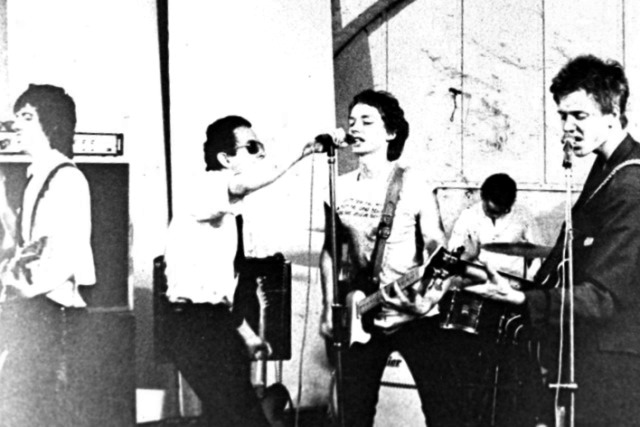
On seeing them at The Screen on the Green, NME’s Charles Shaar Murray wrote “a group called Clash take the stage. They are the kind of garage band who should be speedily returned to their garage, preferably with the motor running, which would undoubtedly be more of a loss to their friends and families than to either rock or roll. Their extreme-left guitarist, allegedly known as Joe Strummer, has good moves, but he and the band are a little shaky on ground that involves starting, stopping and changing chord at approximately the same time.” While it’s odd the R&B-favouring Shaar Murray wasn’t aware of Strummer from The 101’ers, this review inspired the future Clash song “Garageland.”
The already converted Giovanni Dadomo was there too. In Sounds he wrote, The Clash “were amazingly good” despite “their equipment [doing] the band a grave disservice tonight, losing Joe Strummer's hard to mix vocals until they became an unintelligible mumble and generally poleaxing the band's nuclear potential.”
Also for Sounds, Chas de Whalley saw them at The Roundhouse and said “At least you can guarantee that any band formed by the 101’ers guitarist Joe Strummer will bristle with fire and energy. Unfortunately at the Roundhouse The Clash had little more on offer.”
Mixed views then. The audio of the Screen on the Green, 100 Club and Roundhouse shows brings a different perspective, especially on how Levene plugged into this new band.
At The Screen on the Green on 29 August The Clash take the stage and spend the first minute tuning up in front of a silent audience. Hardly nuclear. After the fiddling, the set opener is “Deny.” People in the audience start whooping. The live sound is fine. Jones has the rhythm guitar over which Levene superimposes jagged, spidery arpeggios. Next up is the Kinks/Who-style garage rocker “I Know What to Think About you.” Again, Levene is about irregular aural colour. His contributions render the songs off balance despite their relentless forward motion. When the well-known “Janie Jones” arrives, the difference between pre- and post-Levene band is set in stone: not as fast as later, with a metallic ring to the whole sound – not as in heavy metal, but a sharpness. It’s the same with the chugging “What’s My Name.”
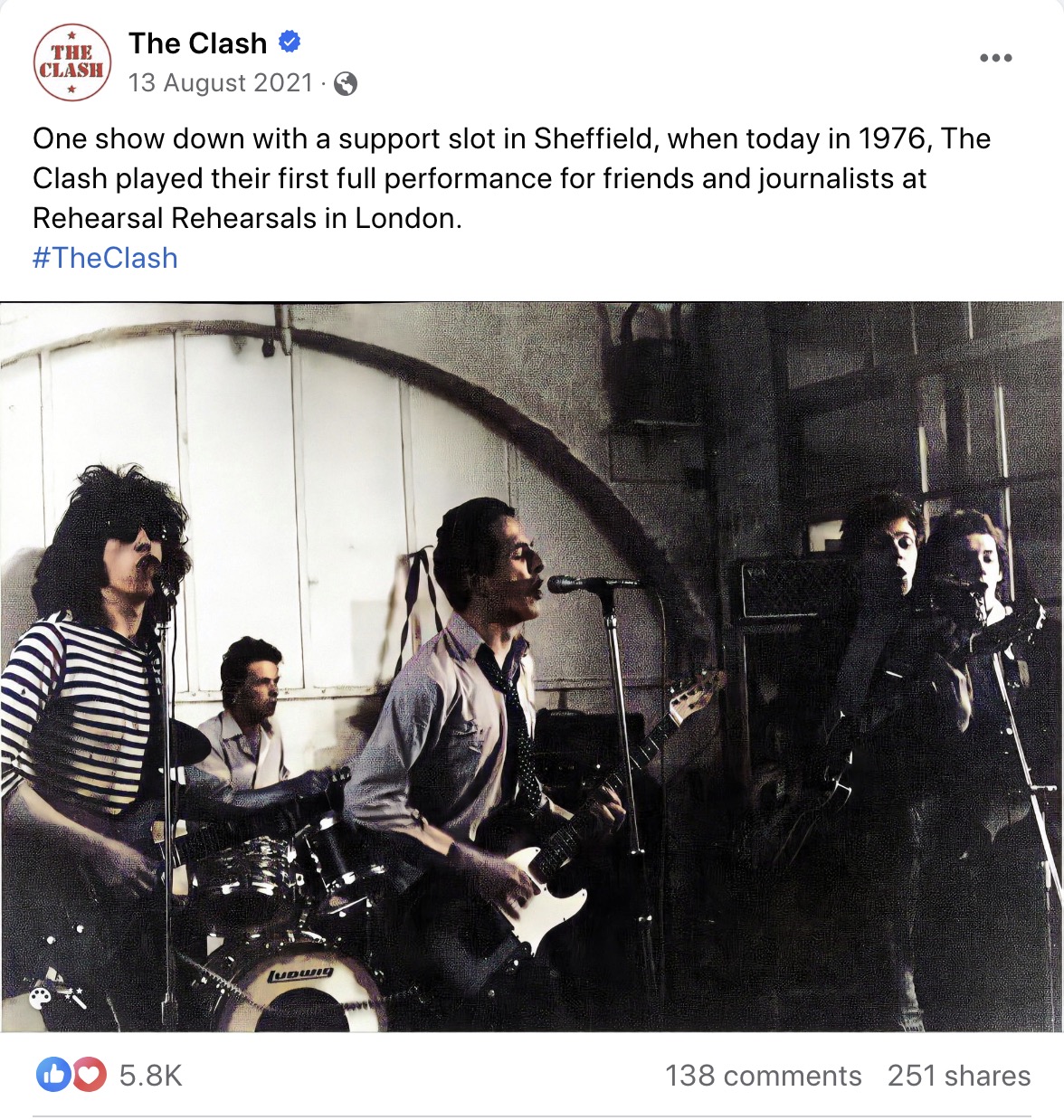
Pictured right, The Clash during the 13 August 1976 showcase at their rehearsal room. Keith Levene, right

Two days later, supporting Sex Pistols at the 100 Club, there's the same restraint with the pacing and an equivalent textured approach to the overall delivery. No matter how crude the songs, Levene’s guitar brings a prickliness. “1-2 Crush on You” is more mod-flash Nuggets-style garage rocker than punk in the 1976 or 1977 sense. “What’s my Name” is most interesting as it has a clanging quality which was later lost.
On 5 September, at The Roundhouse, the measured tempo is still a defining feature. As is Strummer’s verbal baiting of the crowd, which doesn’t work: there are catcalls for The 101’ers. In terms of Levene’s presence, his soloing as part of the overall onward thrust brings a spikiness which was lost in the barrage which was later perfected. By accommodating Levene’s guitar, this version of The Clash was a more measured unit than what was on the horizon.
Sex-Pistols-100-Club-Punk-Festival
Regular shows and press coverage meant the band was progressing but after late August’s Notting Hill Carnival, which Strummer and Simonon attended, the former turned up at a rehearsal with a new song titled “White Riot.” Levene’s refusal to play a song with so provocative title is one reason he gave for leaving the band there and then. He also said he was increasingly sick of manager Bernard Rhodes’ constant programming-style verbiage and Strummer haranguing him about the band’s mission. He was also tiring of, as he saw it, rock ’n’ roll. Any or all of these resulted in him walking out, leaving his guitar feeding back while leaning on an amplifier.
Within a week or so, on 20 September, The Clash played at 100 Club punk fest without Levene and as a four-piece for the first time – on before Sex Pistols again. “White Riot” debuted as the set opener. The show was recorded and finds the band faster than earlier and more emblematically punch-it-out punk than before. The Sixties garage-rock edge and chiming textures Levene gave the band have already gone. Shows from Birmingham, Fulham Town Hall and The Royal College of Art in October and November 1976 are the same – the band has become The Clash: The Clash which would be caught on their debut album is within reach.
According to The Clash, Levene’s sole legacy was a co-writing credit the first album’s “What’s my Name.” But, as the recorded evidence from live dates shows, when he was on stage with the band in August and September 1976, his effect was to temper the coarseness while bringing an unpredictable edge. It is this sound, his sound, which left an imprint by resonating through the early Subway Sect as heard on their first single “Nobody’s Scared.” A slightly different, more abstract, legacy.
As to what the Keith Levene Clash would have sounded like had they signed to a label and recorded? Nothing they were doing then would have attracted a mainstream imprint. Levene's Clash would have had little chance in finding a wide audience. Nevertheless, Joe Strummer joined as he knew where music was going; after ditching The 101’ers, The Clash was his lunge for the brass ring. And manager Bernard Rhodes was only interested in a major label for his charges. Such a scenario meant there was no place for an individualistic guitarist. If Levene had stayed, he would have become collateral damage. There was no chance of an alternative history for UK punk.
Barry Auguste, "How The Clash and I Took Punk Underground in 1970s Camden", Hampstead Highgate Express, March 20, 2014. Available at: hamhigh.co.uk (Accessed April 2025).
How The Clash and I took punk underground in 1970s Camden
In 1976, Camden Town was a derelict landscape, but within its decaying structures, The Clash and fellow punks like Subway Sect found both a rehearsal space and an unlikely playground. Barry 'The Baker' Auguste recalls how Rehearsal Rehearsals served not only as the birthplace of punk anthems but also as the gateway to the eerie Camden Catacombs—a forgotten Victorian labyrinth beneath Chalk Farm Road.
Led by Paul Simonon, they explored this subterranean maze, turning fear into thrill. As punk rock grew serious with events like the 100 Club Punk Festival, these innocent adventures faded. Auguste reflects on how both bands and the area transformed, with Camden’s punk legacy now just a brief flash in the long history of its hidden tunnels.
Barry ‘The Baker’ Auguste was the roadie for punk rockers The Clash. Here, he recalls the band’s formative years in Chalk Farm.
Back in 1976, Camden Town was just another abandoned area of north London which, after years of neglect, had been left to the drunks and winos that littered the pavements of Chalk Farm Road. In the middle of it – within a filthy, dilapidated former British Rail goods yard – sat the practice rooms, Rehearsal Rehearsals.
I arrived there with my schoolmates, The Subway Sect, to help them after Malcolm McLaren had seen fit to call the rooms’ owner (and manager of The Clash) Bernie Rhodes to arrange for some much-needed rehearsal time. However, it was with anything but relish that we first encountered the cold, dank and unpleasant rehearsal space.
Its crumbling, musty atmosphere reminded me of my grandmother’s old coal cellar and the damp cold penetrated everything, even in that hot month of August. Rehearsals was a place you didn’t feel you wanted to hang around in any longer than you had to. Though attempts had been made to make it bearable, it was a bleak and depressing environment.
Paul Simonon hung around the rehearsal room more than anyone else back then and was the first member of The Clash to befriend us. One night he said conspiratorially: “Want to see something really cool?” He led us to the back of the rehearsal room behind the jukebox, through the drapes that served as sound-baffling, and down a gentle ramp to a huge, ancient door.
After some difficulty we managed to get it open and it slid slowly back to reveal an extensive labyrinth of pitch-black tunnels and passageways. The deathly frozen air hit us instantly as we entered what seemed at first to be some kind of sinister medieval dungeon, reeking with years of mouldy disuse. Excitement gripped us and I ran back to my car to get a torch.
Our first tentative exploration of the tunnels revealed a maze of derelict, mildewed archways and passages – some trailing off to dead ends and others leading to enormous cavernous areas, as large as any warehouse. Tramway tracks crisscrossed some of the tunnels and water ran down walls or dripped from crumbling Victorian brickwork and ceilings.
Once Paul Smith (The Subway Sect’s drummer) had managed to get Sebastian Conran’s disused little yellow moped running, we explored further and deeper into the seemingly endless caverns with our torches and would play hide and seek down there for hours with Paul Simonon. The sound of the little moped’s engine getting ever closer and closer in the darkness heightened the macabre excitement of the chase to a spine-chilling fever pitch.
The all-encompassing blackness, pierced only by our torches, hinted at ghastly silent terrors behind the commonest shapes or objects and challenged our corporeal senses to the point at which boundaries dissolved. I cannot convey the nightmare sensation of those vast subterranean passages. The inexorable fear of running into something unknown and unpleasant waiting to pounce in the darkness like a Lovecraft fiction fed into our imaginations and kept us from delving too deep into the fathomless excavation.
Unknown to us, this warren of cold, menacing passages and tunnels hadn’t known warmth or light for almost 100 years. Back then, they had echoed to the sound of an altogether different horror.
The Camden Catacombs, as they have become known today, were once owned by British Railways. They were constructed in the 19th century as stables for horses and pit ponies that were used to shunt railway wagons.
The tunnels run under the Euston mainline, under the goods depot at Primrose Hill, beneath Gilbey’s Bonded Warehouse on the Regent’s Canal and under Camden Lock Market. Their route can be discerned by the distinctive cast-iron grilles set at fixed distances into the road surface; originally the only source of light for the poor overworked horses living their wretched lives in the darkness below.
Some sections were demolished during the redevelopment of the area while others belong to Camden Market who dissuade access. The 650 or so railway horses were stabled in Chalk Farm Road (now Stables Market), and a labyrinth of tunnels built from 1865 allowed them to travel underground from their stables to their work in Camden Town Goods Yard so they did not have to cross the tracks. The same network of tunnels was used by other heavy horses, such as the shire horses of Gilbey’s, the wine and liquor company that owned warehouses and goods sheds with access to the railway.
In our innocence, and unaware of the sinister nightmare that these cold, dank cellars must have borne witness to, we continued amusing ourselves in the tunnels until around the time of the 100 Club Punk Festival, when everything on the burgeoning punk rock scene started to get very serious.
I remember Joe Strummer came down there a few times but Mick Jones and Terry Chimes never did to my knowledge – mostly it was Paul and us who spent many frenzied hours in the network of pitch-dark caverns deep in the dark recesses behind Rehearsals.
Just two years later, The Clash would part company with Rhodes and bid goodbye to the cold, damp rehearsal rooms (if only for five years). So too would The Subway Sect when Rhodes fired the whole band in autumn 1978 and kept Vic Godard as songwriter and singer.
It seems ironic that the Camden Town area has become so trendy with its markets and expensive high street mainly because of the presence of a punk rock band for so short a time when, in fact, the railway yard complex was built more than 100 years before.
Now, with the benefit of hindsight, it is clear that our own temporary and ephemeral use of the warehouse was but a fleeting, vain appearance – a moment, a twinkling of an eye in the long history of those dark, disused warehouses. And now we too have become part of their past.
Read more of Auguste’s The Clash memories at www.thebaker77.wordpress.com
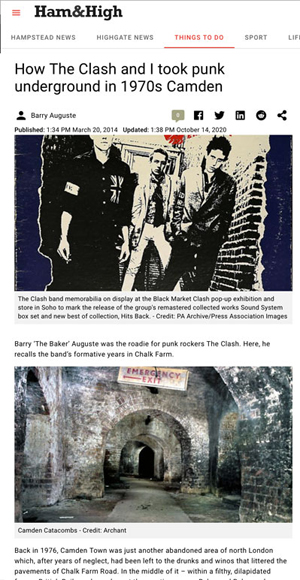 Ham & High
(Hampstead News)
20 March 2014
Extracted and adapted from theclash.org.uk – The Clash CD Booklet, detailing the creation, recording, and legacy of The Clash (1977), featuring insights on locations, songwriting, and iconic imagery.
'Night and day' with the Clash
Clash.org --- Online or archive PDF
The Rehearsal space was a very small area just inside the big arch-topped door (15ft x 10ft approx.) which is opposite the walkway (album cover)
The Clash's 1977 debut album was a fast, fierce reflection of London’s unrest, blending punk energy with sharp social commentary. Written in a council flat and recorded in just twelve days, it remains a defining statement of youthful rebellion.
Most of the debut LP The Clash was written on the 18th floor of a council high-rise on London's Harrow Road. The flat belonged to Mick's grandmother, who regularly turned up at Clash gigs.
One of the regular punk scene photographers, and a friend of the band, the American Kate Simon, took the iconic punk image front cover picture in late 1976. It captures the three-piece Clash posing like street-fighting men on the trolley ramp of the old Tack Room opposite the Rehearsals building in Camden.
The back cover photograph by Rocco Macauley shows a police charge at the Notting Hill Riot beneath the shadow of the Westway.
The Rehearsal Rehearsals space was a small area just inside a large arch-topped door opposite the walkway featured on the album cover. Paul Simonon painted the car dump mural inside, and though the area has since been expanded, it remains open on weekends for second-hand clothing sales.
They wrote short, sharp, fast-riffing songs about social, racial, and political tensions simmering in the summer of '76.
The Clash recorded their first album at CBS Studios, Whitfield Street, London (Studio 3) over twelve days, starting 10th February 1977. The Spaghetti House opposite served as their dining spot during breaks. Today, the studios are known as Sony Music Studios, London.
Track Insights
Janie Jones
Opens with staccato chords and tells of dreary office life versus music, love, and escape. Inspired by infamous party host Janie Jones, who served a four-year jail sentence.
I'm So Bored With The U.S.A.
First performed at 22 Davis Road. The rhythm riff borrows from The Beatles' The Word.
White Riot
Inspired by Notting Hill Carnival, 30 August 1976. A call for white youth to express anger like black youths through direct action.
Hate & War
Written by Joe Strummer in a disused ice cream factory at Foscote Mews.
Protex Blue
Named after a brand of condoms from a machine in Windsor Castle Pub, near Mick's flat in Wilmcote House.
What's My Name
Co-written by Mick Jones and Keith Levene before Joe Strummer joined.
Police & Thieves
A reggae cover of Junior Murvin's hit, featured in the Rude Boy film.
Deny
References the 100 Club on Oxford Street.
London's Burning
About the seductive power of amphetamines and the view from Wilmcote House.
Career Opportunities
Introduced in October 1976, written at Rehearsal Rehearsals.
48 Hours
Written upstairs at Rehearsals about cramming life into a weekend.
Garageland
A response to Charles Shaar Murray's NME review calling them a garage band. The riff nods to Mott The Hoople's All The Way From Memphis.
For more, check out Tony Fletcher's The Clash: The Complete Guide to Their Music (2005) and Uncut Magazine (February 2003) for behind-the-scenes stories and Kate Simon's photography.
Social Media
Journalist Giovanni Dadomo wrote one of the first...
The Clash | Facebook – https://www.facebook.com/ – The Clash FB
WANTED ****
Alick Michel - I have the cassette of Giovanni interviewing The Clash.

Journalist Giovanni Dadomo wrote one of the first articles about The Clash which was published in Sounds magazine
Journalist Giovanni Dadomo wrote one of the first articles...
https://www.facebook.com/ – The Clash| Facebook
Journalist Giovanni Dadomo wrote one of the first articles about The Clash which was published in Sounds magazine. It was written after The Clash’s press-only gig at their rehearsal room on 13 August 1976.
“Before we begin, some clarification. For a start, this isn’t intended to be a ‘review’ as such; consider it rather as a somewhat peripheral cluster of observa-tions regarding one The Clash .. “
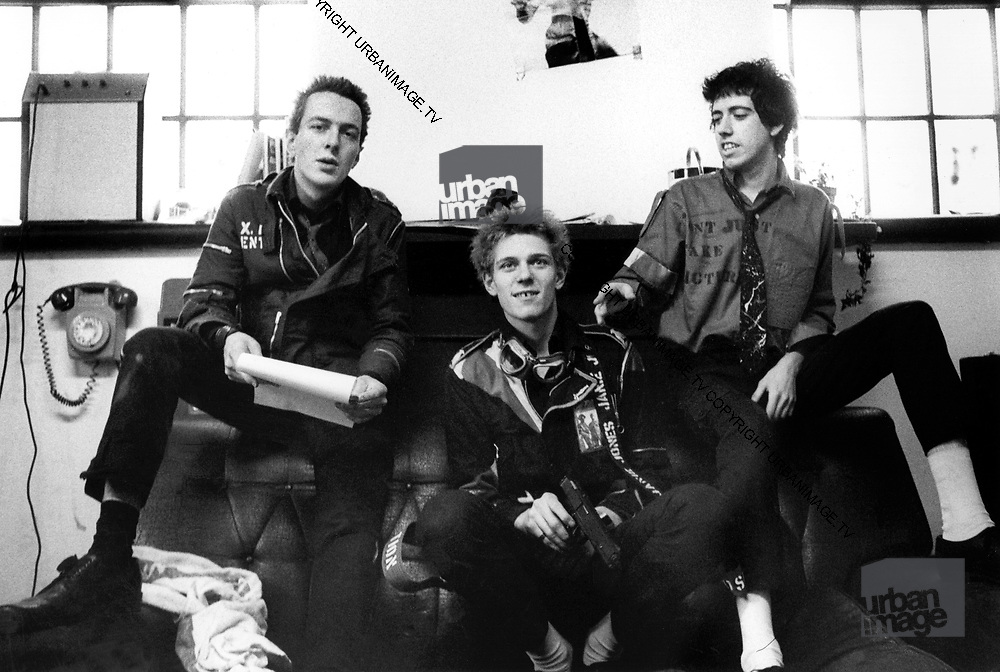
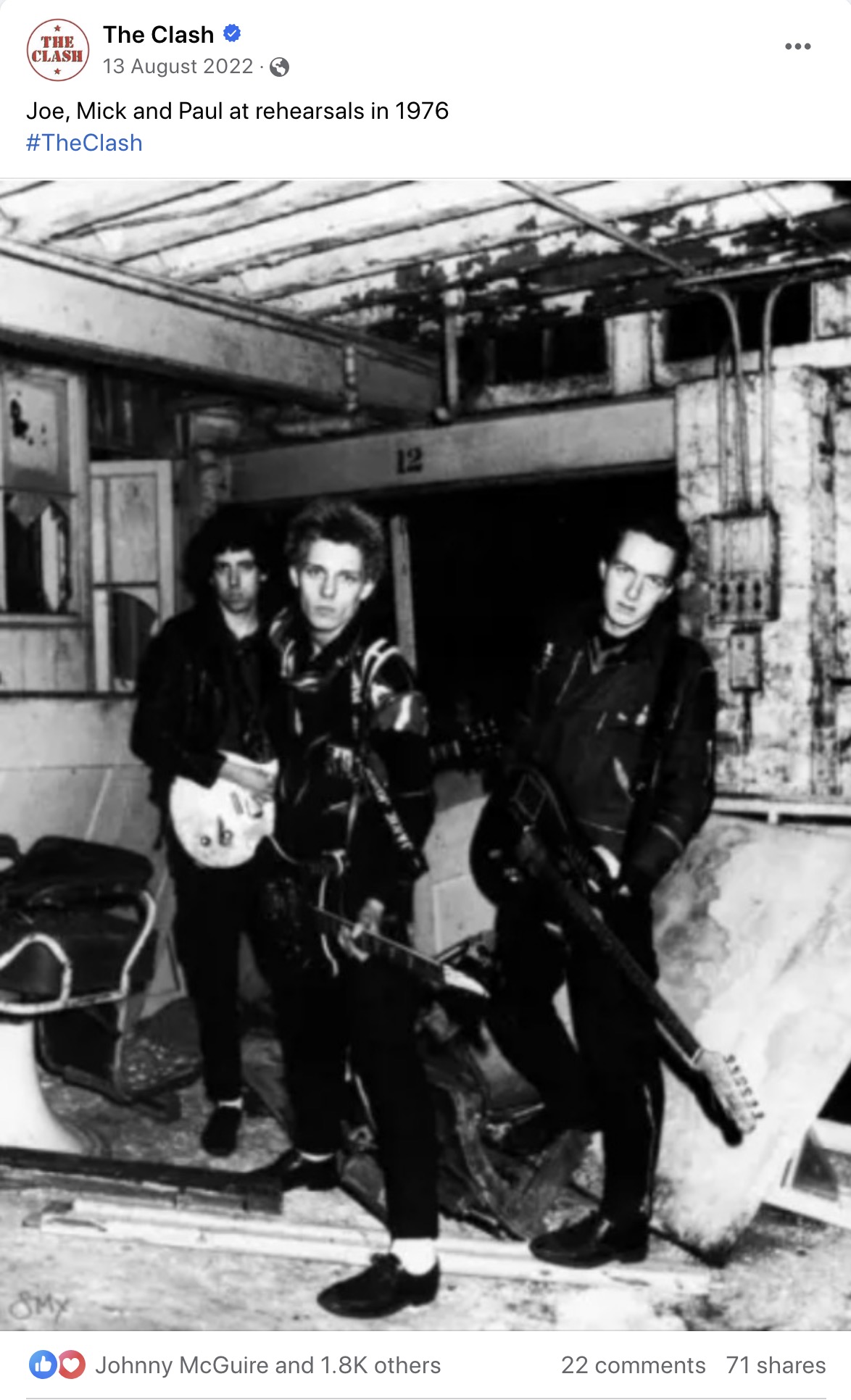
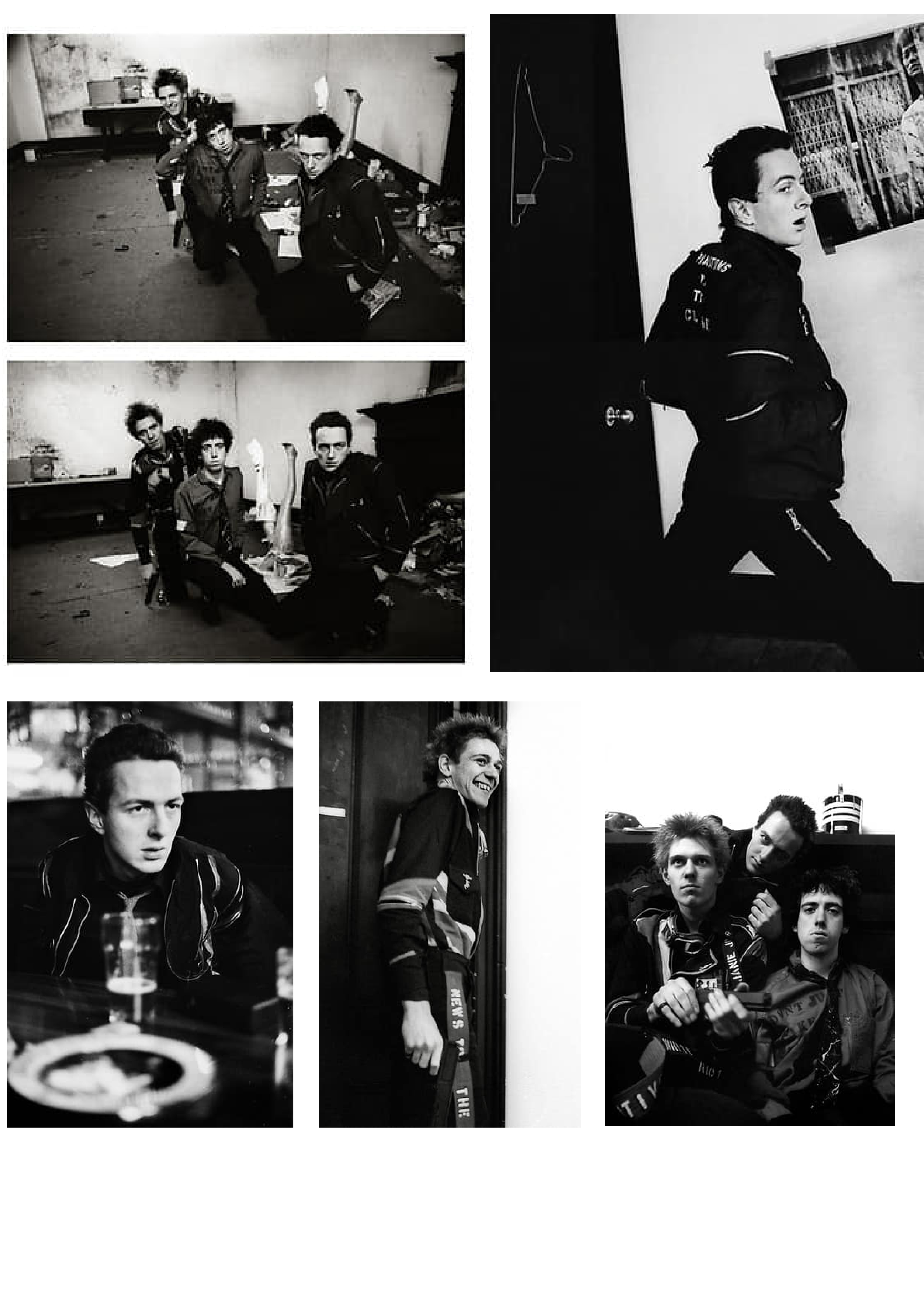
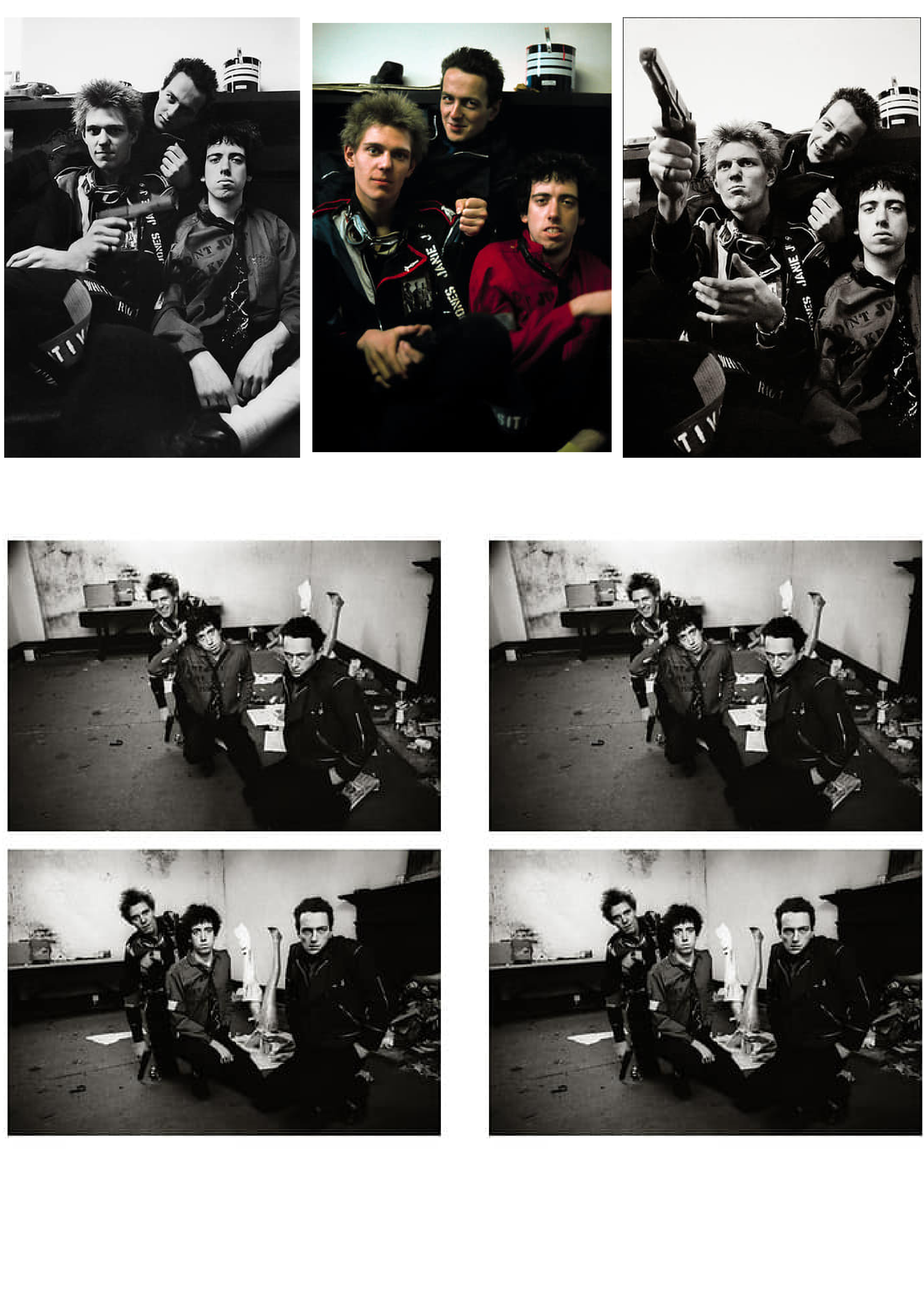
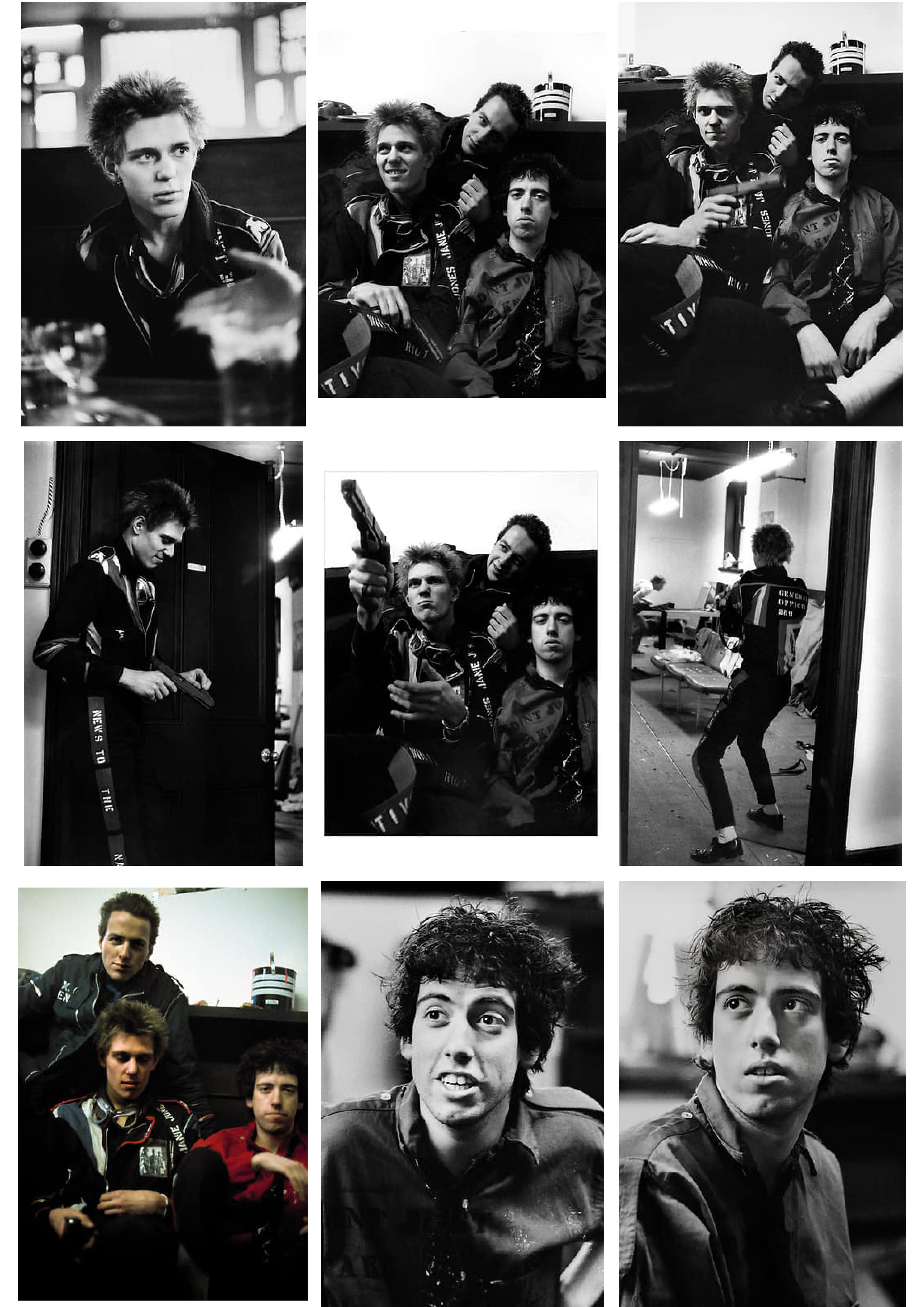
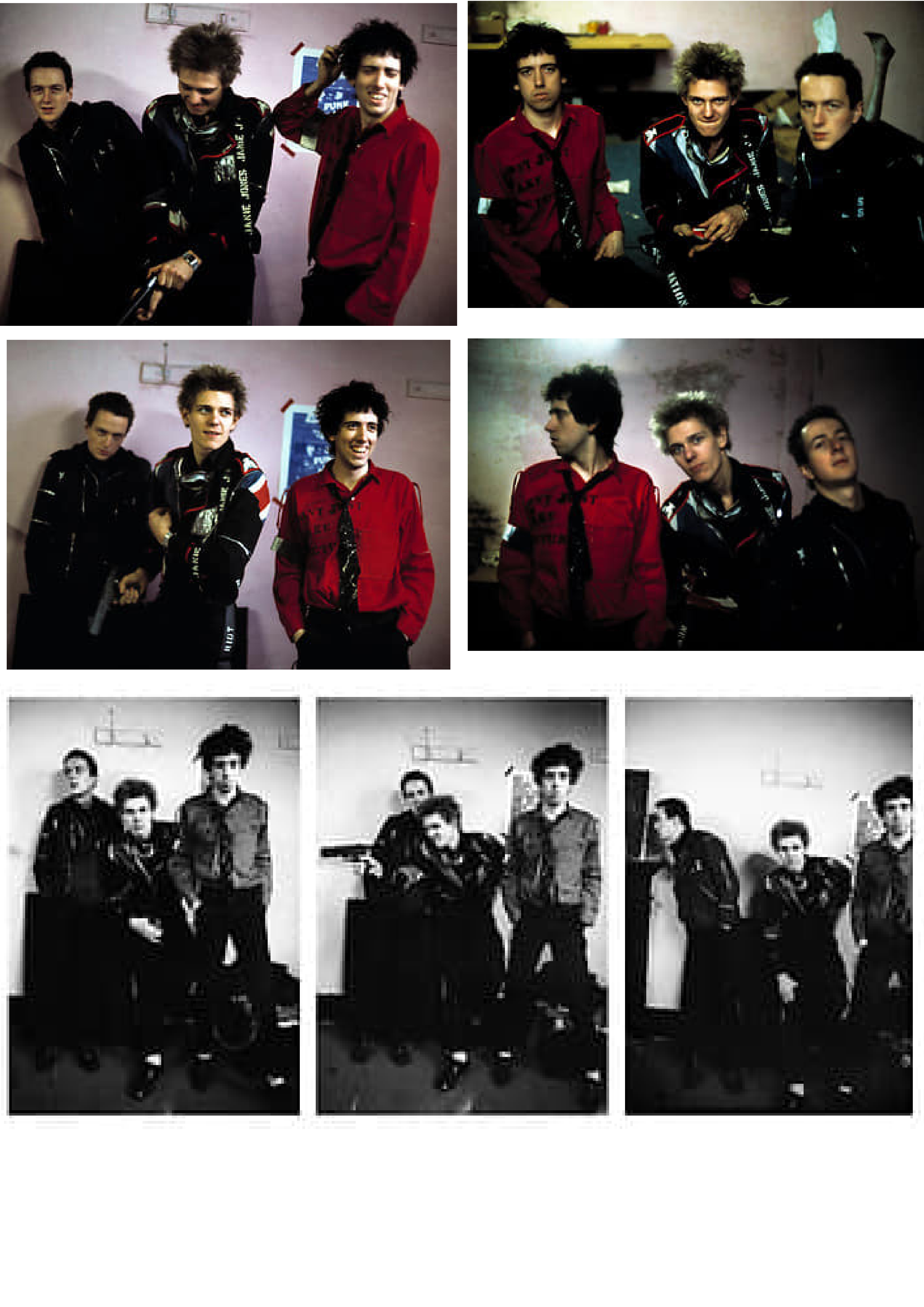
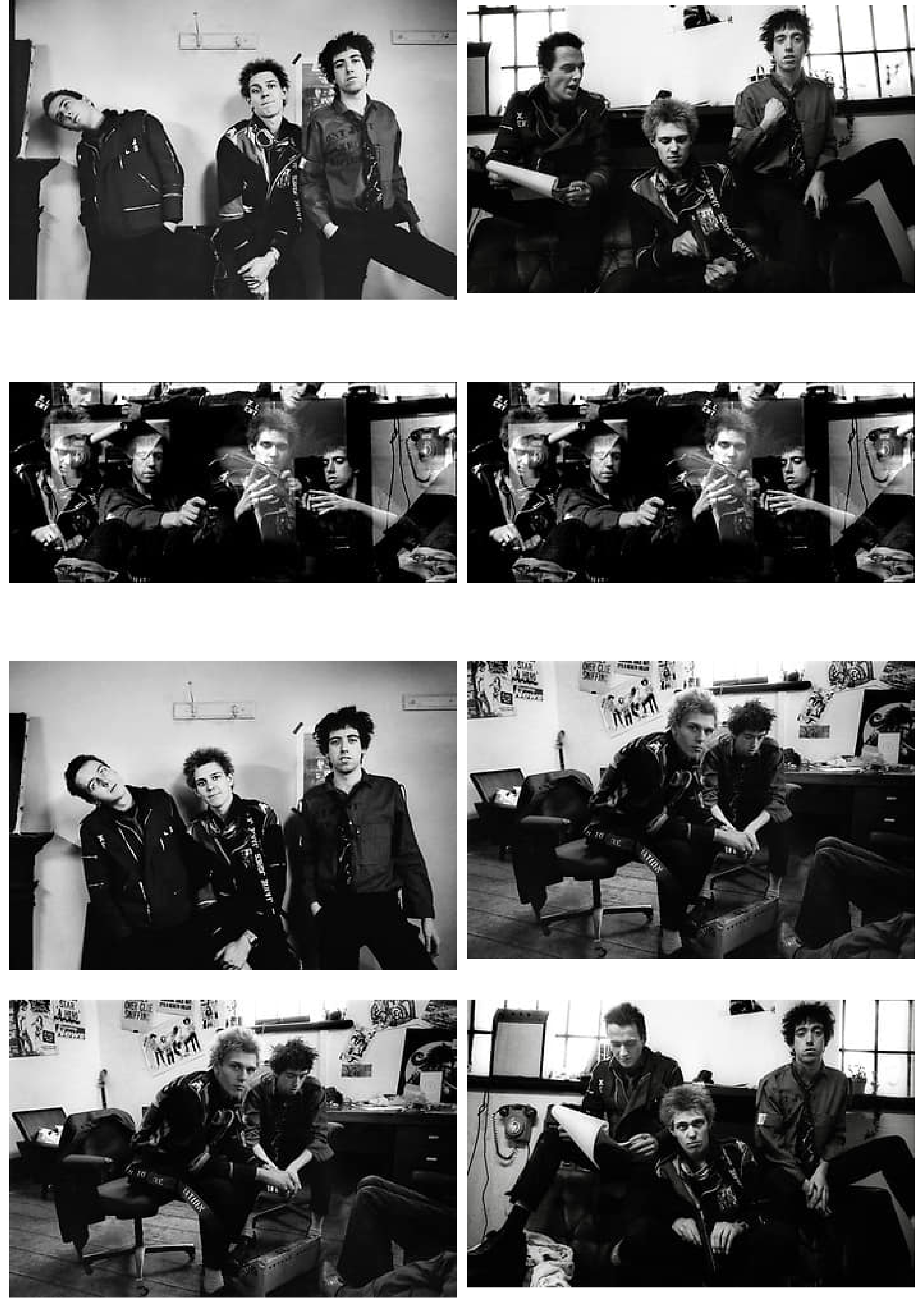
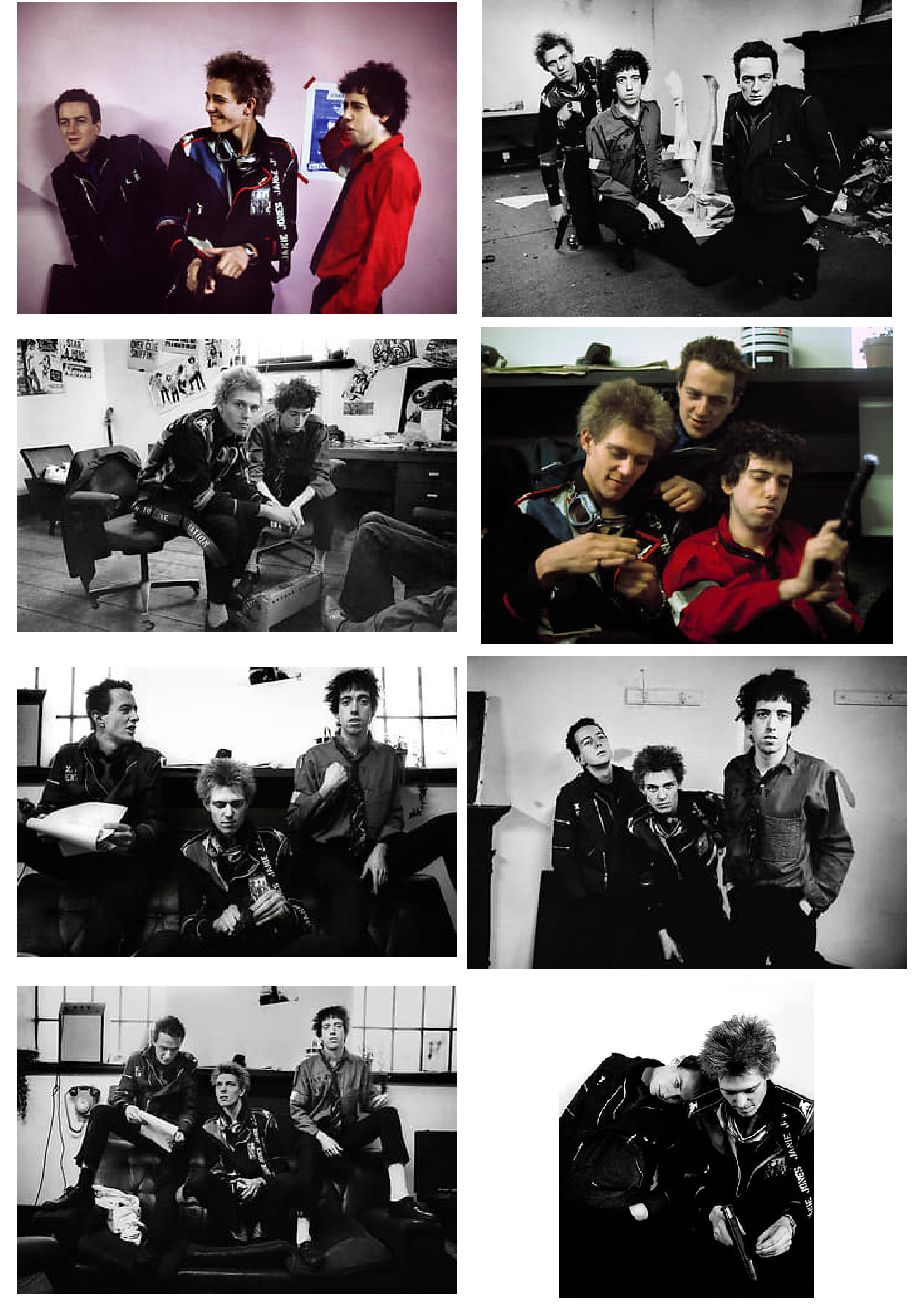
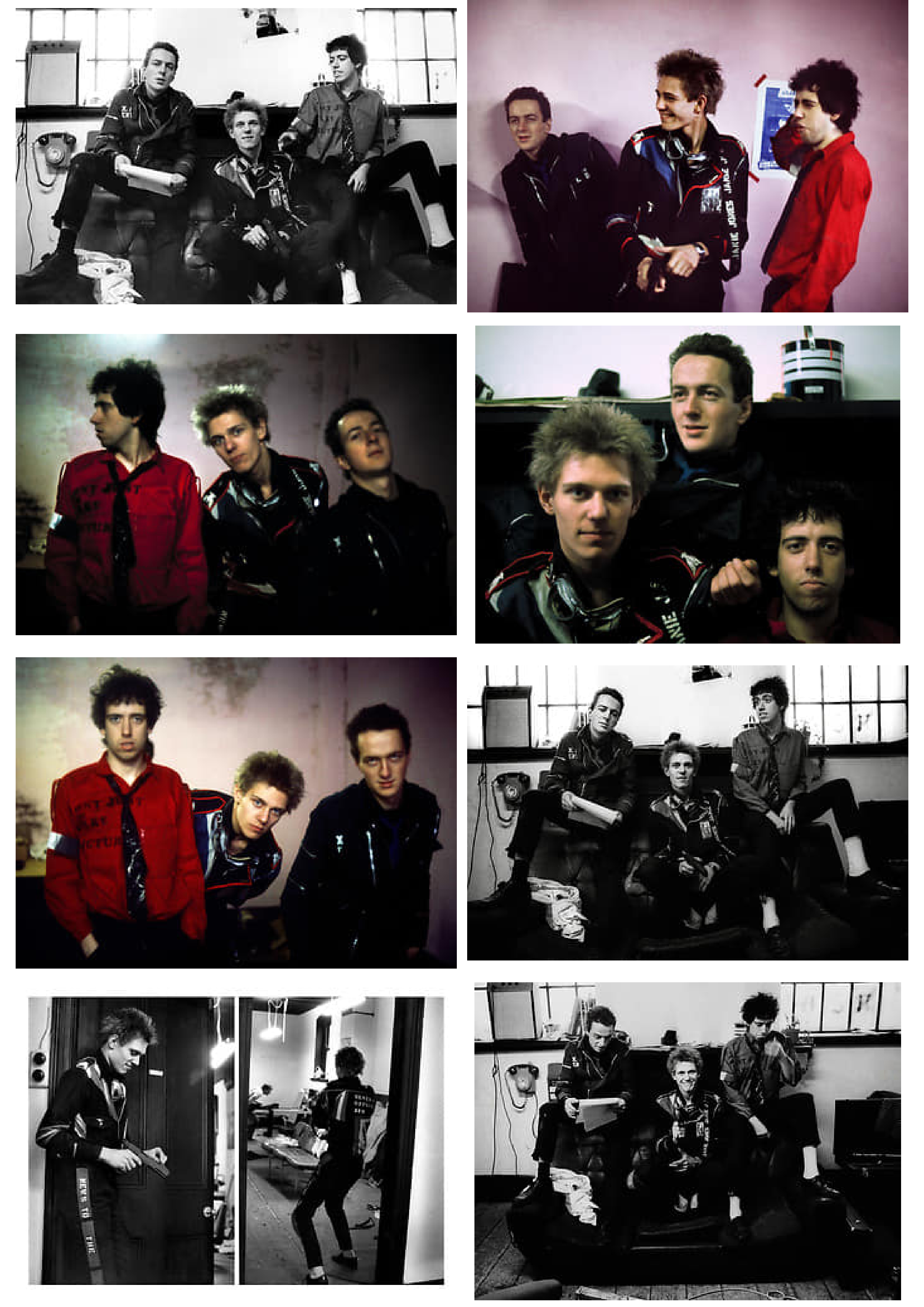
Joe, Mick & Paul at Rehearsals, 1976
Party Invitation Flyer for Rehearsals Rehearsals Studio on the 13th August 1976
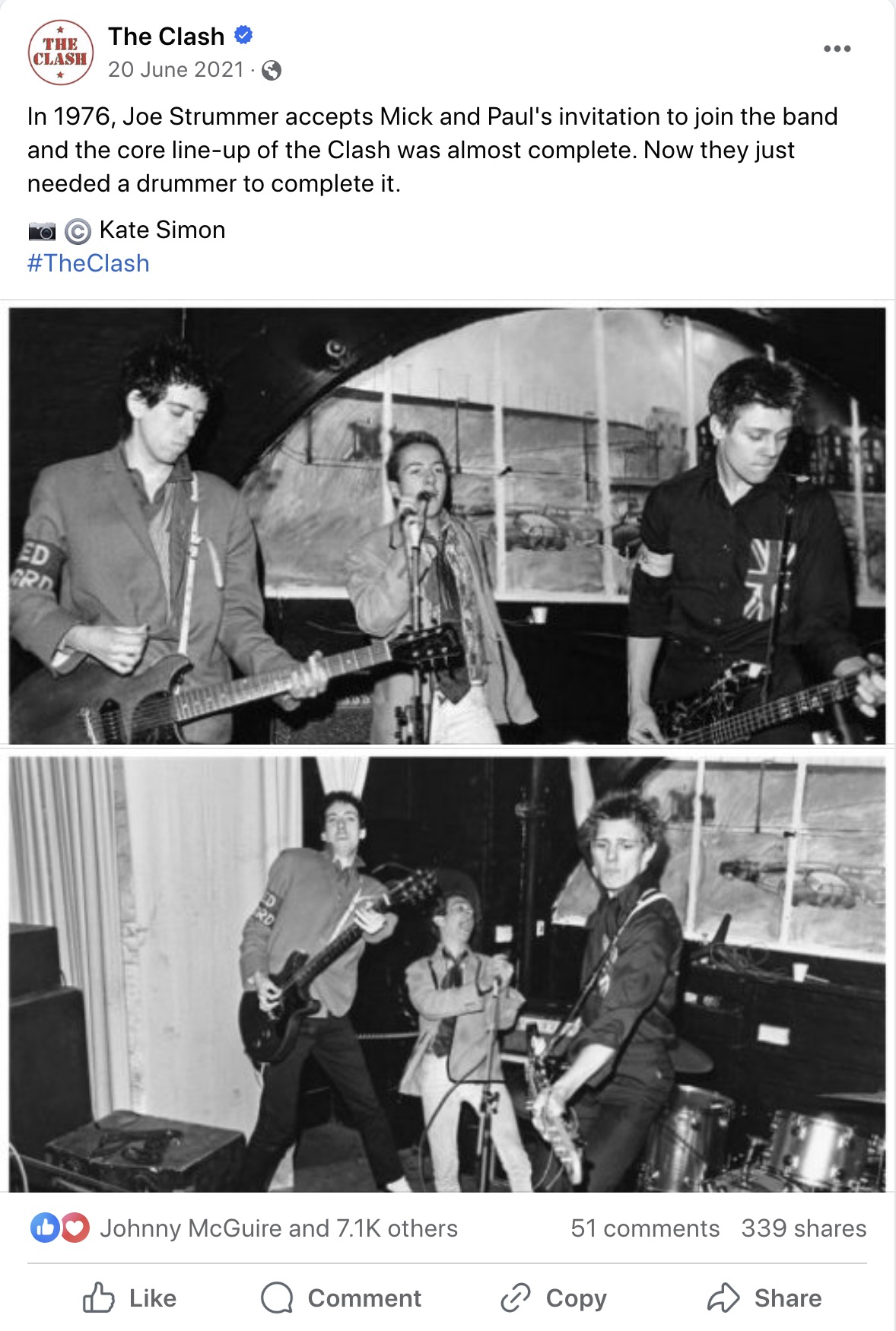
In 1976, Joe Strummer accepts Mick and Paul's invitation to join the band
The Clash played their first full performance
for friends and journalists at Rehearsal Rehearsals in London
Paul Simonon and Mick Jones at ‘Rehearsal Rehearsals, Camden Town.
1977 Adrian Boot
https://www.facebook.com/ – The Clash | Facebook

Photos
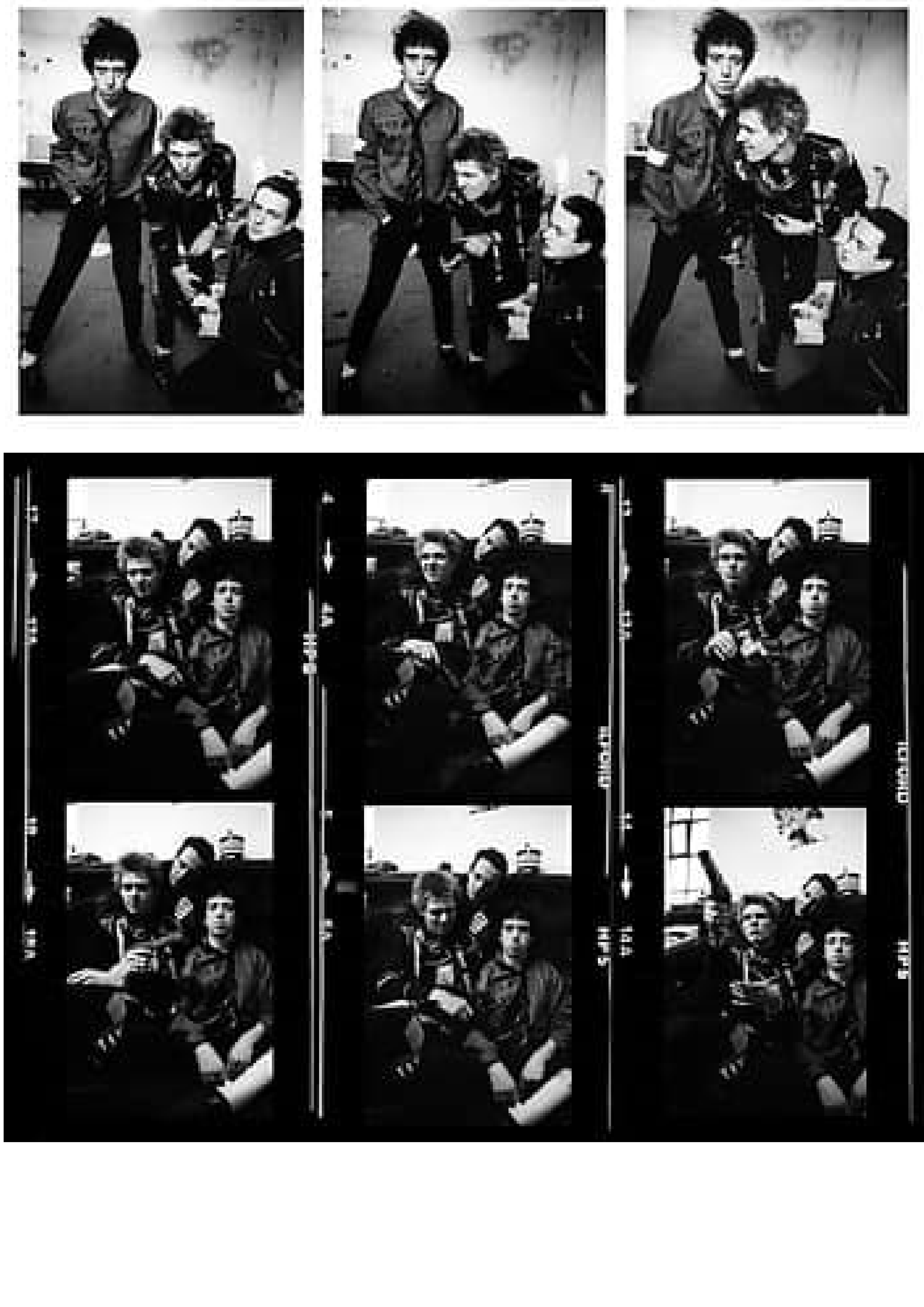
Rehearsal Rehearsals, Camden Town, London - Photos
Open photos in full in new window
CLASH TO ME | Facebook - https://facebook.com/
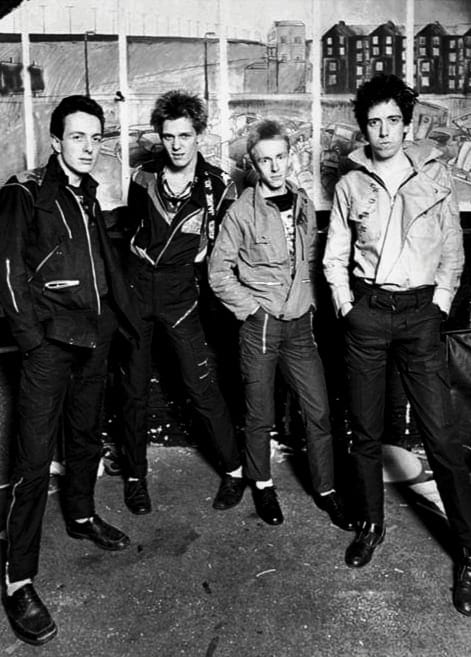
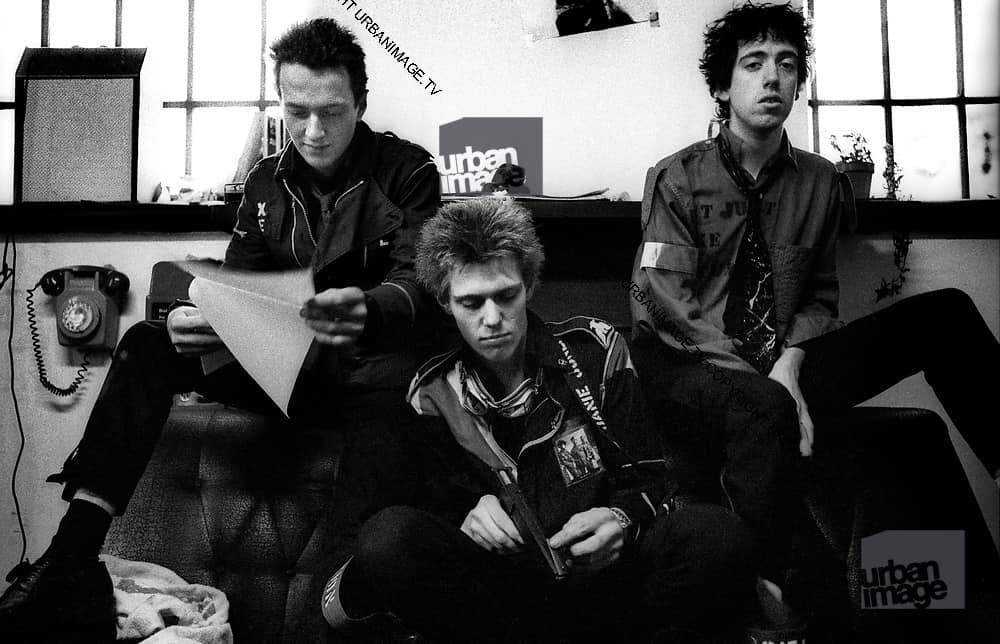
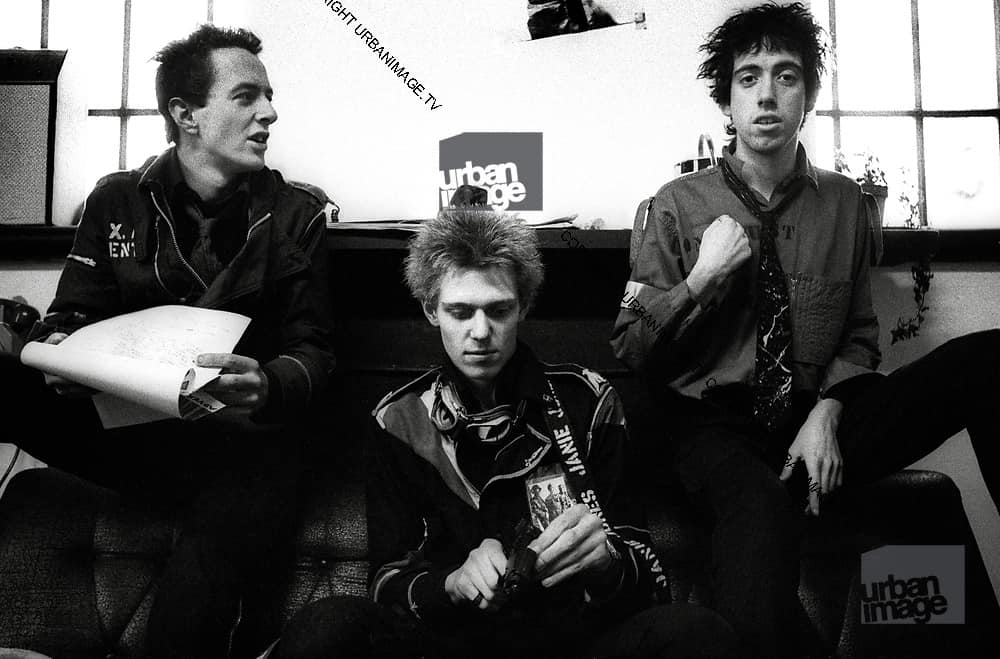
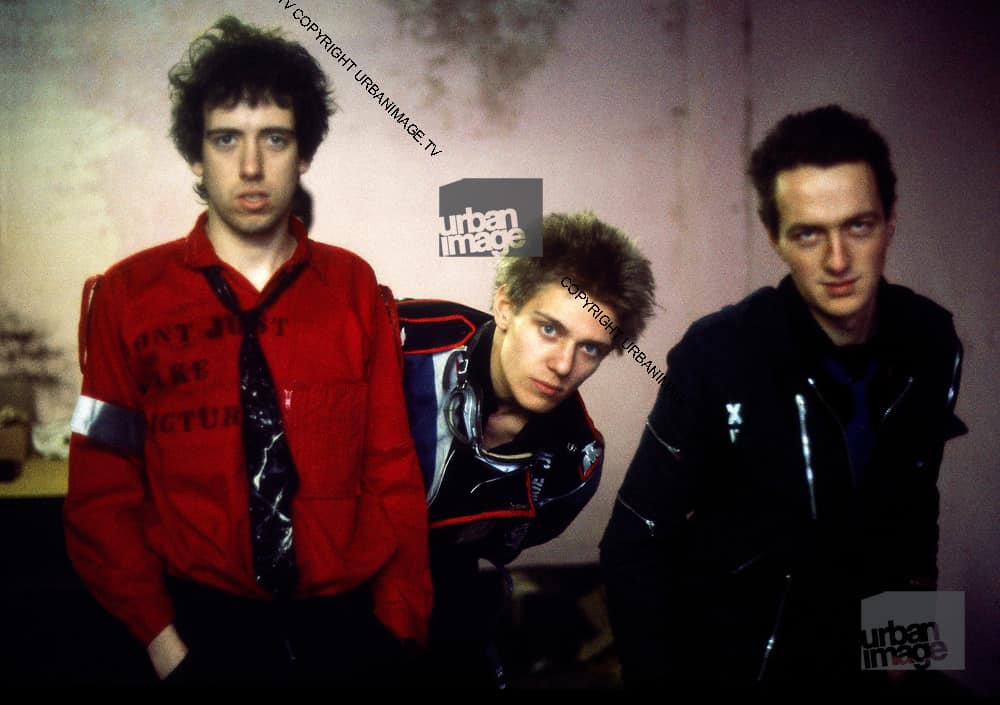
Photo: Kate Simon
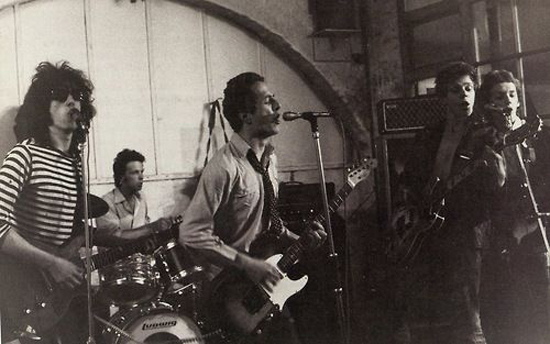
Other
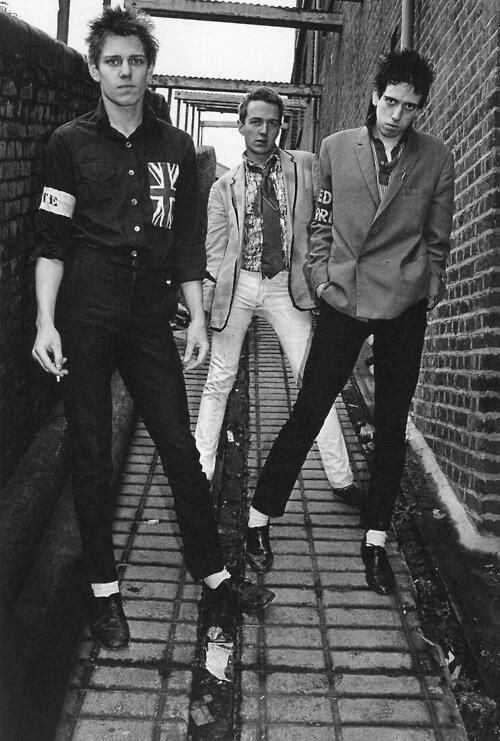
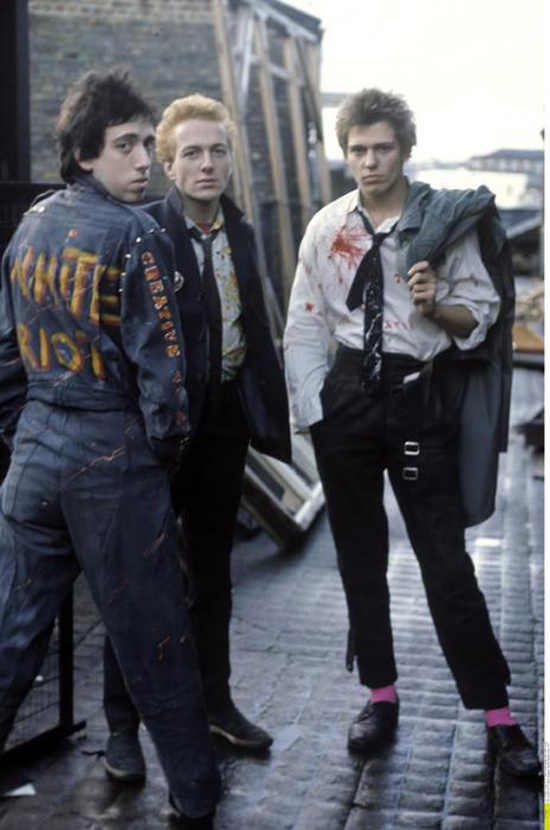
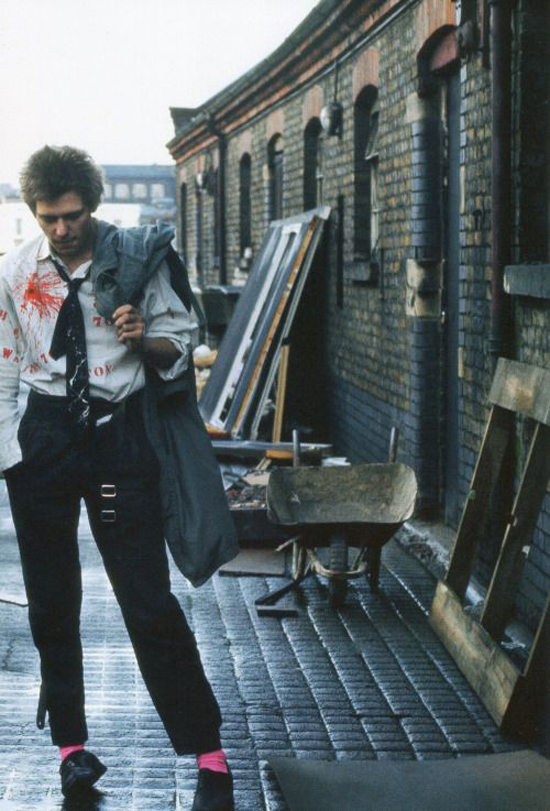
Paul Simonon and Mick Jones at ‘Rehearsal Rehearsals, Camden Town. 1977 Adrian Boot
The Clash | Facebook - https://www.facebook.com/

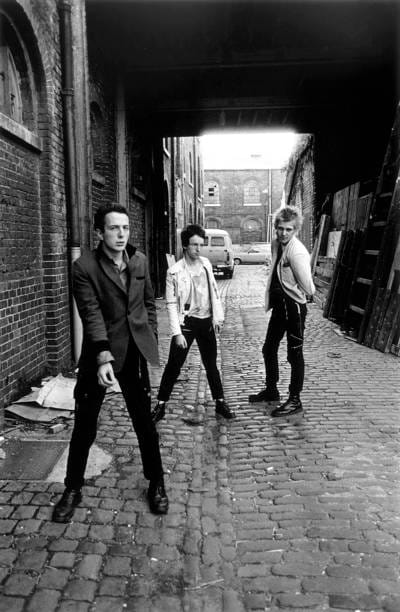
The Clash at the entrance to the tunnels under Rehearsal Rehearsals
The Clash - The Clash | Facebook - https://www.facebook.com/
The Clash at the entrance to the tunnels under Rehearsal Rehearsals, their rehearsal space in Camden. Here's The Baker's account of discovering the tunnels, with Paul in '76. http://thebaker77.wordpress.com/.../the-subways-and.../

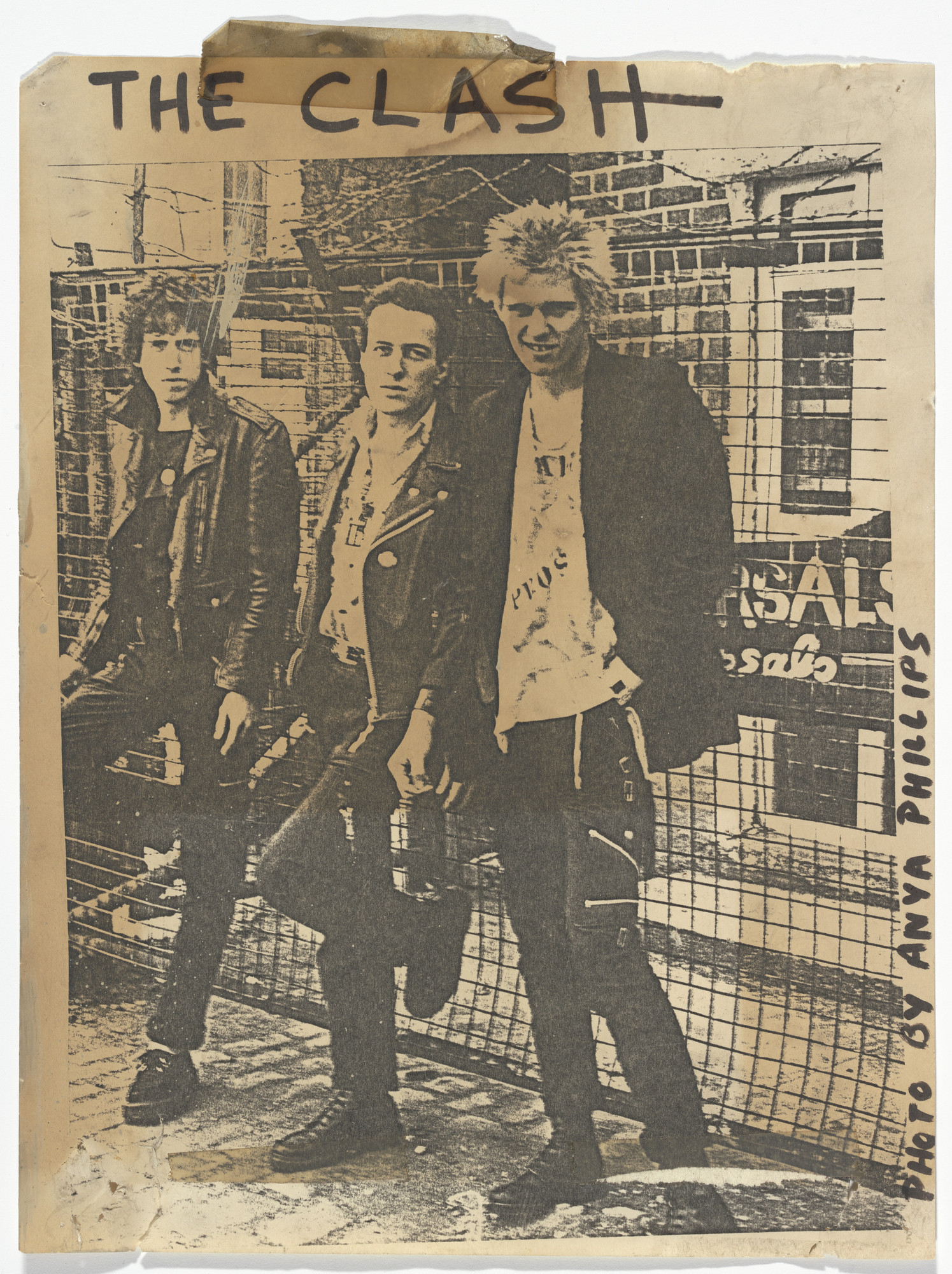
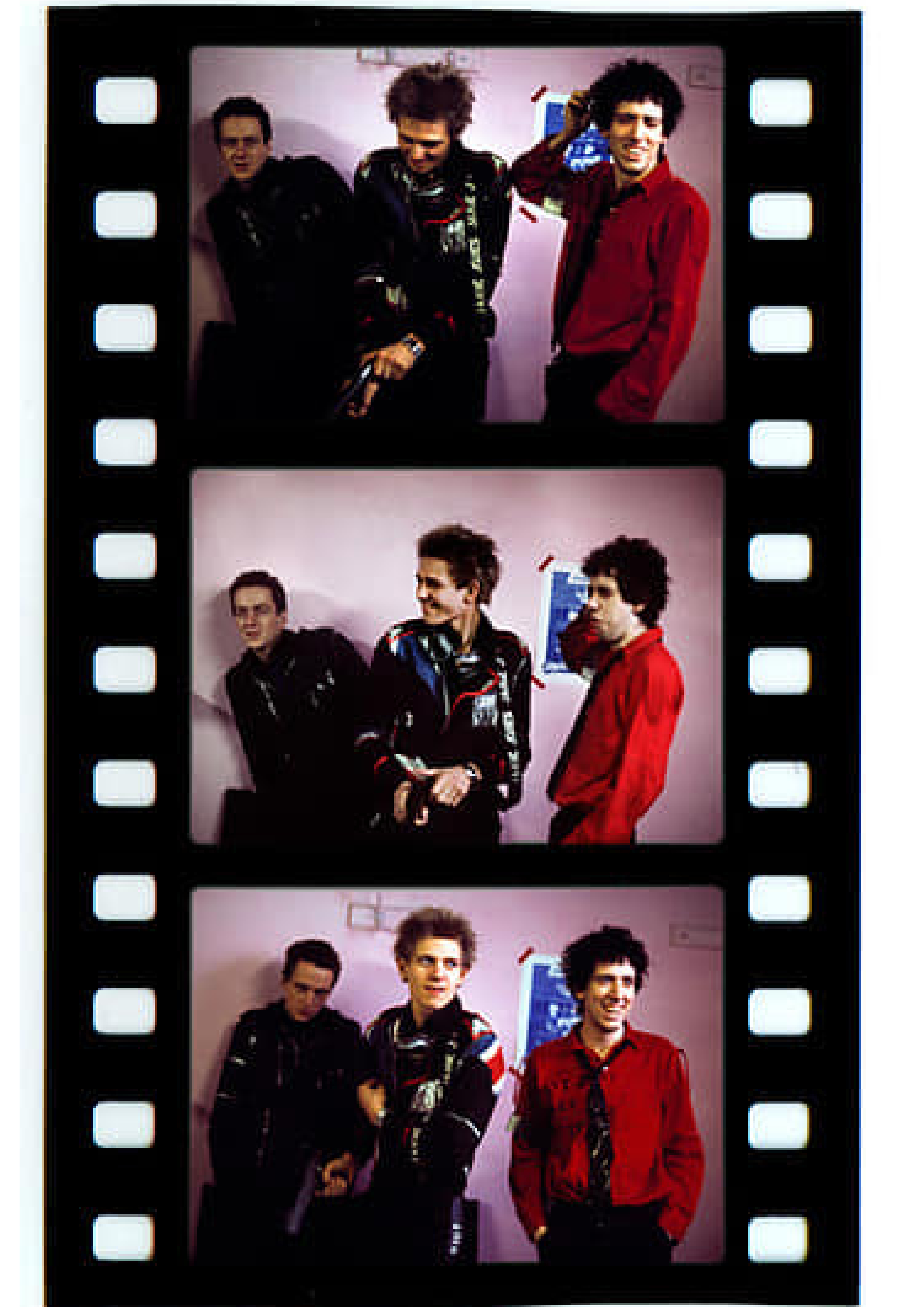

/assets/adverts%20flyers%20posters/1976%2009%2020%20100%20Club%20poster%20big.jpg)
Extensive archive
of articles, magazines and other from the early gigs in 1976
Archive - Snippets - UK Articles - Video Audio - Social media - Fanzines Blogs - Retrospective articles - Photos
www.blackmarketclash.co.uk
email blackmarketclash.co.uk@gmail.com
STRUMMER, BAD, Pogues, films + : THE SOLO YEARS STRUMMER & THE LATINO ROCKABILLY WAR BOOKS, NEWSPAPERS & FEATURE MAGAZINES Sex Pistols / The Jam / The Libertines / Others
|



Not known - some video does exist
If you know of any recording, email blackmarketclash
|
EARLY GIGS '76, A collection of from early 1976 upto the Anarchy Tour, December 1996.
Extensive archive of articles, magazines and other from the early gigs in 1976 INDEX Archive
EARLY GIGS '76, BOOKS
Ignore Alien Orders: On Parole With The Clash
All the Young Punks
Black Swan pg142 ...
Black Swan pg95, 96 ...
Black Swan pg ...
Black Swan pg42 ...
There are several sights that provide setlists but most mirror www.blackmarketclash.co.uk. They are worth checking. from Setlist FM (cannot be relied on) from Songkick (cannot be relied on) & from the newer Concert Database and also Concert Archives Also useful: Ultimate Music database, All Music, Clash books at DISCOGS Articles, check 'Rocks Back Pages'
Stream, download, subscribe Stream and download The Clash here: Subscribe to The Clash's YouTube channel: Blackmarketclash downloads
Follow The Clash: Official website - https://www.theclash.com/
Follow The Clash on : Twitter: http://bit.ly/I0EsOs
Hundreds of fans comments about the gigs they went to... What do you remember about seeing the Clash? Leave your comment
Wikipedia - band mambers Wikipedia - The Clash
Search all of facebook Search all of Twitter Search for a local library Search auction site Search flickr Search Instagram Search the internet Search The Internet Archive [BMC lists] The Clash Books The Clash on film
Magazine searches Trouser Press Creem Magazine [US] Record Mirror [UK] Rockscene Magazine [US] Boston Rock [US] British Library [UK] Nothing Else On Flickr
Fanzine searches Slash Fanzine [US] No Mag Fanzine [US] Damage Fanzine [US] Dry zines Fanzine [US]
Auction sites Great for rare sales such as posters & tickets Photos.com Heritage Auctions ValueYourMusic
Image search Getty Images The Clash here The Clash Art for Sale - Fine Art America WireImages here Brixton Academy 8 March 1984 Photoshelter here Sep 11, 2013: THE CLASH (REUNION) - Paris France 2 IMAGES
Any further info, articles, reviews, comments or photos welcome. Submit an article here We are looking for scans - articles - tickets - posters - flyers - handbills - memorabilia - photos - comments / any information - you might have.
Please like and post on our Facebook page or alternatively email blackmarketclash
You can also follow us on Twitter
Blackmarketclash Links
If Music Could Talk
www.Blackmarketclash.co.uk
Also go to 101 Guitars for downloads
Contact your local library here and see if they can help. If you are searching for articles in the USA - DPLA Find the local US library link here
WorldCat? - find your local library Link British Newspaper Archive - United Kingdom Link Newspaper ARCHIVE - USA+ Link Historical Newspapers - USA & beyond Link Elephind.com - international Link New York Times - USA Link Gallica - France - Not very helpful Link Explore the British Library Link Trove - Australia National Library Link
|
.gif)











 The Official Clash
  Clash City Snappers

