Although an audience recording suffering from the usual problems of distance and bass capture, it's a very enjoyable listen with a wideish dynamic range and fair degree of clarity. Recorded using decent equipment probably by the same person who taped the Midnight Special and Barbarellas' gig (also on 5 Go Mad At The Roundhouse).
The CD came out long after the tape, which had been circulating since the late 70's and is a big improvement in sound. The old circulating tapes are of very poor quality and should be avoided.
The boot MS is either from the master or very low generation and has some spots of wear. Guitars and drums are very clear allowing Keith Levene's lead work to be heard and evaluated. Vocals are good but somewhat distant. Many of the lyrics on the unrecorded songs can now be heard (or at least guessed at). The recording also captures very clearly the audience shouts and responses to Joe's attempts at audience participation.
Bootlegs
Bootleg details can be found here
Visit these websites for a comprehensive catalogue of unofficially released CD's and Vinyl (forever changing) or If Music Could Talk for all audio recordings
This is an historic and essential Clash bootleg. It's the best quality recording circulating from 1976and therefore the best source for checking out the early line up with Keith Levene, hearing the early unreleased songs and noting the development of the later recorded songs.
Despite being only their 5th gig it stands as an exciting performance in its own right and confirms that The Clash were a great band right from the start. More significantly however, it records Joe Strummer's efforts at engaging the audience, and therefore is an early example of why The Clash now command their own place in rock'n'roll history. This was no ordinary good time rock band content to entertain its audience, its aim was nothing less than to change people's lives, "we don't want to just sell records".
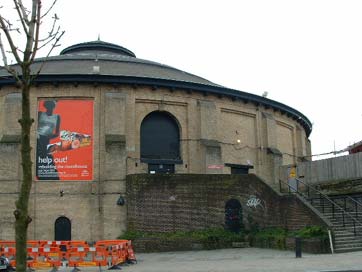
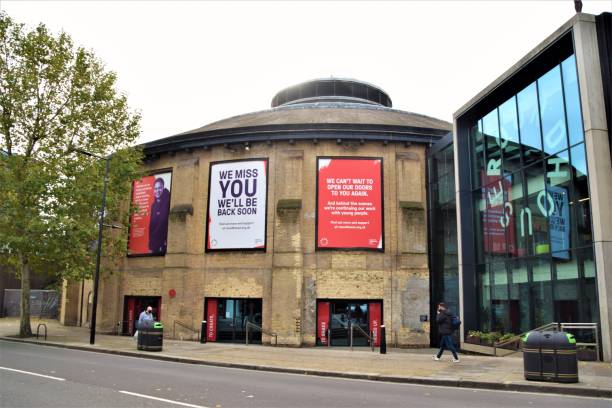
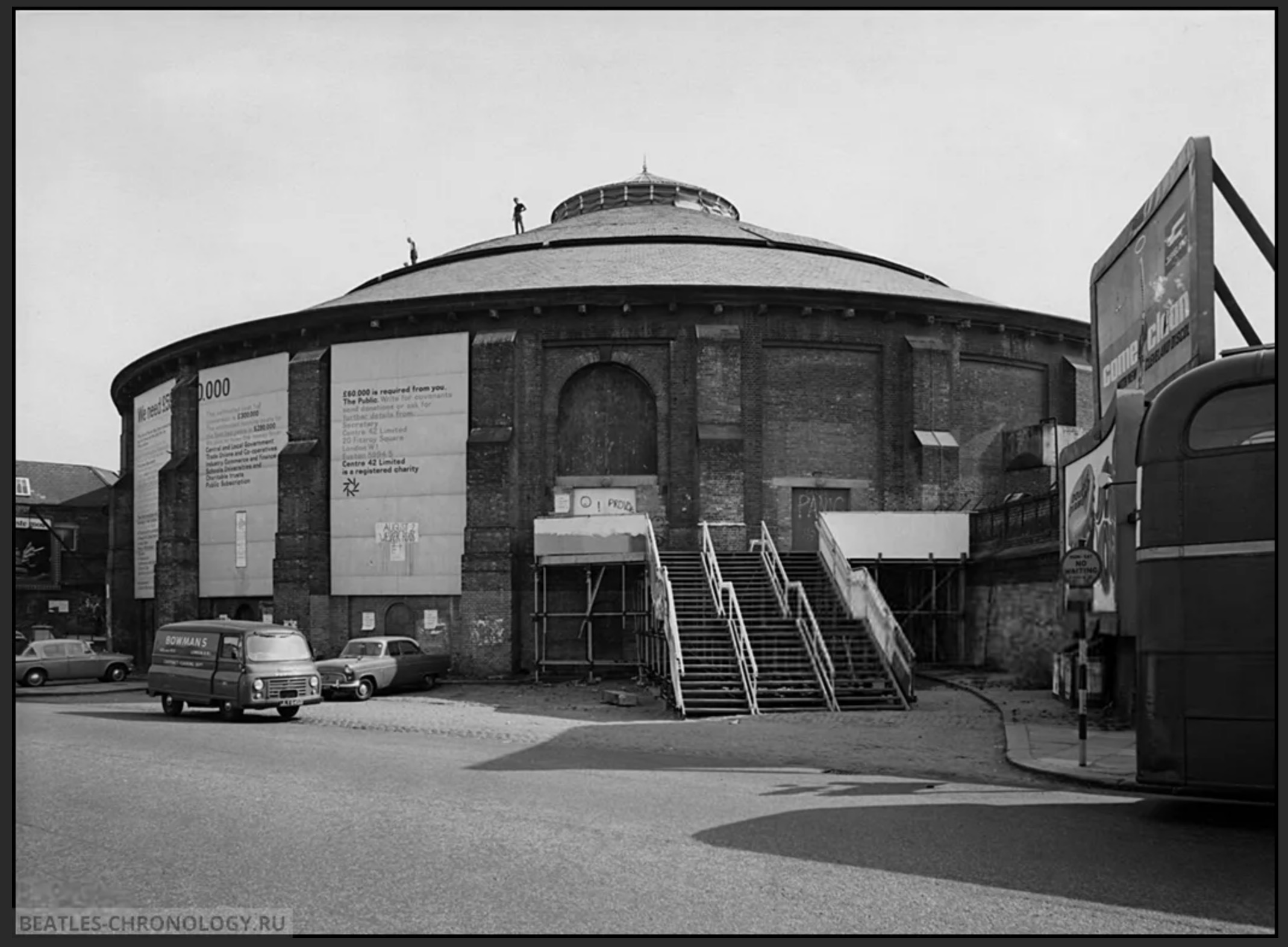
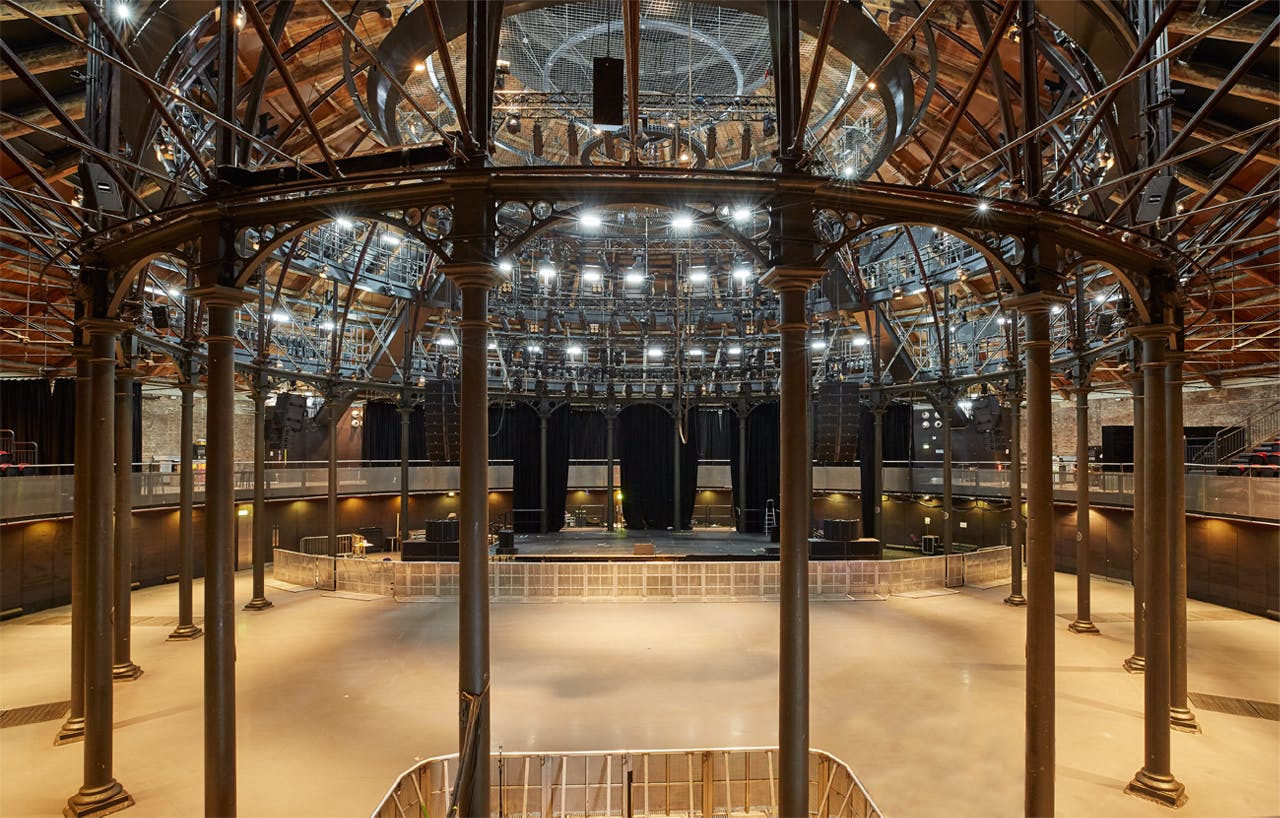
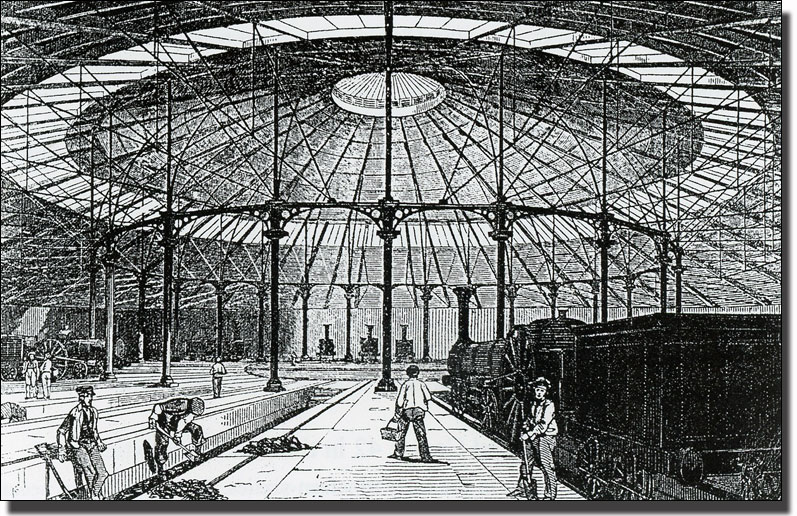
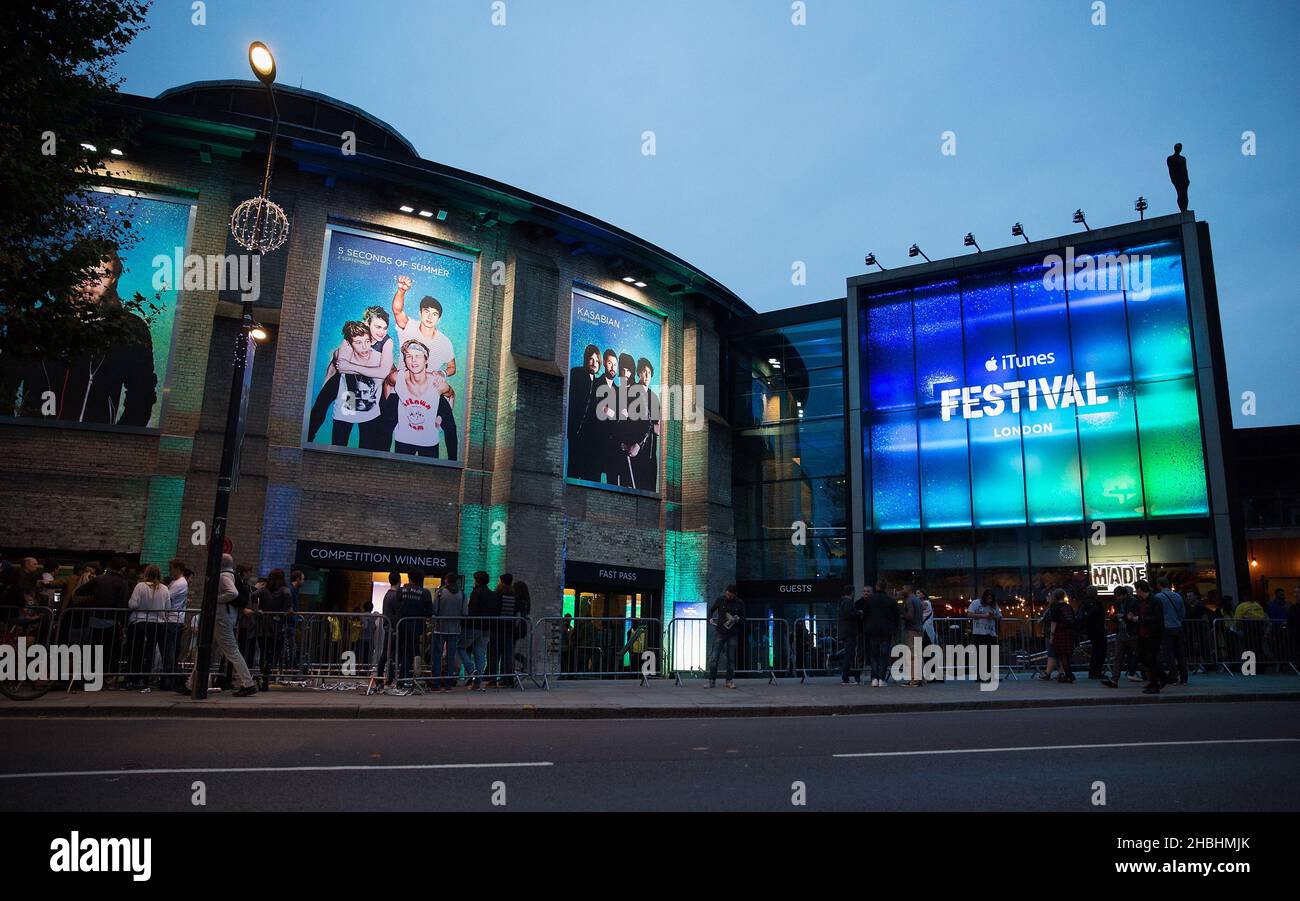
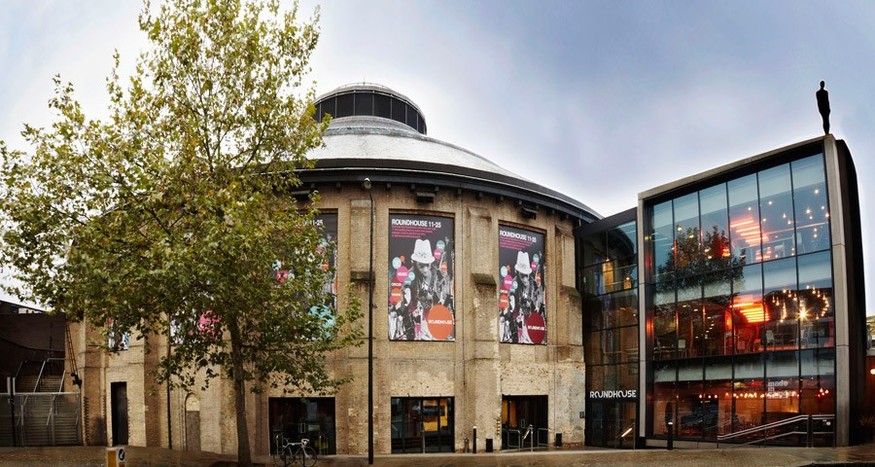
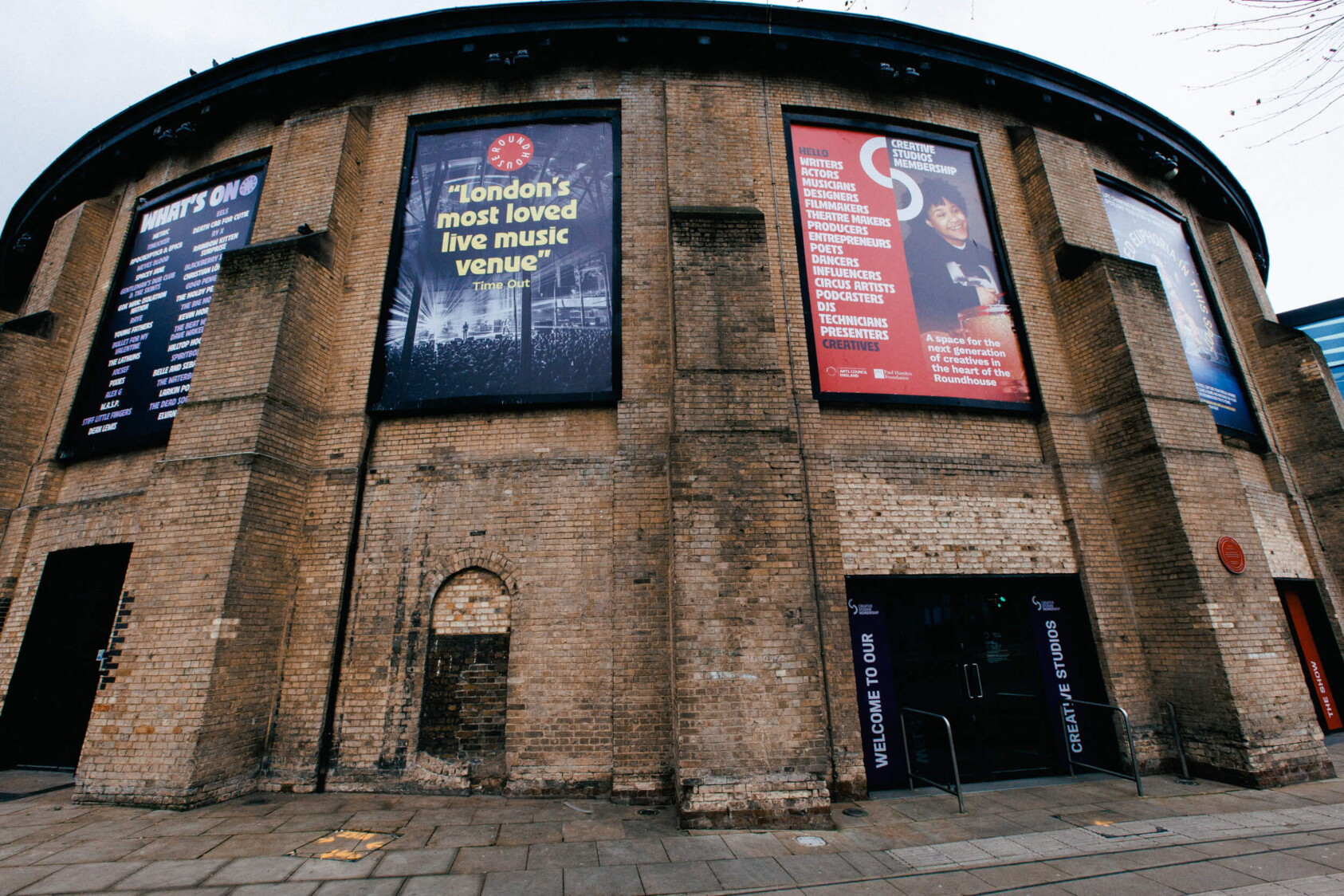
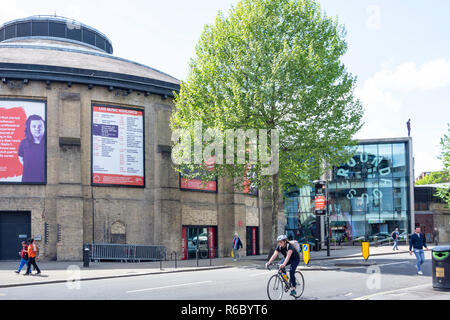
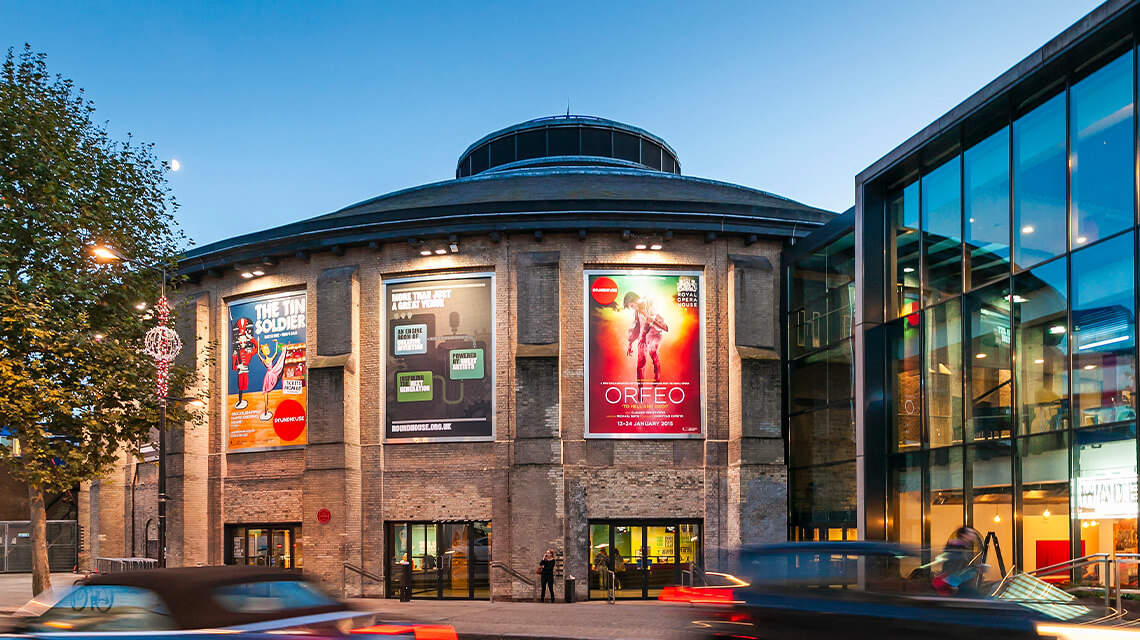
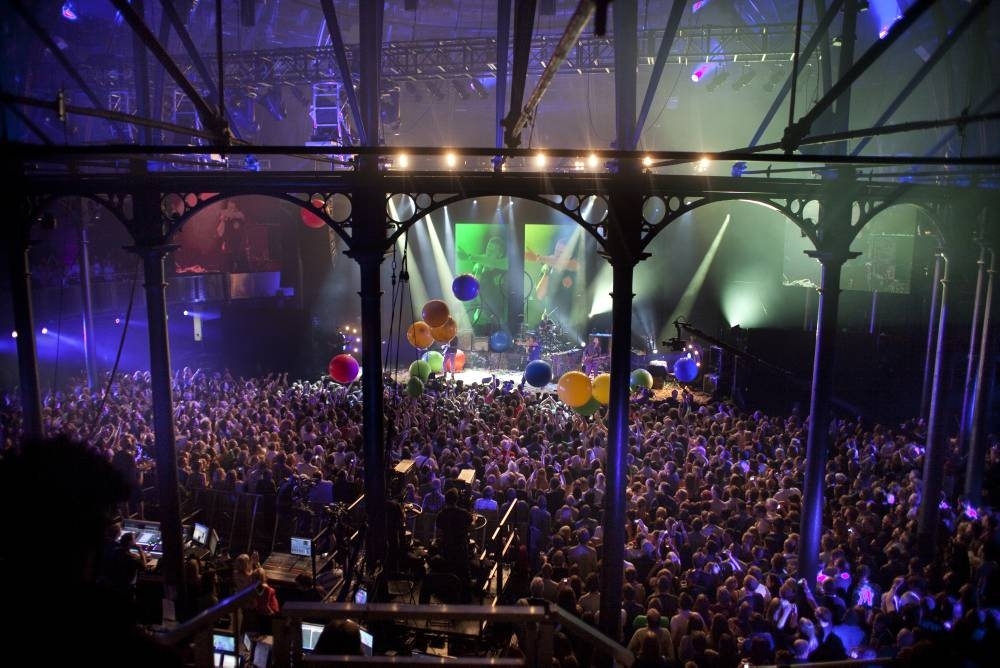
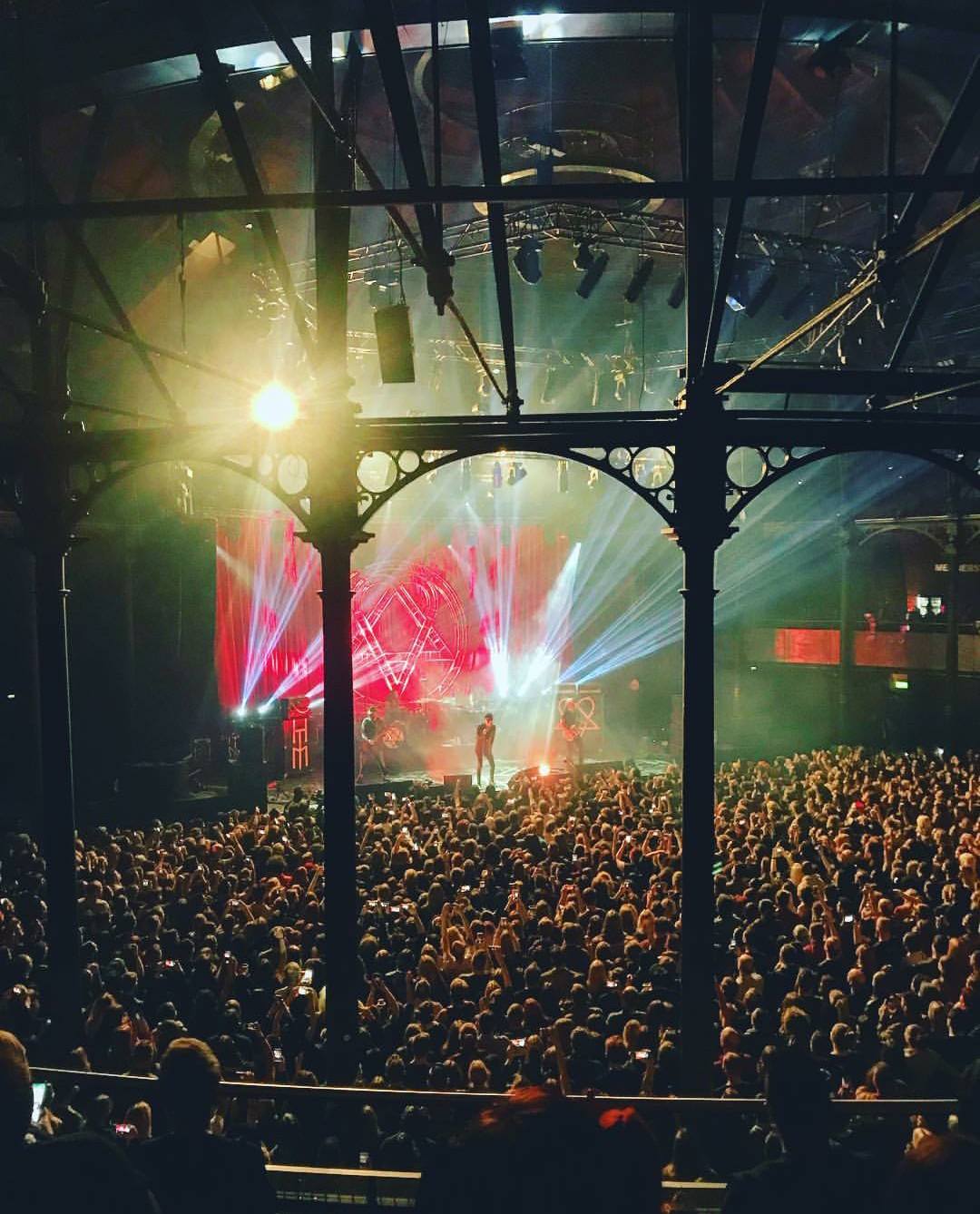
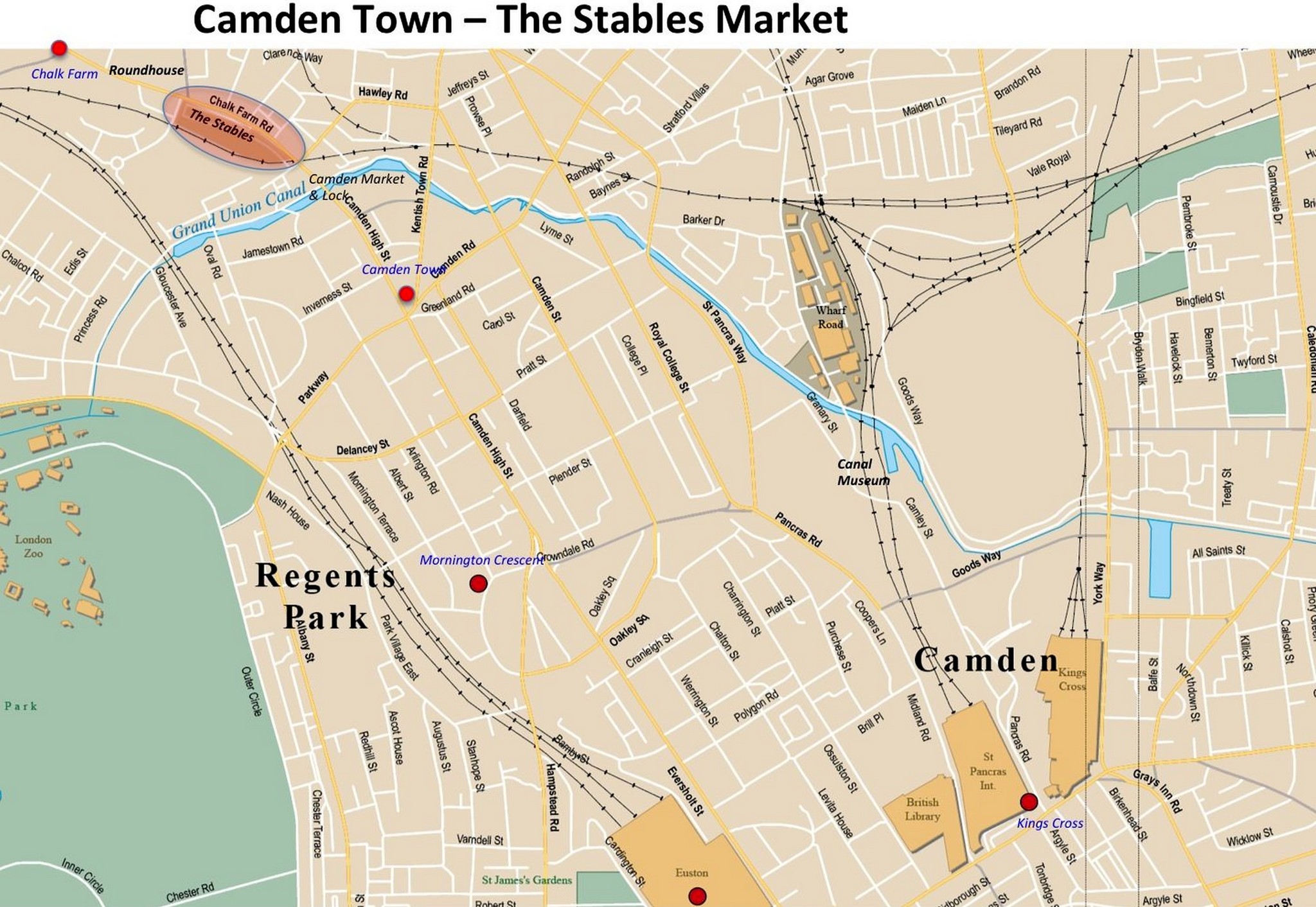
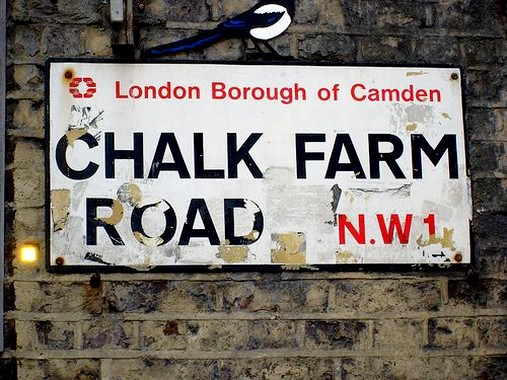
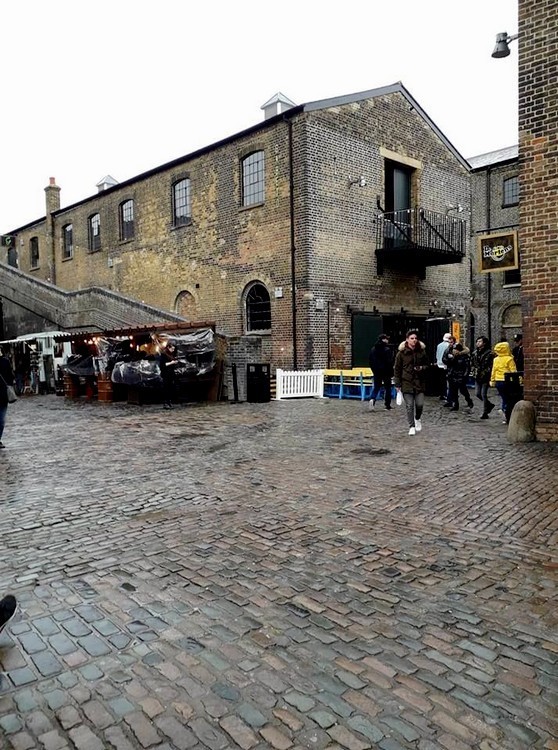
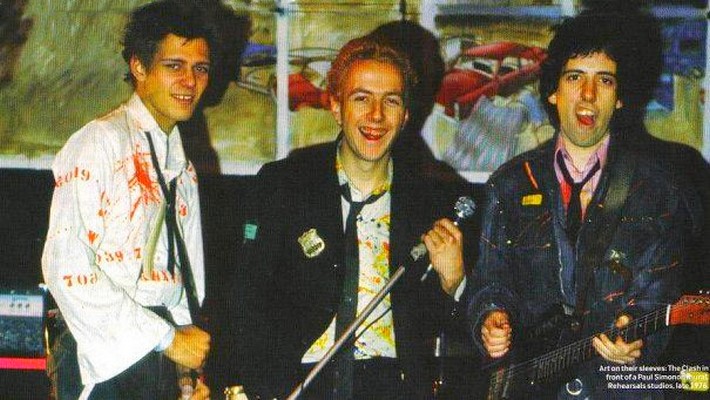
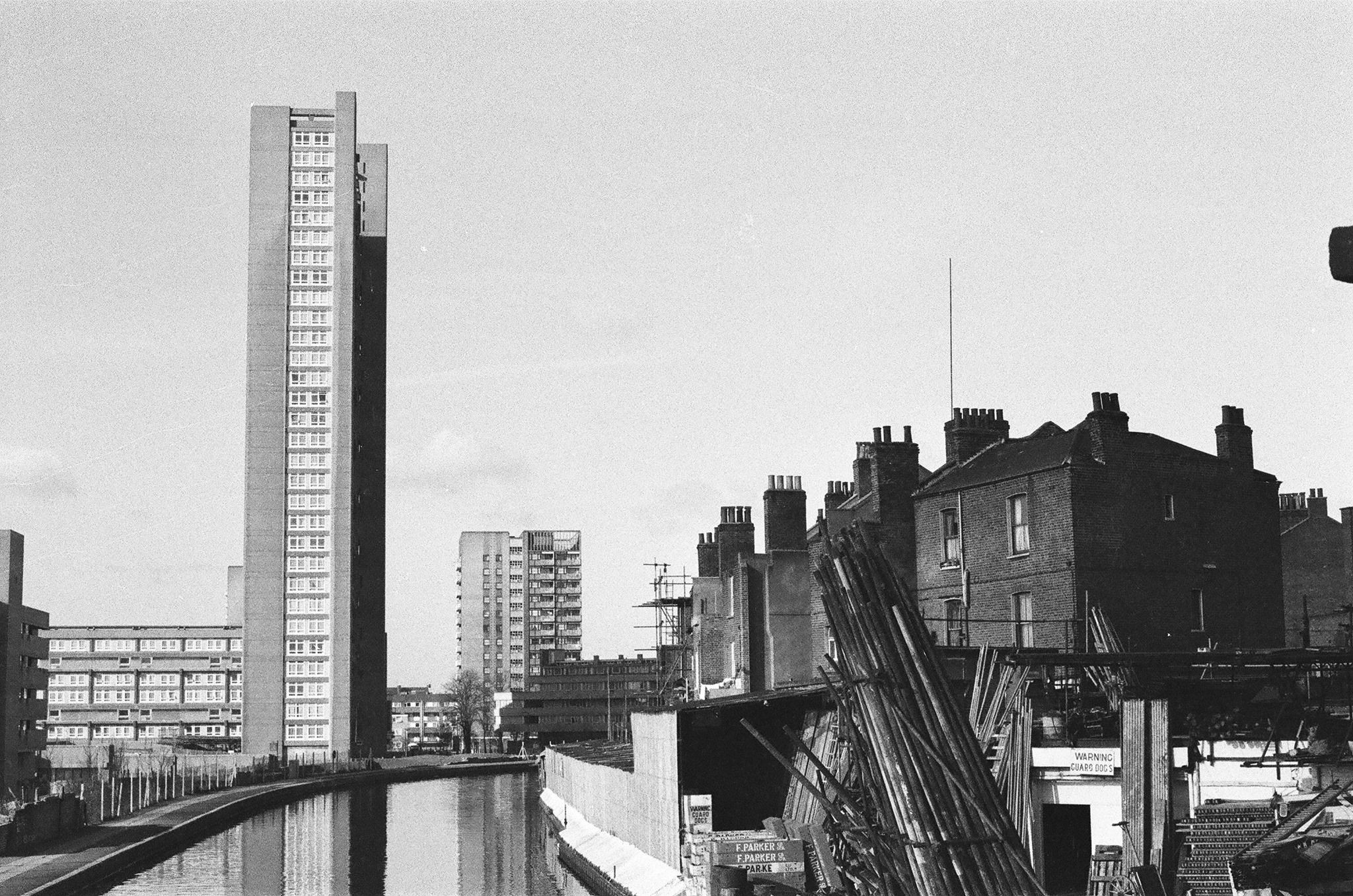
The Roundhouse is a performing arts and concert venue situated at the Grade II* listed former railway engine shed in Chalk Farm, London, England. The building was erected in 1846-1847 by the London & North Western Railway as a roundhouse, a circular building containing a railway turntable, but was used for that purpose for only about a decade. After being used as a warehouse for a number of years, the building fell into disuse just before World War II. It was first made a listed building in 1954.[1]
It reopened after 25 years, in 1964, as a performing arts venue, when the playwright Arnold Wesker established the Centre 42 Theatre Company and adapted the building as a theatre.[2] The large circular structure has hosted various promotions, such as the launch of the underground paper International Times in 1966,[3] one of only two UK appearances by The Doors with Jim Morrison in 1968,[4] and the Greasy Truckers Party in 1972.[5]
The Greater London Council ceded control of the building to Camden Council in 1983. By that time, Centre 42 had run out of funds and the building remained unused until a local businessman purchased the building in 1996 and performing arts shows returned. It was closed again in 2004 for a multi-million pound redevelopment. On 1 June 2006, the Argentine show Fuerzabruta opened at the new Roundhouse.[2]
Since 2006, the Roundhouse has hosted the BBC Electric Proms[6] and numerous iTunes Festivals,[7] as well as award ceremonies such as the BT Digital Music Awards[8] and the Vodafone Live Music Awards.[9] In 2009, Bob Dylan performed a concert, and iTunes promoted a music iTunes Festival, at the venue. In line with the continuing legacy of avant-garde productions, NoFit State Circus performed the show Tab˙ during which the audience were encouraged to move around the performance space.[10]
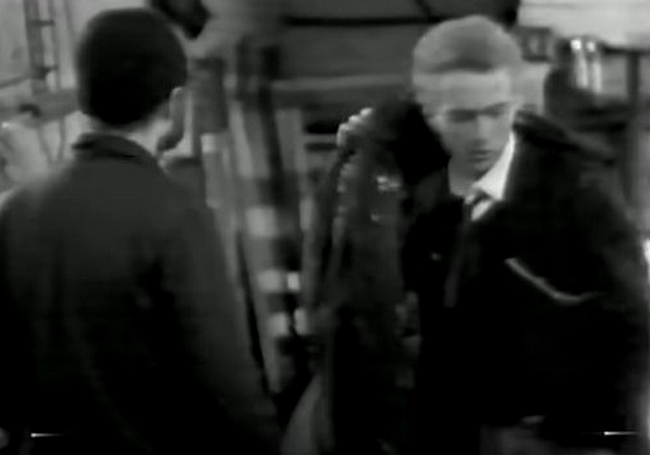
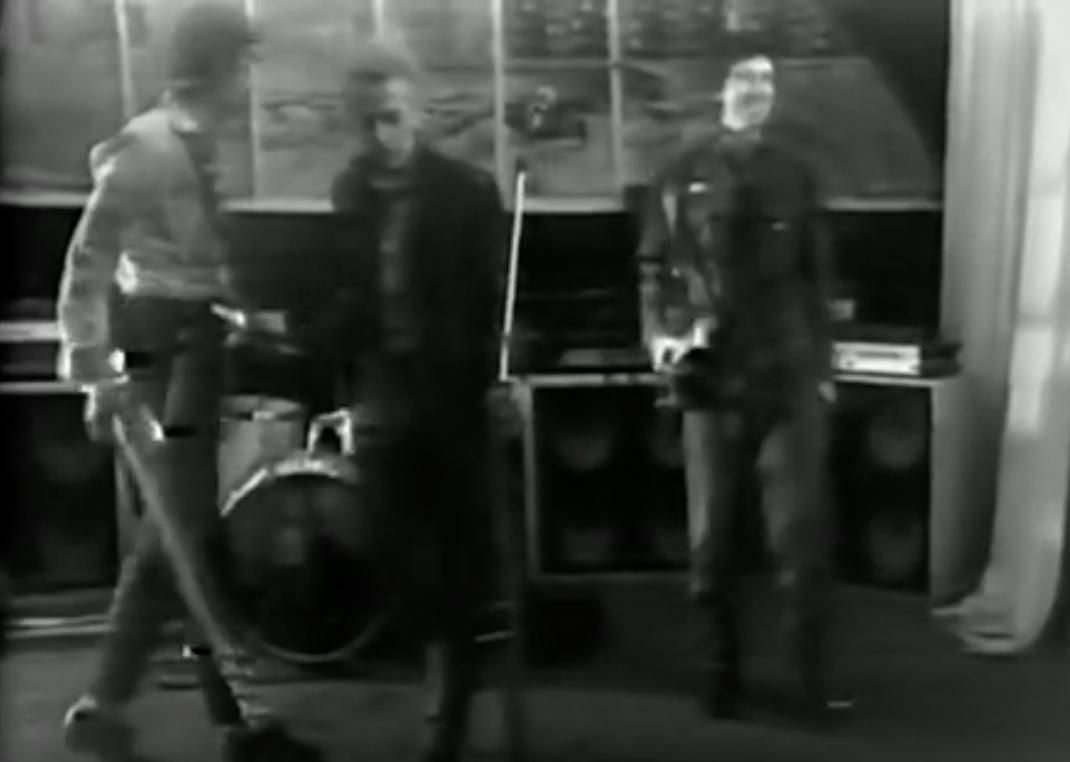
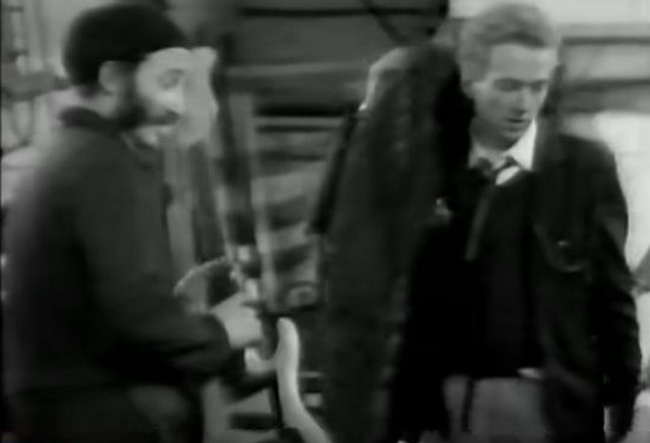
The Gig
Last Gang In Town
Marcus Gray’sLast Gang In Town describes the Roundhouse gig in notable detail, but takes a critical view of Joe Strummer’s attempts at audience participation. This judgment feels somewhat harsh: Joe, by his own admission, was clearly nervous and unsure how to handle hecklers—but his sincere desire to communicate and connect with the crowd is unmistakable. Contrary to Gray’s suggestion, the audience’s reaction at the end wasn’t entirely cold. In fact, it’s clear that at least part of the crowd was impressed.
Here was an almost completely unknown band, taking the stage at 6 o’clock, well before the bar had even opened. They faced a typical Roundhouse crowd of bedenimed, latter-day hippies, who were there for the main acts and certainly weren’t expecting a band so radically different in both sound and appearance. Unsurprisingly, The Clash were nervous—and the easy route would’ve been to bash out a short, sharp set, hurl some abuse at the crowd, and make a quick exit.
But Strummer didn’t choose the easy option. He rejected disengagement, and instead tried to voice his frustration with the state of the rock scene to a local audience, right in the band’s own backyard. Some of his put-downs to hecklers come off as awkward or stilted, but his delivery of the punk DIY ethic—“If you're bored, do something about it”—was heartfelt, if not entirely polished.
Gray does concede that it was a varied and musically proficient 14-song set, though he argues its pacing was undermined by the lengthy between-song interruptions, which failed to generate any compensatory dramatic tension. Meanwhile, Chas De Whalley, in a Sounds review, dismissed most of the material outright, unfavourably comparing it with Strummer’s previous band, the 101’ers. Legend has it that Bernie Rhodes was so furious with the reception that he stormed out, shouting: “It was fucking shit!”
Setlist
1. Deny The song fades in losing its beginning. Lyrics and song structure are very similar to the recorded version. A very good version with the twin guitar interplay coming across well at the ending coda.
2. 1-2 Crush On You This is terrific, fast and furious. Joe on lead vocals.
3. I Know What to Think About You An unrecorded song based on a slow Can't Explain riff. Many of the lyrics can now be heard. A good song and one of the longest in the set.
4. I Never Did It? "I could have been as rich as you"," I never did it", repeated at end. Mick's Beatles like harmonies can be heard already which would later help make "The Clash" such a unique and great record. Another fast and enjoyable unrecorded song.
5. How Can I Understand the Flies? Introduced as "a summer song", its about the Davis Road squat reported to have been filthy! "How can I go to sleep for the flies buzzing around my head!" First Ramones LP is an obvious influence. Slight song but enjoyable.
6. Protex Blue Very good performance, guitars clear, same lyrics as recorded, good vocal from Mick.
7. Janie Jones Before the song Joe starts his attempts to get more reaction from the audience, "I suppose you think you can pay your £1.50 and just come in and sit down as if it's a fuckin' TV set, get off your denims, you might wear them out!"
On Midnight Special Mick sang the chorus but from now on Joe now sings the whole song. Its still sung in the first person "I'm in love etc". Same lyrics as recorded version but not the finished classic yet; it sounds too basic without the punk snarl yet.
8. Mark Me Absent Before this song starts Joe says "now its time for audience participation, tell me what are you doing here? two for rock'n'roll". Someone shouts "waiting for the next band" to which Joe's response was " I don't know what you are about the waist, but I guess its in advance of 36", so if you want to carry your corpulent body up to the bar and stuff it with a few more barrels, go ahead " Joe is clearly nervous and not good yet at dealing with hecklers, there are cries of get off the stage. Joe " alright then 20 various suggestions, what sort of fun you going to get of the rock'n'rollers, the Kursaal Flying Machine?! Did you watch the documentary on TV last year on them, nothing else on, agreed." Someone shouts "were you in the 101'ers?" "Never heard of them", his response. "How many of you are in your normal consciousness?" someone shouts "shut up smart arse, get on with it", Joe exasperated says "you big twit, so what if you've got 5 A-levels, what do I care, that's just a dirty trick" Someone correctly shouts "your drummers got them!" referring to Terry Chimes, Joe's response is a serious "don't worry I'm working on him".
Joe then introduces Mark Me Absent with its "back to your schooldays". A fast, furious but catchy song "I got away" being the message about school.
9. Deadly Serious (Dig a Hole) Before this other unrecorded song Joe is more successful in getting across to the audience. " Have you been having a good time down the pubs, I've been trying to see some groups but I have to stay in, only thing I've got is a TV with no sound, I wanna go out really and see some groups, but there's nothing worth seeing out there, I've seen it all before, so I just watch something like Taras Bulba and lip read through out! I just want to protest about this state of affairs, so if any of you people in the audience who aren't past it yet, why don't you get up and do something around the town instead of lying around" He got his point across, and now its on with the rest of the set and the heckling stops.
A fast furious Deadly Serious (Dig a Hole), based on a fast version of the Can't Explain riff, but it's a slight song, one of the weakest.
10. 48 Hours This was written to bolster the live set and not to fill out the first LP as some journalists have suggested. It's not a great version yet, lacking the punk snarl and venom but is short, fast and enjoyable.
11. I'm So Bored With You Still sung about a girl with totally different lyrics to its later recorded form, "what can I do, you don't look like her" "public school" also features so presumably its a put down of a rich girl. Guitar work is not very exciting from Levene , a work in progress.
12. Sitting at my Party Taper changes tape and there's an edit before this last unrecorded song, probably the weakest. Short fast, and with unintelligible lyrics.
13. London's Burning The last 3 songs are excellent and ample warning of the greatness to come. Lyrically and musically it's already very similar to the recorded version but London's not burning with boredom yet, subway verse is repeated twice and its "drowning in a sea of television". The ending is weak and not developed yet.
14. What's My Name Great performance, already sounding a classic. "What the hell is wrong with you, you look so fucking cool (words used in later live performances including Rude Boy). Other different lyrics including he's at the house late at night (but not with the celluloid strip/camera) but with a much more menacing carving knife, taking a life. Why was this lyric changed, its much more disturbing evocation of the extreme possible effects of alienation and identity, the song's subjects?
15. 1977 "Dedicated to the future", sounds great, nearly the finished classic.
There are cheers at end and applause. This exciting performance clearly didn't go down badly with all.
News Reports
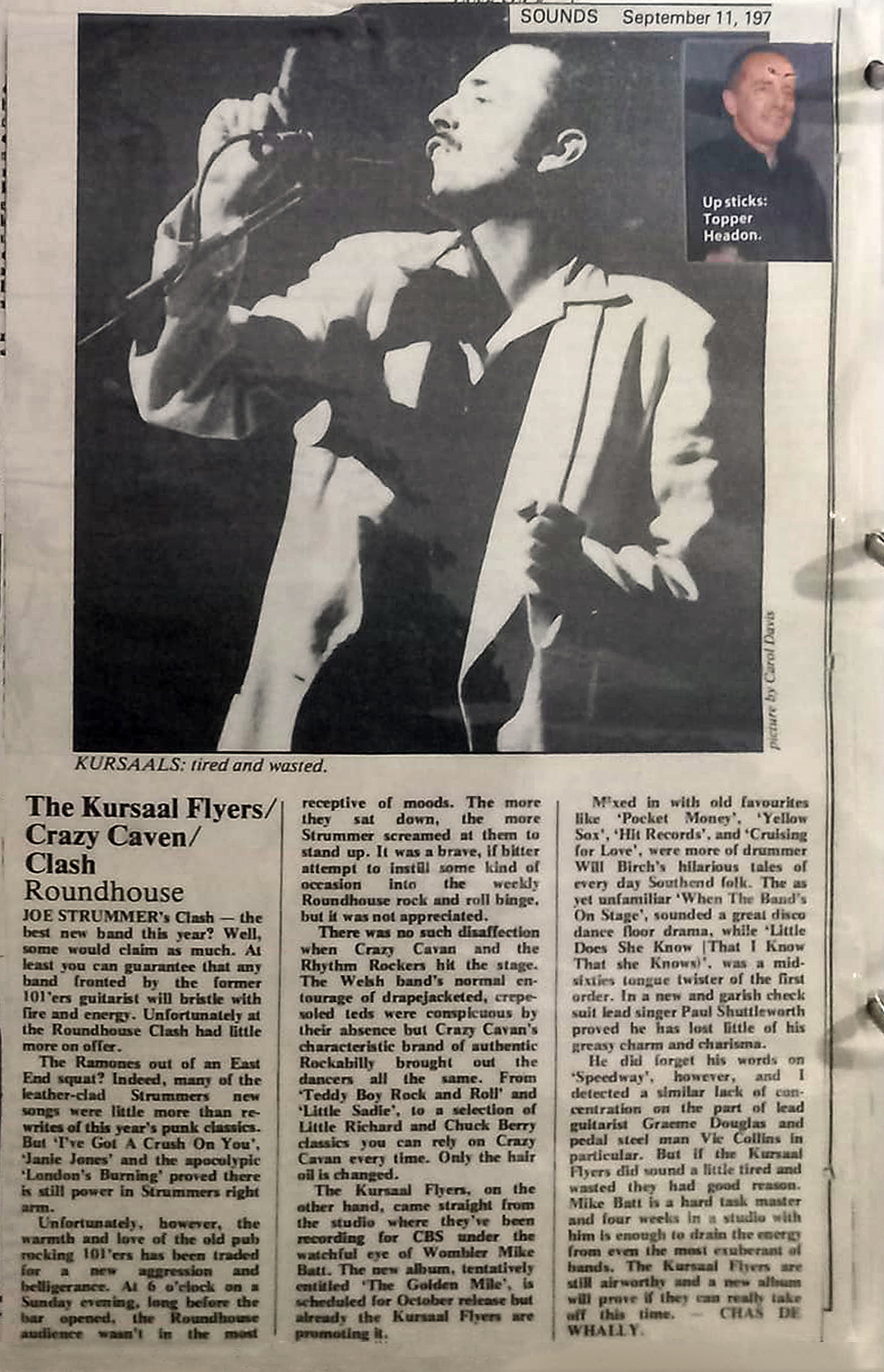
Whally Chas De, SOUNDS, “The Kursaal Flyers / Crazy Cavan / The Clash – Roundhouse,” 11 September 1976, p. ?
Sounds: Roundhouse Review
Joe Strummer’s Clash deliver raw punk fire at the Roundhouse, though still rough-edged compared to the seasoned energy of Crazy Cavan and the studio-weary Kursaal Flyers.
The Kursaal Flyers / Crazy Cavan / The Clash
The Roundhouse – Reviewed by Whally Chas De SOUNDS, 11 September 1976 Topper Headon (picture by Carol Davis)
JOE STRUMMER’s Clash – the best new band this year? Well, some would claim as much. At least you can guarantee that any band fronted by the former 101’ers guitarist will bristle with fire and energy. Unfortunately, at the Roundhouse, Clash had little more on offer.
The Ramones out of an East End squat? Indeed, many of the leather-clad Strummer’s new songs were little more than re-writes of this year’s punk classics. But “I’ve Got A Crush On You,” “Janie Jones” and the apocalyptic “London’s Burning” proved there is still power in Strummer’s right arm.
Unfortunately, however, the warmth and love of the old pub-rocking 101’ers has been traded for a new aggression and belligerence. At 6 o’clock on Sunday evening, long before the bar opened, the Roundhouse audience wasn’t in the most receptive of moods. The more they sat down, the more Strummer screamed at them to stand up. It was a brave, if bitter, attempt to instill some kind of occasion into the weekly Roundhouse rock and roll binge – but it was not appreciated.
There was no such disaffection when Crazy Cavan and the Rhythm Rockers hit the stage. The Welsh band’s normal entourage of drape-jacketed, crepe-soled teds were conspicuous by their absence, but Crazy Cavan’s characteristic brand of authentic rockabilly brought out the dancers all the same. From “Teddy Boy Rock and Roll” and “Little Sadie”, to a selection of Little Richard and Chuck Berry classics, you can rely on Crazy Cavan every time. Only the hair oil is changed.
The Kursaal Flyers, on the other hand, came straight from the studio where they’ve been recording for CBS under the watchful eye of Womble-r Mike Batt. The new album, tentatively entitled “The Golden Mile,” is scheduled for October release, but already the Kursaal Flyers are promoting it.
Mixed in with old favourites like “Pocket Money,” “Yellow Sox,” “Hit Records,” and “Cruising for Love,” were more of drummer Will Birch’s hilarious tales of everyday Southend folk. The as-yet-unfamiliar “When The Band’s On Stage” sounded a great disco dancefloor drama, while “Little Does She Know (That I Know That She Knows)” was a mid-sixties tongue-twister of the first order.
In a new and garish check suit, lead singer Paul Shuttleworth proved he has lost little of his greasy charm and charisma. He did forget his words on “Speedway,” however, and I detected a similar lack of concentration on the part of lead guitarist Graeme Douglas and pedal steel man Vic Collins, in particular.
But if the Kursaal Flyers did sound a little tired and wasted, they had good reason. Mike Batt is a hard taskmaster, and four weeks in a studio with him is enough to drain the energy from even the most exuberant of bands. The Kursaal Flyers are still airworthy, and a new album will prove if they can really take off this time.
Key, Iain. All The Young Punks. Manchester: Burning Books, 2024 page 12
Book: All the Young Punks
The People's history of The Clash
Kevin Pike’s view, as captured in All The Young Punks by Iain Key (2024), reflects the electrifying impact of seeing The Clash live for the first time at the Roundhouse, 5 September 1976. He recalls their set as pure energy, expressing exactly how punk youth felt—"like they were writing our diaries." Strummer’s raw performance left him hooked, convinced that The Clash were 'the only band that mattered' (a reference coined at the Fillmore in San Francisco in February 1979).
All The Young Punks is a people’s history of The Clash, told through the memories of over 300 fans across nearly 150 gigs.
Book: The Clash Official (the big pink book)
5 September 1976, The Roundhouse, Camden, London,
with Kursaal Flyers and Crazy Cavan
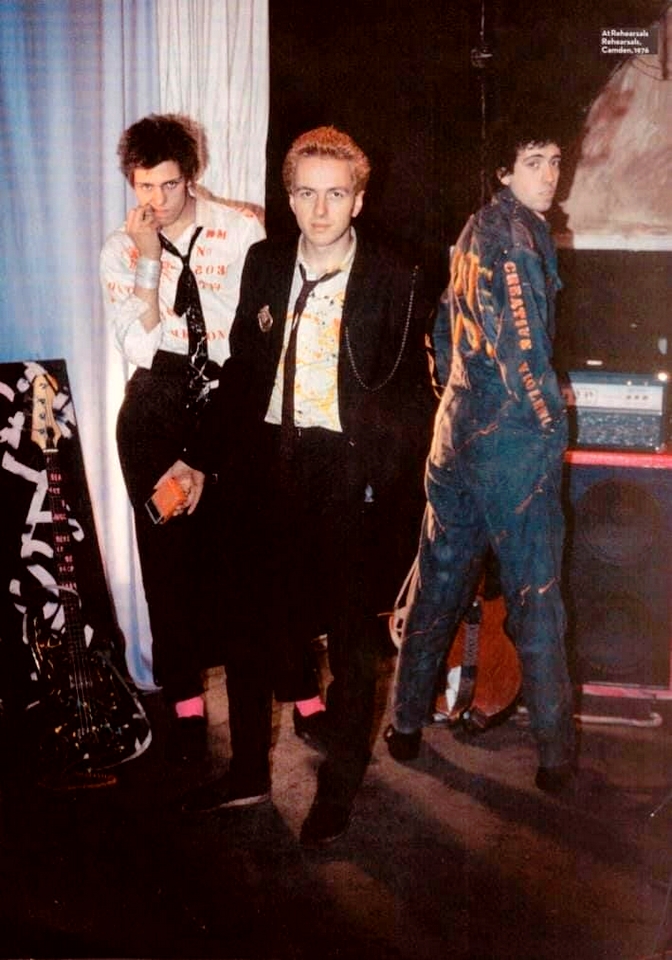
PAUL: The Roundhouse was an interesting gig ‘cos itwas just down the road from where we rehearsed. |used to walk there with Joe and we'd climb on the roof, and walk almost all the way to the top to find a way in. We went to see the Runaways and Patti Smith there but they wouldn't let us in. |don’t think the promoter wanted any punks, so itwas funny to get to play there. The problem was that you couldn't hear anything the audience was saying. Someone would shout ‘wa wa wa’, and the audience would
laugh — but we had no idea what they were laughing about. That was Keith’s last show with us.
MICK: Keith left the band after this gig because he couldn't be bothered to come to rehearsals. As |recall he actually said ‘Ican’t be bothered to come to rehearsals,’ so Joe said ‘Well don’t bloody bother to come again.’
PAUL: I’m not sure why Keith left, but he used to stand on my side of the stage, which was great for me, except Bernie always used to say ‘stand further back, Paul.’ |used to ignore him though and say, ‘Not ifI'm gonna be Pete Townshend’, and stay at the front. When Keith left itwas quite handy for me ‘cos |had my own spot on stage and didn’t have to share itanymore.
Book: Brian Bowe: The Clash : Punk Rock Band
Just two months after the Ramones came to London,Sounds writer Chas de Whalley reviewed a Clash performance at the Roundhouse.
“JoeStrummer’sClash—thebestnewbandoftheyear? Well, some would claim as much,” de Whalley wrote. “At least you can guarantee that any band formed by the lOlers guitarist will bristle with fire and energy. Unfortunately at the
Roundhouse the Clash had little more on offer ...the warmth and love ofthe old pub rocking lOlers has been traded for a new aggression and belligerence.”25
That show was Levene’s last with the band. “Keith left the band because he couldn’t be bothered to come to rehears¬ als,” Jones said. “And then I think Joe said, ‘Well, don’t bloody come at all, then!”’
Book: Sean Egan: The Clash on The Clash
Keith Levene: And we did the Mucky Duck, as Joe Strummer called it—the Black Swan— and it was a good gig. Went back to London, did the Roundhouse.
We supported Patti Smith. And Patti Smith’s talking to Bernard, and I run up to Bernard and I go, “It was fucking awful, it was the most fucking embarrassing fucking set I’ve ever been involved in and I fucking hate this fucking band.” And Bernard pulled me aside and said, “Don’t ever say anything like that about the fucking group in front of anyone.”
I said, “It doesn’t fucking matter ’cause I’m not going to be in the fucking group anymore.” He said, “Don’t pull that fucking drama with me,” and I said, “Bernard, I never fucking pull drama. I’ve made a decision tonight, and you’ve seen it coming, because you’ve seen me and you arguing for the last fucking six months while Paul, Mick, Joe, and whoever the fucking drummer was at the time were just leaning against the wall and it would be me and you arguing, wouldn’t it?
And what would we be arguing about? We’d be arguing about how fucking uncool the fucking Clash is and how stupid the fucking name is and what a load of fucking wankers they are. Because we weren’t arguing about what a wanker I was, were we?” And Bernard went, “Suppose not,” and he went, “Please, Iunderstand, Iunderstand what you’re doing—go.” And he gave me this blue Les Paul Junior and I left.
Sean Egan: I thought that this had been presented to Bernie as a fait accompli, that you’d been sacked...
Keith Levene: Absolute bollocks. I’m telling you the truth.
Sean Egan: So, just backtracking a little bit, with regard to three guitars in the lineup, did that make a problem?
Keith Levene: What three guitars? Well, Joe didn’t count. He may have counted more when I left [laughs]. But because Iwas there, Joe didn’t have to play. In fact, Iused to turn his amp down. Because it was awful.
We're in situations like sitting in the Speakeasy and he’d be sitting there drunk and going, “Oh come on, Keith, come on, you don’t want to leave the band,” and all this kind of stuff. They didn’t believe me. They didn’t believe I wanted to leave.
There was avote. Isaid, “Well, look, Idon’t wanna leave the band but the way the band is, I do wanna leave it, so unless you’re gonna let me have a hell of a lot more input, you guys can decide. Is the band better with Keith or does the band make more sense without Keith? I think it’s either my band or Mick’s band, because that’s the way this band works. Now if it was my band, I wouldn’t be telling Joe to read books and how to sing and I wouldn’t be showing Paul what notes to play.”
Fanzine: Steve Walsh, Mark Perry: Sniffin' Glue
Mick-That was part of it, but we’ve tried other things since then, like at the Roundhouse ... er. ..we ‘talked’ to the audience ...
Joe-But they were half asleep ...
Mick-The ones who were awake were pretty clever.
Joe-I didn’t think so, Imean, you could hear them, Icouldn’t. How can I answer smartass jibes when I can’t hear ’em? All I could hear was some girl sayin’, “nyah, nyah, nyah!” and then every-one goes,“aha,ha,ha (Bursts out laughing)’. If you can’t hear what they’re saying, then you can’t really get out your great wit!
Mick-Well, I’m sure they were funny ’cause everyone was laughing at ’em but when Joe said something like, you know, “Fuck off, fatso!”, there was just complete silence!
(More laughter).
Book: Kris Needs, Joe Strummer and the Legend of The Clash
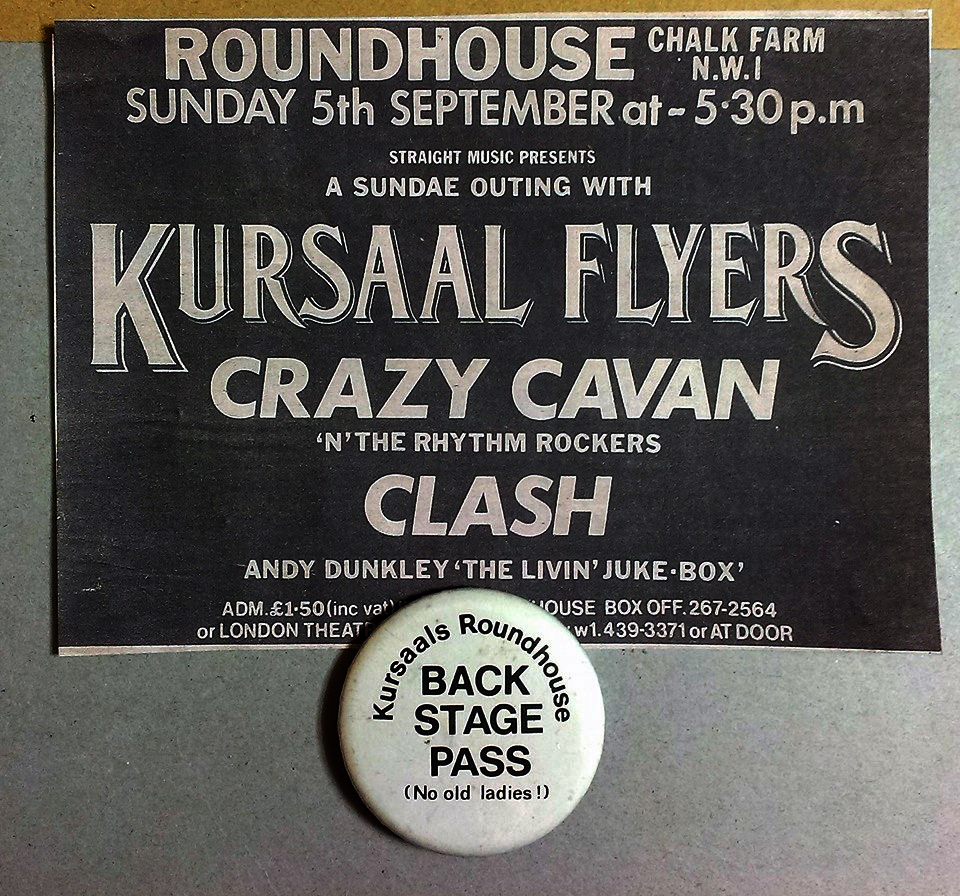
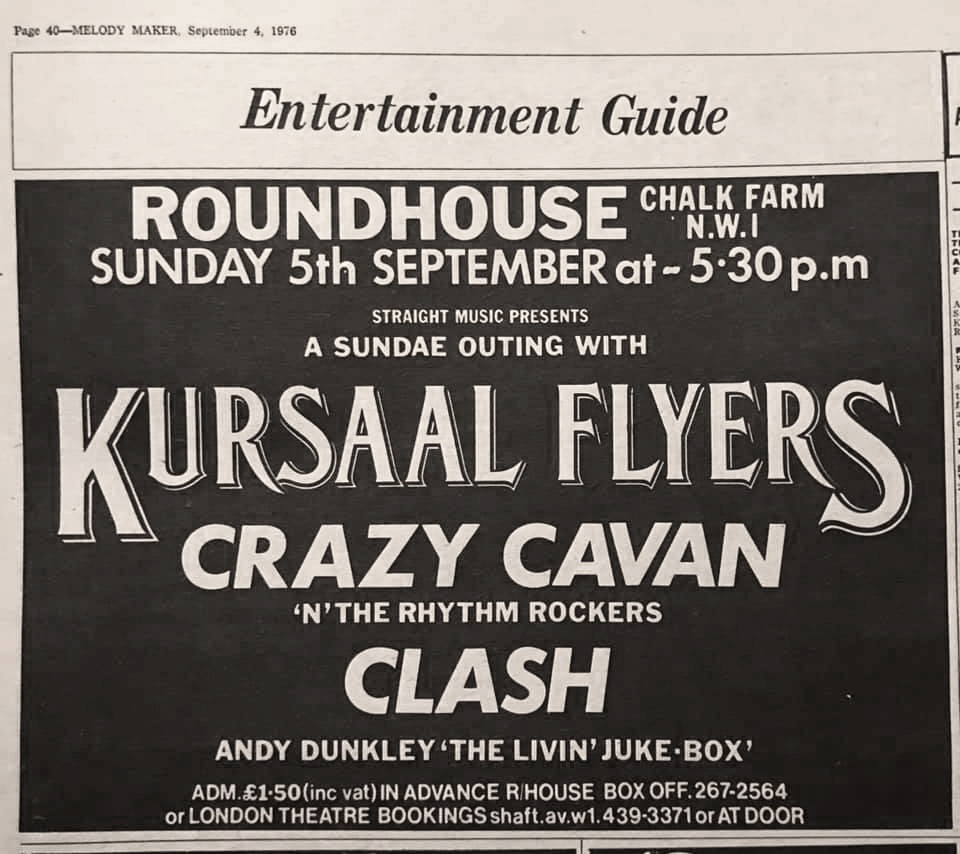
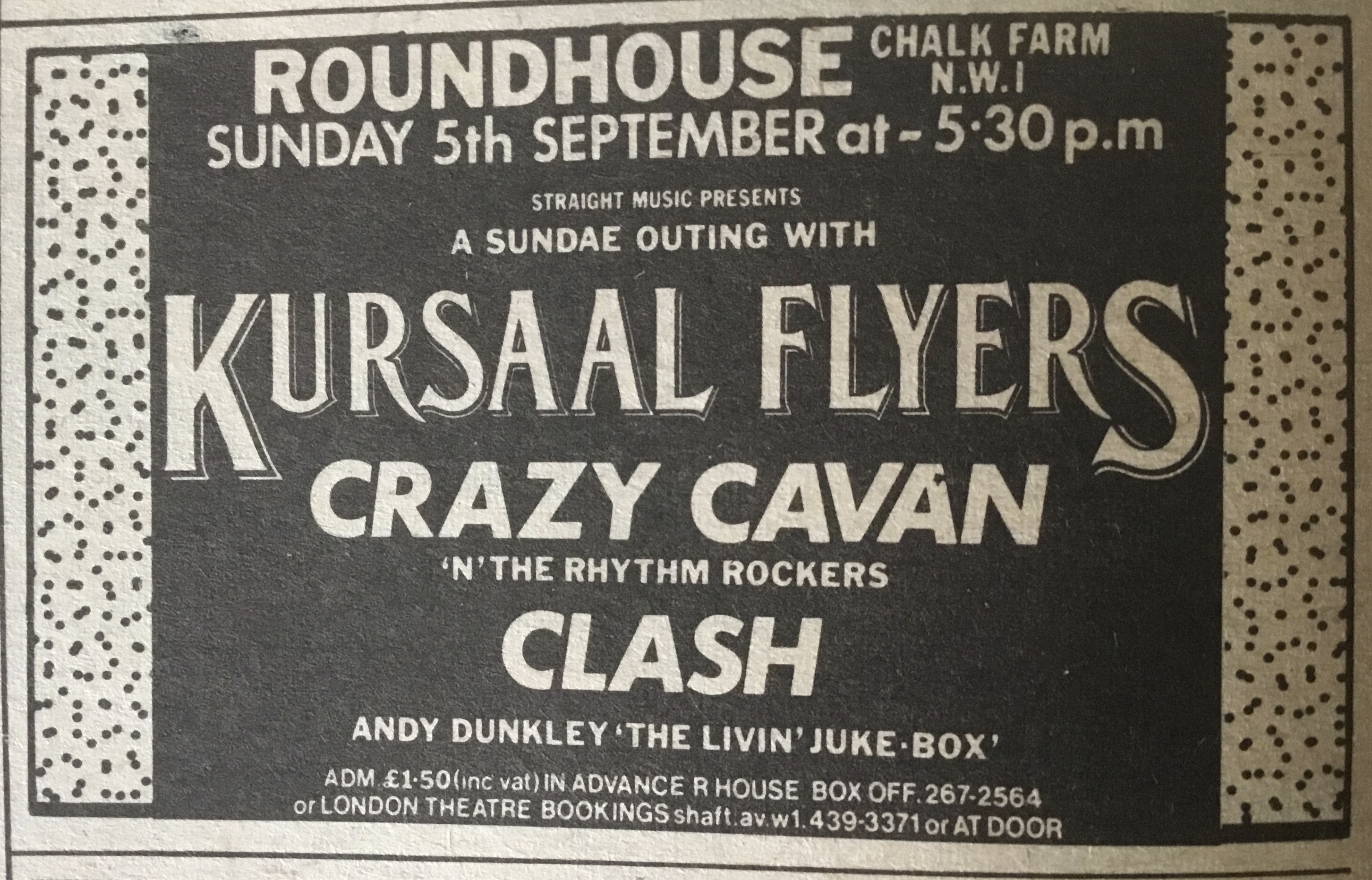
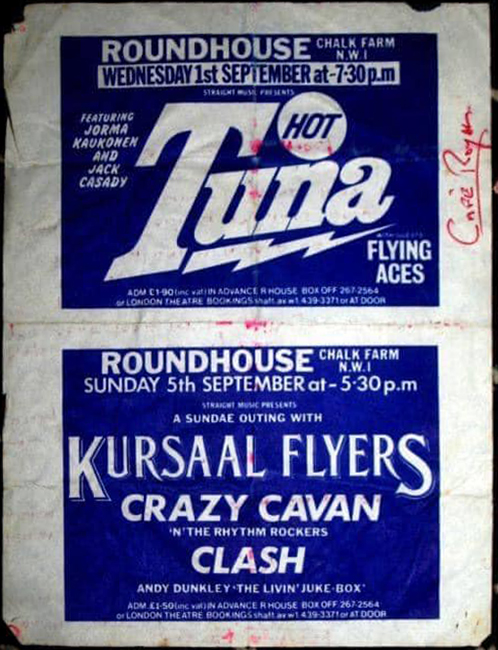
A gig on 5 September at one of the Roundhouse’s Sunday sessions proved to be Keith Levene’s last. The Clash were third on the bill supporting pub-rockers the Kursaal Flyers and rock ’n’ roll revivalists Crazy Cavan & The Rhythm Rockers. Playing inhumanly early to just-arrived hippies, The Clash were greeted with a luke- warm response and asmattering of heckling.
Book: Marcus Gray: The Return of the Last Gang in Town
By late August, the Clash’s repertoire was going through changes in an effort to reflect this attitude. At Bernie’s insistence, ‘She’s Sitting At My Party’ was dropped for good at the end of the month. It was replaced by four new songs, none of which — as it turned out — would be officially recorded, but all of which were preserved on the tape of the 5 September Roundhouse show, eventually released as the bootleg CD 5 Go Mad In The Roundhouse. Thematically, one would seem to be a close cousin of ‘Janie Jones’ and ‘48 Hours’.
Built on adramatic guitar riff,itlacks an official titlebut islisted on the CD as ‘Work’, quite possibly because the chorus appears to consist of that word repeated over and over again with no great fondness. The occasionally discernible line from the verses takes apop atteachers and other everyday authority figures. ‘IDon’t Want Your Money’ is a rejection-by-numbers of superficial materialism. ‘I Know What You Do’ (aka ‘You Know What I Think About You’) recycles the staccato riff of the Who’s ‘I Can’t Explain’. Lyrically, it passes moral judgement on the behaviour of an acquaintance, much like ‘Deny’; and the reference to a hospital room would suggest it does so for much the same reason. The song listed on the bootleg CD as ‘Going To The Disco’ — another close cousin of ‘I Can’t Explain’ — is in fact ‘Deadly Serious’, which would seem to attack the empty hedonism associated with the rock’n’roll life.
At least one of these songs represented an attempt by the Clash to use their differences with the Damned as a departure point for the development of their own ideology. Early Clash interviews were mostly devoted to expanding or expounding on the band’s lyrical themes, and the one Steve Walsh and Mark Perry conducted with the band for the October 1976 issue of Sniffin’ Glue was telling, without making specific reference to any particular song:
Mark: What do you think of bands that just go out and enjoy themselves?
Mark: What ifthe audience say they’re enjoying themselves? Joe: Look, the situation is far too serious for enjoyment, man...
Mick: You know what I think, I think they’re a bunch of ostriches, they’re sticking their heads in the fucking sand! They’re enjoying themselves at the audience’s expense...
Mick: I think, ifyou wanna fuckin’ enjoy yourselves, you sitinan armchair and watch TV, but ifyou wanna get actively involved, rock’n’roll’s about rebellion. Look, I had this out with Brian James of the Damned and we were screaming at each other for about three hours, ’cause he stands for enjoying himself, and I stand for change and creativity.
Book: Pat Gilbert: Passion is a Fashion
That week. The Clash played two more gigs - at the 100 Club on 31 August (supporting The Pistols) and at the Roundhouse on 5 September (with The Kursaal Flyers and Crazy Cavan). The latter proved to be a disaster, not least because Joe's attempts to educate/rile/convert the audience between songs resulted in a barrage of guffaws and heckles. After the show, Bernie told the group they were 'shit' and enquired where Joe had found 'those old Johnny Rotten scripts'. It was to be Keith Levene's last gig with the group.
'It was obvious to me there was a problem,' explains Micky Foote. 'There was a problem with him and Mick, and a problem with his reliability. Reliability is very important. He was doing too much speed. You're never gonna get on with someone who wasn't there.'
Chimes disagrees: 'Keith was always around as far as I can remember, though Joe did call him Phantom the Guitar Player.'
Joe: 'Our idea of a good time was scoring a lump of dope the size of a match head. Now and then we'd get some blues or some sulphate. But Keith was more pro on speed. He took it in a very pure form.'
Strummer had taken onboard Bernie's suggestion 'to write about what's happening' and penned a song about the events at Notting Hill - 'White Riot'. According to Joe, Keith wasn't interested in rehearsing it. Levene felt that it was musically regressive and lyrically crass. But his waning commit- ment arguably had roots in deeper reservations about the group.
Micky Footer 'I don't think it was dangerous enough for him. He was hanging out with Sid - it wasn't really a druggy scene at that point but it was edgy. And it was all a bit, "Are you working with Joe Strummer from The lOTers? He's a bit old, isn't he?" It was a bit of a stigma. They found it more difficult to take him in as one of them because he was a bit older and a bit middle-class. Keith's scene dragged him out of it, as much as he didn't want to bond up with it.'
The 'problem' between Mick and Keith was mostly personal. Keith tells of Jones 'yelling' at him a lot, and chewing him out for faiUng to turn up to a rehearsal that a) allegedly hadn't even been arranged and b) was on a Saturday afternoon when Keith was working. Speaking to Perfect Sound Forever website, Levene claims Mick's antagonism stemmed from an incident in July, when Viv Albertine had announced it was Keith's birthday while they were waiting together at a bus stop.
' [Mick] found out that I was three years younger than him,' he says. 'Ever since that day, he was just this total fucking bitch cunt to me. There wasn't a thing I could do that wasn't wrong.'
It's certainly possible that Mick's attitude towards his bandmate did change when he realised Keith was his junior. Since Levene was born in 1957 and Mick in 1955, there were two (not three) years between them, still a considerable gap at that age.
One afternoon at Rehearsals when Keith was absent, Mick instigated a discussion about Keith's role in the group. 'Mick was putting forward the idea in a very roundabout way that they didn't need three guitar players in the band,' recalls Terry Chimes. 'I wasn't listening very much, but Joe said, "Shall we get rid of him, then?" I jumped then, and thought, "You can't get rid of someone just on a whim." I thought it was Joe and his crazy behaviour. But Mick said, "I think you're right." And Paul, who didn't say very much, said, "I think you're right." I was shocked. So they'd all been thinking of this but never said it. But when Keith left it seemed easier to progress and get things done. He slowed it down.'
Micky Foote said: 'It was a shock when he got the boot. It was a situation of someone who's not really on it getting chucked out and then being "I'm really hurt, man". It was a classic case of I'd rather fuck off than you tell me to fuck off.'
Levene's quick and unsentimental sacking said a lot about the atmosphere of The Clash. Bernie had instilled in Joe, Mick and Paul a collective ruth- lessness that they'd used effectively and decisively. Keith was given no warning or second chance. His lack of commitment was rewarded with his instant dismissal. This wasn't a band that, like The Stones with Brian Jones or The Beatles with Pete Best, was going to let things fester or palm off harsh decisions on management.
Ironically, Rhodes was alarmed by their action. 'Bernie was quite shocked when he turned up at Rehearsals and I'd sacked Keith,' said Joe. 'He was a favouriteofBernie's.I canseenowthatBerniewasworriedaboutlosingcon- trol.'
Keith Levene was soon airbrushed from the picture. A rumour began to circulate that put his dismissal down to hard drug use. He was the first victim of what Foote describes as 'friendly fire' in The Clash camp. There were plenty more victims to come.
Knowles, Chris. Clash City Showdown: The Meaning and Legacy of The Clash. Independently published, 2020. ISBN: B08DSSZLC7. Available on Amazon UK.
Clash City Showdown: The Music, The Meaning and the Legacy of The Clash
Chris Knowles - The Essential Clash Bootleg Bible -- Text source
You can go on the web and find any number of complete Clash bootleg discographies. That is not my intention here. What I set out to do here was to provide the curious with what I think is a meaningful representation.
09/05/76 - Chalk Farm Roundhouse London, England Available on: 5 Go Mad In the Roundhouse (CD), Going to the Disco (LP), traders' copies
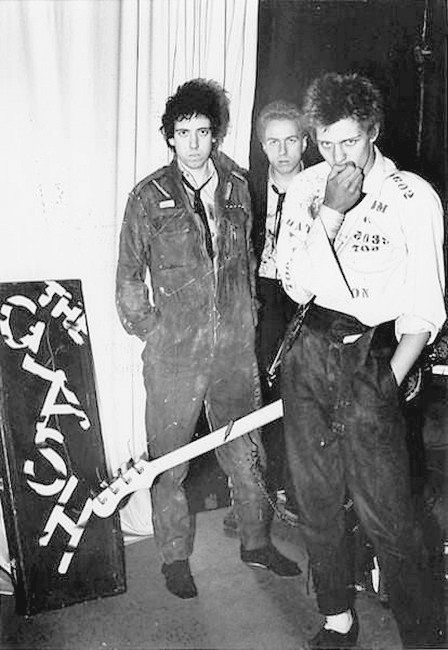
This is an invaluable snapshot of the early five-man Clash: Strummer, Jones, Simonon, Chimes and the soon-to-be-departing Keith Levene. Haven't heard the non-LP tracks listed above? Don't worry about it. Most of them are pretty feeble variations on old Kinks and Who tracks, lacking the fury of the later material. However, ‘Flies' has some interesting drumming from Chimes - a drummer who was rarely accused of as being interesting - and ‘Mark Me Absent' is a great Garage rocker that you should get your band to cover. The band is remarkably tight, especially when you consider just how sloppy the Clash could be, especially in their drug days. But the guitars sound cheap and nasty and an observer could be forgiven for not recognizing the embryonic Clash as future world beaters. While the band struggles to tune up, a pre-Cockney Joe berates the audience for being lame. The sound is a remarkably OK audience recording.
Magazines
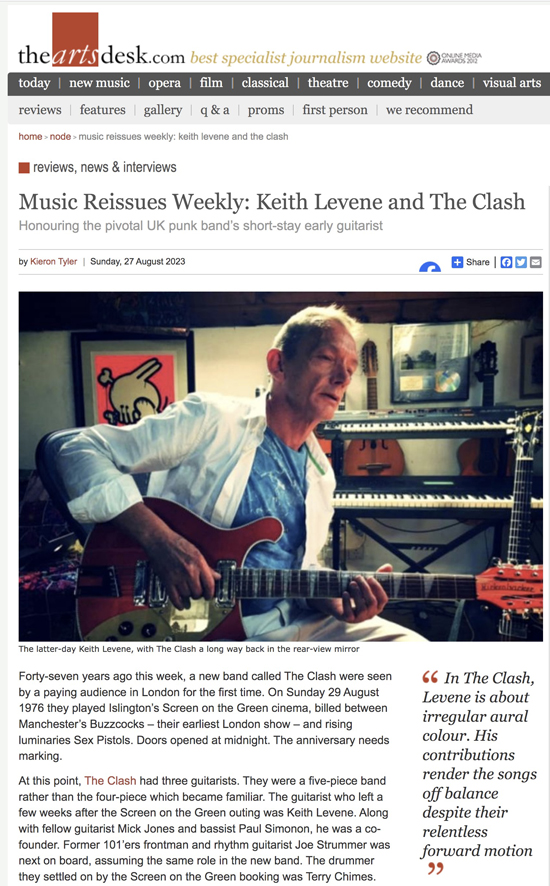
Music Reissues Weekly
Keith Levene and The Clash
Covers the first few months of The Clash from London SS to 101'ers to the first few gigs of the Clash and includes references to the gig at the Black Swan.
During this June 1976 rehearsal period, the as-yet unnamed outfit’s initial drummer was Paul Buck (later in 999 as Pablo Labritaine), who had been at school with Strummer. He left after two or three practices and Terry Chimes was once-again tapped. The line-up settled on Chimes, Levene, Jones, Simonon and Strummer. Finding a name was difficult – amongst those in the running were The Psychotic Negatives and The Heartdrops or Weak Heartdrops (from a Big Youth record). Simonon came up with The Clash.
A debut show was booked for 4 July, supporting Sex Pistols sat Sheffield’s Black Swan – on the same day The Ramones debuted in the UK at The Roundhouse. The Sheffield billing was “ex 101’ers.” It was deliberate that, Pistols aside, London’s punk élite would not have a chance to pronounce on the worthiness of the band.
Despite there being no sonic evidence for the Sheffield debut, a little is known about what was played. The band opened with an instrumental titled “Listen” and, according to Pat Gilbert's 2005 book Passion is a Fashion, also played “Protex Blue” and Mick Jones’ Sixties-style beatster “1-2 Crush on You.” The set additionally included 101’ers staples “Keys to Your Heart,” “Junco Partner” and “Too Much Monkey Business” along with a Who cover and The Troggs' “I Can’t Control Myself” (also covered by the early Buzzcocks). A 101’ers hangover clouded proceedings.
Music Reissues Weekly:
Keith Levene and The Clash Honouring the pivotal UK punk band’s short-stay early guitarist
by Kieron Tyler
Sunday, 27 August 2023
The latter-day Keith Levene, with The Clash a long way back in the rear-view mirror Forty-seven years ago this week, a new band called The Clash were seen by a paying audience in London for the first time. On Sunday 29 August 1976 they played Islington’s Screen on the Green cinema, billed between Manchester’s Buzzcocks – their earliest London show – and rising luminaries Sex Pistols. Doors opened at midnight. The anniversary needs marking.
At this point, The Clash had three guitarists. They were a five-piece band rather than the four-piece which became familiar. The guitarist who left a few weeks after the Screen on the Green outing was Keith Levene. Along with fellow guitarist Mick Jones and bassist Paul Simonon, he was a co-founder. Former 101’ers frontman and rhythm guitarist Joe Strummer was next on board, assuming the same role in the new band. The drummer they settled on by the Screen on the Green booking was Terry Chimes.
Sex Pistols Screen on the Green
When The Clash played the 100 Club a month later on 20 September – at what became known as the “Punk Festival” – Levene was out and they were the band which – despite some drummer wobbles – signed to CBS on 26 January 1977. What came next for The Clash is well known. Easily lost though is the story of what came first.
Remarkably, and despite his short stay in the band, there is an aural evidence of the formative, Levene-era Clash. The band played in front of audiences five times with him in the line-up – the last three appearances were recorded. The surviving audio from before and after Levene’s departure makes it possible to dig into his importance to the band and impact on their sound – and how The Clash changed after the departure of one of their co-creators.
Keith Levene, who died on 11 November 2022 at age 65, was a significant figure in British punk and what came in its wake. An accomplished, self-taught guitarist his pre-punk adventures included working as roadie for Yes in 1972 and 1973. After leaving The Clash, he spent some of late 1976 in a band named Flowers of Romance with, amongst other in-crowd punks, Sid Vicious and a pre-Slits Viv Albertine. They never played live. In late 1977, he was in a short-lived band named Drunk & Disorderly with Rat Scabies, who had just left The Damned – they played live twice supporting The Clash at London’s Rainbow. Then, from May 1978, Levene became integral to John Lydon’s post-Pistols band Public Image Ltd, who he left in 1983. Following this, his path was erratic. He was the only person to play with members of all three of The Clash, The Damned and Sex Pistols. Becoming a member of The Clash was the opening shot.
An examination of the set lists from Levene’s stay in The Clash makes it obvious this was different to what CBS signed in early 1977. Songs were played live which were never recorded: “Deadly Serious” (also known as “Going to the Disco”), “How Can I Understand the Flies?” “I Know What to Think About you,” “I Never Did it,” “Mark Me Absent” and “Sitting at My Party.” These sat alongside others which were released: “1977,” “48 Hours,” “Deny,” “I'm So Bored With you” (later reconfigured as “I'm So Bored With the USA”), “Janie Jones,” “London's Burning,” “Protex Blue” and “What's My Name.” Of those lacking later studio versions, “Deadly Serious,” “How Can I Understand the Flies,” “I Know What to Think About you” and “Mark Me Absent” remained in the live set after Levene had gone. His departure did not markedly affect the material played on stage.
Scrolling back, as recounted in Marcus Gray’s 1995 book Last Gang in Town, Levene first met Mick Jones through a mutual friend named Alan Drake, the potential singer for a new band Jones wanted to form in Spring 1976 after his spell in the rehearsal-only London SS. Levene came on board, probably as result of encouragement by Malcolm McLaren associate Bernard Rhodes, who had managed The London SS. McLaren had Sex Pistols on his books so Rhodes wanted a competitor band. Also around was another London SS alumnus, neophyte bassist Paul Simonon.
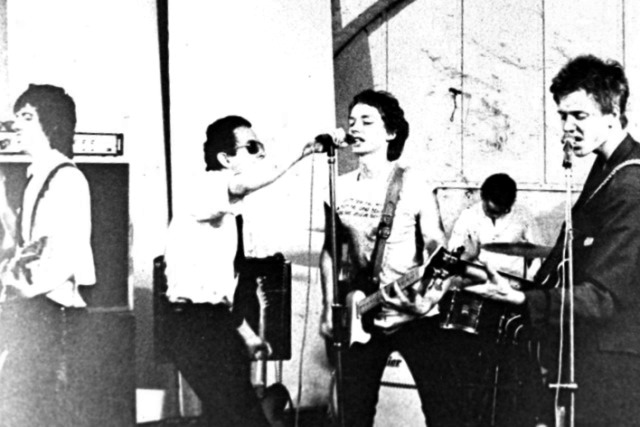
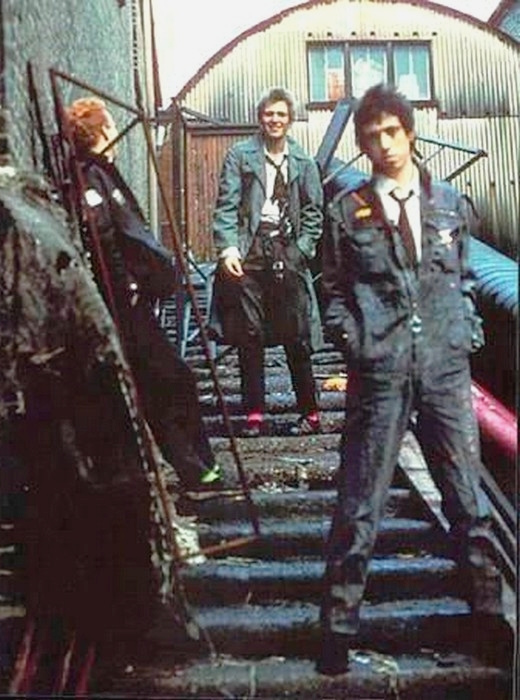
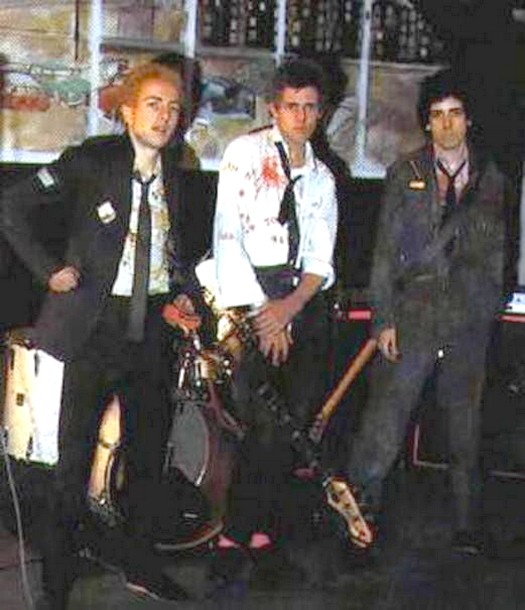
Pictured left, The Clash rehearsing in June 1976 with Paul Buck on drums. Keith Levene, right
In April or May 1976. Mick Jones, Keith Levene and Paul Simonon had the skeleton of a new band. Drake dropped out and a few rehearsals were held with a singer named Billy Watts. Drummer Terry Chimes – another fleeting London SS member – arrived after he was phoned by Rhodes. Watts and Chimes were gone by the time Levene and Rhodes approached the recently Sex Pistols-smitten 101’ers frontman Joe Strummer at a 25 May Pistols gig at the 100 Club to see if he’d join the band they were touting. Despite the imminent release of his band’s debut single “Keys to Your Heart” and the following he had fronting a band familiar on the college and pub circuit, Strummer pitched in with the unknowns and began rehearsing with the new band in the first or second week of June 1976. The final 101’ers show was on 5 June.
During this June 1976 rehearsal period, the as-yet unnamed outfit’s initial drummer was Paul Buck (later in 999 as Pablo Labritaine), who had been at school with Strummer. He left after two or three practices and Terry Chimes was once-again tapped. The line-up settled on Chimes, Levene, Jones, Simonon and Strummer. Finding a name was difficult – amongst those in the running were The Psychotic Negatives and The Heartdrops or Weak Heartdrops (from a Big Youth record). Simonon came up with The Clash. A debut show was booked for 4 July, supporting Sex Pistols sat Sheffield’s Black Swan – on the same day The Ramones debuted in the UK at The Roundhouse. The Sheffield billing was “ex 101’ers.” It was deliberate that, Pistols aside, London’s punk élite would not have a chance to pronounce on the worthiness of the band.
Despite there being no sonic evidence for the Sheffield debut, a little is known about what was played. The band opened with an instrumental titled “Listen” and, according to Pat Gilbert's 2005 book Passion is a Fashion, also played “Protex Blue” and Mick Jones’ Sixties-style beatster “1-2 Crush on You.” The set additionally included 101’ers staples “Keys to Your Heart,” “Junco Partner” and “Too Much Monkey Business” along with a Who cover and The Troggs' “I Can’t Control Myself” (also covered by the early Buzzcocks). A 101’ers hangover clouded proceedings. A retreat to rehearsing followed.
(Pictured right, The Clash rehearsing in late June or July 1976 with Terry Chimes on drums. Keith Levene, second right)
Next up, over a month on, was a showcase at their Camden rehearsal room on 13 August 1976 – an invitation-only event for booking agents, music journalists and record label people. This time, the band had to be sure it had the goods. Despite this being written about by Sounds’ Giovanni Dadomo and the presence of writers Caroline Coon and John Ingham, there is no record of what was performed. However if, as at Sheffield, R&B and 101’ers numbers were played, it would have been noted. Dadomo was thrilled by what he saw, writing “I think they're the first band to come along who'll really frighten the Sex Pistols shitless. Exciting isn't the word for it.”
In the early rehearsals Levene, like Strummer, played a Fender Telecaster. For the showcase and later, he had the more unusual, un-rock Mosrite guitar – perhaps influenced by The Ramones, whose guitarist Johnny also played a Mosrite: Levene had seen them at Dingwalls, near The Clash’s rehearsal studio, on 5 July 1976. The showcase ushered in a new-style Clash.
Focus arrives with the next three shows, the remaining trio Levene played with the band: The Screen on the Green (29 August); The 100 Club (31 August, supporting Sex Pistols for a third time); The Roundhouse (5 September, supporting Strummer’s former pub-rock peers The Kursaal Flyers). All were recorded.
In parallel, there is a written record from the time. The nascent Clash was an object of fascination.
Pictured left, The Clash rehearsing in late June or July 1976 with Terry Chimes on drums. Keith Levene, third right at microphone
On seeing them at The Screen on the Green, NME’s Charles Shaar Murray wrote “a group called Clash take the stage. They are the kind of garage band who should be speedily returned to their garage, preferably with the motor running, which would undoubtedly be more of a loss to their friends and families than to either rock or roll. Their extreme-left guitarist, allegedly known as Joe Strummer, has good moves, but he and the band are a little shaky on ground that involves starting, stopping and changing chord at approximately the same time.” While it’s odd the R&B-favouring Shaar Murray wasn’t aware of Strummer from The 101’ers, this review inspired the future Clash song “Garageland.”
The already converted Giovanni Dadomo was there too. In Sounds he wrote, The Clash “were amazingly good” despite “their equipment [doing] the band a grave disservice tonight, losing Joe Strummer's hard to mix vocals until they became an unintelligible mumble and generally poleaxing the band's nuclear potential.”
Also for Sounds, Chas de Whalley saw them at The Roundhouse and said “At least you can guarantee that any band formed by the 101’ers guitarist Joe Strummer will bristle with fire and energy. Unfortunately at the Roundhouse The Clash had little more on offer.”
Mixed views then. The audio of the Screen on the Green, 100 Club and Roundhouse shows brings a different perspective, especially on how Levene plugged into this new band.
At The Screen on the Green on 29 August The Clash take the stage and spend the first minute tuning up in front of a silent audience. Hardly nuclear. After the fiddling, the set opener is “Deny.” People in the audience start whooping. The live sound is fine. Jones has the rhythm guitar over which Levene superimposes jagged, spidery arpeggios. Next up is the Kinks/Who-style garage rocker “I Know What to Think About you.” Again, Levene is about irregular aural colour. His contributions render the songs off balance despite their relentless forward motion. When the well-known “Janie Jones” arrives, the difference between pre- and post-Levene band is set in stone: not as fast as later, with a metallic ring to the whole sound – not as in heavy metal, but a sharpness. It’s the same with the chugging “What’s My Name.”
Pictured right, The Clash during the 13 August 1976 showcase at their rehearsal room. Keith Levene, right
Two days later, supporting Sex Pistols at the 100 Club, there's the same restraint with the pacing and an equivalent textured approach to the overall delivery. No matter how crude the songs, Levene’s guitar brings a prickliness. “1-2 Crush on You” is more mod-flash Nuggets-style garage rocker than punk in the 1976 or 1977 sense. “What’s my Name” is most interesting as it has a clanging quality which was later lost.
On 5 September, at The Roundhouse, the measured tempo is still a defining feature. As is Strummer’s verbal baiting of the crowd, which doesn’t work: there are catcalls for The 101’ers. In terms of Levene’s presence, his soloing as part of the overall onward thrust brings a spikiness which was lost in the barrage which was later perfected. By accommodating Levene’s guitar, this version of The Clash was a more measured unit than what was on the horizon.
Sex-Pistols-100-Club-Punk-Festival
Regular shows and press coverage meant the band was progressing but after late August’s Notting Hill Carnival, which Strummer and Simonon attended, the former turned up at a rehearsal with a new song titled “White Riot.” Levene’s refusal to play a song with so provocative title is one reason he gave for leaving the band there and then. He also said he was increasingly sick of manager Bernard Rhodes’ constant programming-style verbiage and Strummer haranguing him about the band’s mission. He was also tiring of, as he saw it, rock ’n’ roll. Any or all of these resulted in him walking out, leaving his guitar feeding back while leaning on an amplifier.
Within a week or so, on 20 September, The Clash played at 100 Club punk fest without Levene and as a four-piece for the first time – on before Sex Pistols again. “White Riot” debuted as the set opener. The show was recorded and finds the band faster than earlier and more emblematically punch-it-out punk than before. The Sixties garage-rock edge and chiming textures Levene gave the band have already gone. Shows from Birmingham, Fulham Town Hall and The Royal College of Art in October and November 1976 are the same – the band has become The Clash: The Clash which would be caught on their debut album is within reach.
According to The Clash, Levene’s sole legacy was a co-writing credit the first album’s “What’s my Name.” But, as the recorded evidence from live dates shows, when he was on stage with the band in August and September 1976, his effect was to temper the coarseness while bringing an unpredictable edge. It is this sound, his sound, which left an imprint by resonating through the early Subway Sect as heard on their first single “Nobody’s Scared.” A slightly different, more abstract, legacy.
As to what the Keith Levene Clash would have sounded like had they signed to a label and recorded? Nothing they were doing then would have attracted a mainstream imprint. Levene's Clash would have had little chance in finding a wide audience. Nevertheless, Joe Strummer joined as he knew where music was going; after ditching The 101’ers, The Clash was his lunge for the brass ring. And manager Bernard Rhodes was only interested in a major label for his charges. Such a scenario meant there was no place for an individualistic guitarist. If Levene had stayed, he would have become collateral damage. There was no chance of an alternative history for UK punk.
I was at the Roundhouse gig for an interview for a roadie job with the Kursaals. Jon Norledge, Camden Town
I think I can help clear up the minor omissions at the end of the review on this page.
The producer was 'Wombler' Mike Batt. Batt wrote and performed Wombles songs in a Womble outfit ! http://www.toonhound.com/wombles.htm
However Batt was also a renowned producer and knew how to arrange a 'big sound' with an orchestra. As did George Martin and most of the studio producers of the 60's. This is what the Kursaal Flyers were after at that time for the Golden Mile LP. I was at the Roundhouse gig for an interview for a roadie job with the Kursaals.
I always will remember the Clash for the rants at the audience. It was normal to sit down during performances in those days - so it was amazing to hear Joe Strummer shout at us about 'wearing out yer denims'. So I was delighted to see that you have a recording of this gig and that my memory hadn't let me down. I got the job with the Kursaals and toured with them until they broke up at the end of 1977.
We kept in touch with the Clash (in particular - Mick Jones) during their meteoric rise to fame and met them 'back at the hotel' whenever our tour dates coincided. Coincidentally I was at the Roundhouse for the opening 2 events of the BBC Electric Proms.
The first film was about Pete Doherty which included the studio sessions for his new single - Janie Jones.
Funny to think I saw that song performed at the same venue exactly 30 years ago! (The other event yesterday was Paul Weller live - amazing. He did loads of Jam songs including Going Underground, Town Called Malice and In the City !!).
Saw them at the Roundhouse
Dale McIsaac - Saw them supporting John Cale at the Roundhouse, London 1976...
Blackmarketclash | Leave a comment
Did you see The Clash!
Please leave a comment
Leave your comment here on the Blackmarketclash's FB page (above/below) Or alternatively leave a comment here
Email:
All help appreciated. Info, articles, reviews, comments or photos welcome. Please email blackmarketclash
Deny
1-2 Crush on You
I Know What to Think About You
I Never Did It
How Can I Understand the Flies
Protex Blue
Janie Jones
Mark Me Absent
Deadly Serious (Dig a Hole)
48 Hours
I'm So Bored with You
Sitting At My Party
London's Burning
What's My Name
1977
EARLY GIGS '76,
LOTs of ARTICLES, POSTERS, CLIPPINGS ...
A collection of • Tour previews
• Tour posters
• Interviews
• Features
• Articles
• Tour information
Ignore Alien Orders: On Parole With The Clash Tony Beesley & Anthony Davie
Extensive eyewitness coverage of the early years from the Black Swan pub onwards
All the Young Punks
The People's history of The Clash
All The Young Punks is a people’s history of The Clash, told through the memories of over 300 fans across nearly 150 gigs. From their punk beginnings in 1976 to global fame, the book captures the raw energy, political fire, and unforgettable stage presence of Joe Strummer, Mick Jones, Paul Simonon, and Topper Headon. Featuring a foreword by Billy Bragg, it’s a vivid tribute to the only band that mattered.
Return of the Last Gang in Town,
Marcus Gray
Black Swan pg142 ... Rehearsal Rehearsals pg ...
Screen on the Green pg151, 164 ...
The 100 Club (Aug) pg160
Roundhouse pg160 ...
100 Club Festival pg164 ...
Tiddenfoot pg177 ...
Guildford pg178 ...
Aklan Hall pg178 ...
Uni of London pg178 ...
ICA (23 Oct) pg 176,180, 183 ...
Birmingham pg180 ...
RCA pg182 ...
Fulham pg182 ...
Ilford Lady Lacy pg185 ... Birmingham (27th) pg ...
Wycombe pg187 ... Lanchester Poly pg ...
Polydor demos pg188 ... Janet Street Porter LWT pg ...
Passion is a Fashion,
Pat Gilbert
Black Swan pg95, 96 ... Rehearsal Rehearsals pg ... Screen on the Green pg ...
The 100 Club (Aug) pg ... Roundhouse pg ...
100 Club Festival pg ... Tiddenfoot pg114 ...
Guildford pg114 ...
Uni of London pg114 ...
ICA (23 Oct) pg114 ...
Birmingham pg114 ...
RCA pg116 ...
Fulham pg116 ...
Ilford pg114,127 ... Birmingham pg ...
Polydor demos pg117 ... Janet Street Porter LWT pg 177 ...
Redemption Song,
Chris Salewicz
Black Swan pg ... Rehearsal Rehearsals pg ...
Screen on the Green pg ...
The 100 Club (Aug) pg ...
Roundhouse pg ...
100 Club Festival pg ...
Tiddenfoot pg165 ...
ICA (23 Oct) pg ...
RCA pg168 ...
Fulham pg166 ...
Ilford pg170 ...
Wycombe pg170 ... Lanchester Poly pg 173 ...
Polydor demos pg170 ...
Joe Strummer and the legend of The Clash
Kris Needs
Black Swan pg42 ...
Rehearsal Rehearsal pg43 ...
Screen on the Green pg44 ... 100 Club Festival pg ... Tiddenfoot pg49 ...
ICA (23 Oct) pg54, 56 ...
Birmingham pg56 ...
RCA pg56 ...
Ilford pg64 (photo) ... Birmingham pg ... Fulham pg56 ... Wycombe pg58 ...
Janet Street Porter LWT pg60 ...
Lanchester Poly (Rob Harper) pg61 ...
Polydor demos pg59 ...
The Clash (official)
by The Clash (Author), Mal Peachey
Black Swan pg ... Rehearsal Rehearsal pg ... Screen on the Green pg ... The 100 Club (Aug) pg ... Roundhouse pg ...
100 Club Festival pg ... ICA (23 Oct) pg ...
Uni of London pg82, 87 ... RCA pg83 ...
Janet Street Porter LWT pg60
Brixton Academy 8 March 1984
ST. PAUL, MN - MAY 15
Other 1984 photos
Sacramento Oct 22 1982
Oct 13 1982 Shea
Oct 12 1982 Shea
San Francisco, Jun 22 1982
Hamburg, Germany May 12 1981
San Francisco, Mar 02 1980
Los Angeles, April 27 1980
Notre Dame Hall Jul 06 1979
New York Sep 20 1979
Southall Jul 14 1979
San Francisco, Feb 09 1979
San FranciscoFeb 08 1979
Berkeley, Feb 02 1979
Toronto, Feb 20 1979
RAR Apr 30 1978
Roxy Oct 25 1978
Rainbow May 9 1977
Us May 28 1983
Sep 11, 2013: THE CLASH (REUNION) - Paris France 2 IMAGES
Mar 16, 1984: THE CLASH - Out of Control UK Tour - Academy Brixton London 19 IMAGES
Jul 10, 1982: THE CLASH - Casbah Club UK Tour - Brixton Fair Deal London 16 IMAGES
1982: THE CLASH - Photosession in San Francisco CA USA 2 IMAGES
Jul 25, 1981: JOE STRUMMER - At an event at the Wimpy Bar Piccadilly Circus London 33 IMAGES
Jun 16, 1980: THE CLASH - Hammersmith Palais London 13 IMAGES
Feb 17, 1980: THE CLASH - Lyceum Ballroom London 8 IMAGES
Jul 06, 1979: THE CLASH - Notre Dame Hall London 54 IMAGES
Jan 03, 1979: THE CLASH - Lyceum Ballroom London 19 IMAGES
Dec 1978: THE CLASH - Lyceum Ballroom London 34 IMAGES
Jul 24, 1978: THE CLASH - Music Machine London 48 IMAGES Aug 05, 1977: THE CLASH - Mont-de-Marsan Punk Rock Festival France 33 IMAGES
1977: THE CLASH - London 18 IMAGES
Joe Strummer And there are two Joe Strummer sites, official and unnoffical here
Clash City Collectors - excellent
Facebook Page - for Clash Collectors to share unusual & interesting items like..Vinyl. Badges, Posters, etc anything by the Clash. Search Clash City Collectors & enter search in search box. Place, venue, etc
Clash on Parole- excellent Facebook page - The only page that matters Search Clash on Parole & enter search in the search box. Place, venue, etc
Clash City Snappers Anything to do with The Clash. Photos inspired by lyrics, song titles, music, artwork, members, attitude, rhetoric,haunts,locations etc, of the greatest and coolest rock 'n' roll band ever.Tributes to Joe especially wanted. Pictures of graffitti, murals, music collections, memorabilia all welcome. No limit to postings. Don't wait to be invited, just join and upload. Search Flickr / Clash City Snappers Search Flickr / 'The Clash'
Search Flickr / 'The Clash' ticket
I saw The Clash at Bonds - excellent Facebook page - The Clash played a series of 17 concerts at Bond's Casino in New York City in May and June of 1981 in support of their album Sandinista!. Due to their wide publicity, the concerts became an important moment in the history of the Clash. Search I Saw The Clash at Bonds & enter search in red box. Place, venue, etc
Loving the Clash Facebook page - The only Clash page that is totally dedicated to the last gang in town. Search Loving The Clash & enter search in the search box. Place, venue, etc
Blackmarketclash.co.uk Facebook page - Our very own Facebook page. Search Blackmarketclash.co.uk & enter search in red box. Place, venue, etc
Search all of Twitter Search Enter as below - Twitter All of these words eg Bonds and in this exact phrase, enter 'The Clash'
 Unofficial CD,


 Enlarge Image
%20(Big%20Pink%20Book)/Clash%20_%20Strummer,%20Jones,%20Simonon,%20Headon,%20The/Clash%20_%20Strummer,%20Jones,%20Simonon,%20Headon,%20The%20-%20Clash%20(Musical%20group)%20Pink%20book-300px.jpg) with Kursaal Flyers and Crazy Cavan
with Kursaal Flyers and Crazy Cavan Just two months after the Ramones came to London,Sounds writer Chas de Whalley reviewed a Clash performance at the Roundhouse.
 Keith Levene: And we did the Mucky Duck, as Joe Strummer called it—the Black Swan— and it was a good gig. Went back to London, did the Roundhouse.
 %20PUNK%20GENERIC/Sniffin%20Glue/Sniffin%20Glue%20(Perry,%20Ms,%20Terry)/Sniffin%20glue%20_Rawlings,%20Terry.jpg) Mick-That was part of it, but we’ve tried other things since then, like at the Roundhouse ... er. ..we ‘talked’ to the audience ...
Mick-That was part of it, but we’ve tried other things since then, like at the Roundhouse ... er. ..we ‘talked’ to the audience ... A gig on 5 September at one of the Roundhouse’s Sunday sessions proved to be Keith Levene’s last. The Clash were third on the bill supporting pub-rockers the Kursaal Flyers and rock ’n’ roll revivalists Crazy Cavan & The Rhythm Rockers. Playing inhumanly early to just-arrived hippies, The Clash were greeted with a luke- warm response and asmattering of heckling.
 By late August, the Clash’s repertoire was going through changes in an effort to reflect this attitude. At Bernie’s insistence, ‘She’s Sitting At My Party’ was dropped for good at the end of the month. It was replaced by four new songs, none of which — as it turned out — would be officially recorded, but all of which were preserved on the tape of the 5 September Roundhouse show, eventually released as the bootleg CD 5 Go Mad In The Roundhouse. Thematically, one would seem to be a close cousin of ‘Janie Jones’ and ‘48 Hours’.
  That week. The Clash played two more gigs - at the 100 Club on 31 August (supporting The Pistols) and at the Roundhouse on 5 September (with The Kursaal Flyers and Crazy Cavan). The latter proved to be a disaster, not least because Joe's attempts to educate/rile/convert the audience between songs resulted in a barrage of guffaws and heckles. After the show, Bernie told the group they were 'shit' and enquired where Joe had found 'those old Johnny Rotten scripts'. It was to be Keith Levene's last gig with the group.
 Clash City Showdown: The Music, The Meaning and the Legacy of The Clash





/assets/adverts%20flyers%20posters/1976%2009%2020%20100%20Club%20poster%20big.jpg)



.gif)











 The Official Clash
  Clash City Snappers

