with Paul and Mick. At 41.45 mins they talk about this ICA gig and the "Canabilism at Clash gig". Patty Smith jumped on stage.
Background
...
...
Tickets, Posters
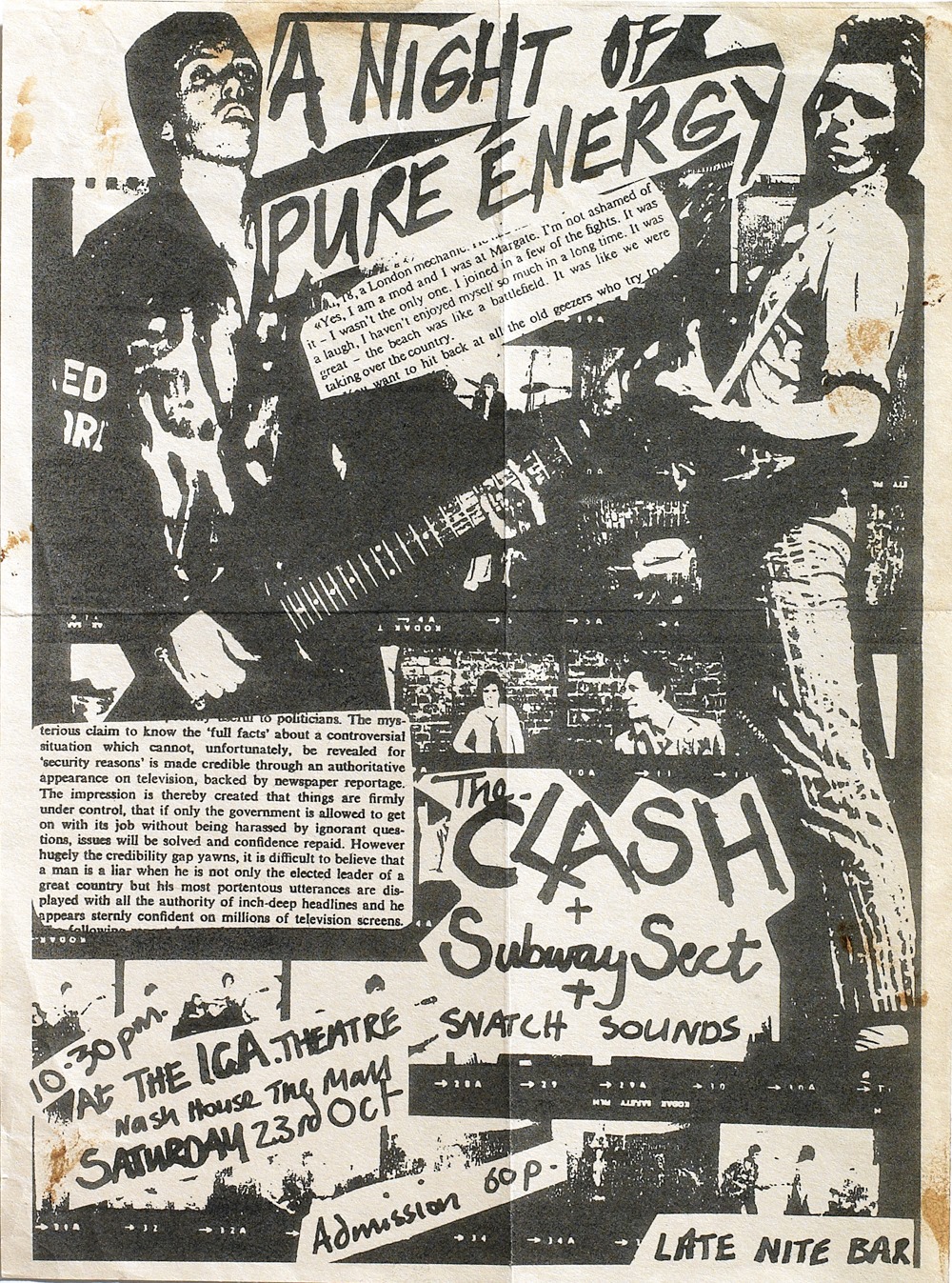
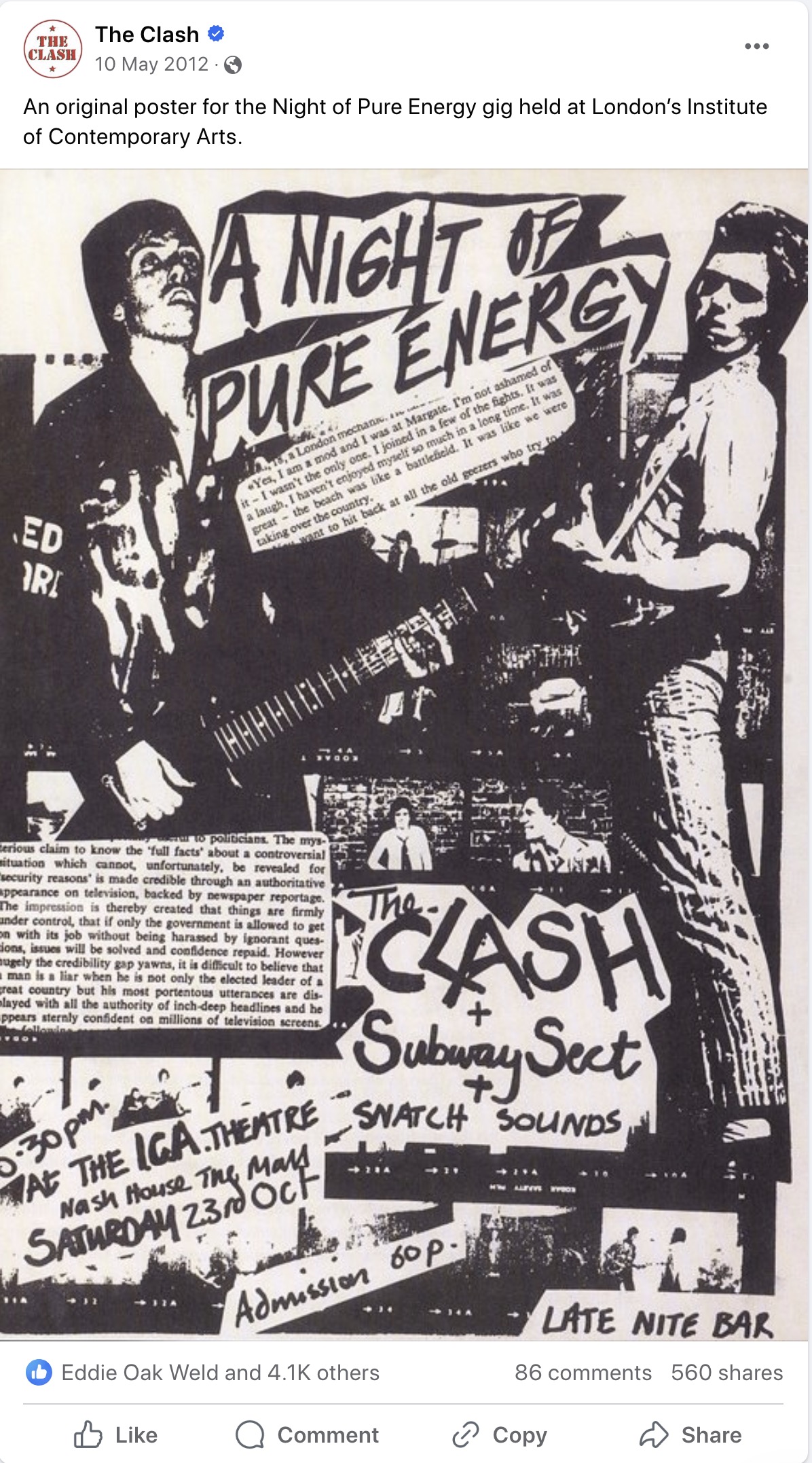
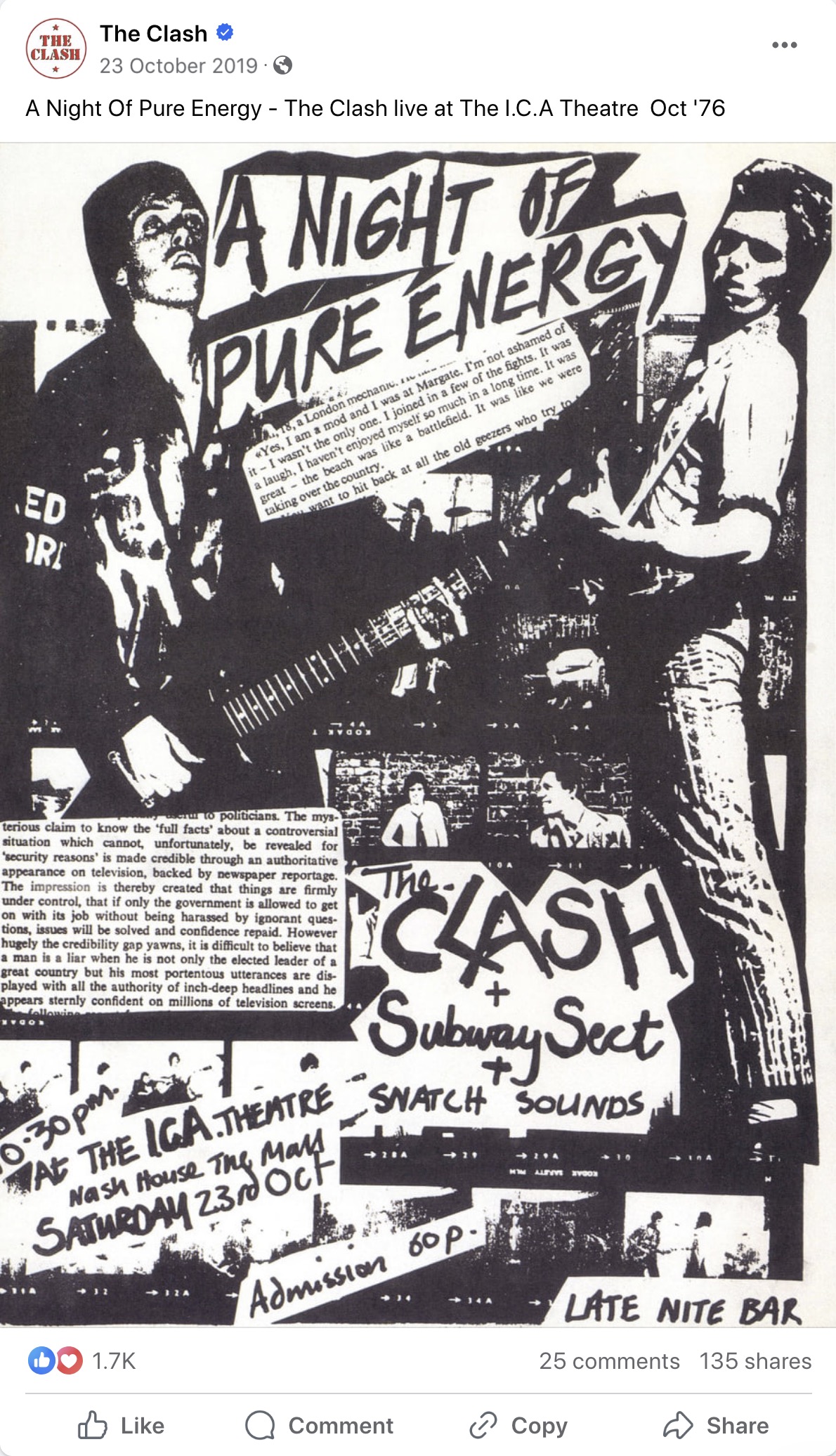
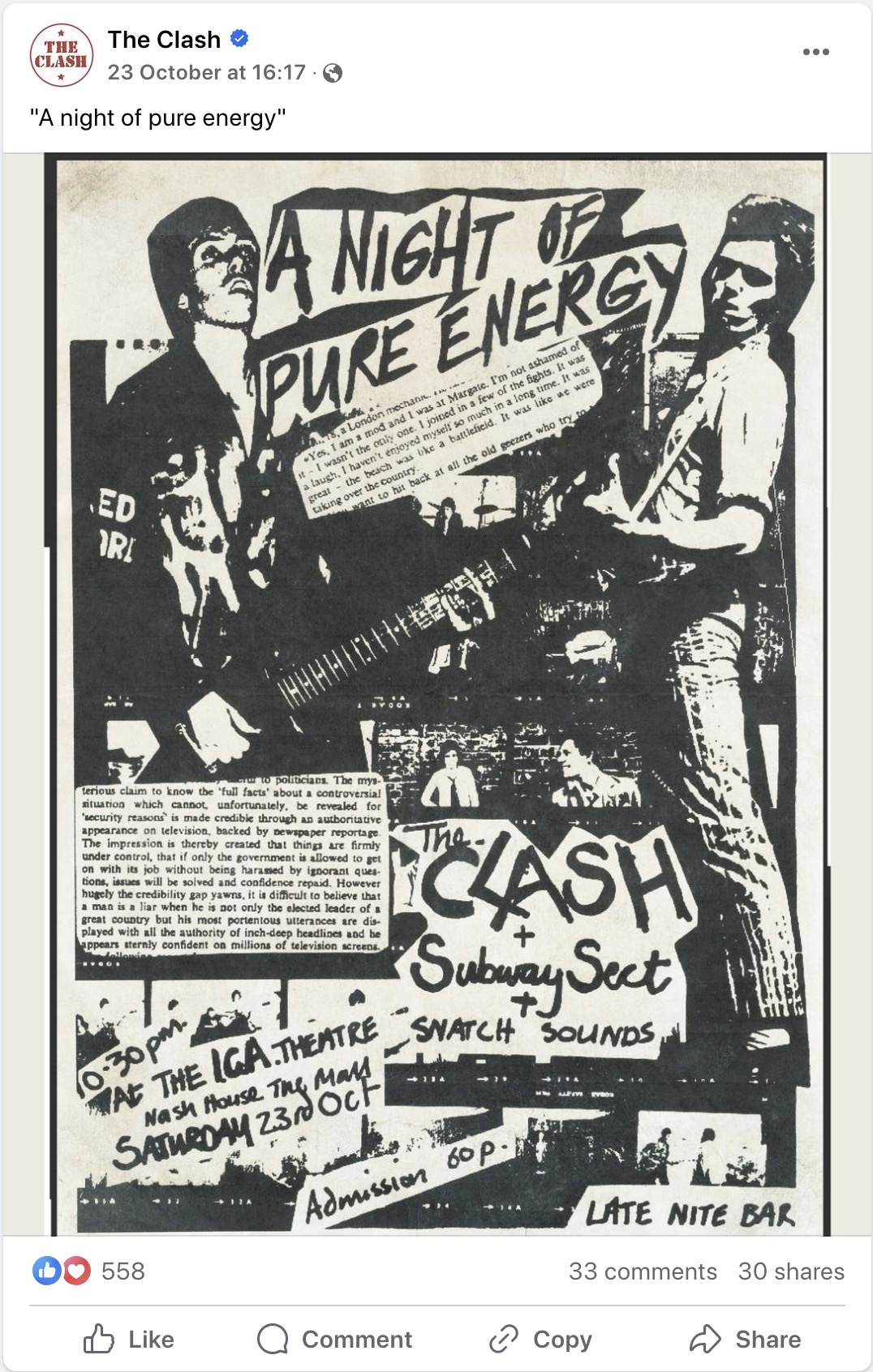
Poster - ICA - A Night of Pure Energy
AUCTION: The Clash: A Concert Flyer For 'A Night Of Pure Energy', at the ICA Theatre, London, 23rd October 1976 (bottom right)
printed on paper: 30.4 x 21.6cm (12 x 8 1/2in)
Footnotes, Provenance From the personal archive of Bernard Rhodes, designer, studio owner, record producer, songwriter, and co-creator of The Clash.
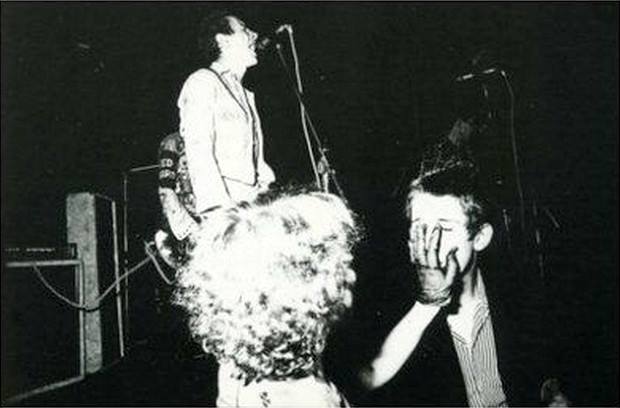
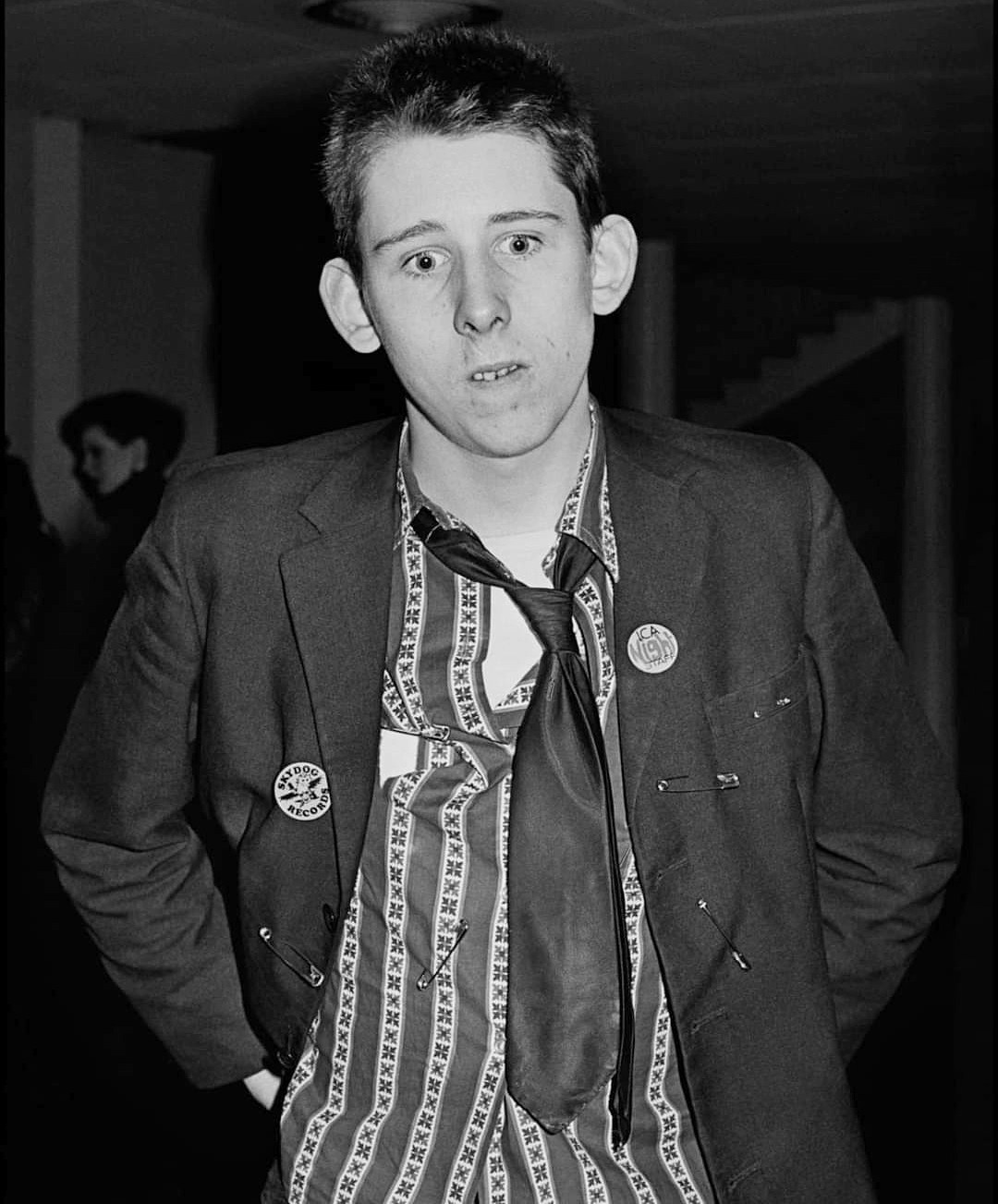
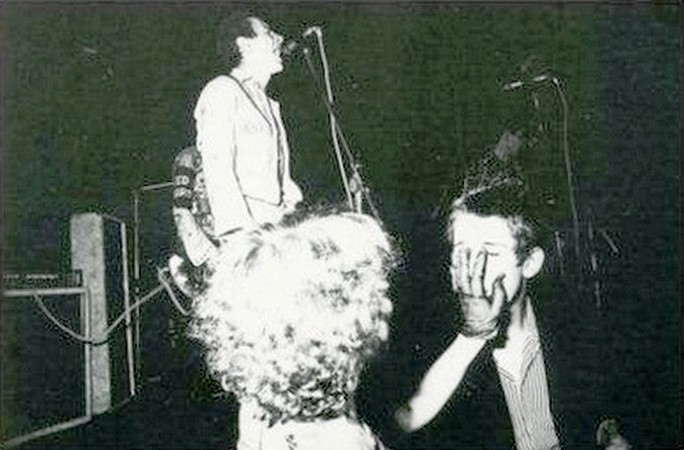
BR: "One of the earliest examples of Clash cut and paste agit-prop artwork for their infamous 1976 ICA show, at which the audience became so ecstatic that, in the frenzied fervour, a young lady bit a portion off the ear of The Pogues' Shane McGowan and Patti Smith excitedly jumped onstage."
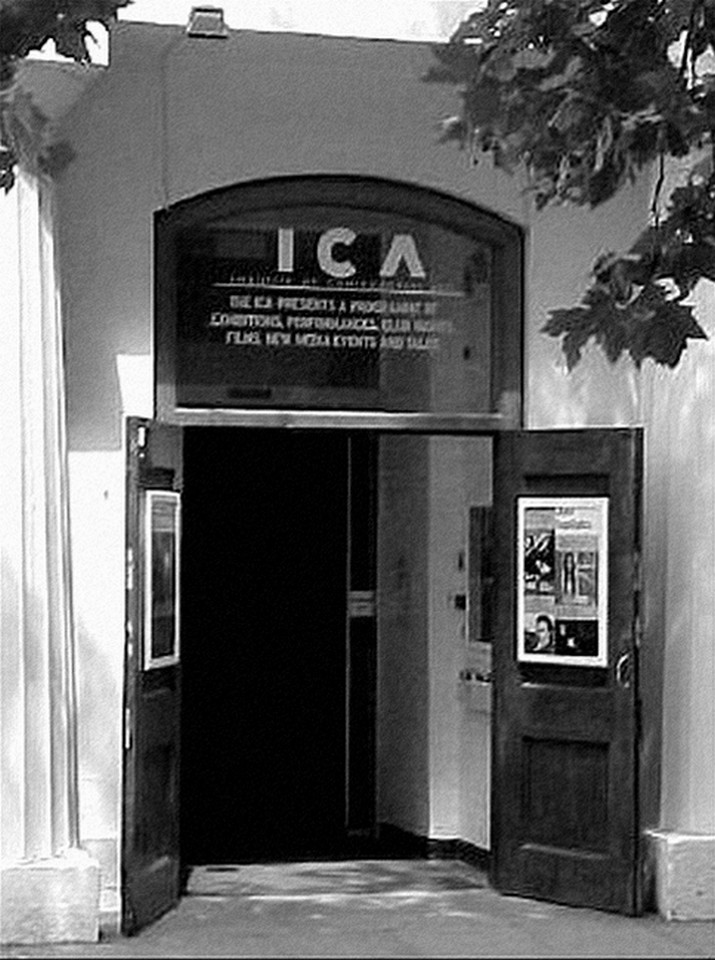
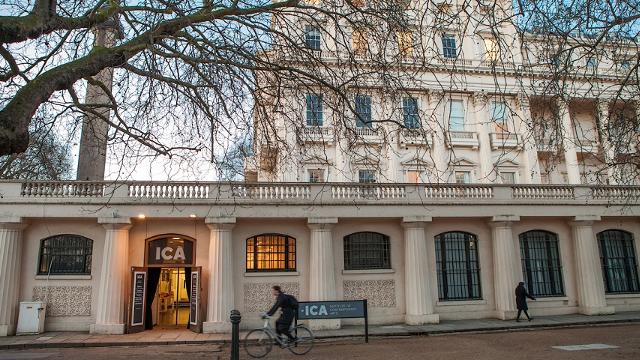
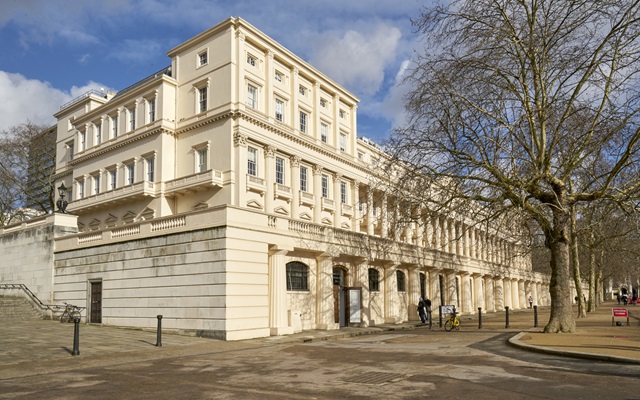
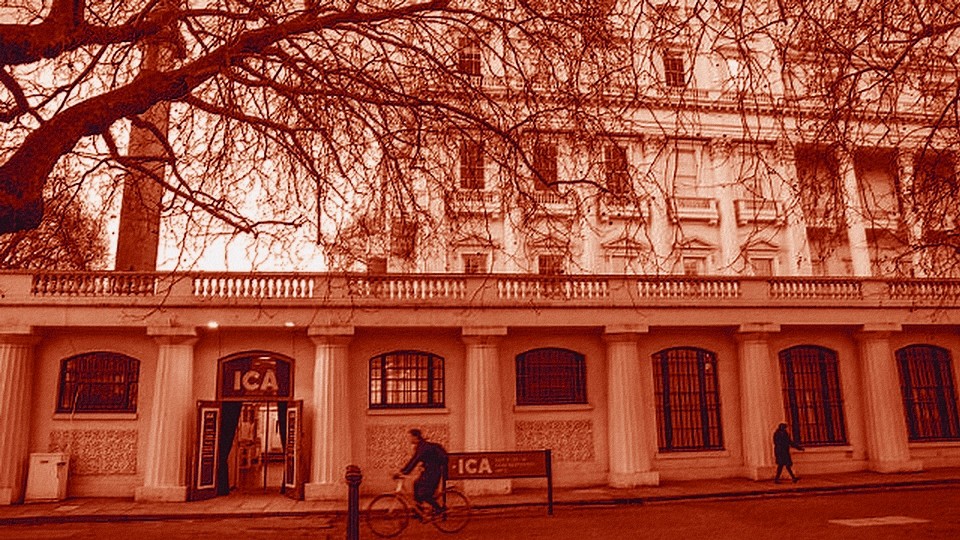
The Institute of Contemporary Arts (ICA) is an artistic and cultural centre on The Mall in London, just off Trafalgar Square. Located within Nash House, part of Carlton House Terrace, near the Duke of York Steps and Admiralty Arch, the ICA contains galleries, a theatre, two cinemas, a bookshop and a bar. Wiki.
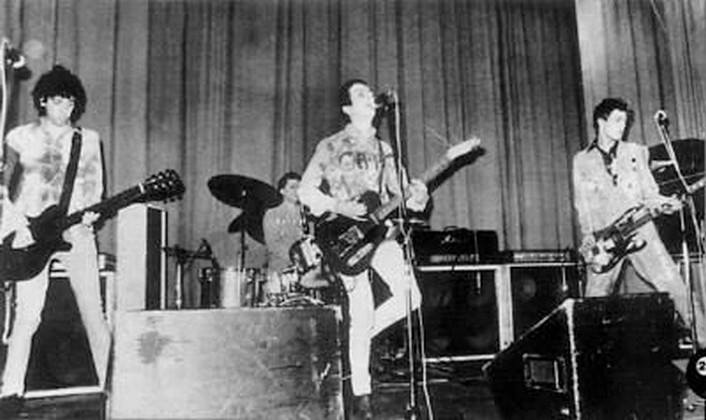
the gig
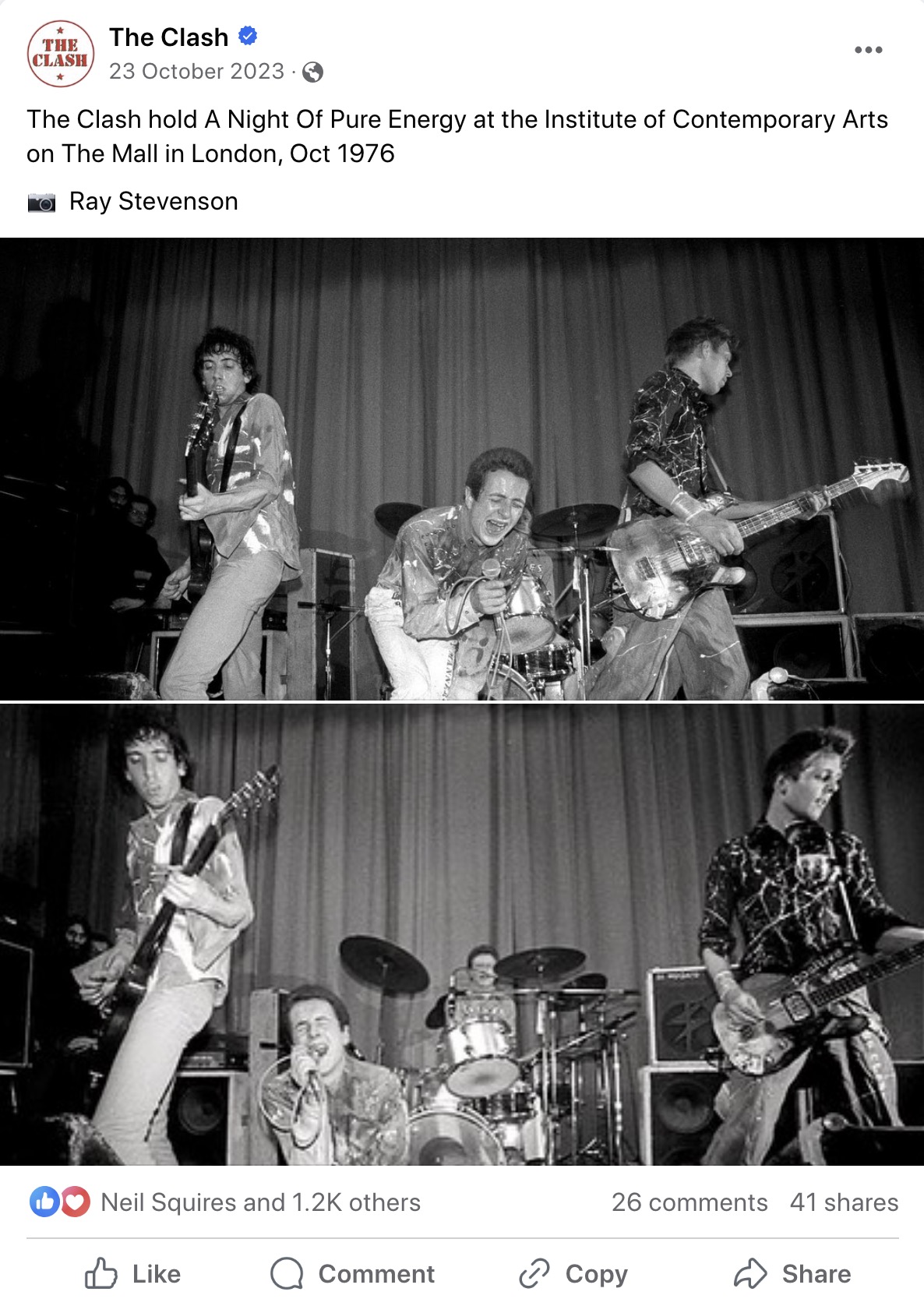
A Night of Pure Energy: The Clash Ignite at the ICA, 1976
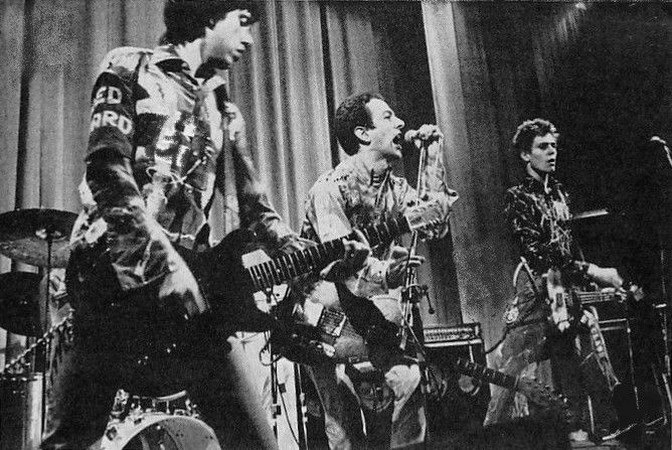
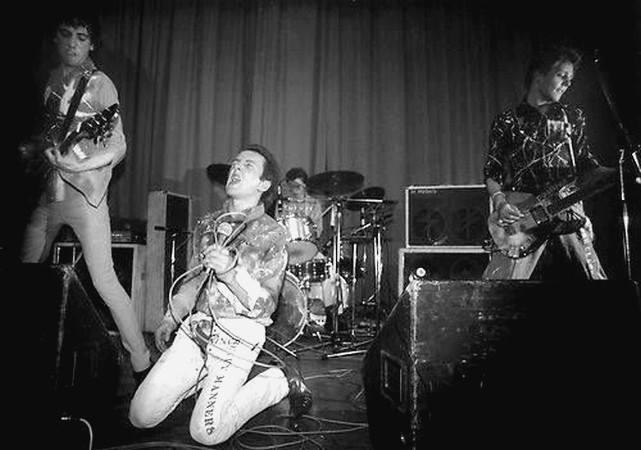
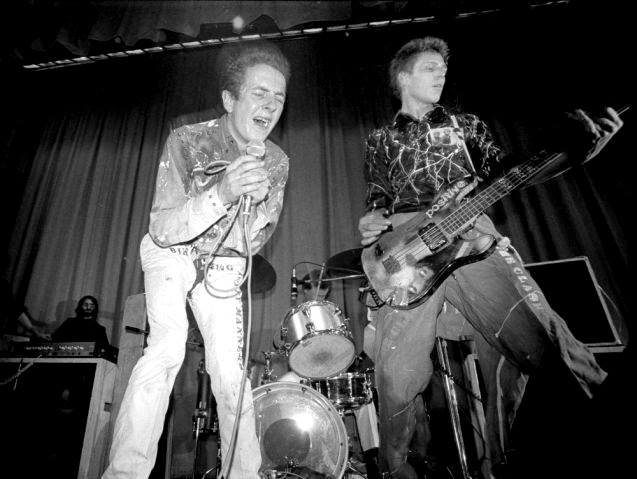
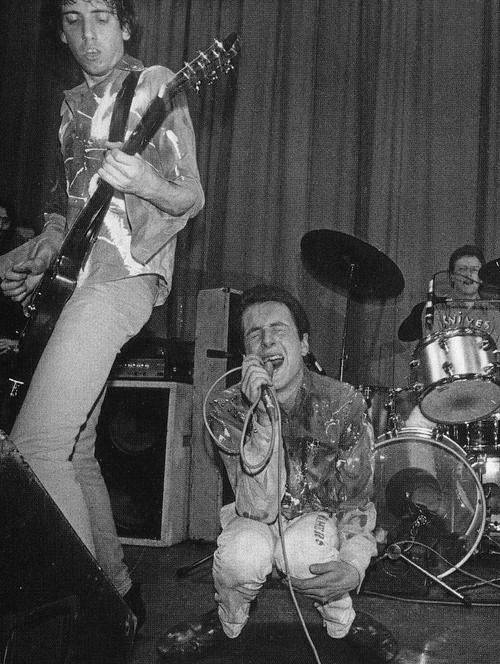
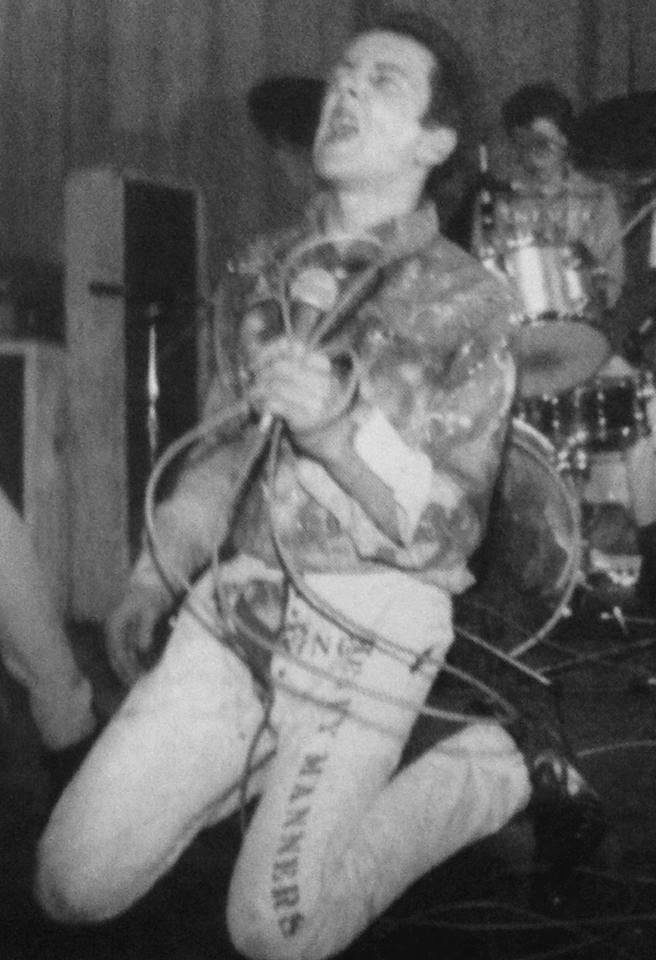
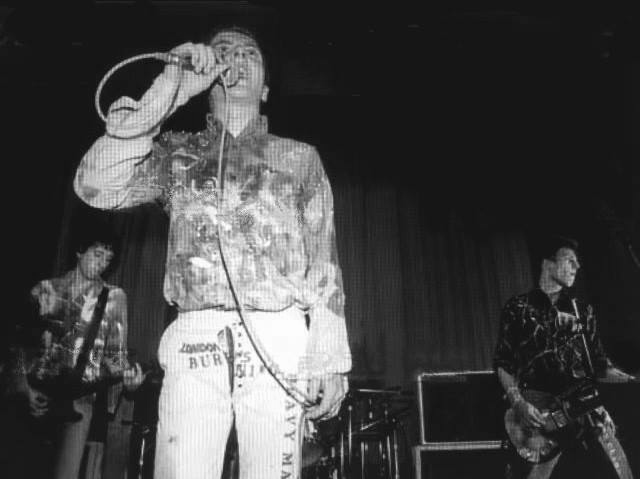
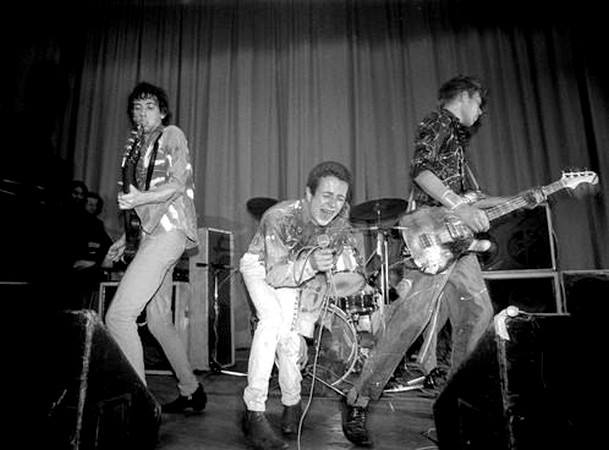
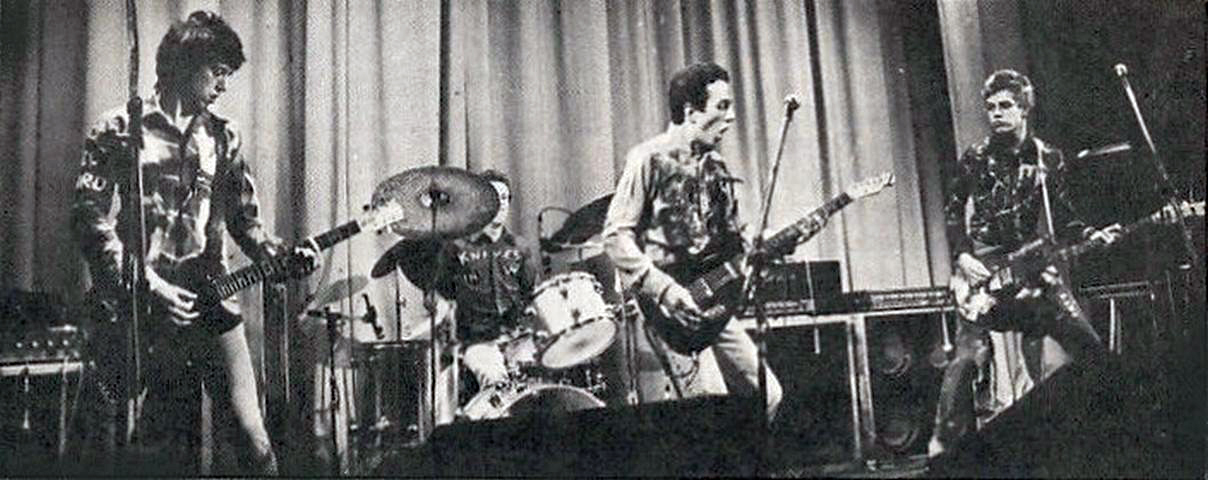
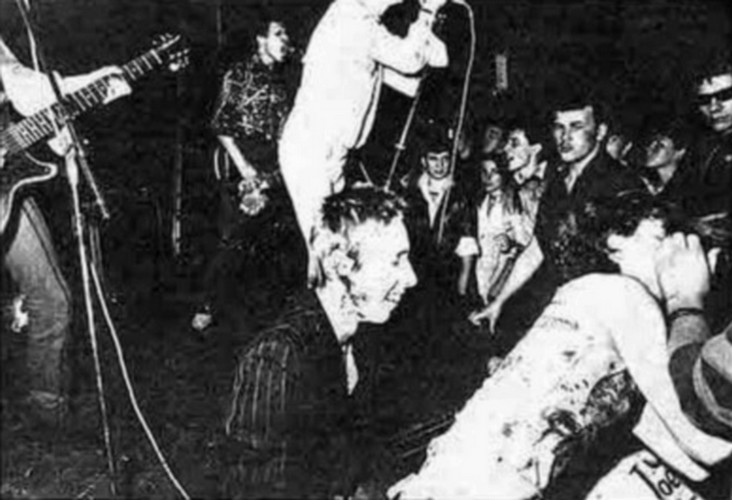
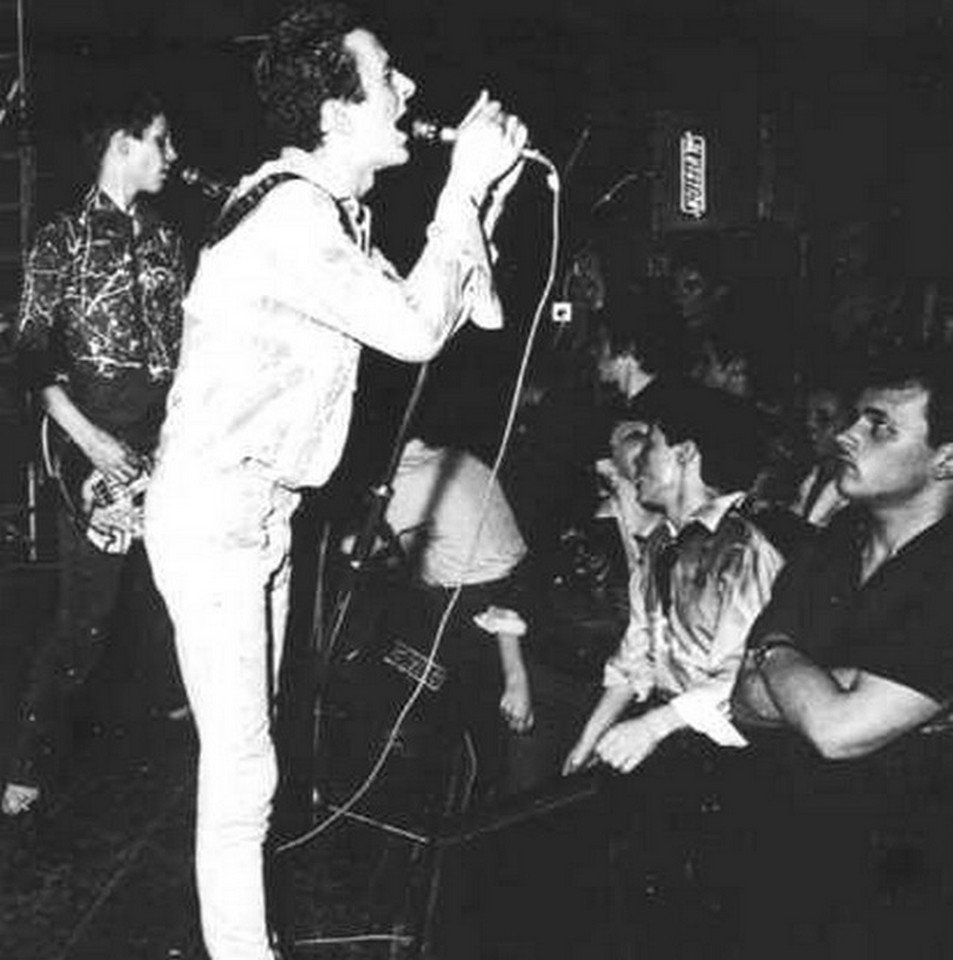
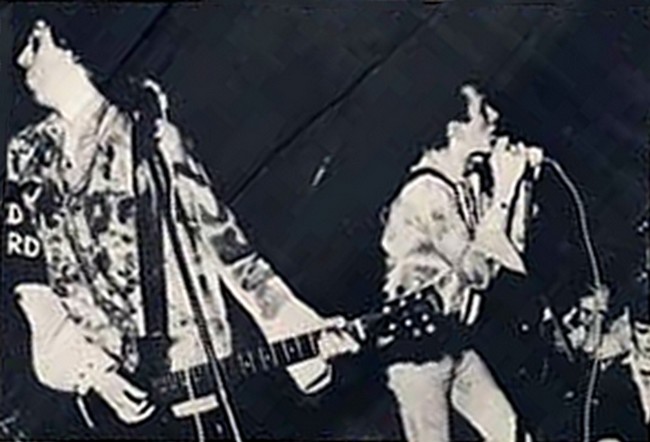
The Clash's ICA performance in October 1976 was more than just another punk gig—it was the moment they exploded into the public consciousness. Set in the modernist confines of the Institute of Contemporary Arts, the band delivered a short, ferocious set that showcased their early songs like “White Riot”, “I’m So Bored With the USA”, and “Career Opportunities”.
According to Caroline Coon, writing in Melody Maker, their playing was taut and purposeful, stripped of theatrics, and laser-focused on emotional precision. Even when Joe Strummer’s guitar failed mid-set, the band powered through with raw determination. With Patti Smith leaping onstage to dance, the evening bridged American punk cool with emergent British defiance.
What cemented the night in punk lore, however, was the infamous earlobe incident involving Shane MacGowan and “Mad” Jane. Captured in Barry Miles’s unforgettable NME piece “Cannibalism at Clash Gig”, the moment saw MacGowan’s ear bloodied by Jane in what became mythologised as a moment of violent passion and primal expression.
Strummer later joked, “Without Mad Jane’s teeth and Shane’s earlobe, we wouldn’t have got in the papers that week.” The scene illustrated both the intensity and unpredictability of the nascent punk crowd—an audience as likely to bleed as to pogo.
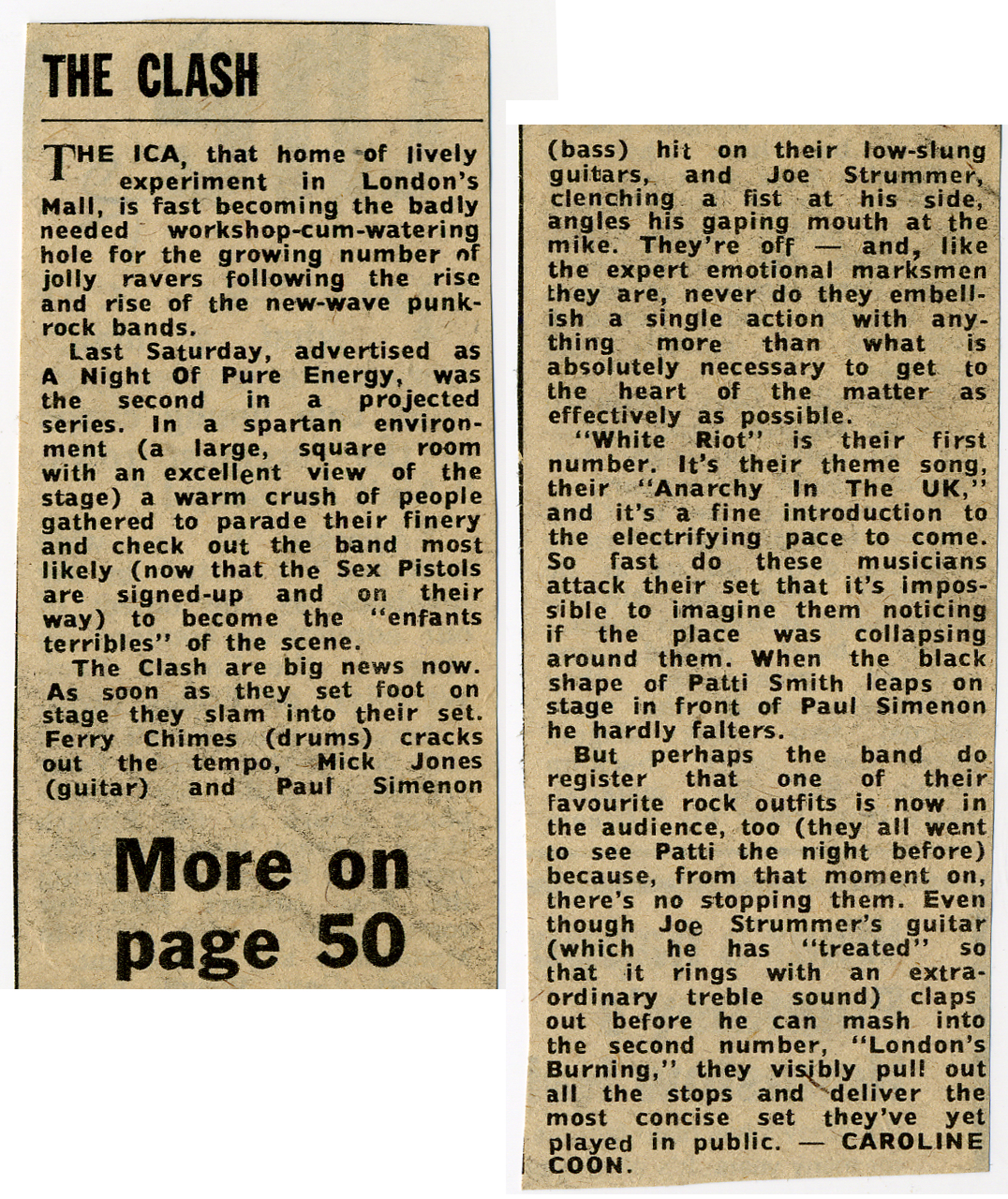
Coon, Caroline. "The Clash." Melody Maker, 30 Oct. 1976, p. 50.
MM: "The ICA, home of lively..."
Caroline Coon captures The Clash’s explosive live energy at the ICA in October 1976, positioning them as the next great punk provocateurs following the Sex Pistols.
THE CLASH
THE ICA, that home of lively experiment in London'sMall, is fast becoming the badly needed workshop-cum-watering hole for the growing number of jolly ravers following the rise and rise of the new-wave punk-rock bands.
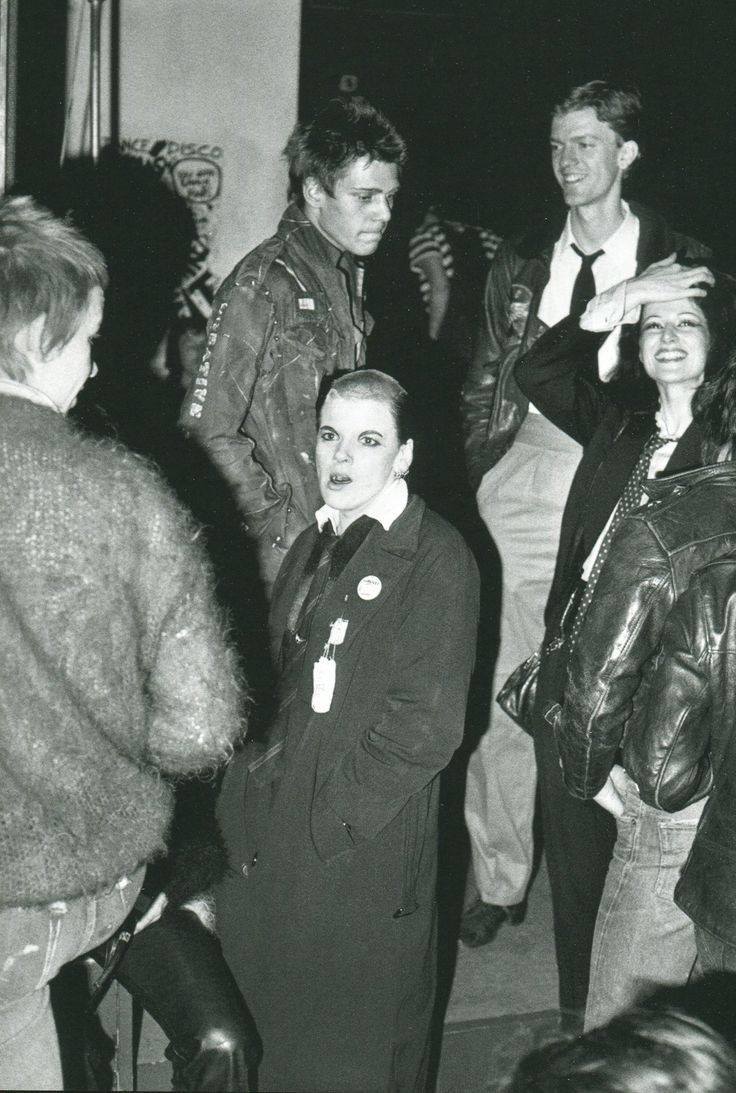
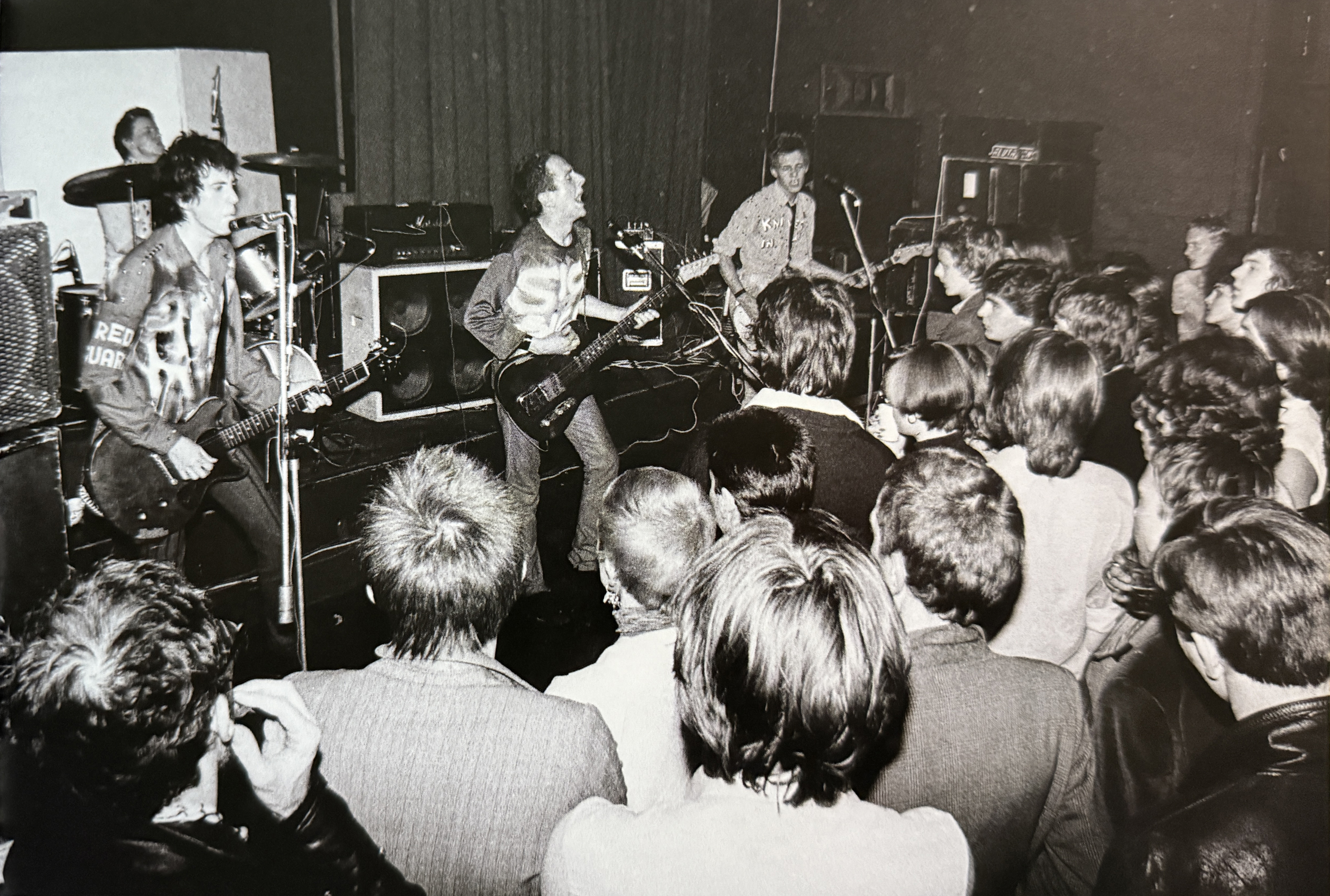
Last Saturday, advertised as A Night Of Pure Energy, was the second in a projected series. In a spartan environment (a large, square room with an excellent view of the stage) a warm crush of people gathered to parade their finery and check out the band most likely (now that the Sex Pistols are signed-up and on their way) to become the "enfants terribles" of the scene.
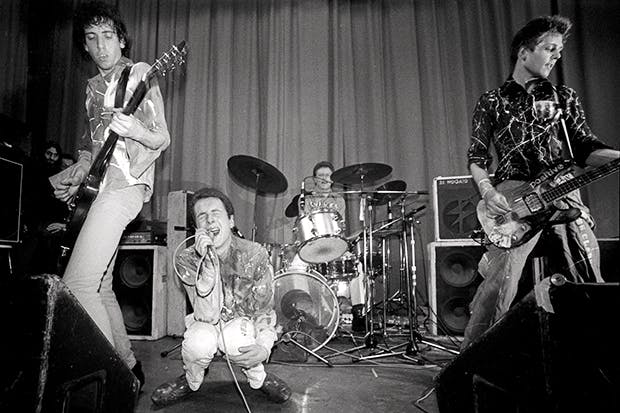
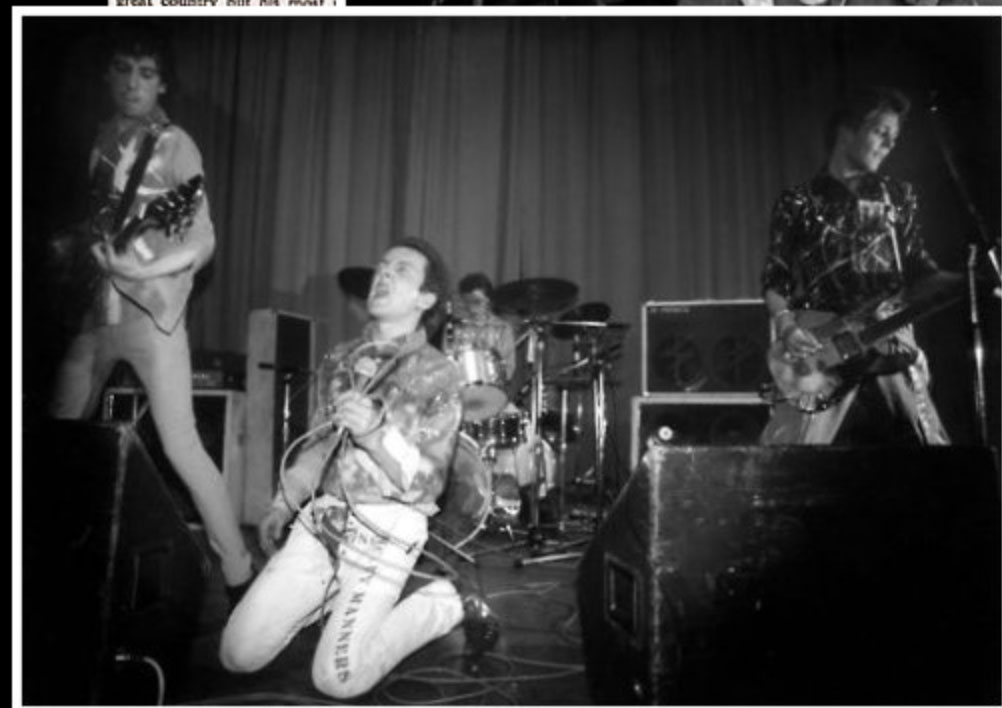
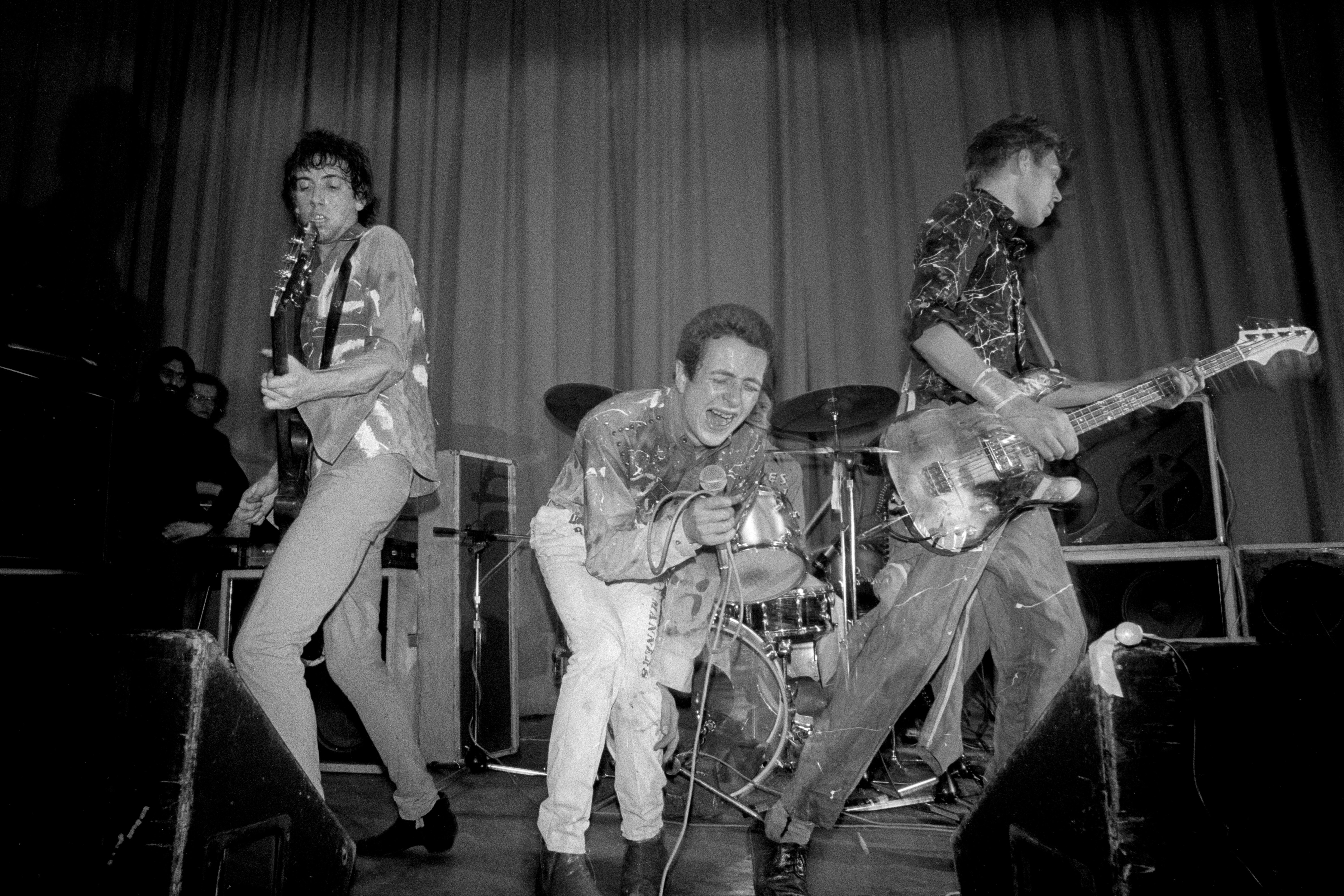
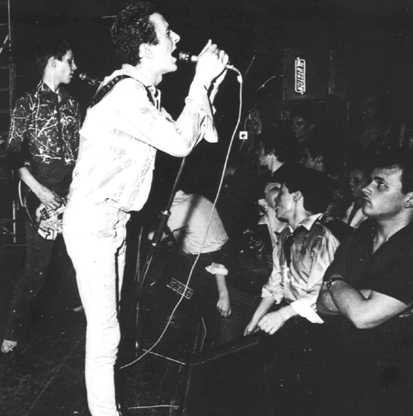
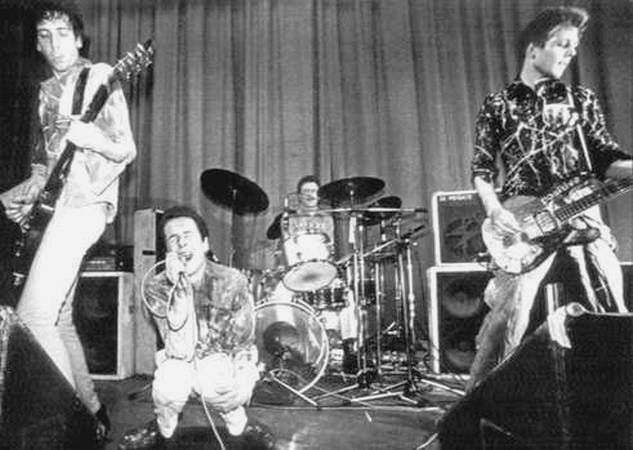
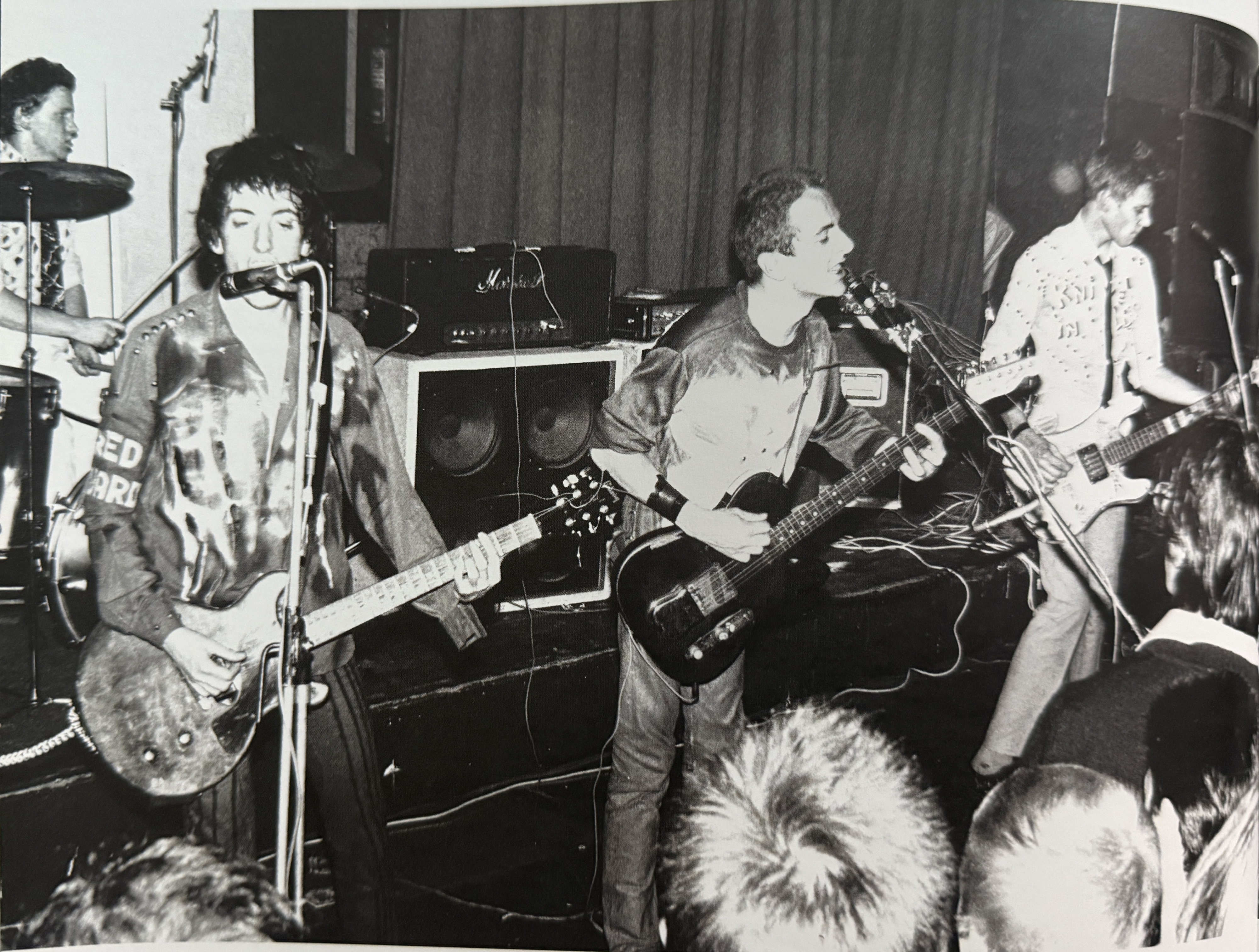
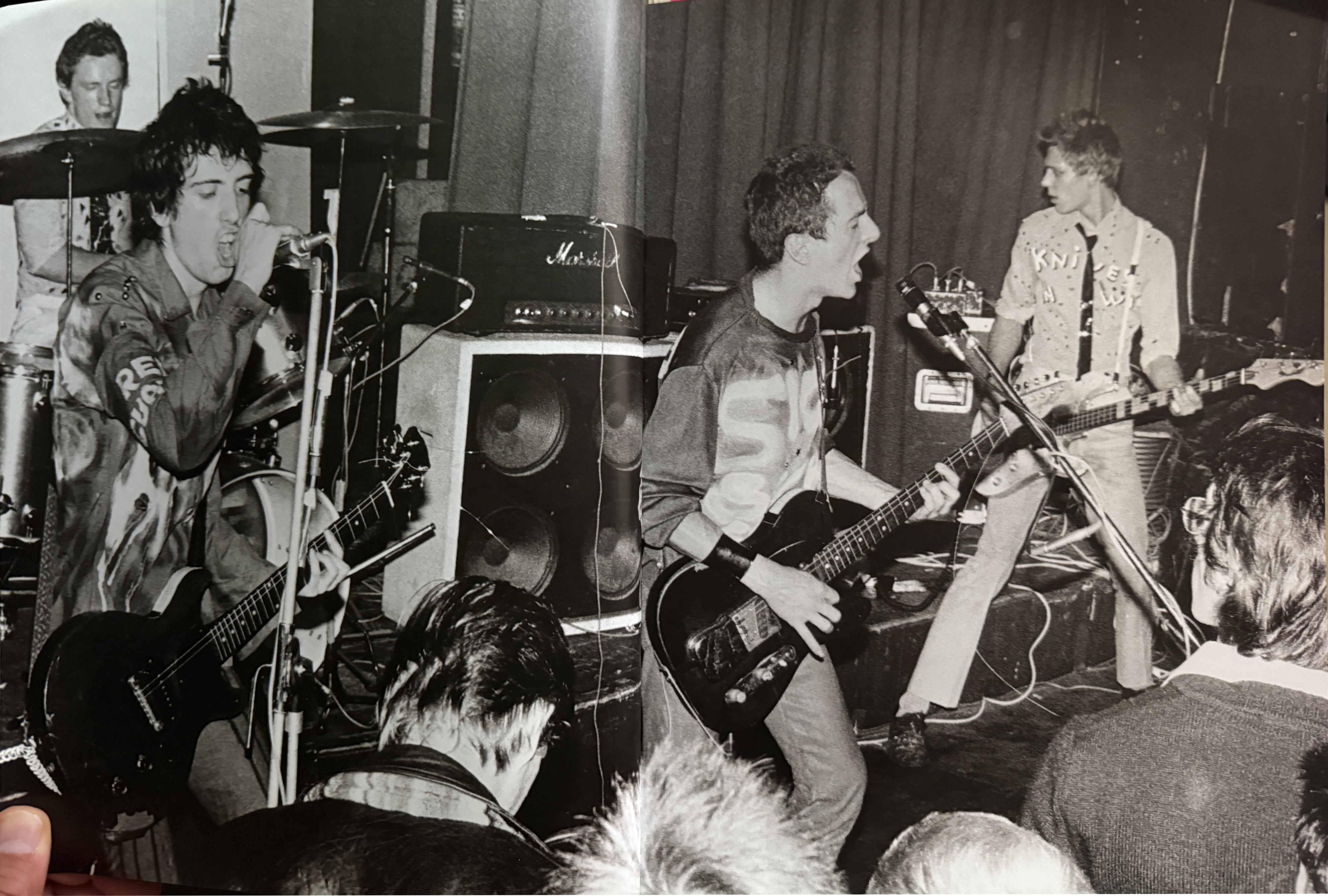
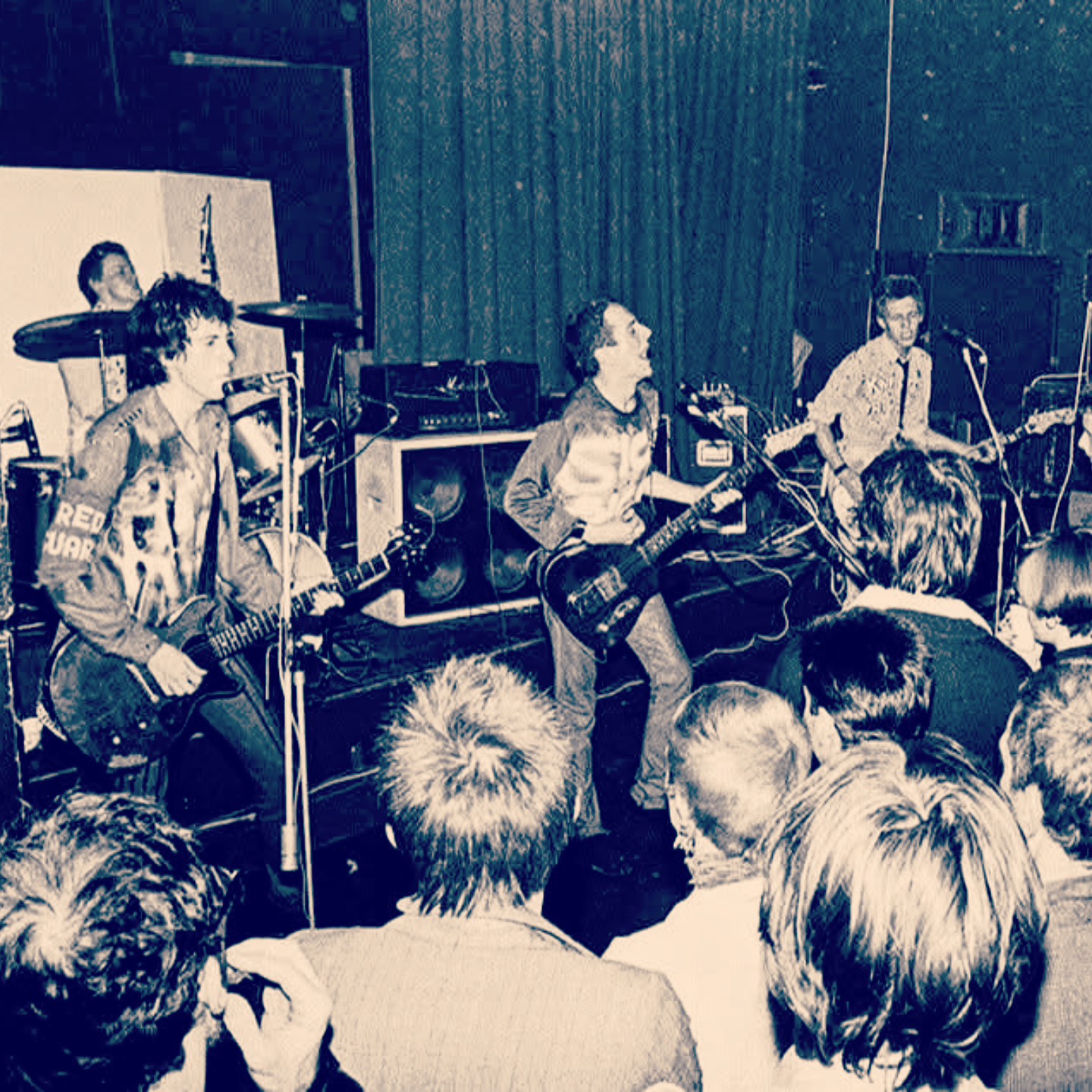
The Clash are big news now. As soon as they set foot on stage they slam into their set. Ferry Chimes (drums) cracks out the tempo, Mick Jones (guitar) and Paul Simenon (bass) hit on their low-slung guitars, and Joe Strummer, clenching a fist at his side, angles his gaping mouth at the mike. They're off and, like the expert emotional marksmen they are, never do they embellish a single action with anything more than what is absolutely necessary to get to the heart of the matter as effectively as possible.
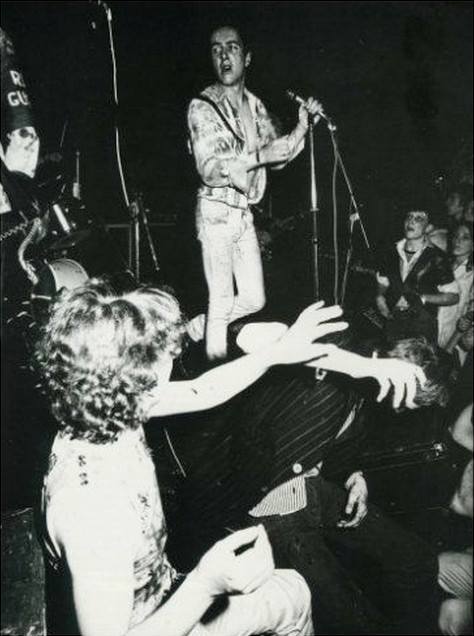
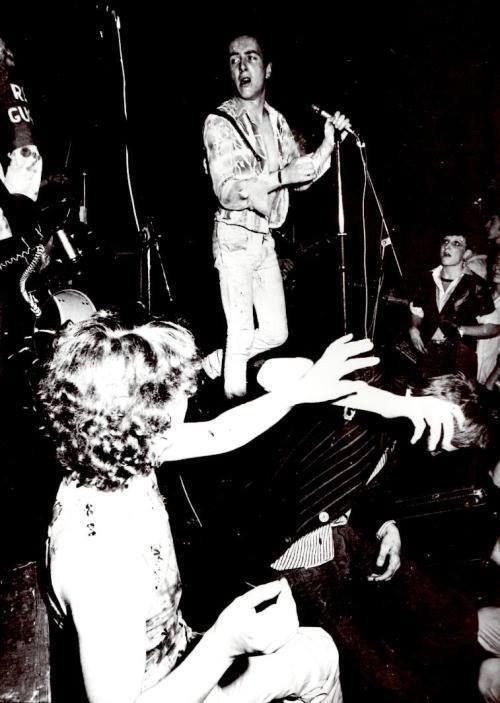
"White Riot" is their first number. It’s their theme song, their "Anarchy In The UK," and it's a fine introduction to the electrifying pace to come. So fast do these musicians attack their set that it's impossible to imagine them noticing if the place was collapsing around them. When the black shape of Patti Smith leaps on stage in front of Paul Simenon he hardly falters.
But perhaps the band do register that one of their favourite rock outfits is now in the audience, too (they all went to see Patti the night before) because, from that moment on, there's no stopping them. Even though Joe Strummer's guitar (which he has "treated" so that it rings with an extraordinary treble sound) claps out before he can mash into the second number, "London's Burning," they visibly pull out all the stops and deliver the most concise set they've yet played in public.
– CAROLINE COON
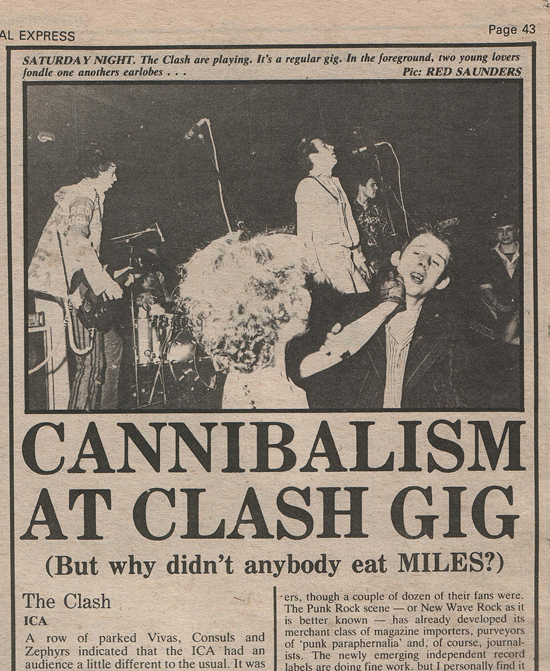
Miles. "Cannibalism at Clash Gig."New Musical Express, 30 Oct. 1976, p. 43. Photo by Red Saunders.
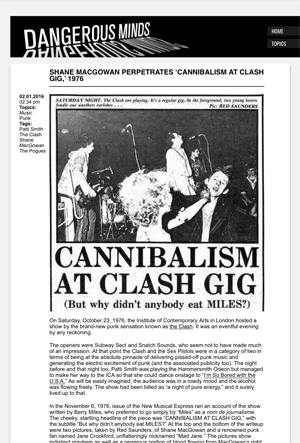
NME: CANNIBALISM AT CLASH GIG
Miles reports on The Clash's ferocious ICA set, comparing their intensity to The Ramones, while an infamous earlobe-biting incident unfolds mid-gig in front of a stunned crowd.
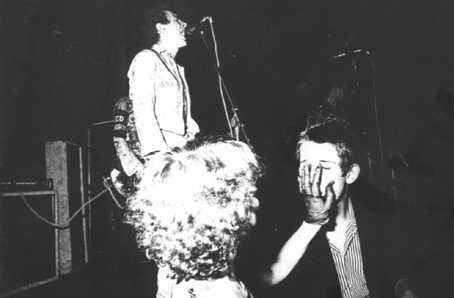
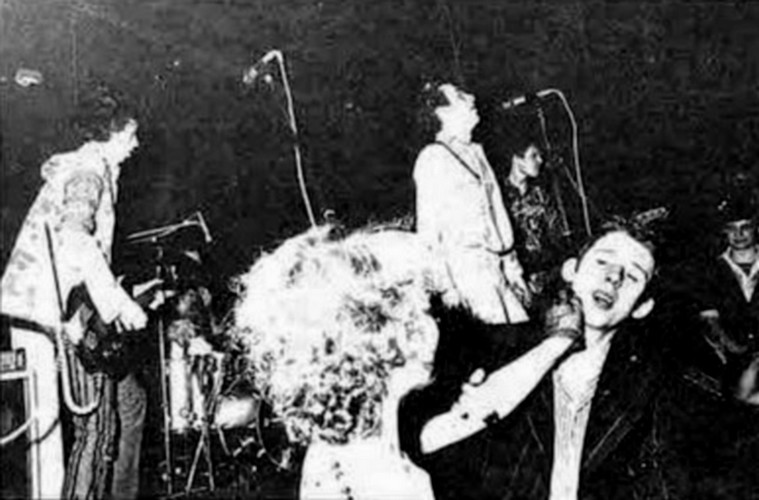
PHOTO: SATURDAY NIGHT. The Clash are playing. It's a regular gig. In the foreground, two young lovers fondle one another’s earlobes Pic: RED SAUNDERS
CANNIBALISM AT CLASH GIG
(But why didn't anybody eat MILES?)
The Clash ICA
A row of parked Vivas, Consuls and Zephyrs indicated that the ICA had an audience a little different to the usual. It was "A Night Of Pure Energy" with Subway Sect, who were terrible, Snatch Sounds, who I missed, and The Clash.
The Clash were real good. I enjoyed them a lot more than the Patti Smith Band the night before. They were not poseurs. They are everything that Sniffin’ Glue magazine promised they would be.
It was as if they had crystallised the dormant energy of all the hours of crushing boredom of being an unemployed school-leaver, living with your parents in a council flat, into a series of three-minute staccato blasts delivered like a whiplash at the audience, who were galvanised into frenzied dancing.
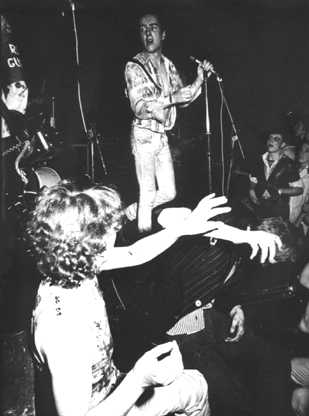
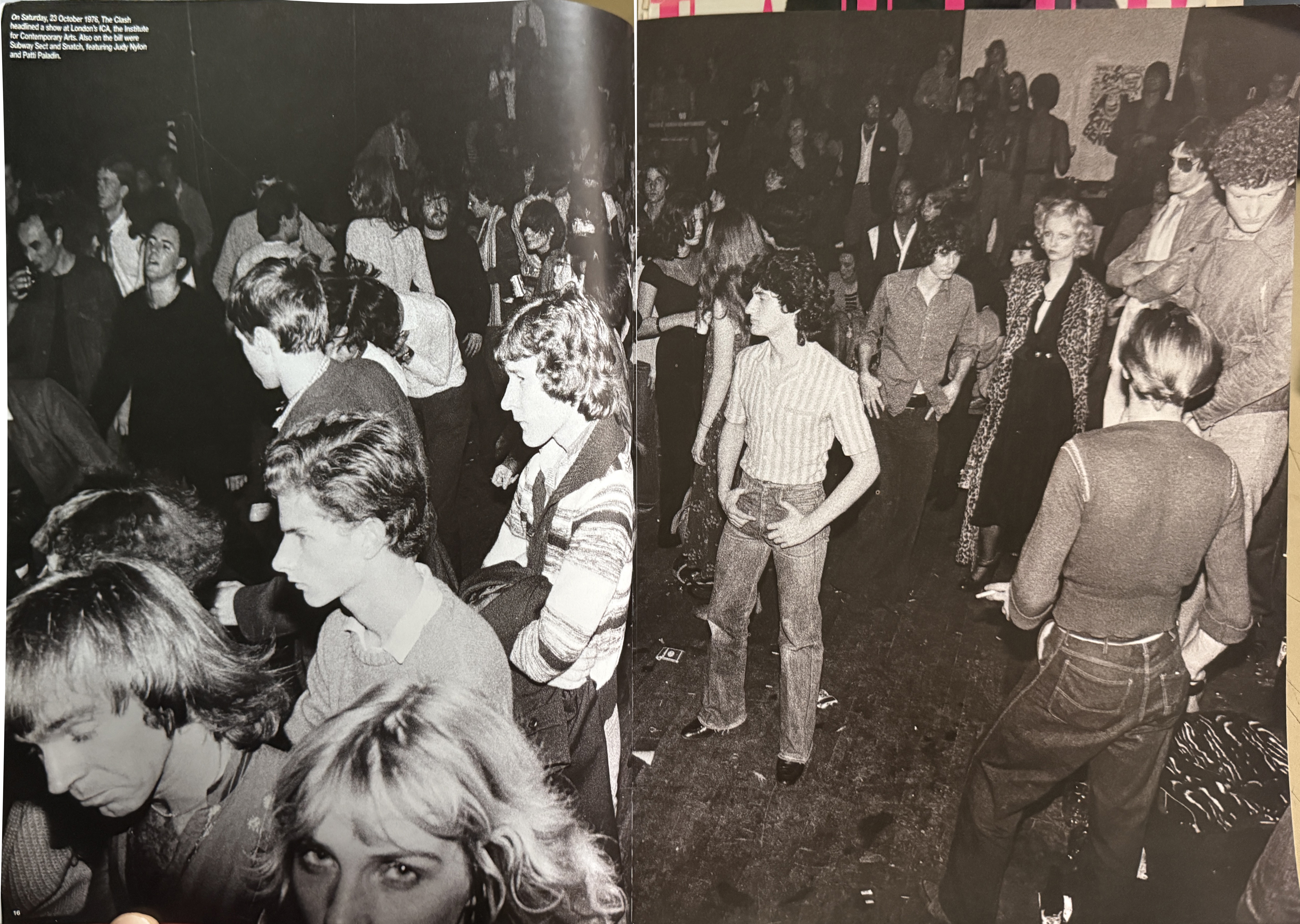
The audience stood out the disco, but now they demonstrated the choreography of the West Side Story knife-fight, the sparring partner bop, the villain seducing the virgin dance, the horse-ride, a little basic pogo dancing and even some old-fashioned high-steppin’ truckin’. Patti Smith was there, of course, and felt removed to climb onstage to dance.
The Clash have the musical intensity of The Ramones, a concerted high-energy delivery and their lyrics are much better. You can’t hear too well, but if you do catch them it’s an extra bonus to what’s going down:
"In 1977, I hope I go to heaven
’Cos I been too long on the dole,
And I can’t work at all.
Danger, stranger! You better paint your face,
No Elvis, Beatles or Rolling Stones,
In 1977!"
("1977" by The Clash)
Lead singer-guitarist Joe Strummer was in The 101’ers until they broke up. The other guys are Micky Jones on guitar, Paul Simenon on bass and Terry Chimes on drums.
The Clash weren’t wearing pink plastic trousers, though a couple of dozen of their fans were. The punk rock scene—or new wave rock as it is better known—has already developed its merchant class of magazine importers, purveyors of punk paraphernalia, and, of course, journalists. The newly emerging independent record labels are doing fine work, but I personally find it hard to imagine a viable musical or social revolution coming from a clothes boutique in the King’s Road, Chelsea.
Not that the clothes don’t look good—many of the outfits were really neat and were certainly freaking the NW3 crowd who’d come to see one of the ICA’s other shows that evening. There were imaginative combinations of tri-colour hair, fishnet stockings with plastic minis, the curious safety-pin fetish, the ubiquitous plastic trousers and, of course, a lot of Keith Richard look-alikes.
The Clash played some great numbers like "I’m So Bored With The USA" and "Career Opportunities," all of which had a vicious treble ring to them. Then Joe peered down at the audience in front of the stage and muttered: "I don’t believe what’s happening down here at the front."
A young couple, somewhat out of it, had been nibbling and fondling each other amid the broken glass when she suddenly lunged forward and bit his earlobe off. As the blood spurted, she reached out to paw it with a hand tastefully clad in a rubber glove, and after smashing a Guinness bottle on the front of the stage, she was about to add to the gore by slashing her wrists when the security men finally reached her, pushing through the trance-like crowd who watched with cold, calculated hiptitude.
Creepy, but not the much-exaggerated violence that is rumoured to attend the new wave bands. I’ve seen rumbles at everything from Who concerts to pacifist folk singing sessions.
Meanwhile The Clash continued their 30-minute set, heads snapping forward like snakes on speed. They ended with their theme tune:
"White Riot. I wanna riot.
White Riot, a riot of me own!"
If anyone’s got the energy for it, they have. – Miles
PHOTO: TEN SECONDS LATER.My God, they’re eating each other. These people are cannibals! The young man howls with pain as his blood-spattered young lady is dragged away, all the while trying to slash her own wrists. But for the dudes in the audience it’s just a regular Saturday gig. Maybe they eat earlobes themselves? Edgar Froese (left) wonders if they’ll be turning out for T. Dream. "Can’t these Englishers afford sausages?" Pic: RED SAUNDERS
Dangerous Minds. Shane MacGowan Perpetrates ‘Cannibalism at Clash Gig,’ 1976. January 2, 2016.
Shane MacGowan perpetrates
'Cannibalism at Clash gig,' 1976 ...
A retrospective account of The Clash's infamous 1976 ICA gig where a blood-soaked incident involving Shane MacGowan and Mad Jane gave the band their first major press exposure.
Shane MacGowan perpetrates
'Cannibalism at Clash gig,' 1976 ...
On Saturday, October 23, 1976, the Institute of Contemporary Arts in London hosted a show by the brand-new punk sensation known as The Clash. It was an eventful evening by any reckoning.
The openers were Subway Sect and Snatch Sounds, who seem not to have made much of an impression. At that point The Clash and the Sex Pistols were in a category of two in terms of being at the absolute pinnacle of delivering pissed-off punk music and generating the electric excitement of punk (and the associated publicity too). The night before—and that night too—Patti Smith was playing the Hammersmith Odeon but managed to make her way to the ICA so that she could dance onstage to "I'm So Bored with the U.S.A." As will be easily imagined, the audience was in a rowdy mood and the alcohol was flowing freely. The show had been billed as "a night of pure energy," and it surely lived up to that.
In the November 6, 1976 issue of the New Musical Express, an account of the show appeared, written by Barry Miles, who preferred to go simply by Miles as a nom de journalisme. The cheeky, startling headline of the piece was "CANNIBALISM AT CLASH GIG," with the subtitle "But why didn't anybody eat MILES?" At the top and bottom of the writeup were two pictures, taken by Red Saunders, of Shane MacGowan and a renowned punk fan named Jane Crockford, unflatteringly nicknamed "Mad Jane." The pictures show indistinct mayhem as well as a generous portion of blood flowing from MacGowan's right earlobe. Interestingly, both of the subjects were, or would be, in notable bands of their own: MacGowan was in the Nipple Erectors and (of course) The Pogues, while Jane was in The Bank of Dresden and The Mo-dettes.
In Bob Gruen's must-own book The Clash he gets Mick Jones and Paul Simonon to comment on the show:
Mick: "That was the night of Shane MacGowan's earlobe, wasn't it? He didn't really have it bitten off, you know. Isn't that the same show where Patti Smith got up on stage during our set?"
Paul: "That was the ICA—it was called A Night of Pure Energy. My haircut's gone very mod; it had flopped down from all the jumping around onstage. In the beginning all that jumping about was a way of dodging gobs and missiles generally. There's Joe with his sharks' teeth—when I first met him they looked just like a real shark's teeth."
Gruen notes of the MacGowan incident that it gave The Clash"their first significant press coverage." He also quotes Joe Strummer as saying, "Without Mad Jane's teeth and Shane's earlobe, we wouldn't have got in the papers that week."
In The Clash: Return of the Last Gang in Town, Marcus Gray writes about that evening:
When the Clash started playing, a couple in front of Miles and Red were obstructing their view of the band. Apparently intent on attacking each other while laughing like maniacs, they refused to move out of the way. So Red took pictures of them. "I had no idea how famous those photos were to become." The NME used them to accompany Miles's report under the headline "CANNIBALISM AT CLASH GIG": "A young couple, somewhat out of it, had been nibbling and fondling each other amid the broken glass when she suddenly lunged forward and bit his ear lobe off [while the crowd] watched with cold, calculated hipitude." ... the Clash gig was a wild night fuelled by speed and alcohol. The bar staff entered into the spirit of the evening to such an extent that they gave away a further £80 worth of booze ... and the twosome Miles and Red observed, Mad Jane and Shane MacGowan, were by no means content to loiter at the back of the queue.
"Me and this girl were having a bit of a laugh which involved biting each other's arms till they were completely covered in blood and then smashing up a couple of bottles and cutting each other up a bit,"Shane informed ZigZag's Granuaille in 1986, setting the record straight on the occasion of punk's 10th anniversary, and, in the process, offering another insight into the mythopoetics of punk. "That, in those days, was the sort of thing that people used to do. I haven't got a clue now why I did it or why anyone would want to do it, but that was how teenagers got their kicks in London if they were hip. Anyway, in the end she went a bit over the top and bottled me in the side of the head. Gallons of blood came out and someone took a photograph. I never got it bitten off—although we had bitten each other to bits—it was just a heavy cut." As Shane noted, though, the anecdote was exaggerated with each telling. "It's like the old story about the bloke who catches the fish. He says that it weighs this much and it's that big, and within a couple of days it's a whale." Over the years, few have been prepared to let the fact that his earlobes are both present and correct stand in the way of a good story.
The Clash 'Photograghs by Bob Gruen', 2015. ISBN 178323489X
Photos, comments in Bob Gruens book
Shane MacGowan’s earlobe-biting incident with “Mad” Jane at the ICA gave The Clash their first major press coverage, remembered by Joe Strummer, Mick Jones, and Paul Simonon as part of the chaotic “Night of Pure Energy.”
Extensive photos in Bob Gruens book
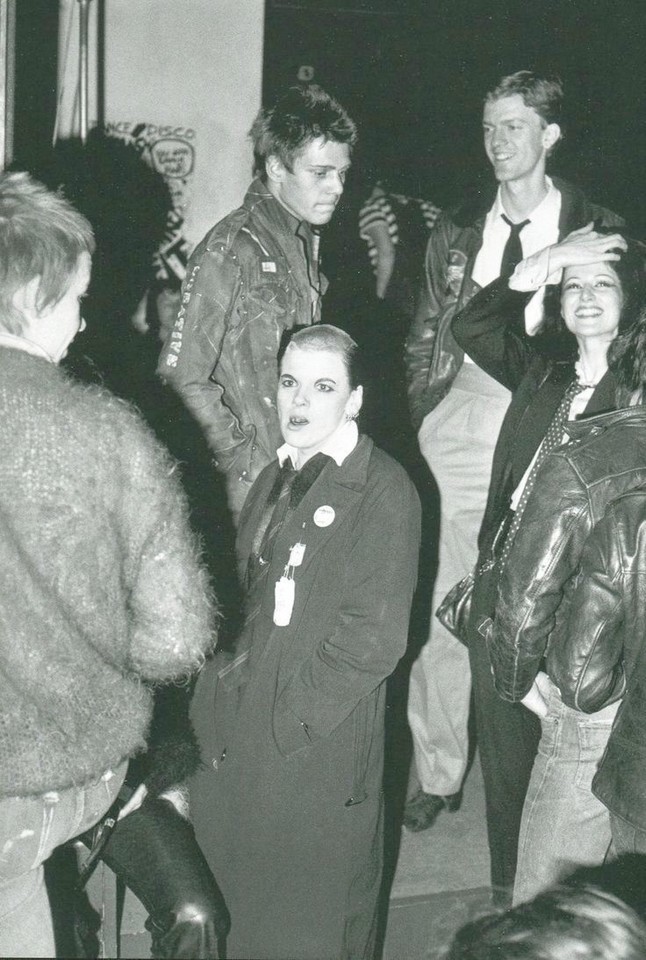
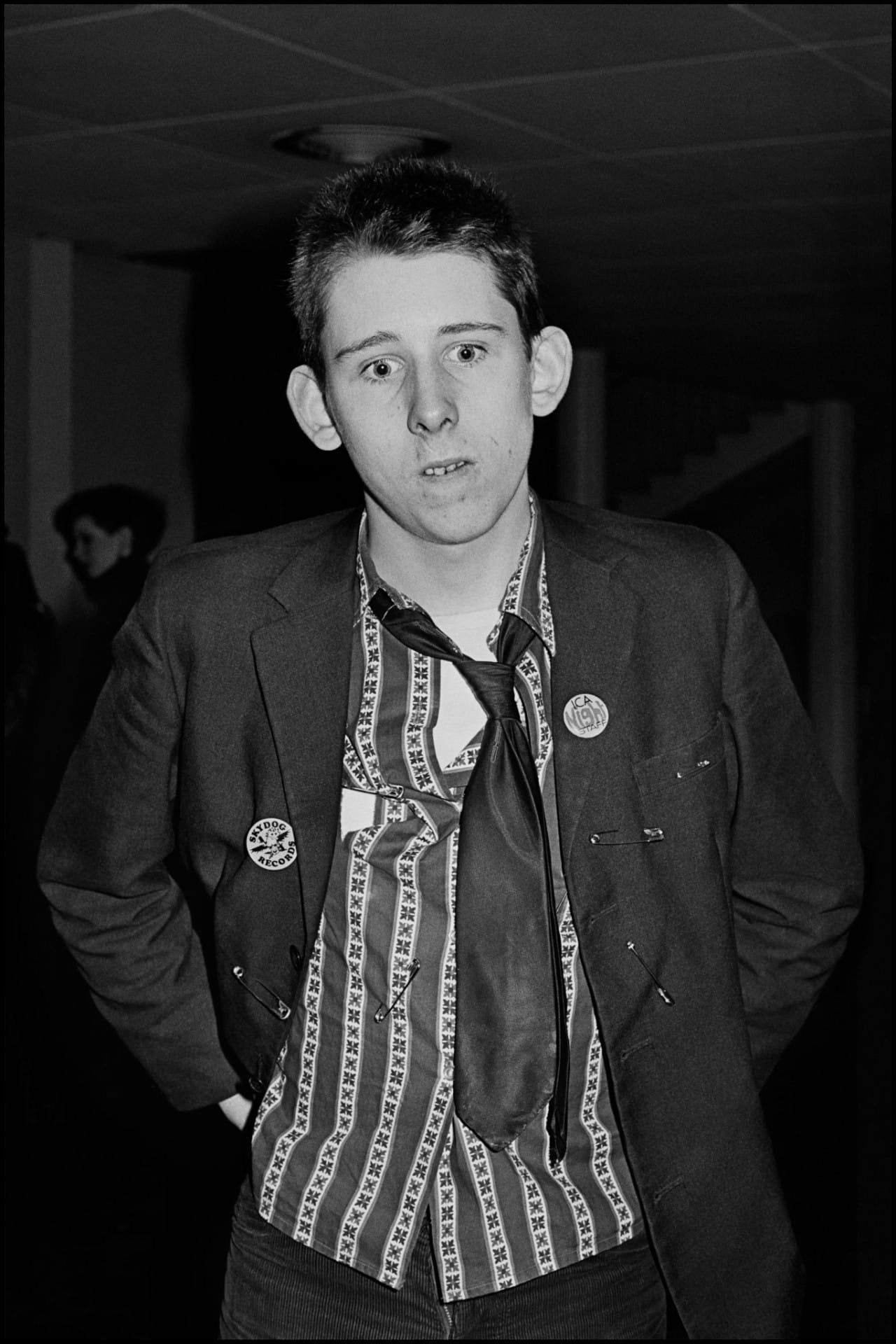
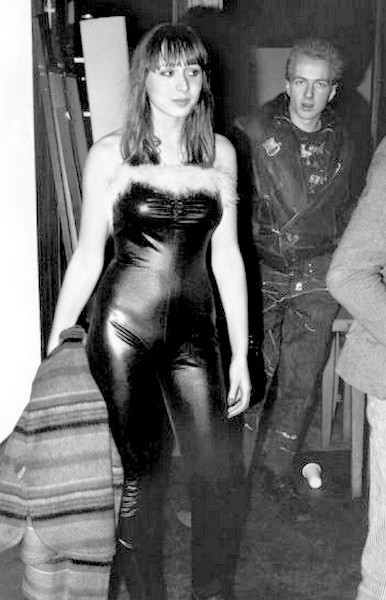
Shane MacGowan, a noted punk face, was entwined with "Mad" Jane, later of The Mo-dettes; only when blood began to stream down his face and neck did he realise that in her passion she had bitten off most of an earlobe. (Within the culture of punk, this was held to be a rather impressive statement of primal art). The incident gave The Clash their first significant music press coverage.
“Without Mad Jane’s teeth and Shane’s earlobe, we wouldn’t have got in the papers that week,” said Joe Strummer.
Mick: "That was the night of Shane MacGowan’s earlobe, wasn’t it? He didn’t really have it bitten off, you know. Isn’t that the same show where Patti Smith got up on stage during our set?"
Paul: "That was the ICA – it was called A Night of Pure Energy. My haircut’s gone very mod; it had flopped down from all the jumping around onstage. In the beginning all that jumping about was a way of dodging gob and missiles generally. There’s Joe with his sharks’ teeth – when I first met him they looked just like real sharks’ teeth."
Kay, Iain, ed. All the Young Punks: A People’s History of The Clash, p. 12.
All the Young Punks
Roadent recalls meeting Joe Strummer outside the ICA gig in October 1976, becoming part of The Clash’s inner circle and reflecting on the tight-knit, idealistic spirit of early punk.
INSTITUTE OF CONTEMPORARY ARTS,
23 October 1976, London ROADENT
I got my travel warrant from HMP Birmingham to London. I’d only been there for a short visit. Miscarriage of justice, of course, and I went to the ICA where The Clash were playing. I was over early doors, and I met Joe. I asked, "Do you know anywhere I can sleep?" and he said to come and sleep at the rehearsal room. Then I asked if I could carry boxes and get into the gig for nothing... and so I became their road filth!
I know that people talk about all that "last gang in town" thing, but we were a very close-knit bunch. Joe, Paul and I spent a long time sleeping in Rehearsal Rehearsals. I think we had something like four sheets, one blanket, one sofa, two cushions and a one-bar electric fire, and we’d take turns having the blankets. Paul was lucky he didn’t have a sense of smell!
Joe used to spend a lot of time at Sebastian Conran’s flat, or the house when Sebastian was meant to be looking after it for his father. His allowance was meant to be the rent he collected, which wasn’t a great deal because Joe certainly never paid very much!
With punk we couldn’t quite believe the moral panic that was being caused. I remember me and Joe discussed it, once saying that if a band hadn’t made it after two years you may as well knock it on the head because you’re never going to make it—but The Clash did. We did think we were something special. You know, all of us did.
We knew Siouxsie from going down Club Louise’s on Poland Street. Everybody used to be down there and at the 100 Club. We all thought we were special because we weren’t of the same ilk as everything that had gone before.
Certainly, with The Clash there was no feeling they’d go on to become this sort of massive thing and there was no feeling that Joe would be canonised into St Rummer, but we did feel we were special.
Tony Beesley & Anthony Davie, Ignore Alien Orders: Dispatches from the Punk Vanguard (Days Like Tomorrow Books, 2022), pp. 26–27
Ignore Alien Orders
The book Ignore Alien Orders recounts the intensity of The Clash's ICA gig, where the raw power of punk provoked both excitement and fear among first-time viewers. With moments like Patti Smith joining the band onstage and chaotic crowd scenes, it illustrates the unpredictable, electrifying spirit of early punk shows.
INSTITUTE OF CONTEMPORARY ARTS,
23 October 1976, London
Michelle Brigandage:"The next time I sawThe Clashwas at theICA. I bumped into* Mick Joneson theStrandand we talked a while and then walked to the venue together. I remember this gig as being absolutely rammed, but my friend took photos from behind us and it was only three or so lines thick, the rest was empty space filled with music biz people drinking and chatting between themselves. There's a photo of me at theICA, looking horrified asShane McGowangot his ear bitten off andAdrian Thrillsnot even noticing, he was so intent on pogoing away right at the front! Another time,Patti Smithjumped on stage and started dancing; I really enjoyed those early gigs."
"I was frightened when I first sawThe Clashat theICA. I was shit scared. To see a punk show is very frightening, it's the music. It's very heavy, the vibe in the music and the vibe in the audience is very frightening for a first-time onlooker."
— Gene October, Sniffin' Glue, Issue 10
At the ICA gig, Patti Smith showed her approval by joining The Clash onstage, later taking Paul Simonon to Birmingham ahead of her next gig.
By autumn 1976, punk remained largely unrecognised outside its small circles. Despite growing music press attention and dedicated fans, punk's music, fashion, and ideals were still evolving — a time of artistic freedom and endless possibilities. By year’s end, much of that would change forever.
Magazines
Needs, Kris."The Clash: Konkrete Klockwork."ZigZag, no. 70, April 1977, pp. 18–21
ZIGZAG: KONKRETE KLOCKWORK (1)
Kris Needs charts the rise of The Clash through gigs at Leighton Buzzard,ICA, 100 Club, Royal College of Art, Harlesden Colosseum, and more, describing them as the most vital and revolutionary band of the New Wave. He praises their DIY ethic, explosive live shows, and upcoming debut album as a defining moment in modern rock.
Kris Needs, ZigZag, April 1977
THE CLASH: KONKRETE KLOCKWORK
At the moment there isn't a group in the New Wave that comes within spitting distance of The Clash, live or on record. Within a year they have become the most exciting live band in the country, and shortly they will release an album which is the most stunning debut for years... I believe it'll be as important as the first Rolling Stones album in shaping a new direction for rock'n'roll.
The New Wave groups who have so far made albums — The Hot Rods and The Damned — have been OK for party music, but The Clash are something far more important and vital. Not only is their music original and lethally energised, but it encompasses a whole new attitude of positive creativity which, if it rubs off on their audience, can only be a good thing. They are trying to wake people up to reality as well as plumbing the fine essence of ultimate rock'n'roll.
First time I saw The Clash was at their first out-of-London gig at Leighton Buzzard’s Tiddenfoot Leisure Centre, about an hour's drive out of London. The hall was like a large hotel lounge, which encouraged the crowd to drape itself over the seating.
The Clash taking the stage was like an injection of electricity into the smoky air. They charged headlong into "White Riot" with shattering energy, strutting and leaping like clockwork robots out of control. They never let up for half an hour. Despite sound problems they were astounding, almost overpowering in their attack and conviction.
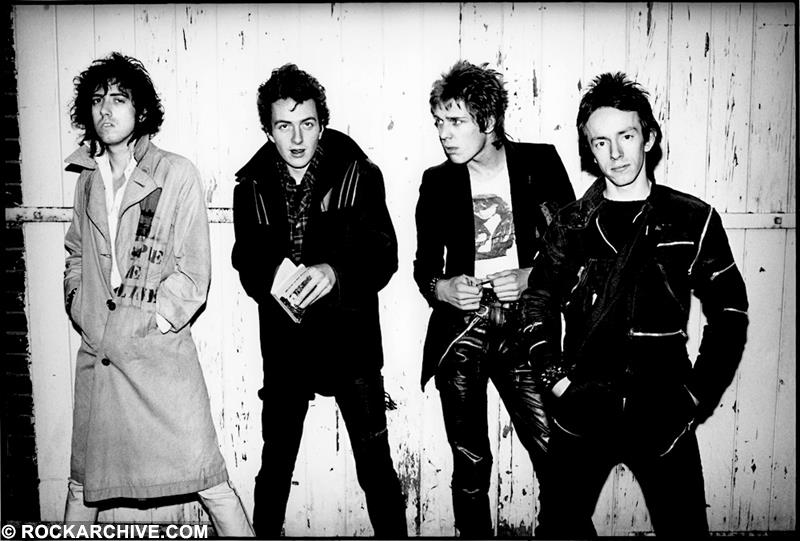
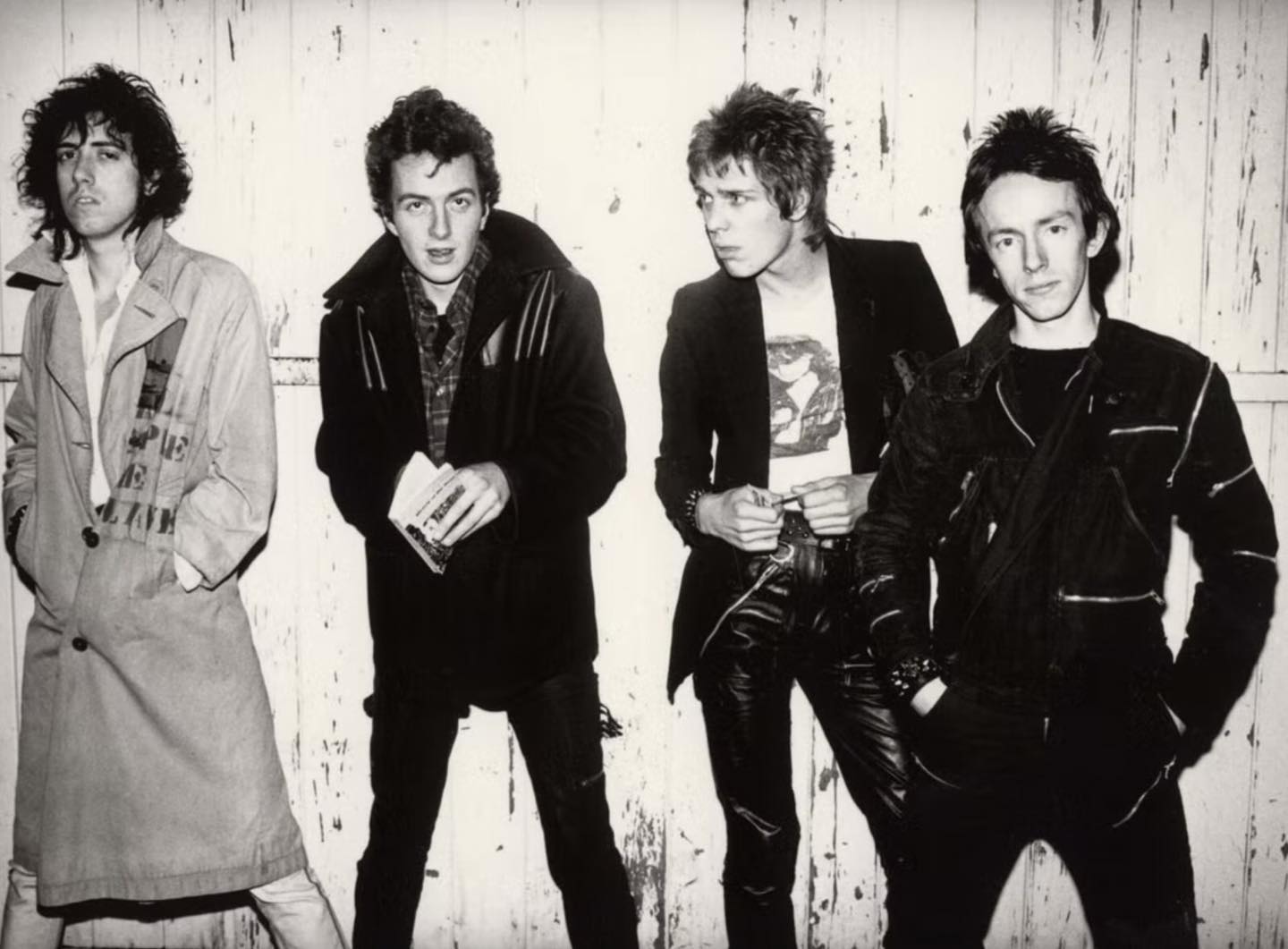
The Clash are: Mick Jones (lead guitar, vocals); Joe Strummer (vocals, guitar); Paul Simenon (bass, vocals). They haven't got a permanent drummer, although Terry Chimes has done most gigs with them and plays on the album.
They are managed by one Bernard Rhodes and rehearse/hang out in this huge ex-warehouse he found in Camden Town between Dingwalls and The Roundhouse. They converted it to a rehearsal room downstairs, with pink drapes and old barber's chairs for added home comforts; and upstairs is where the group create their outfits, revamping jumble sale purchases with acrylic paint spatterings and slogans... cheap and striking.
Mick: "We encourage the kids to paint their clothes. That way they get involved, feel part of it. Now they come along and show us ideas we like."
Back to the music. They write all their own songs, no Clash number is longer than three minutes, and not many exceed two. Each is fast, razor-sharp and rocking, with insanely catchy choruses. The songs are viciously topical and directly inspired by the group's London environment.
"White Riot" was written after Joe and Mick got caught in the Notting Hill riots last year. "Janie Jones" concerns the bloke with a boring job who gets off by being in love with Janie Jones (the imprisoned vice queen). "London’s Burning" ("with boredom") is "a celebration of the Westway under a yellow light," says Joe Strummer. "1977" is a cold look at the future/present: "No Elvis, Beatles or The Rolling Stones in 1977," and "Ain't so lucky to be rich; sten guns in Knightsbridge." There's loads... all vital, power-packed SONGS.
The Clash are very much a London band. They couldn't live anywhere else or their music would suffer.
Joe: "We love the place — blocks of flats, concrete."
Mick: "I hate the country. The minute I see cows I feel sick."
The Clash formed a year ago this month. Originally Mick, who like Paul comes from Brixton, was a member of The London SS, arguably the first New Wave group. The line-up also included Brian James (now with The Damned) and Tony James (bassist with Generation X). They were rehearsing in 1975, and Paul came down to a rehearsal one day and met Mick, who got him singing. "I'd never sung or played bass before in my life."
The S.S. "didn't work out" and split before they'd done a gig. Mick got together with Paul and formed The Heartdrops, which later became The Clash. Paul learned bass by sticking white dots on the fret board of the machine he'd acquired.
There was another guitarist too... Keith Levine, who left mysteriously last autumn and is getting his own band together.
They needed a singer, and one day when Mick and Paul were walking down a street in Shepherd's Bush they bumped into Joe, who was still with The 101ers. Mick told him that he was great but his band stunk, and asked him to join The Clash. Joe was bored with singing pub rock standards, and despite the fact that The 101ers were rising fast, he broke them up and joined The Clash (on April 1st, to be precise).
By the time The 101ers single "Keys To Your Heart" came out, Joe was firmly involved with The Clash. Goodbye rhythm & blues, hello 1976.
When they were ready, The Clash unveiled themselves to a rehearsal room full of press and friends. The date was Friday the 13th. Reaction was immediate and they got rave reviews.
There followed a select series of London dates at places like the 100 Club (they did the punk rock festival last summer), the Sex Pistols all-nighter at the Screen On The Green, and two at the Institute Of Contemporary Arts (the last one being the time when Patti Smith leapt on stage during "I'm So Bored With The U.S.A.").
The Clash have always taken gigs seriously, never being content to just trundle round the circuits night after night. They've only done The Roxy once (January) and they often organise their own gigs... that way everything's right and it becomes a complete event. They might lose money, but it's made for some great gigs. There've been the ICA gigs, one at the Royal College of Art, where hippy art students threw glasses at the stage, and the last one, which was on March 11th at Harlesden Colosseum.
[...continues with full event report, band philosophy, and recording insight. Please request Part 2 if you would like the remainder included.]
— Kris Needs delivers a landmark profile of The Clash.
— Declares The Clash the most exciting group of the new wave, more important than Eddie & The Hot Rods or The Damned.
— First gig recalled: Tiddenfoot Leisure Centre, Leighton Buzzard, with an explosive White Riot.
— Profiles members Joe Strummer, Mick Jones, Paul Simonon, and drummer Terry Chimes; notes rehearsal base in Camden Town under manager Bernard Rhodes.
— Song inspirations: Notting Hill Riots (White Riot), vice queen Janie Jones (Janie Jones), London’s Burning on the Westway, dystopian 1977.
— History covered from London S.S. through The Heartdrops, to Joe quitting the 101ers.
— Tiddenfoot Leisure Centre (first out-of-London gig 9 October 1976); 100 Club Punk Festival (20 Sept 1976); Screen on the Green (29 Aug 1976); ICA gigs (2nd and 23rd Oct 1976); RCA (5 Nov 1976); Roxy (1 Jan 1977); Anarchy Tour with Sex Pistols, Damned, Heartbreakers (Dec 1976); Harlesden Colosseum (11 Mar 1977).
— On the “Anarchy” tour: cancelled dates after the Sex Pistols–Bill Grundy scandal, leaving the band frustrated but politically hardened.
— Focus on the Harlesden Colosseum gig (March 1977): The Slits debut, Subway Sect revival, new-look Buzzcocks, capped by a ferocious Clash set.
— Recording insights: sessions with Guy Stevens, later replaced by Micky Foote. Songs include White Riot, 1977, Garage Land, and radical reggae cover Police & Thieves. — Notes the CBS contract, six-figure deal, and accusations of “selling out,” countered by insistence on artistic control. — Concludes that the debut LP will be “the most exciting album in years” and an all-time classic.
Coon, Caroline. "New Faces: Clash and The Damned." Melody Maker, 13 Nov. 1976, pp. 31-32.
New Faces: Clash and The Damned
Clash: Down And Out And Proud
— Caroline Coon profiles "New Faces: Clash and The Damned." The Clash's politically charged anthems like "White Riot" and their members' tough backgrounds, contrasting them with The Damned's more horror-influenced, high-energy aesthetic and their rebuttal of media-fuelled violence accusations.
— The Clash performance at London's ICA, The 100 Club's London Punk Rock Festival — The First European Punk Rock Festival in France
Miles, Barry. The Seventies: Adventures in the Counter-Culture. London: Serpent’s Tail, 2011. ISBN 9781847654947. Online
In The Seventies:
Adventures in the Counter-Culture
Barry Miles recounts The Clash's chaotic 1976 ICA gig, where frenzied punk energy, pogo dancing, and a blood-soaked incident involving Shane MacGowan symbolised the violent birth of the punk era.
In The Seventies:
Adventures in the Counter-Culture
Bernie Rhodes, the manager of Subway Sect, Snatch Sounds and The Clash, invited me to see his bands perform at the Institute of Contemporary Arts (ICA) at a gig billed as ‘A Night of Pure Energy’ on 23 October 1976. NME had not yet mentioned The Clash, though from what I’d heard, they were more politically committed than the Sex Pistols and their lyrics were more interesting, so I went along. I found Subway Sect virtually impossible to listen to and I was talking with Bernie Rhodes when Snatch Sounds were on and returned only for The Clash.
As soon as The Clash took the stage, the punks erupted in a frenzy of activity. Pogo dancing was supposedly invented by Sid Vicious, slam-dancing at the 100 Club, and had not yet completely taken over as the only correct punk mode of rhythmic expression; there was also prizefight sparring, the rocking-horse ride, several examples of West Side Story-style knife-fight choreography and even some old hippy high-steppin’ and boogying-on-down, though a hard core in the centre pogoed furiously, slamming into each other and twisting and turning with the music, rather like seals leaping up to be fed in a crowded aquarium.
I had seen the Patti Smith Group play the previous night, but they had been too distant, too New York cool and arrogant to really connect with the audience, and I had not liked them as much as at their gig five months before, which had been less studied. I preferred Patti as a poet. Now Patti was in the Clash audience to check out the competition and clearly felt that her own dance moves were being overshadowed by the crowd, so she climbed on stage alongside the band to dance where everyone could see her.
The Clash was everything that Sniffin’ Glue magazine had promised. Fast, high energy, with intelligent lyrics—though it was hard to actually decipher them—songs such as ‘I’m So Bored With the USA’, ‘Career Opportunities’ and ‘White Riot’. It was this last title which made my editor at NME, Neil Spencer, wonder whether the paper should be publicising them because to him it sounded racist. I was worried too, as there were a number of swastika armbands and patches on display and the audience was brimming with aggression.
At this time the Clash line-up consisted of Joe Strummer, lead singer, Mick Jones on guitar, Paul Simonon on bass and Terry Chimes (known as Tory Crimes) on drums. Terry left soon after, unable to deal with the violence of the fans. A wine bottle had shattered on his high-hat, showering him with shards of glass. The other members of a group can dodge if they see a missile, but the drummer is seated, an obvious target. He was replaced by Topper Headon.
Joe Strummer was born in Ankara, a public schoolboy whose father was in the diplomatic corps, but he hid his undeniable middle-class origins with a slurred working-class London accent.
...The show turned violent: a couple amid broken beer bottles suddenly lunged at each other and she appeared to bite off his earlobe. As the blood spurted, she reached out to paw it with a hand tastefully clad in a rubber glove, and after smashing a Guinness bottle on the front of the stage she was about to add to the gore by slashing her wrists when the security men finally reached her, pushing through the crowd, who, apparently in a trance, watched but did not attempt to get involved.
‘Anyone’s into violence, go home and collect stamps!’Strummer yelled at them. ‘Collecting stamps is much tougher.’
It turned out that not all the earlobe was lost and its owner, Shane MacGowan, later went on to front the multimillion-selling band The Pogues, and his girlfriend Mad Jane became Jane Modette of The Mo-dettes. MacGowan later told ZigZag magazine:
‘I was up the front at this Clash gig in the ICA, and me and this girl were having a laugh, which involved biting each other’s arms ’til they were completely covered in blood and then smashing up a couple of bottles and cutting each other up a bit. Anyway, in the end she went a bit over the top and bottled me in the side of the head. Gallons of blood came out and someone took a photograph. I never got it bitten off—although we had bitten each other to bits—it was just a heavy cut.’
I brought up the issue of violence when I interviewed the band for NME two weeks later at Rehearsal Rehearsals, their studio space next to the Roundhouse in Camden Town. Mick Jones was vehement:
‘We ain’t advocating it. We’re trying to understand it... It ain’t hip. We definitely think it ain’t hip. We think it’s disgusting to be violent.’
When I mentioned the earlobe incident he turned to Joe: ‘On that gig, it put me an’ you off, didn’t it? I mean, when I came offstage I didn’t feel particularly good.’
I got the sense that Joe didn’t agree, but he cleverly redirected the conversation:
‘But it’s energy, right? And we wanna channel it in the right directions.’
Paul Simonon had the words ‘Creative Violence’ stencilled on his painted boiler suit. Since I wanted to know about violence, Joe explained further:
‘Suppose I smash your face in and slit your nostrils with this, right?’
Joe had been opening and closing his flick-knife in a vaguely threatening way throughout the interview. Now he held it close to my face.
‘...Well, if you don’t learn anything from it, then it’s not worth it, right? But suppose some guy comes up to me and tries to put one over on me, right? And I smash his face up and he learns something from it. Well, that’s in a sense creative violence.’
‘And this sort of paintwork is creative violence too, right?’ he said, pointing to Paul’s white stencils and clashing colours.
It seemed to me that Joe had a fascination with violence that was at odds with his generally left-wing sympathies. I felt the same ambivalence in their lyrics and their political slogans, and I thought their audience would like a clear, unambiguous statement of their position. Joe spelled it out for me:
‘I think people ought to know that we’re antifascist, we’re anti-violence, we’re anti-racist and we’re pro-creative. We’re against ignorance.’
Photographer Shelia Rock recalls, "I met them at their ICA gig in 1976 and went to Chalk Farm to photograph them soon afterwards. They look cool and lean and hungry. They had iconic status even then."
An original poster for the Night of Pure Energy gig held at London's Institute of Contemporary Arts. Teh Clash offical page have posted this three times. See links and included is a common search for all...
Photographer Shelia Rock recalls, "I met them at their ICA gig in 1976 and went to Chalk Farm to photograph them soon afterwards. They look cool and lean and hungry. They had iconic status even then."
Shane MacGowan, a noted punk face, was entwined with "Mad" Jane, later of The Mo-dettes; only when blood began to stream down his face and neck did he realise that in her passion she had bitten off most of an earlobe. (Within the culture of punk, this was held to be a rather impressive statement of primal art). The incident gave The Clash their first significant music press coverage.
“Without Mad Jane’s teeth and Shane’s earlobe, we wouldn’t have got in the papers that week,” said Joe Strummer.
Mick: "That was the night of Shane MacGowan’s earlobe, wasn’t it? He didn’t really have it bitten off, you know. Isn’t that the same show where Patti Smith got up on stage during our set?"
Paul: "That was the ICA – it was called A Night of Pure Energy. My haircut’s gone very mod; it had flopped down from all the jumping around onstage. In the beginning all that jumping about was a way of dodging gob and missiles generally. There’s Joe with his sharks’ teeth – when I first met him they looked just like real sharks’ teeth."
Ignore Alien Orders: On Parole With The Clash Tony Beesley & Anthony Davie
Extensive eyewitness coverage of the early years from the Black Swan pub onwards
All the Young Punks
The People's history of The Clash
All The Young Punks is a people’s history of The Clash, told through the memories of over 300 fans across nearly 150 gigs. From their punk beginnings in 1976 to global fame, the book captures the raw energy, political fire, and unforgettable stage presence of Joe Strummer, Mick Jones, Paul Simonon, and Topper Headon. Featuring a foreword by Billy Bragg, it’s a vivid tribute to the only band that mattered.
Return of the Last Gang in Town,
Marcus Gray
Black Swan pg142 ... Rehearsal Rehearsals pg ...
Screen on the Green pg151, 164 ...
The 100 Club (Aug) pg160
Roundhouse pg160 ...
100 Club Festival pg164 ...
Tiddenfoot pg177 ...
Guildford pg178 ...
Aklan Hall pg178 ...
Uni of London pg178 ...
ICA (23 Oct) pg 176,180, 183 ...
Birmingham pg180 ...
RCA pg182 ...
Fulham pg182 ...
Ilford Lady Lacy pg185 ... Birmingham (27th) pg ...
Wycombe pg187 ... Lanchester Poly pg ...
Polydor demos pg188 ... Janet Street Porter LWT pg ...
Passion is a Fashion,
Pat Gilbert
Black Swan pg95, 96 ... Rehearsal Rehearsals pg ... Screen on the Green pg ...
The 100 Club (Aug) pg ... Roundhouse pg ...
100 Club Festival pg ... Tiddenfoot pg114 ...
Guildford pg114 ...
Uni of London pg114 ...
ICA (23 Oct) pg114 ...
Birmingham pg114 ...
RCA pg116 ...
Fulham pg116 ...
Ilford pg114,127 ... Birmingham pg ...
Polydor demos pg117 ... Janet Street Porter LWT pg 177 ...
Redemption Song,
Chris Salewicz
Black Swan pg ... Rehearsal Rehearsals pg ...
Screen on the Green pg ...
The 100 Club (Aug) pg ...
Roundhouse pg ...
100 Club Festival pg ...
Tiddenfoot pg165 ...
ICA (23 Oct) pg ...
RCA pg168 ...
Fulham pg166 ...
Ilford pg170 ...
Wycombe pg170 ... Lanchester Poly pg 173 ...
Polydor demos pg170 ...
Joe Strummer and the legend of The Clash
Kris Needs
Black Swan pg42 ...
Rehearsal Rehearsal pg43 ...
Screen on the Green pg44 ... 100 Club Festival pg ... Tiddenfoot pg49 ...
ICA (23 Oct) pg54, 56 ...
Birmingham pg56 ...
RCA pg56 ...
Ilford pg64 (photo) ... Birmingham pg ... Fulham pg56 ... Wycombe pg58 ...
Janet Street Porter LWT pg60 ...
Lanchester Poly (Rob Harper) pg61 ...
Polydor demos pg59 ...
The Clash (official)
by The Clash (Author), Mal Peachey
Black Swan pg ... Rehearsal Rehearsal pg ... Screen on the Green pg ... The 100 Club (Aug) pg ... Roundhouse pg ...
100 Club Festival pg ... ICA (23 Oct) pg ...
Uni of London pg82, 87 ... RCA pg83 ...
Janet Street Porter LWT pg60
Brixton Academy 8 March 1984
ST. PAUL, MN - MAY 15
Other 1984 photos
Sacramento Oct 22 1982
Oct 13 1982 Shea
Oct 12 1982 Shea
San Francisco, Jun 22 1982
Hamburg, Germany May 12 1981
San Francisco, Mar 02 1980
Los Angeles, April 27 1980
Notre Dame Hall Jul 06 1979
New York Sep 20 1979
Southall Jul 14 1979
San Francisco, Feb 09 1979
San FranciscoFeb 08 1979
Berkeley, Feb 02 1979
Toronto, Feb 20 1979
RAR Apr 30 1978
Roxy Oct 25 1978
Rainbow May 9 1977
Us May 28 1983
Sep 11, 2013: THE CLASH (REUNION) - Paris France 2 IMAGES
Mar 16, 1984: THE CLASH - Out of Control UK Tour - Academy Brixton London 19 IMAGES
Jul 10, 1982: THE CLASH - Casbah Club UK Tour - Brixton Fair Deal London 16 IMAGES
1982: THE CLASH - Photosession in San Francisco CA USA 2 IMAGES
Jul 25, 1981: JOE STRUMMER - At an event at the Wimpy Bar Piccadilly Circus London 33 IMAGES
Jun 16, 1980: THE CLASH - Hammersmith Palais London 13 IMAGES
Feb 17, 1980: THE CLASH - Lyceum Ballroom London 8 IMAGES
Jul 06, 1979: THE CLASH - Notre Dame Hall London 54 IMAGES
Jan 03, 1979: THE CLASH - Lyceum Ballroom London 19 IMAGES
Dec 1978: THE CLASH - Lyceum Ballroom London 34 IMAGES
Jul 24, 1978: THE CLASH - Music Machine London 48 IMAGES Aug 05, 1977: THE CLASH - Mont-de-Marsan Punk Rock Festival France 33 IMAGES
1977: THE CLASH - London 18 IMAGES
Joe Strummer And there are two Joe Strummer sites, official and unnoffical here
Clash City Collectors - excellent
Facebook Page - for Clash Collectors to share unusual & interesting items like..Vinyl. Badges, Posters, etc anything by the Clash. Search Clash City Collectors & enter search in search box. Place, venue, etc
Clash on Parole- excellent Facebook page - The only page that matters Search Clash on Parole & enter search in the search box. Place, venue, etc
Clash City Snappers Anything to do with The Clash. Photos inspired by lyrics, song titles, music, artwork, members, attitude, rhetoric,haunts,locations etc, of the greatest and coolest rock 'n' roll band ever.Tributes to Joe especially wanted. Pictures of graffitti, murals, music collections, memorabilia all welcome. No limit to postings. Don't wait to be invited, just join and upload. Search Flickr / Clash City Snappers Search Flickr / 'The Clash'
Search Flickr / 'The Clash' ticket
I saw The Clash at Bonds - excellent Facebook page - The Clash played a series of 17 concerts at Bond's Casino in New York City in May and June of 1981 in support of their album Sandinista!. Due to their wide publicity, the concerts became an important moment in the history of the Clash. Search I Saw The Clash at Bonds & enter search in red box. Place, venue, etc
Loving the Clash Facebook page - The only Clash page that is totally dedicated to the last gang in town. Search Loving The Clash & enter search in the search box. Place, venue, etc
Blackmarketclash.co.uk Facebook page - Our very own Facebook page. Search Blackmarketclash.co.uk & enter search in red box. Place, venue, etc
Search all of Twitter Search Enter as below - Twitter All of these words eg Bonds and in this exact phrase, enter 'The Clash'





%20Early%20Gigs%20Zig%20Zag%20no71/1977%2004%2077%20April%20Zig%20Zag%20n_71.gif)
%20Best/ZIG-ZAG%201977%2004.html/ZIG-ZAG%201977%2004_files%20copy/0_500h.jpg)
%20Best/ZIG-ZAG%201977%2004.html/ZIG-ZAG%201977%2004_files%20copy/1_500h.jpg)
%20Best/ZIG-ZAG%201977%2004.html/ZIG-ZAG%201977%2004_files%20copy/2_500h.jpg)
%20Best/ZIG-ZAG%201977%2004.html/ZIG-ZAG%201977%2004_files%20copy/3_500h.jpg)



/assets/adverts%20flyers%20posters/1976%2009%2020%20100%20Club%20poster%20big.jpg)



.gif)











 The Official Clash
  Clash City Snappers

